Eurozone consumers turned slightly more hawkish on inflation in September, with the European Central Bank’s survey showing one-year price expectations rising to 3.1%, a reminder that the battle to drag inflation back to target is not yet won.
Eurozone Consumers Lift Inflation Expectations to 3.1%

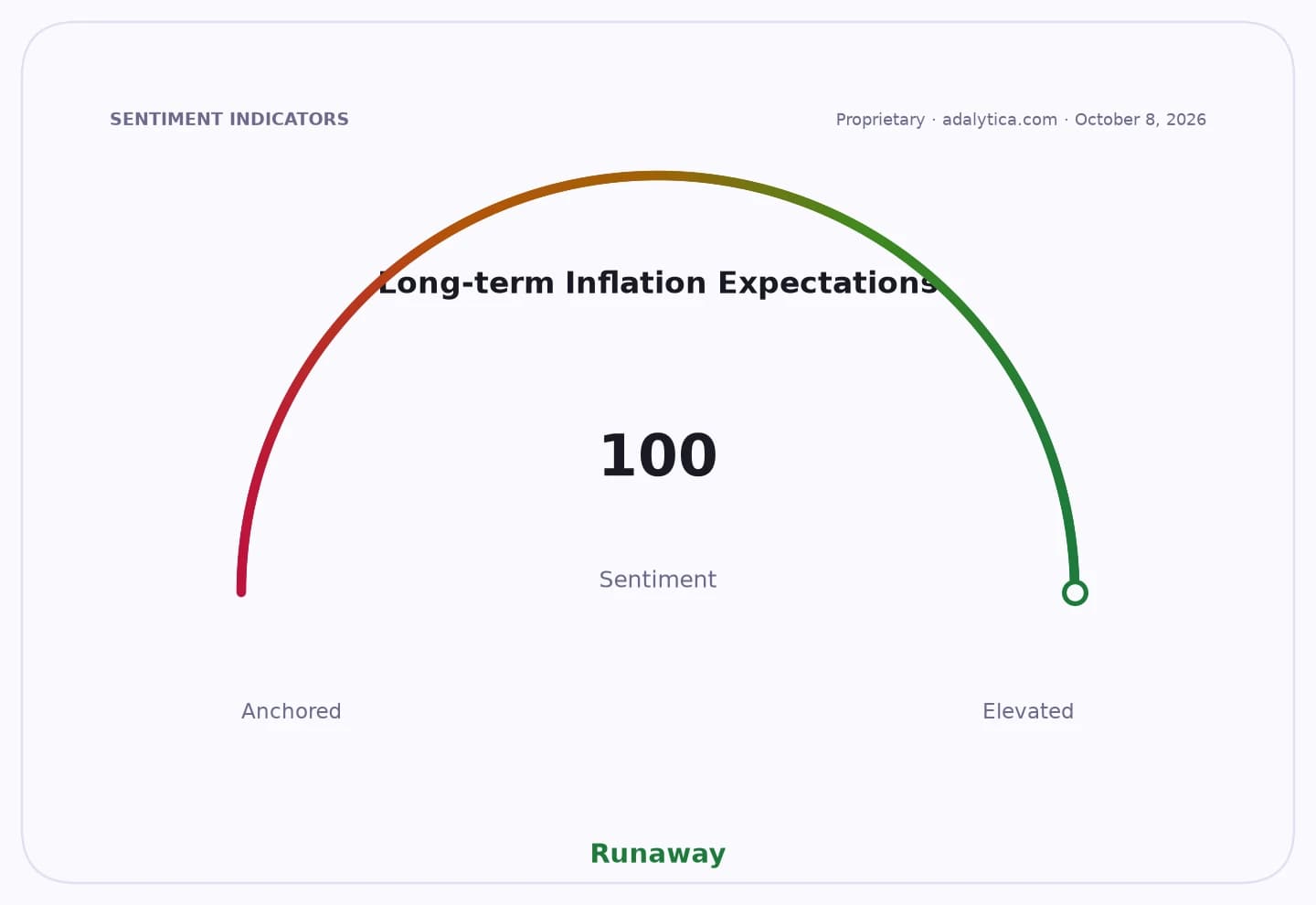
That matters because the ECB has spent the past year trying to convince households and markets that inflation will settle close to 2% over time. When consumers expect higher prices, wage demands and spending patterns can become harder to manage, making it more difficult for policymakers to justify aggressive easing.
Sentiment Indicators
The survey also showed consumers expecting the economy to contract by 1.5% over the next 12 months and unemployment to rise to 11.3%, a combination that points to stagflationary anxiety rather than confidence in a clean disinflationary path. For the ECB, that mix complicates the case for rapid rate cuts: softer growth argues for support, but sticky expectations argue for caution.
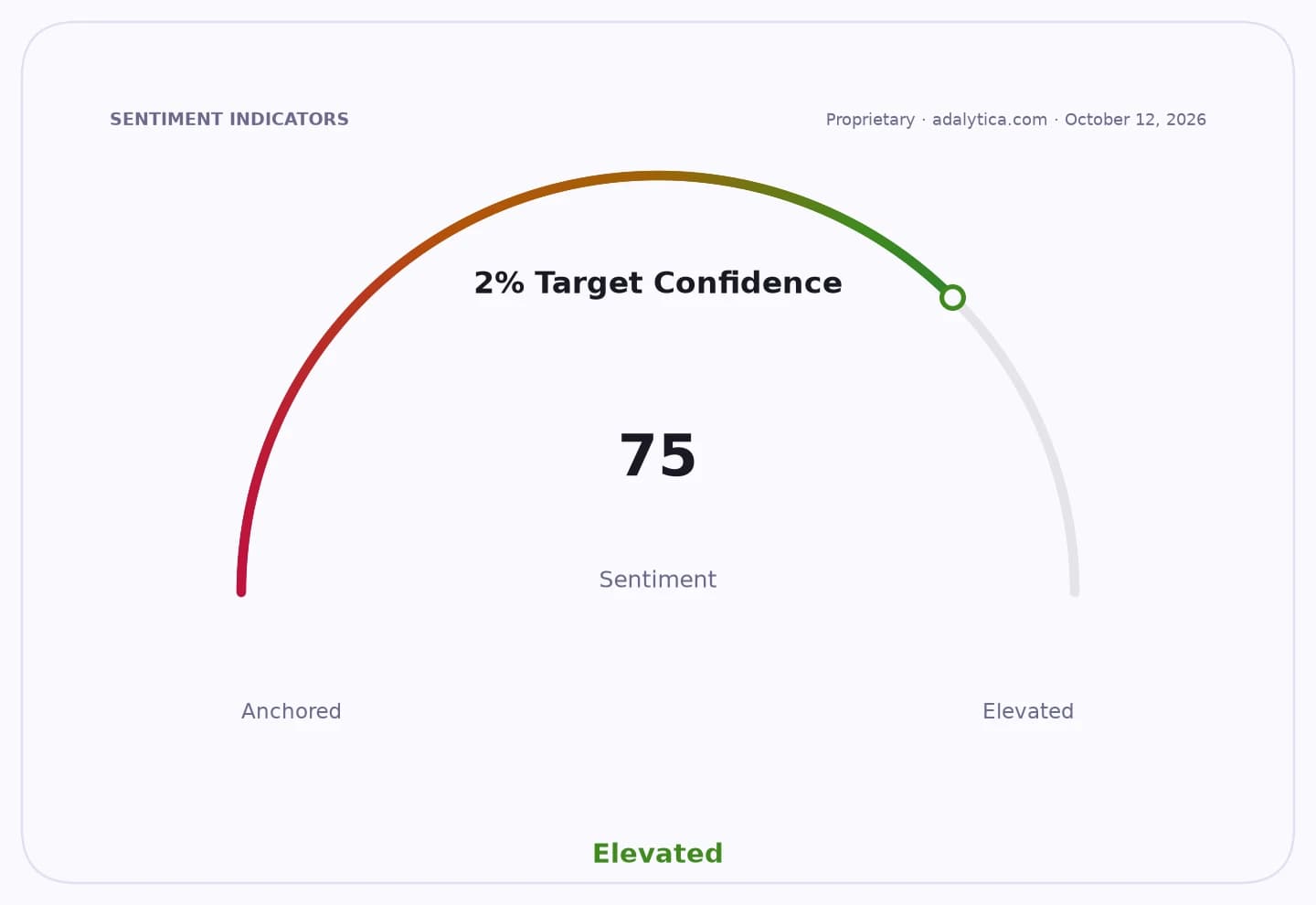
The numbers come as broader eurozone inflation concerns remain elevated, with recent market and policy commentary still focused on energy costs and the risk that inflation stays above target longer than previously hoped. Adalytica’s confidence gauge for the Fed’s 2% inflation target also showed elevated readings, underscoring that investors are still sensitive to any sign that inflation expectations are becoming less anchored globally.
For investors, the immediate implication is for euro rates and the currency. A firmer inflation expectations print can support higher-for-longer pricing for ECB policy, lift short-dated yields and limit downside in the euro, while pressuring rate-sensitive assets that have been leaning on an earlier easing cycle.
Eurozone equities, especially interest-rate proxies and domestic cyclicals, also face a tougher backdrop if policymakers signal patience. The consumer survey will likely feed into debate at the ECB’s next policy meetings, where officials must balance slowing activity against the risk that inflation expectations reaccelerate.
| Entity | Gains | Losses |
|---|---|---|
| ECB hawks | ▲Tighter policy case | ▼Faster rate cuts |
| Euro short-term yields | ▲Higher-for-longer pricing | ▼Easing bets |
| Euro currency | ▲Relative rate support | ▼Dovish repricing |
| Rate-sensitive European stocks | ▲Stronger policy credibility | ▼Lower valuation support |