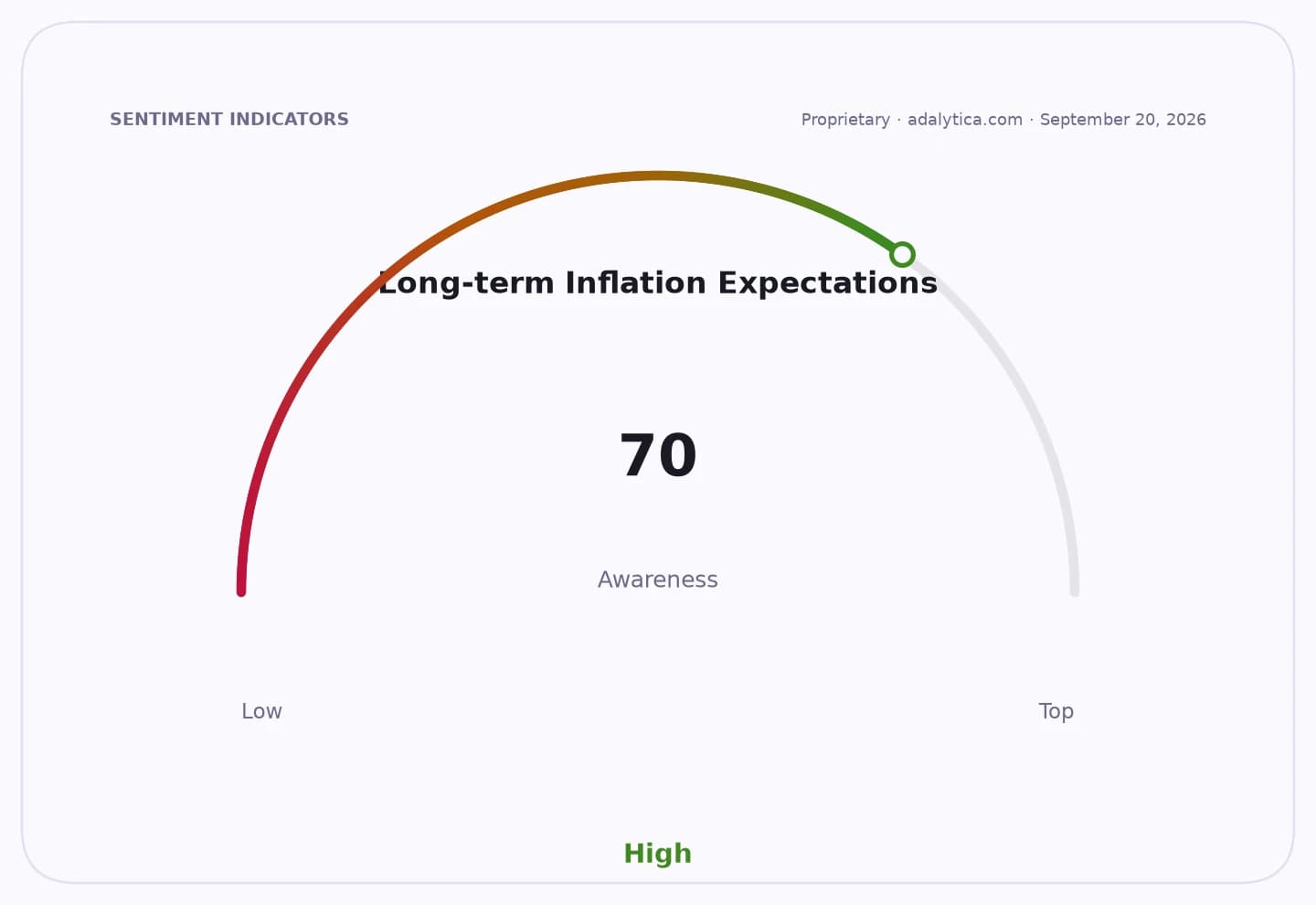
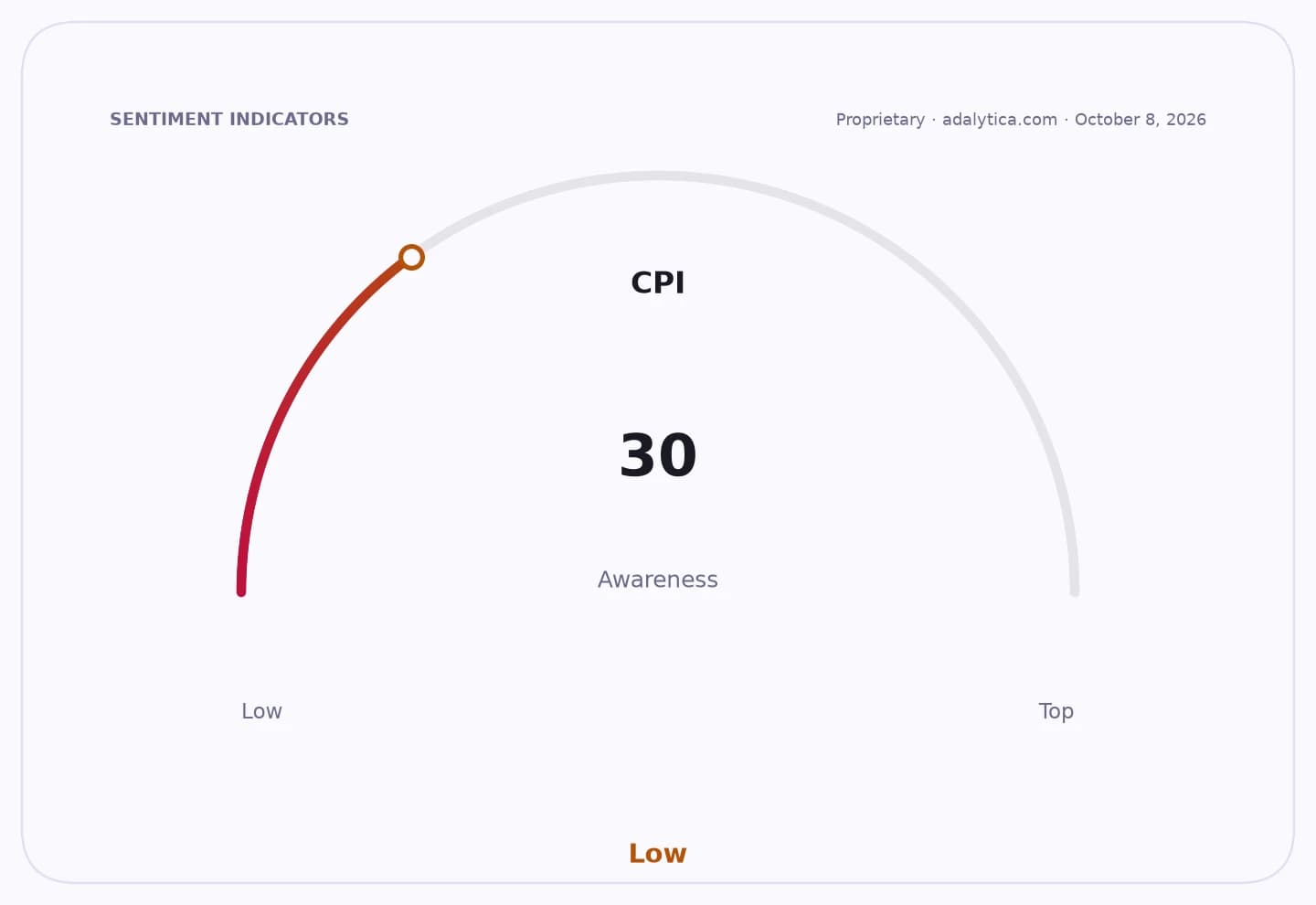
Portugal’s central bank said inflation will run at 3.1% this year and remain at that level in 2026 before easing toward target, a forecast that matters because it suggests the country is moving through a prolonged but not destabilizing inflation phase rather than facing a renewed price shock.
Portugal inflation seen at 3.1% in 2025 and 2026
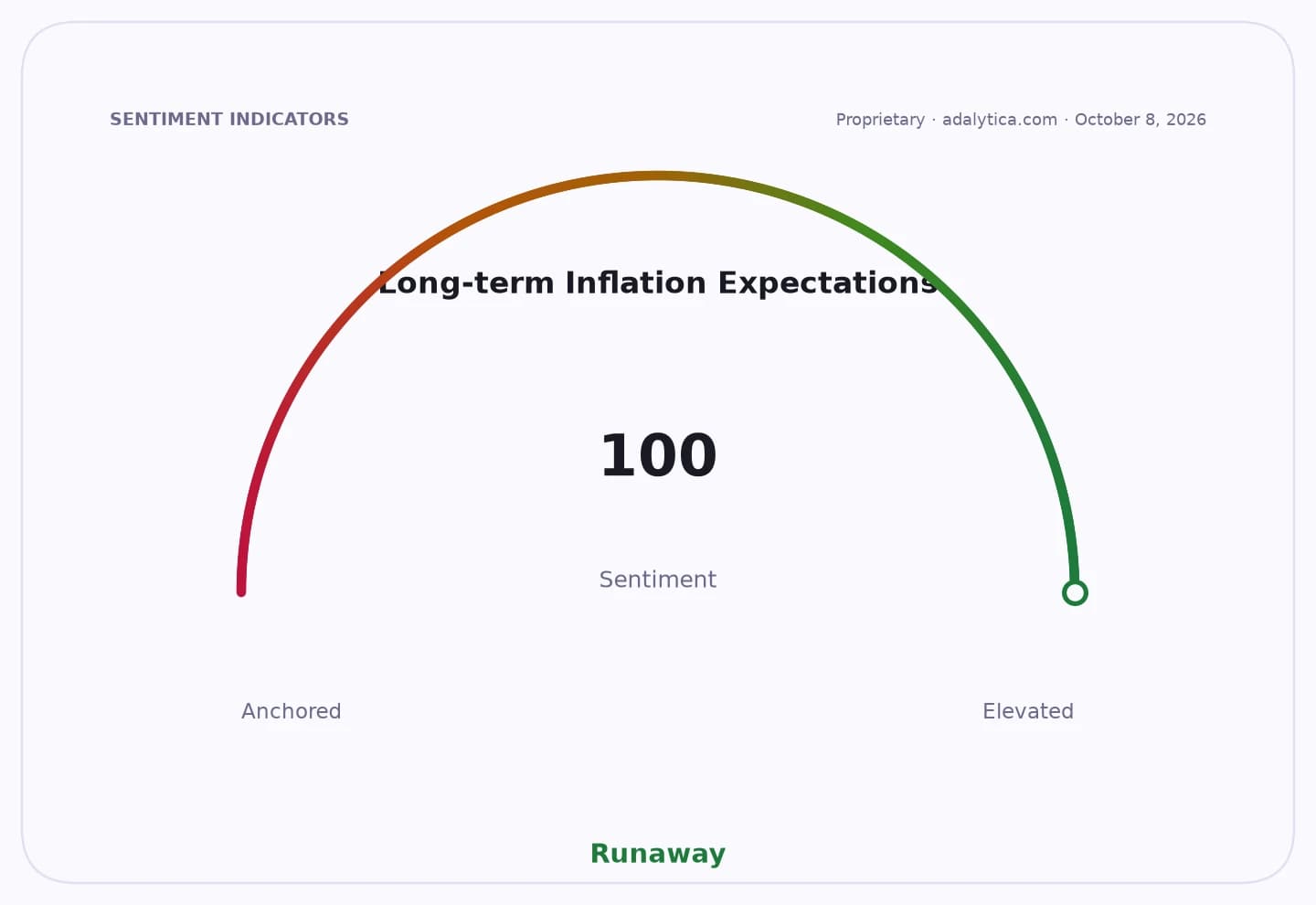
The Banco de Portugal’s outlook, published in its October Economic Bulletin, points to inflation falling to 2.4% in 2027 and 2.0% in 2028 as the effects of the energy shock fade and wage growth moderates. That places Portugal broadly in line with the euro area and with the central bank’s previous June projections, implying limited immediate pressure for a policy rethink from the European Central Bank.
Sentiment IndicatorsⓘProprietary · adalytica.com · October 8, 2026
This is a snapshot — live sentiment, awareness and momentum for 130+ markets update continuously in the dashboard.Open AlphaPulse
For investors, the message is less about the headline rate than the path. Inflation staying above 3% in 2025 and 2026 means households’ purchasing power will keep recovering only gradually, while firms still face some cost pressure. But the expected decline toward 2% by 2028 supports the case for lower volatility in consumer demand, steadier margins and a more predictable rate environment for Portuguese assets.
The central bank also struck a relatively constructive tone on employment, saying labor-market conditions should remain favorable even as job growth slows. It sees employment rising 1.7% in 2026, 0.7% in 2027 and 0.3% in 2028, with unemployment holding at 5.6%. That combination — slower hiring but still-low unemployment — points to a softer landing rather than a cyclical downturn.
The broader narrative is one of normalization after an energy-driven inflation spike. The dissipation of those shocks should help bring price growth closer to target, but the adjustment will be gradual, not abrupt. For markets, that reduces the odds of a sharp policy surprise while keeping attention on whether wage growth and migration trends cool fast enough to anchor inflation around the ECB’s 2% objective.
| Entity | Gains | Losses |
|---|---|---|
| Portuguese households | ▲Easier purchasing-power recovery | ▼Still-elevated living costs |
| Portuguese firms | ▲More predictable input costs | ▼Margin pressure before disinflation |
| ECB / policymakers | ▲Inflation trend stays contained | ▼Limited room for complacency |
| Bond investors | ▲Lower long-term inflation risk | ▼Persistent near-term price pressure |