The European Central Bank sees no convincing evidence yet that higher energy prices are feeding through into a broader, self-sustaining rise in euro-area inflation, a reading that supports the case for a cautious policy stance even as headline prices remain elevated.
ECB sees limited energy inflation spillovers

ECB chief economist Philip Lane said the transmission from energy costs to the rest of the economy remains uncertain and that the central bank has “not observed very strong second-round effects so far,” according to an interview with ANSA. His comments matter because second-round effects — when firms and workers start baking higher energy costs into wages and other prices — are what turn a temporary shock into more persistent inflation and force central banks to keep rates higher for longer.
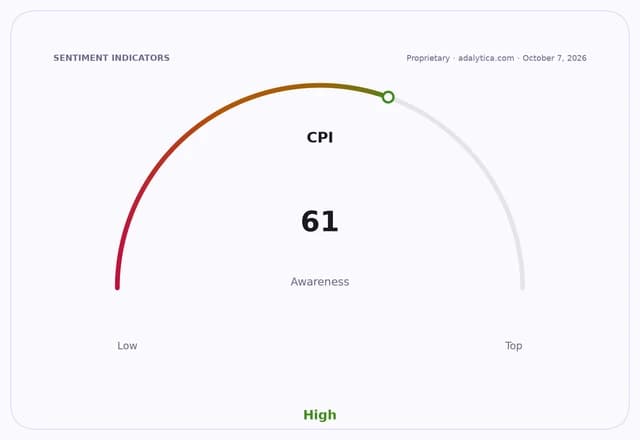
Sentiment IndicatorsⓘProprietary · adalytica.com · October 7, 2026
This is a snapshot — live sentiment, awareness and momentum for 130+ markets update continuously in the dashboard.Open AlphaPulse
That distinction is central to the ECB’s next move. If energy inflation is contained, policymakers can argue that tighter policy already in place is doing enough and avoid over-tightening an economy that is still fragile. If those spillovers widen, however, wage demands and services inflation could stay sticky, making any rate cuts harder to justify and potentially reopening debate over further tightening.
The warning signs remain mixed. Euro-area inflation has been pressured by energy, but Lane said it is too simplistic to frame the outlook as either a base case or an adverse case. That language suggests the Governing Council is still weighing a range of outcomes rather than locking in a single path, a notable shift from the more mechanical inflation-fighting posture central banks often signal when price pressures are broad-based.
For investors, the message is that the ECB is not yet ready to declare victory on inflation, but it is also not signaling alarm. That keeps the market focused on incoming wage data, services inflation and energy prices as the key determinants of whether the euro-zone rate cycle is close to peaking. Euro asset traders, especially in sovereign debt and bank stocks, will read the remarks as mildly dovish versus a scenario of entrenched second-round inflation, though not dovish enough to erase rate-risk premiums.
The broader backdrop remains important. Energy shocks have been one of the main transmission channels for inflation in Europe since the post-pandemic surge and Russia’s invasion of Ukraine, and lingering geopolitical risks mean that a fresh jump in gas or oil prices could still feed through to consumers later this year. But for now, Lane’s comments suggest the ECB is betting that the pass-through is limited, which would help protect growth even as it leaves inflation above target for longer than policymakers would like.
For markets, the near-term implication is less about an immediate policy pivot than about the bar for the ECB to stay restrictive. Any evidence that wages or services prices are picking up would quickly shift that balance, while a continued absence of spillovers would strengthen the case that the central bank can hold steady and wait for inflation to cool.
| Entity | Gains | Losses |
|---|---|---|
| ECB doves | ▲More room to pause | ▼Less urgency for hikes |
| ECB hawks | ▲Ongoing vigilance retained | ▼Less case for tighter policy |
| Euro-area borrowers | ▲Lower odds of more tightening | ▼Persistent inflation uncertainty |
| Euro-area bondholders | ▲Fewer hawkish surprises | ▼Energy-driven inflation risk |