Belgian households are entering the final stretch of 2026 with more spending power than the inflation headline suggests, even as energy costs push consumer prices back to their highest level in more than three years.
Belgium inflation rises on energy costs in September
That is the central tension in Belgium’s inflation story: annual price growth accelerated to 4.69% in September, driven mainly by a surge in energy, but wage indexation and stabilizing prices for many everyday goods mean real incomes have held up better than in most of Europe. For investors and policymakers, the significance is not the print itself but the mix underneath it — one that keeps pressure on energy-sensitive sectors while reducing the chance of a broad-based inflation spiral.
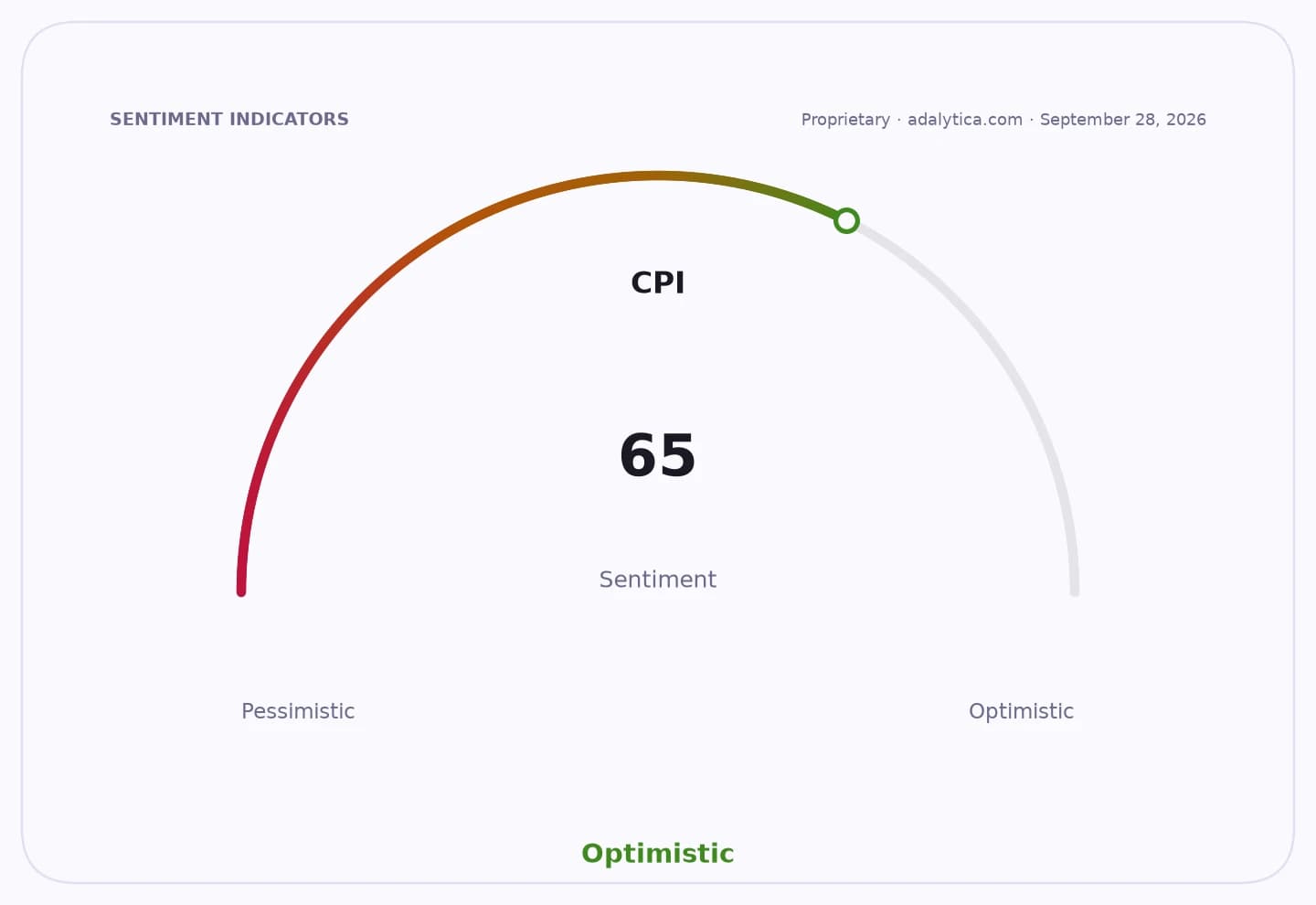
Sentiment IndicatorsⓘProprietary · adalytica.com · September 30, 2026
This is a snapshot — live sentiment, awareness and momentum for 130+ markets update continuously in the dashboard.Open AlphaPulse
Economists say the latest rebound is heavily concentrated in fuel and heating. Charlotte de Montpellier said energy prices rose about 16% in August from a year earlier, with diesel singled out as the main driver because refinery disruptions have made it scarce. That matters because diesel feeds into transport, logistics and industrial costs, so a sustained move higher can work through the economy even if other goods stay tame.
But the broader inflation picture is far less alarming than the energy component suggests. Food prices were flat year on year, and some consumer electronics have actually become cheaper. That helps explain why the headline rate can rise while households still feel their purchasing power improve: Belgian wages are indexed, so pay rises more quickly than in countries where salary growth is negotiated more slowly. In practice, that cushions real consumption and limits the erosion of household demand.
For markets, the split matters. A Belgium inflation rate near 4.7% is high enough to keep pressure on the European Central Bank’s inflation vigilance, but it is not yet the kind of broad, demand-led inflation that would force a major reassessment of euro zone growth. The more immediate effect is on rates-sensitive assets and on sectors exposed to energy costs, where margins can be squeezed if diesel and power stay elevated.
The inflation data also fit a broader European pattern in which energy remains the swing factor. With oil, diesel and refinery bottlenecks driving the latest move, the risk is less a full inflation comeback than a volatile period in which headline CPI oscillates with commodity markets. If that proves temporary, the real story will be resilient household purchasing power. If energy stays tight, the market will start to price a more persistent squeeze on transport, industry and consumer sentiment.
For investors, the key question is whether this is a headline shock or the start of a second-round effects story. Right now, Belgium looks closer to the former: inflation is up, but the underlying consumer base has not been as badly damaged as the top-line number implies. That is why the most important economic takeaway is not that inflation is 4%, but that Belgian purchasing power can still be strong even in that environment.
| Entity | Gains | Losses |
|---|---|---|
| Belgian households | ▲Indexed wages, stable real incomes | ▼Higher energy bills |
| Energy suppliers | ▲Stronger pricing power | ▼Households and transport firms |
| Transport and logistics firms | ▲None | ▼Higher diesel costs |
| ECB / rate hawks | ▲Justification for vigilance | ▼Faster case for easing |