The Bank of Japan’s growing odds of a December rate hike are rippling through global markets, strengthening the case that a long period of ultra-cheap Japanese money is ending at a time when investors are already cautious on U.S. equities and the dollar.
BOJ December Hike Risk Hits Global Markets

That matters because Japan has been one of the world’s most important sources of liquidity for years. Even a modest shift by the BOJ can alter capital flows, move the yen, and force a repricing across equities, commodities and rate-sensitive assets. The latest positioning suggests investors are starting to unwind trades built around cheap yen funding and easy global financial conditions.
Sentiment Indicators

The immediate market read-through is visible in the price action. The S&P 500 ETF SPY fell to 689.81 on Nov. 20 from 766.81 on Nov. 4, a drop of more than 10% in just over two weeks, while volume jumped to 151.0 million shares, a sign of forced de-risking rather than a quiet drift lower. The fund is now trading below its 50-day and 200-day moving averages, with RSI at 29.4, close to oversold territory, and MACD still below its signal line.
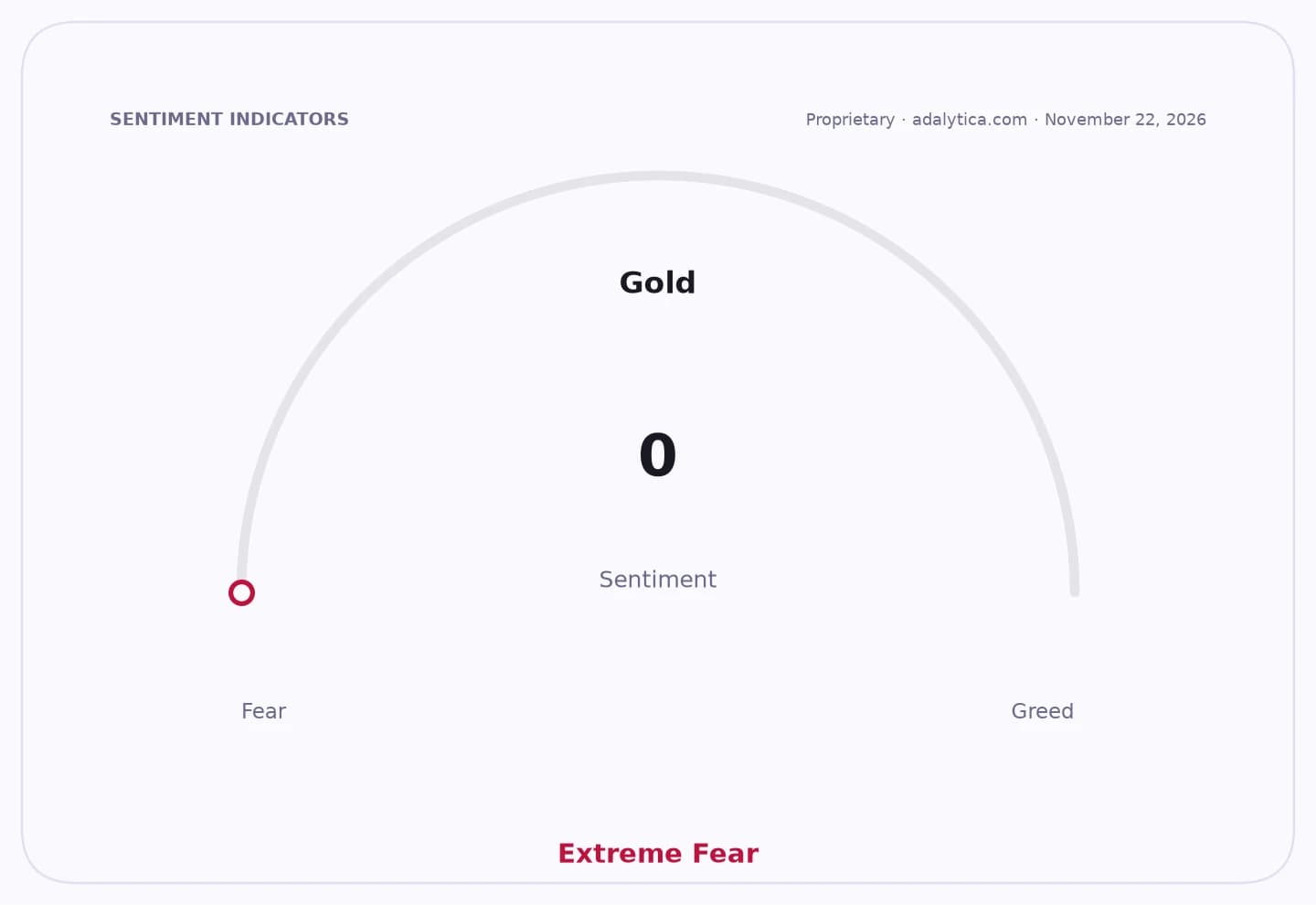
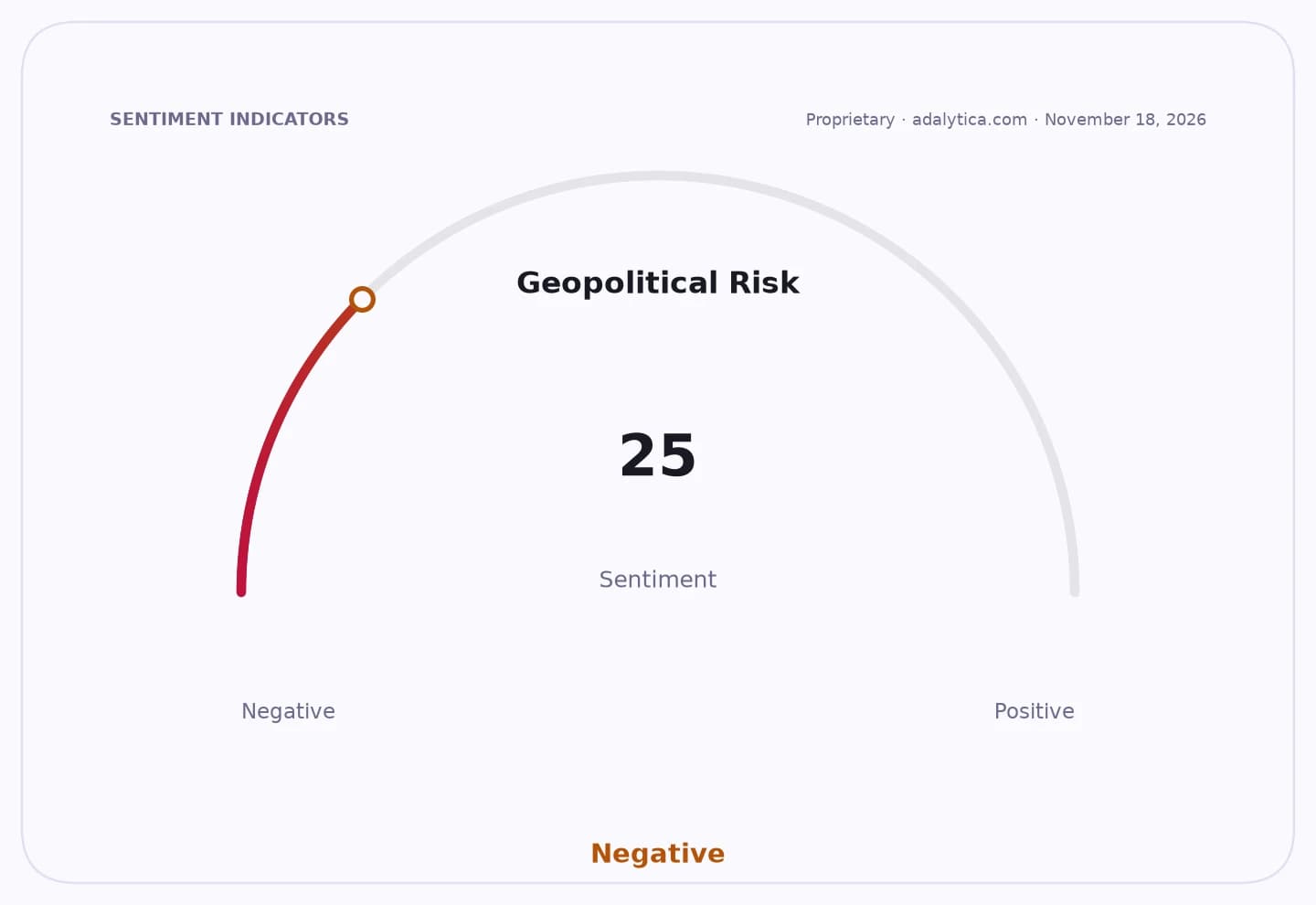
Gold has not benefited from that flight-to-safety backdrop in a straight line. GLD slid to 322.87 on Nov. 20 from 379.53 on Nov. 9, even as a separate geopolitical risk gauge from Adalytica showed global stability sentiment at 36, or neutral, after a sharp 29-point one-day jump in awareness. The metal’s weakness suggests the market is not pricing a clean defensive bid so much as a broader liquidation of risk exposures, including positions that had been crowded around safe-haven assets. GLD is also trading below both its 50-day and 200-day moving averages, with RSI at 27.6.
Oil has held up better, and that is economically meaningful. USO rose to 139.63 on Nov. 20 from 136.11 on Nov. 18, even though the crude proxy remains below both its 50-day and 200-day averages. The move came alongside Adalytica’s U.S. dollar trade-signal snapshot, which showed extreme fear on the greenback and a 69-point deterioration over 30 days. A weaker dollar tends to support dollar-priced commodities, while tighter Japanese policy can also reshape carry trades that have helped finance global risk assets and energy positions.
For investors, the BOJ story matters less as a one-day rates event than as a signal that one of the last major pillars of ultra-loose global policy is shifting. A December hike would likely support the yen and raise Japanese borrowing costs, but it could also tighten global financial conditions if leveraged trades are unwound. That is the bear case for equities and the dollar-funded risk complex.
The bull case is that a cleaner BOJ exit from emergency policy could eventually improve market functioning and reduce distortions that have kept capital cheap for too long. But near term, the more likely effect is higher volatility, lower appetite for leverage and more rotational pressure across currencies, commodities and U.S. large caps.
| Entity | Gains | Losses |
|---|---|---|
| Japanese yen | ▲Higher policy support | ▼Exporters facing a stronger currency |
| Gold holders | ▲Safe-haven demand over time | ▼Leveraged longs during liquidation |
| Oil producers | ▲Dollar weakness and risk hedging | ▼Consumers if volatility lifts costs |
| U.S. equity investors | ▲Potentially cheaper re-entry levels | ▼Leveraged longs and momentum traders |