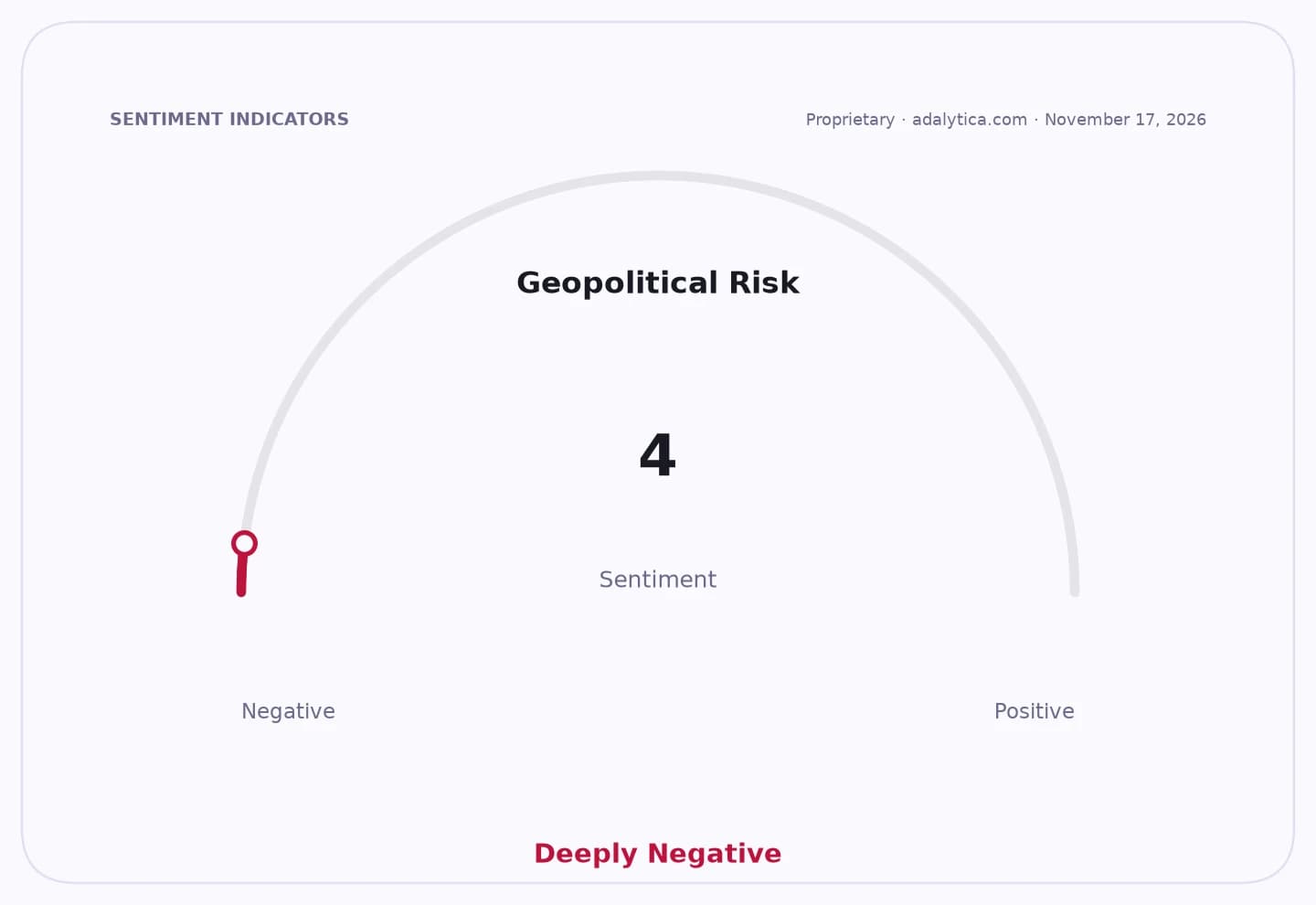
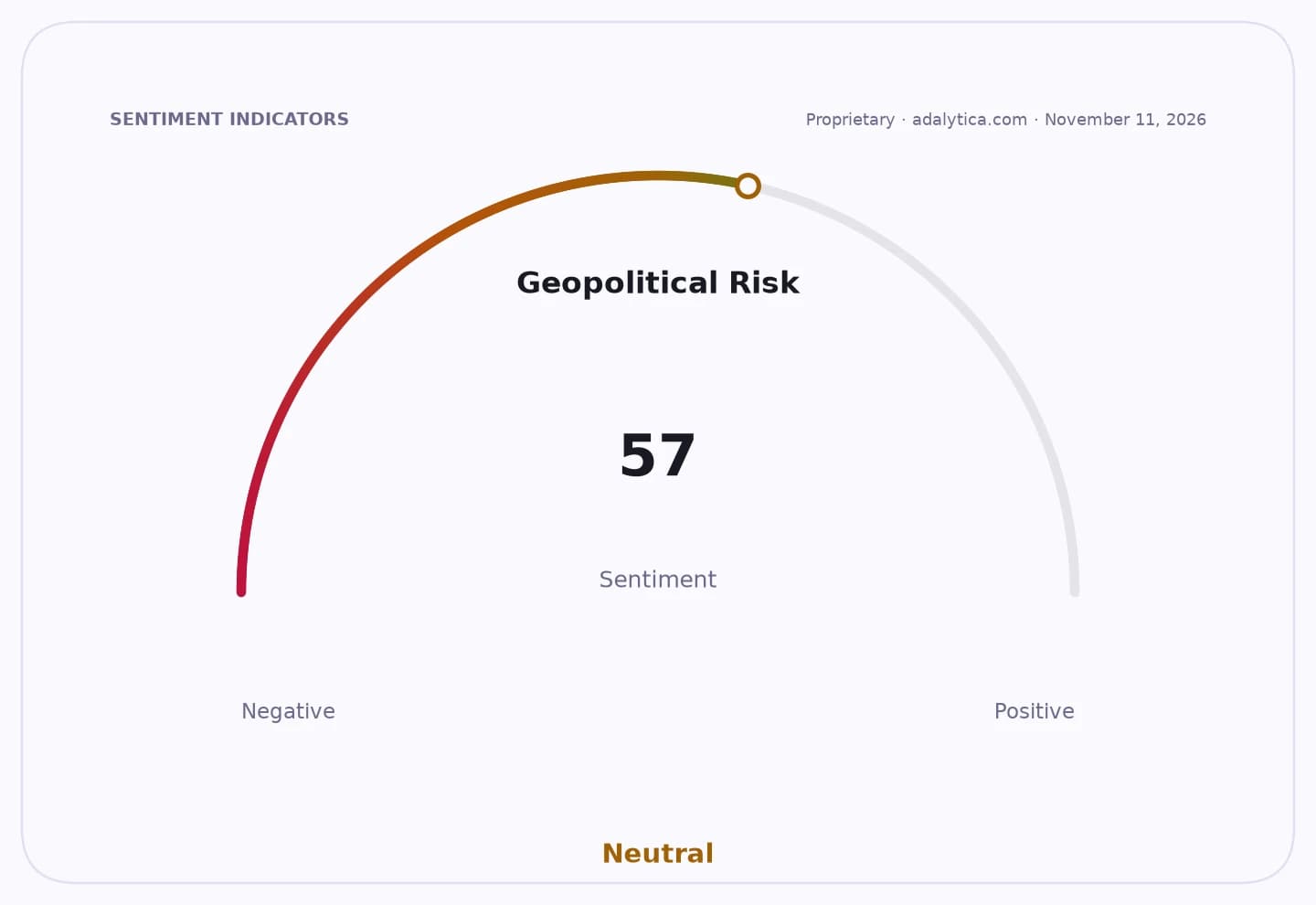
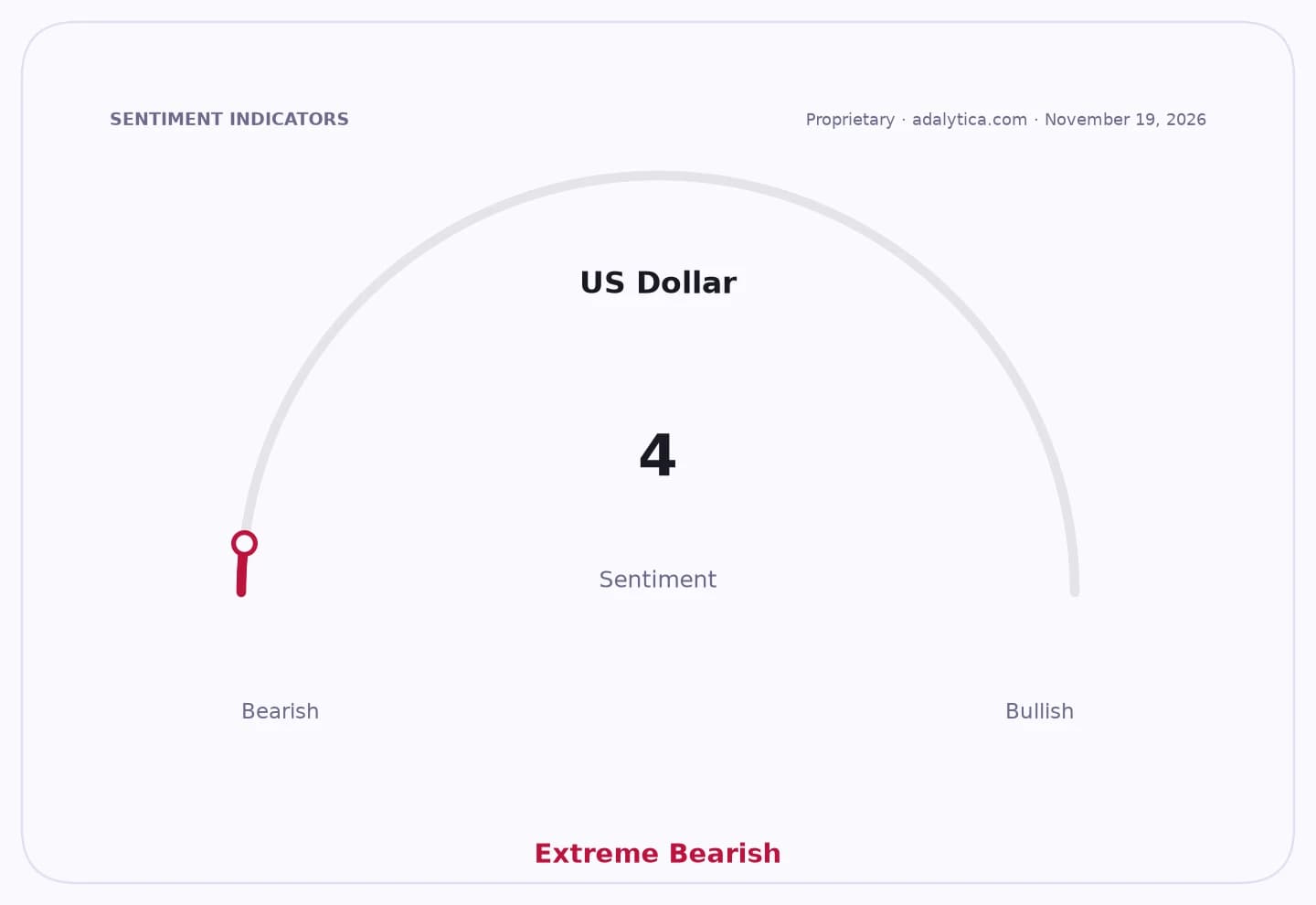
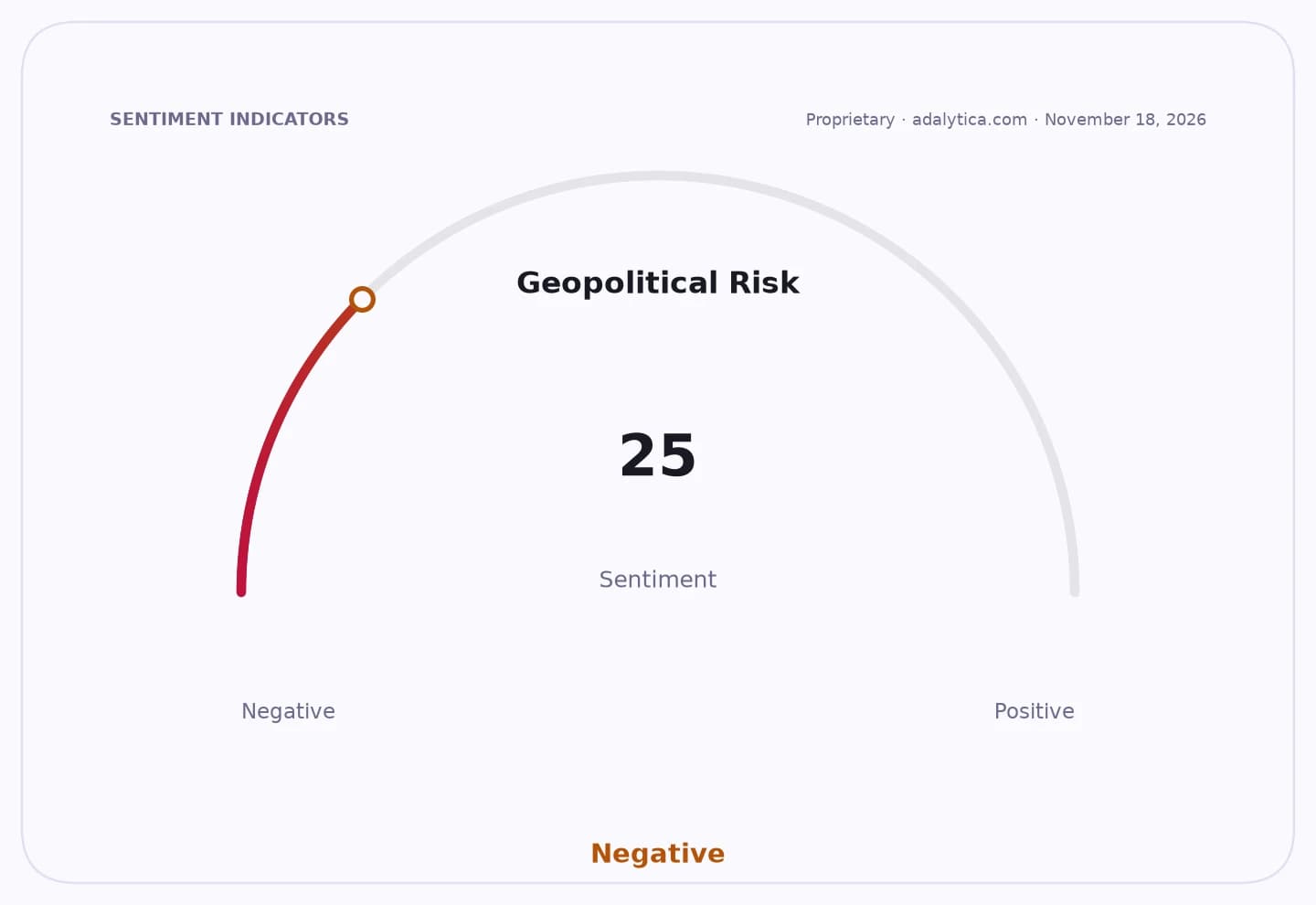
A rare three-way meeting involving Donald Trump, Vladimir Putin and Xi Jinping is jolting markets just as investors were already braced for a fragile global backdrop, with U.S. Treasury yields hovering near 5.08%, the dollar flashing stress signals and global stability sentiment sinking into “Extreme Fear.”
Trump, Putin, Xi Meeting Jolts Markets
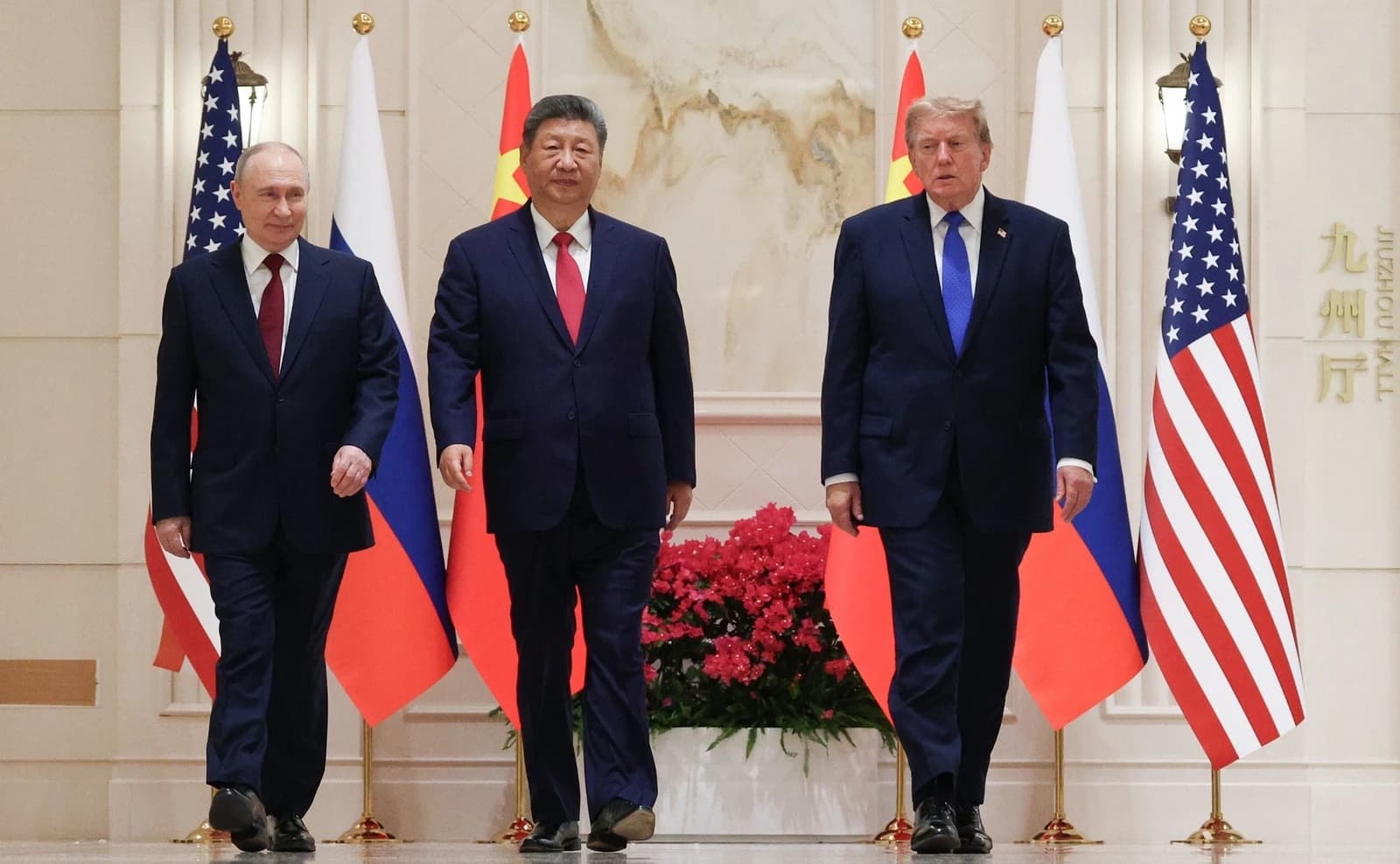
The political significance is immediate: any direct coordination among Washington, Moscow and Beijing can reshape trade, sanctions, energy flows and military risk in one stroke. For investors, that matters because geopolitical shocks rarely stay political for long — they tend to move rates, currencies, stocks and commodities by altering inflation expectations, supply chains and safe-haven demand.
Sentiment Indicators
The 10-year Treasury yield was last seen at 5.075% in forecast data for Nov. 19, after trading around 5.07% to 5.12% earlier in the week, keeping borrowing costs near levels that can pressure equity valuations and credit markets. The U.S. dollar also showed strain, with Adalytica’s trade-signal gauge for the currency in “Extreme Fear” even as awareness stayed elevated, while the global stability index fell to 11 from 25 a day earlier and 75 at the start of the year.
U.S. stocks reflected the nerves. The SPY ETF fell to 715.87 on Nov. 19 from 766.81 on Nov. 4, with the 50-day moving average still above the price and the RSI at 34.5, a sign the benchmark is approaching oversold territory. The MACD remained negative, underscoring how quickly risk appetite has weakened in recent sessions.
Geopolitical Risk — 30-day sentimentadalytica.com
Explore this data interactively — full history, time series and cross-market comparisons.
China-focused equities also sold off. FXI dropped to 31.79 from 34.26 in mid-October and sits below both its 50-day and 200-day moving averages, a sign investors are still pricing in weaker Chinese growth and trade exposure despite intermittent rebounds. That leaves the index vulnerable if the talks end up pointing to tighter economic coordination, new trade rules or fresh pressure on exporters and technology supply chains.
The wider market setup argues the talks matter beyond diplomatic optics. With yields still elevated and global fear already spiking, traders will be looking for any hints on sanctions, tariffs, semiconductor controls, energy shipments and the future of the dollar-based trade system. A de-escalation could support risk assets and relieve pressure on cyclicals, while a breakdown or tougher posture could send investors back into Treasurys, gold and defensive sectors.
The next catalyst is whether the talks produce any concrete language on trade, security or Ukraine-related pressure, because in this environment even a short statement could reset positioning across equities, bonds and FX.
| Entity | Gains | Losses |
|---|---|---|
| Safe-haven assets | ▲Higher demand | ▼Risk assets under pressure |
| U.S. Treasurys | ▲Haven bid, lower yields risk | ▼Inflation-sensitive sectors |
| China exporters | ▲Trade relief if tensions ease | ▼New tariffs or controls |
| Global equities | ▲De-escalation upside | ▼Geopolitical volatility |