Donald Trump’s midterm setback weakens his grip on domestic policy, but it does not meaningfully restrain the one arena that can move markets fastest: foreign policy.
Trump foreign policy keeps markets on edge
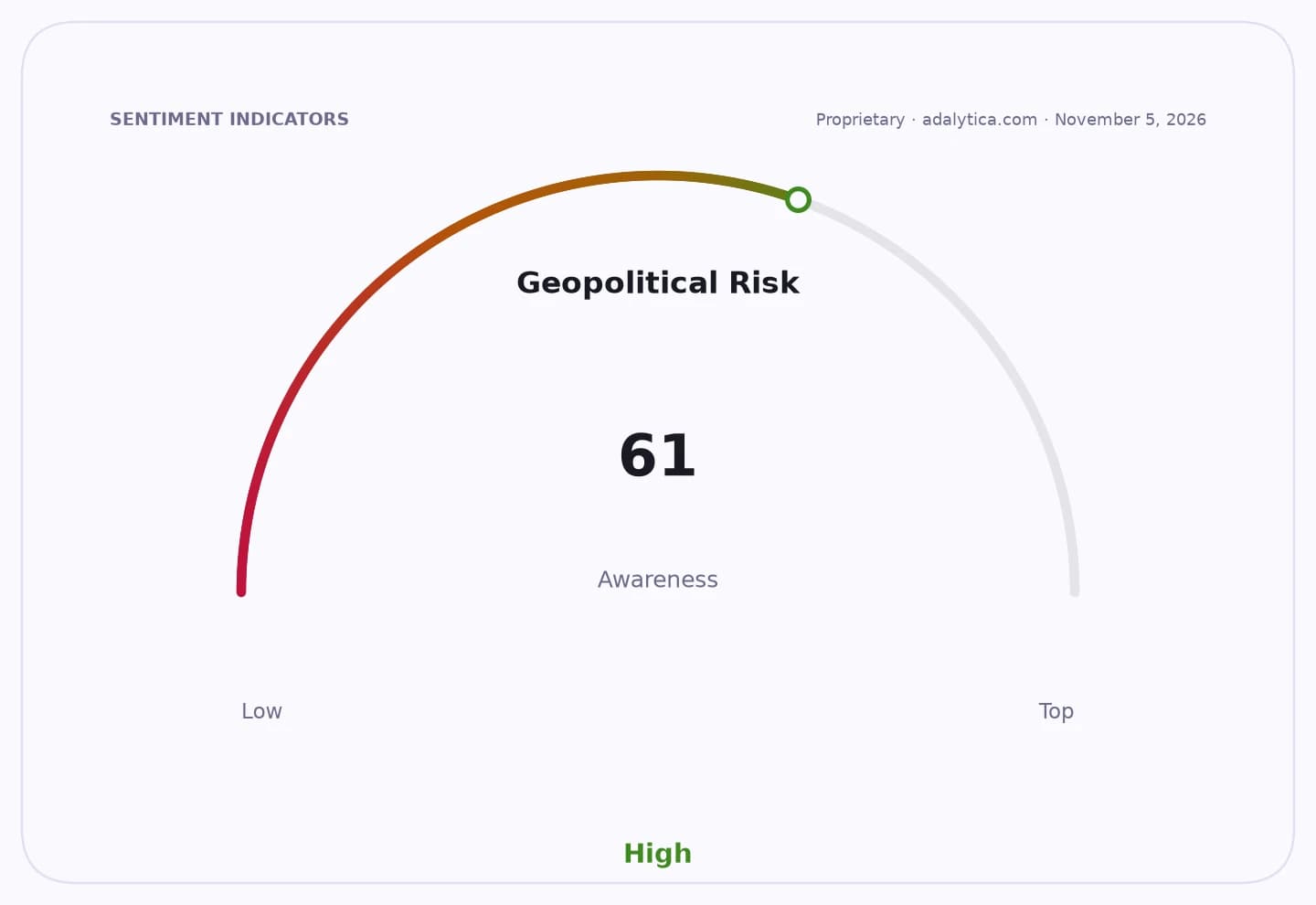
Geopolitical Risk
That matters because the next two years of Trump’s term may be driven less by legislation than by unilateral moves on Iran, Ukraine, China and Israel, leaving investors exposed to a more volatile mix of energy shocks, defense spending, tariff risk and dollar strength. The election result may have clipped his domestic mandate, but it has not stripped away the powers that can alter global capital flows and asset prices overnight.
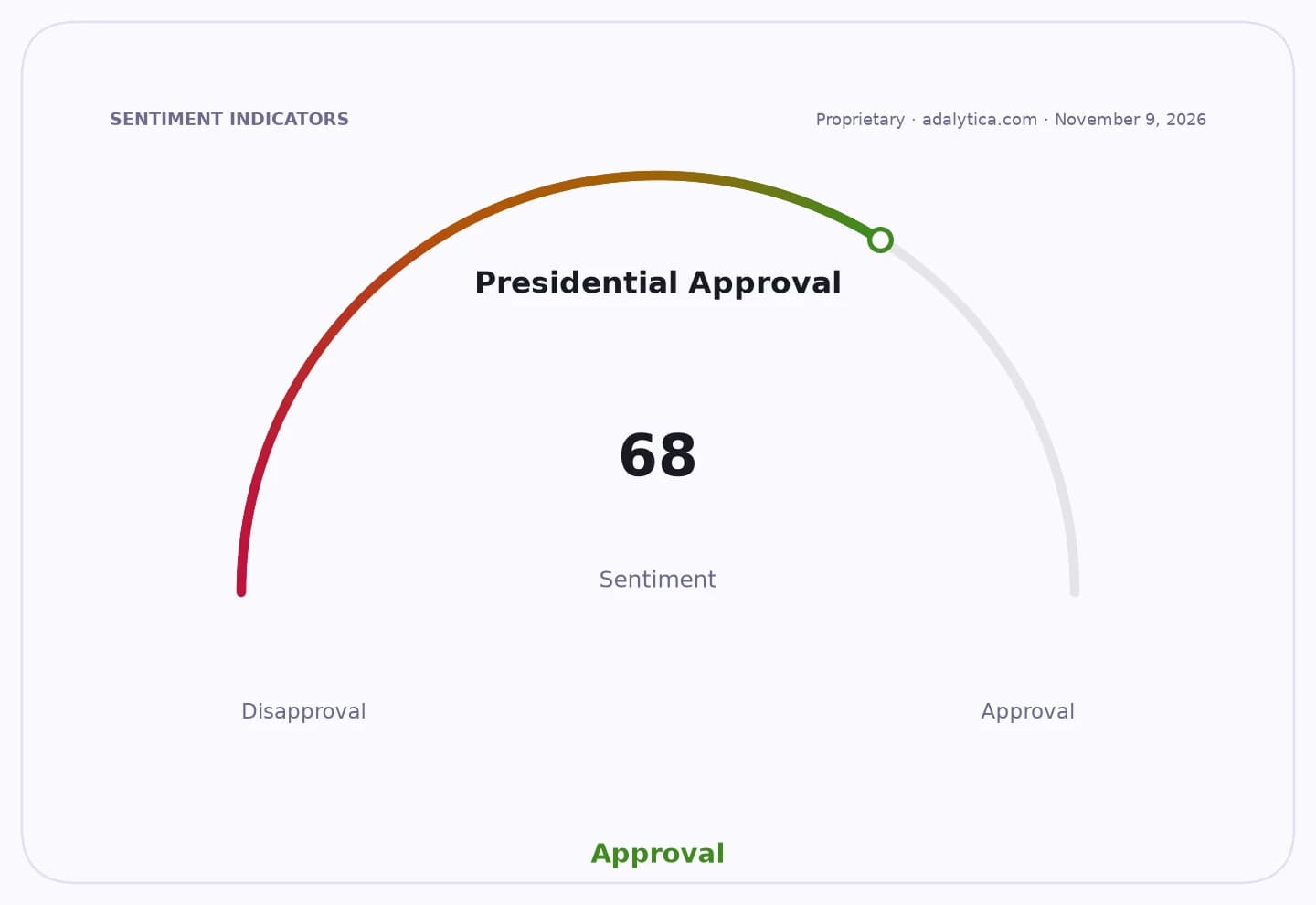
Sentiment Indicators
The immediate market read is straightforward: the administration’s foreign-policy latitude keeps geopolitics at the center of the trade. Trump has already tied the election loss to the Iran conflict, and he continues to frame the strikes as necessary to stop Tehran from getting a nuclear weapon. That leaves the possibility of renewed military action or a negotiated freeze, both of which would carry very different implications for oil, shipping, inflation expectations and risk appetite.
The stakes are not theoretical. Eight months of conflict helped push up U.S. gasoline prices and erode Trump’s popularity, according to the reporting. Yet analysts say the political cost does not necessarily translate into operational restraint. Even with Democrats controlling Congress, their tools are mostly limited to hearings, investigations and funding threats — useful for slowing domestic initiatives, far less effective at stopping a president from acting as commander in chief.
US Dollar — 30-day sentimentadalytica.com
Explore this data interactively — full history, time series and cross-market comparisons.
For investors, that means the market underestimates the durability of the geopolitical premium. U.S. Treasury yields and the dollar have already been moving with broader risk and policy expectations, while gold remains a classic hedge against policy shocks and war risk. Adalytica’s U.S. dollar trade signals show “Extreme Greed,” while the S&P 500 trade signals sit in “Greed” with “Extreme Greed” awareness, a combination that suggests investors are still leaning into risk even as the policy backdrop gets more unstable.
The most direct beneficiaries are defense primes and energy names. Lockheed Martin, RTX and Northrop Grumman remain leveraged to a world where Washington’s foreign-policy posture stays aggressive even as Congress turns hostile. Exxon Mobil and other large integrated producers also gain from any renewed disruption in the Middle East or from a sustained status quo that keeps crude and gas markets tight. The losers are obvious: importers, airline costs, bond bulls and any investor betting that divided government will calm the geopolitical tape.
Ukraine is another flashpoint. Democrats are likely to push for renewed aid, but the bigger issue is that Trump can still block funding and complicate sanctions policy. That keeps pressure on European allies and preserves uncertainty around global defense spending, energy security and industrial policy. In Europe and Canada, the damage from Trump’s tariff and pressure tactics could linger even if Congress starts probing them more aggressively.
Israel adds a further layer of instability. Trump now faces a Congress that is less uniformly supportive of Israel than in the past, and some Democrats want to end multibillion-dollar annual aid. But the president’s veto power means sweeping changes are still unlikely. The result is a policy environment where rhetoric may harden faster than legislation, and where investors should expect headline risk to remain elevated across defense, crude, gold and the dollar.
The broader lesson is that Trump’s domestic weakness may actually increase the odds of a more forceful foreign-policy push. Near the end of a presidency, leaders often look abroad to shape their legacy, and analysts warn that could mean more unilateral military or diplomatic action. That is not just a Washington story — it is a market regime shift.
For now, the high-conviction trade is to stay positioned for volatility, not calm. I believe the market is too focused on Trump’s reduced legislative leverage and not focused enough on the fact that his most consequential powers are still intact. That keeps defense, energy and gold in the sweet spot, while making the dollar a structural hedge against the next geopolitical surprise.
| Entity | Gains | Losses |
|---|---|---|
| Defense contractors | ▲Higher foreign-policy risk premium | ▼Hope for peace dividend |
| Oil and gas producers | ▲Tighter crude markets | ▼Lower energy volatility |
| Gold | ▲Safe-haven demand | ▼Risk-on inflows |
| Importers and airlines | ▲— | ▼Higher fuel and tariff risk |