The US midterm elections may not decide how Donald Trump prosecutes the war with Iran, but they could determine how far he is willing to go, and investors are already pricing that risk into energy and defense markets.
Oil and defense trade on Iran war risk
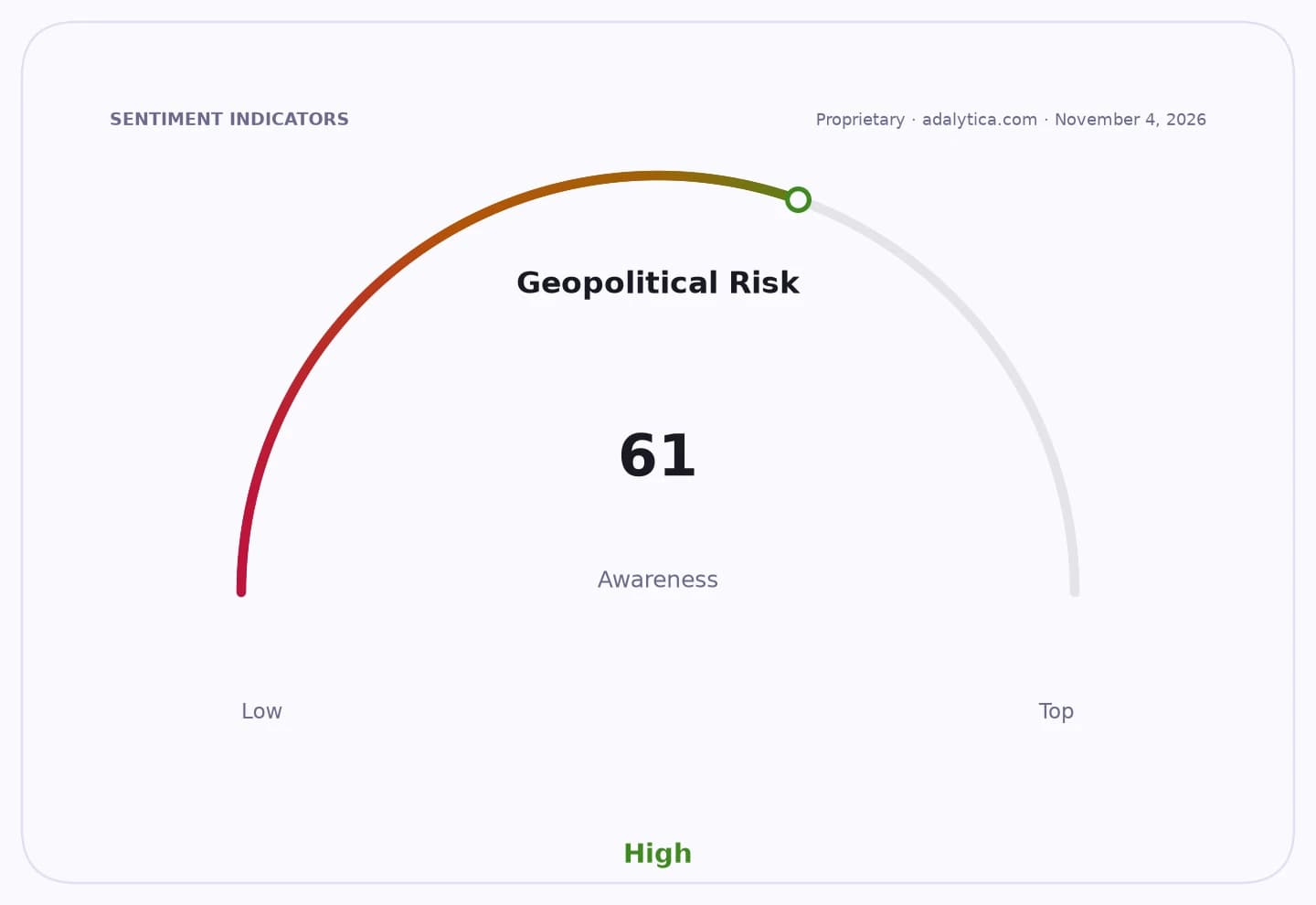
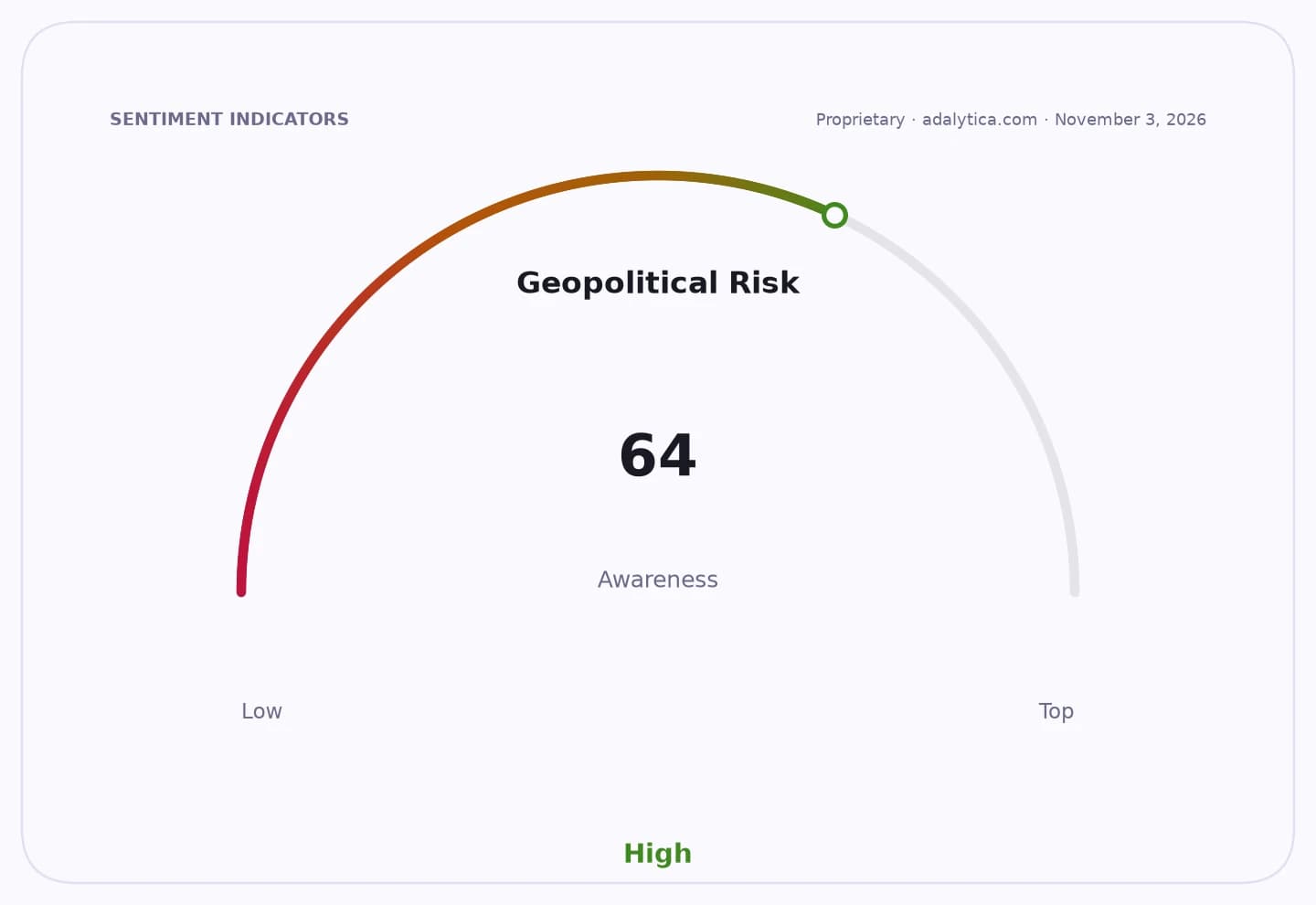
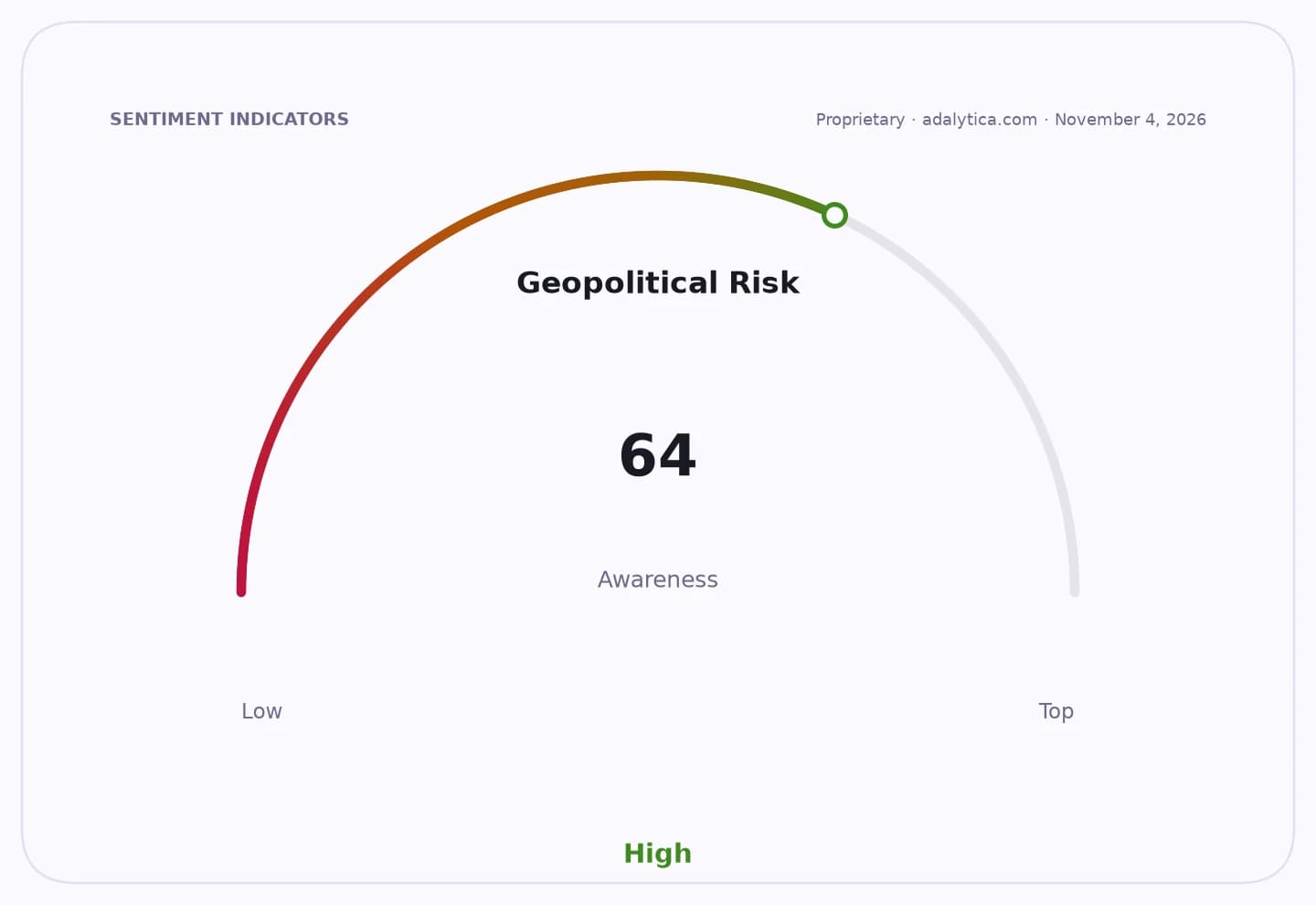
Geopolitical Risk
That is the key economic message behind a week of political and market whiplash. Republican losses tied to voter anger over the prospect of a wider Middle East war suggest Trump’s domestic room to maneuver could narrow if the fighting escalates further. At the same time, crude prices have stayed elevated and the energy complex remains sensitive to any disruption in the Strait of Hormuz or broader regional supply flows.
Sentiment Indicators
That tension matters because the conflict is no longer just a foreign-policy test. It is now feeding directly into inflation, bond yields, risk appetite and sector leadership. Brent and West Texas Intermediate have repeatedly spiked on escalation, while the US 10-year yield has stayed near 4.9%, leaving policymakers with less breathing room if energy costs jump again. Markets know that a prolonged war with Iran would not only threaten shipping and supply chains, but also complicate the Federal Reserve’s path by re-igniting commodity inflation.
The clearest market read comes from the equity tape. The US Oil Fund has traded at elevated levels, with USO still near $148 after moving as high as $158 this week, even after a sharp pullback. That kind of volatility is what you see when traders are still assigning a meaningful geopolitical premium to crude. The energy sector ETF XLE has also held up far better than the broad market, though its recent drop to about $63.22 shows how quickly the trade can unwind if the risk premium fades. For now, the message is simple: the market is not betting on peace.
US Dollar
Defense shares remain the other obvious beneficiary. The iShares U.S. Aerospace & Defense ETF, ITA, has been volatile, but the underlying bid for missile defense, munitions and airpower remains intact as Washington and allies prepare for a longer confrontation. Lockheed Martin and Raytheon, both cited in recent filings, continue to benefit from higher demand for Patriot and THAAD systems, the exact capabilities most likely to be in demand if the conflict broadens. That is the part of the story investors should not miss: the election result may shape the politics, but the Pentagon’s response will shape the capex cycle.
The bigger investment implication is that this is becoming a classic second-order trade. If Trump is politically constrained after the midterms, the odds rise that Washington leans harder on sanctions, deterrence and selective strikes rather than an open-ended campaign. That would temper the most extreme upside case for oil, but it would still support elevated spending on air defense, drones, missiles and naval protection. If, instead, Trump ignores the domestic backlash and doubles down, crude could spike sharply and the energy complex would reprice again.
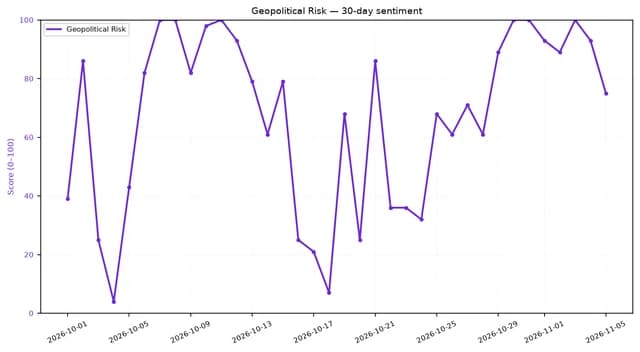
Our thesis is that the market is underestimating how durable this geopolitical premium can be. The global stability backdrop has already weakened sharply, and Adalytica’s Global Stability Sentiment has fallen 21 points in one day to 75, while US dollar trade signals show extreme fear. That combination usually means investors are seeking shelter, not complacency. In practical terms, that favors energy producers, oil-service names, defense contractors and select commodity-exposed plays over rate-sensitive growth sectors that would suffer if inflation gets another war-driven impulse.
| Entity | Gains | Losses |
|---|---|---|
| Oil producers | ▲Higher crude prices | ▼Demand destruction risk |
| Defense contractors | ▲Missile and air-defense demand | ▼Political budget pressure |
| Consumers | ▲Lower fuel costs if tensions ease | ▼Higher gasoline and inflation |
| Trump administration | ▲More leverage if escalation is contained | ▼Narrower political room if war widens |