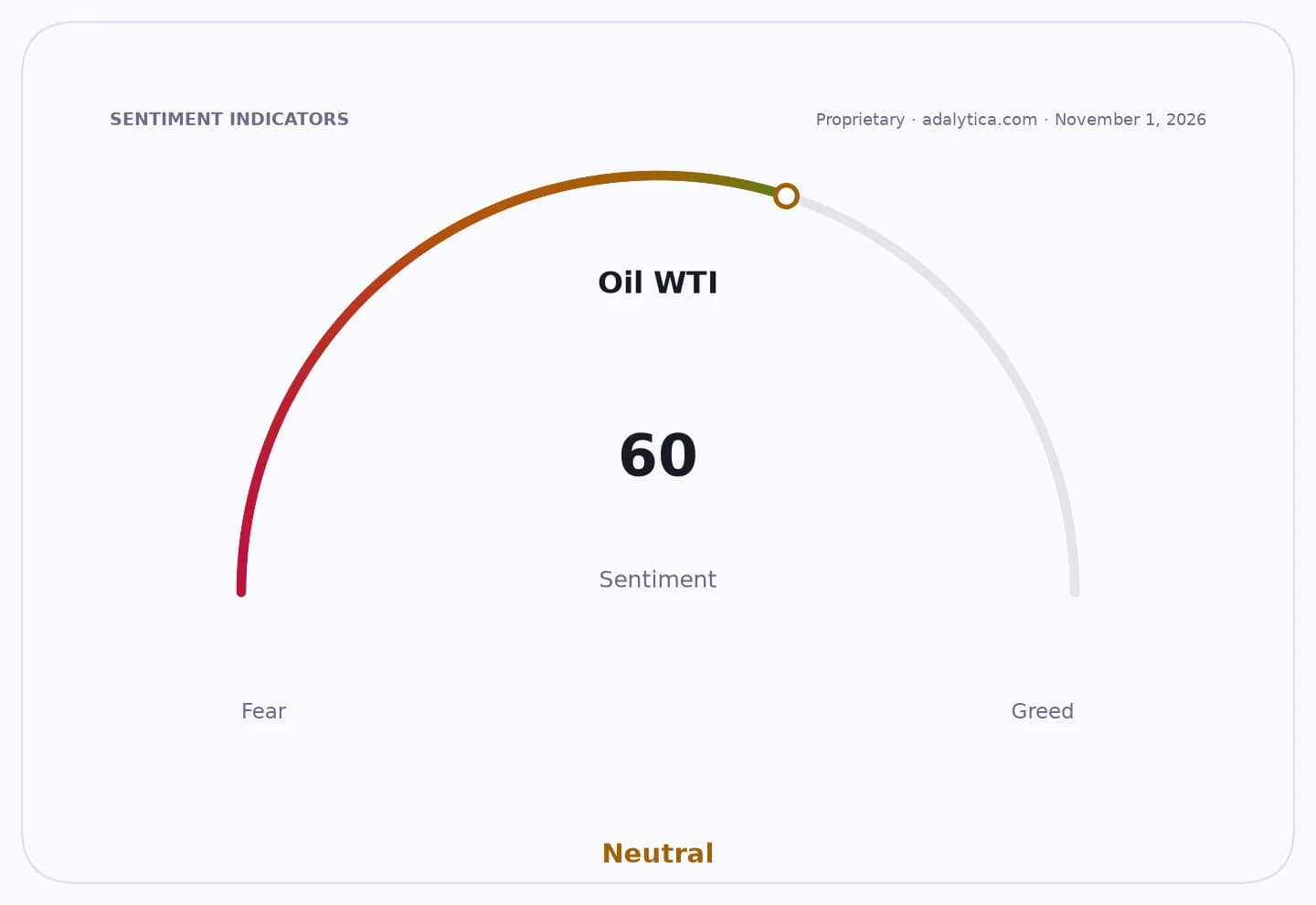
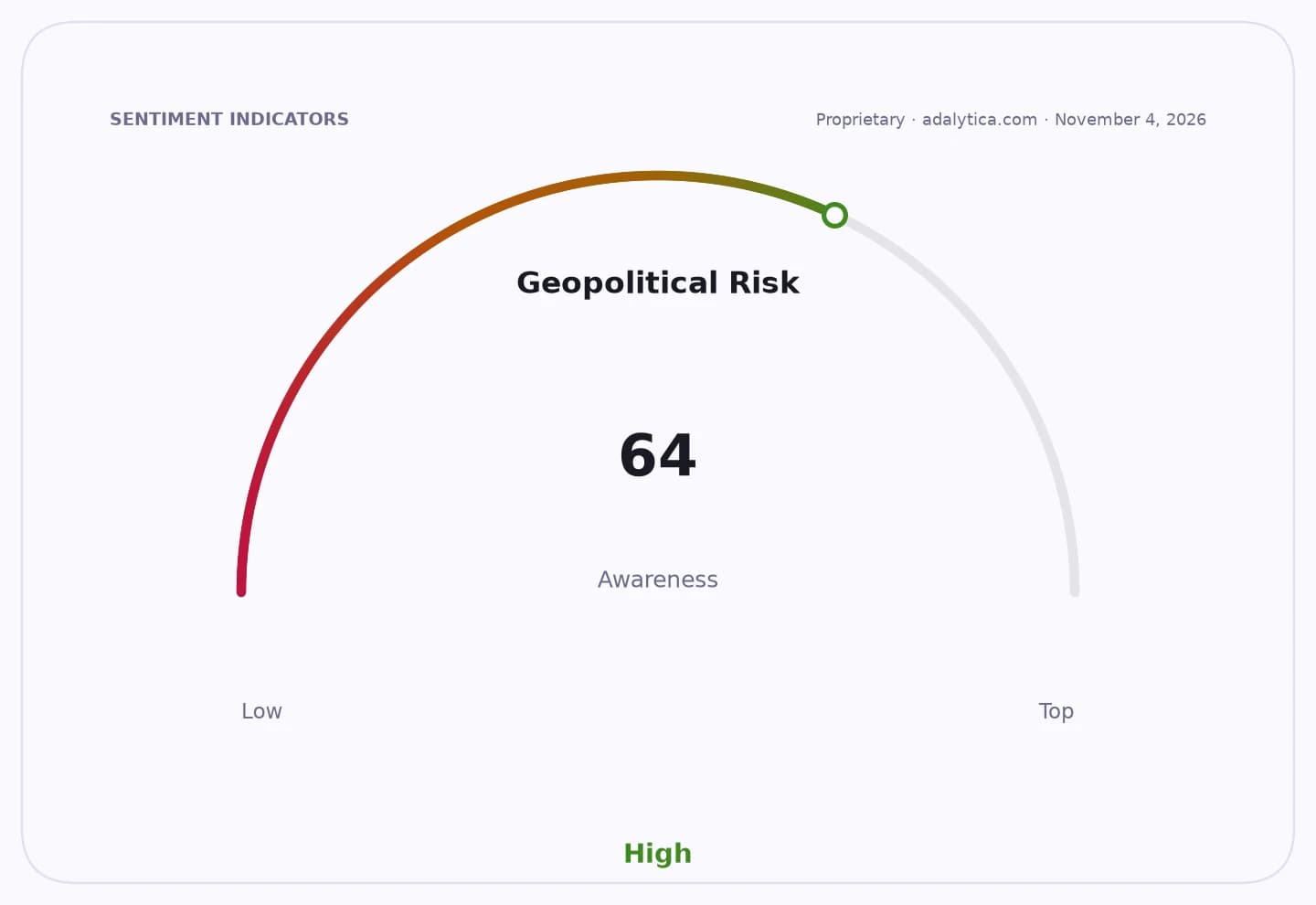
A tentative plan for Russia and Ukraine to resume negotiations next week has done little to ease the market’s view that the war remains the key driver of energy prices, with U.S. crude still trading near $158 a barrel and global stability gauges flashing extreme complacency.
Russia-Ukraine Talks Keep Oil, Defense Risk Elevated
Geopolitical Risk
That matters because the conflict is still acting as a tax on the world economy. Even the prospect of talks — after U.S. envoy Steve Witkoff’s meeting with President Vladimir Putin in St. Petersburg — has not produced a durable ceasefire or a meaningful pullback in hostilities. Ukraine says the war is inflicting severe economic damage, and the latest fighting shows how fragile any diplomatic opening remains.
Sentiment Indicators
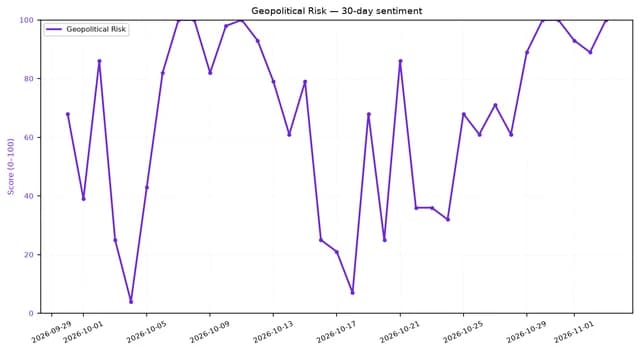
For investors, the message is straightforward: geopolitical risk is still embedded in oil, defense and rates. WTI has surged more than 50% over the past month in Adalytica’s oil-trade snapshot, while the rally in energy shares has cooled only modestly. The XLE energy ETF remains far above its 200-day moving average, even after a pullback from late-October highs, suggesting the market still expects tight supply conditions rather than a clean geopolitical reset.
The macro setup reinforces that view. Brent-linked shocks are feeding through to inflation expectations and keeping Treasury yields elevated, with the 10-year yield just under 5%. Credit spreads have also widened modestly, a sign that markets are preparing for more volatility if talks fail or if the fighting intensifies again before any agreement can take hold.
Oil WTI
That is why the next round of negotiations matters less as a peace headline than as a trading catalyst. A credible de-escalation would likely hit oil first, then rotate cash into airlines, transport and consumer sectors that have been squeezed by higher fuel costs. But if the talks stall, the winners remain the same: integrated oil producers, energy infrastructure and defense contractors that benefit from a prolonged security premium.
The market is still underestimating how little has changed on the ground. Until diplomacy produces an actual pause in the violence, the war premium stays in the barrel, and investors should treat any crude pullback as tactical rather than structural. The asymmetric trade remains positioned around energy strength and geopolitical hedges until proven otherwise.
| Entity | Gains | Losses |
|---|---|---|
| Integrated oil producers | ▲Higher realized prices | ▼Demand destruction risk |
| Energy ETFs like XLE | ▲Cash-flow support | ▼Sudden peace-driven unwind |
| Transport and airlines | ▲Lower fuel costs if peace holds | ▼More expensive jet fuel |
| Defense contractors | ▲Prolonged security spending | ▼De-escalation in war risk |