Zelensky’s call to freeze the battle lines with Russia matters first because it raises the odds of a diplomatic opening that could knock some of the geopolitical risk premium out of oil while keeping defense spending elevated for longer.
Ukraine peace talks and oil, defense stocks

For investors, that is the key trade: any credible move toward talks can pressure crude, but it does not erase the rearmament cycle that Europe and the U.S. have already set in motion. The market is already pricing a more volatile energy backdrop, with WTI at $166.23 after touching $169.53 on Friday, while Brent’s broader geopolitical bid has kept oil near multi-month highs. At the same time, defense shares have held their ground, with the iShares U.S. Aerospace & Defense ETF near $207.16, even after a pullback from earlier-year peaks.
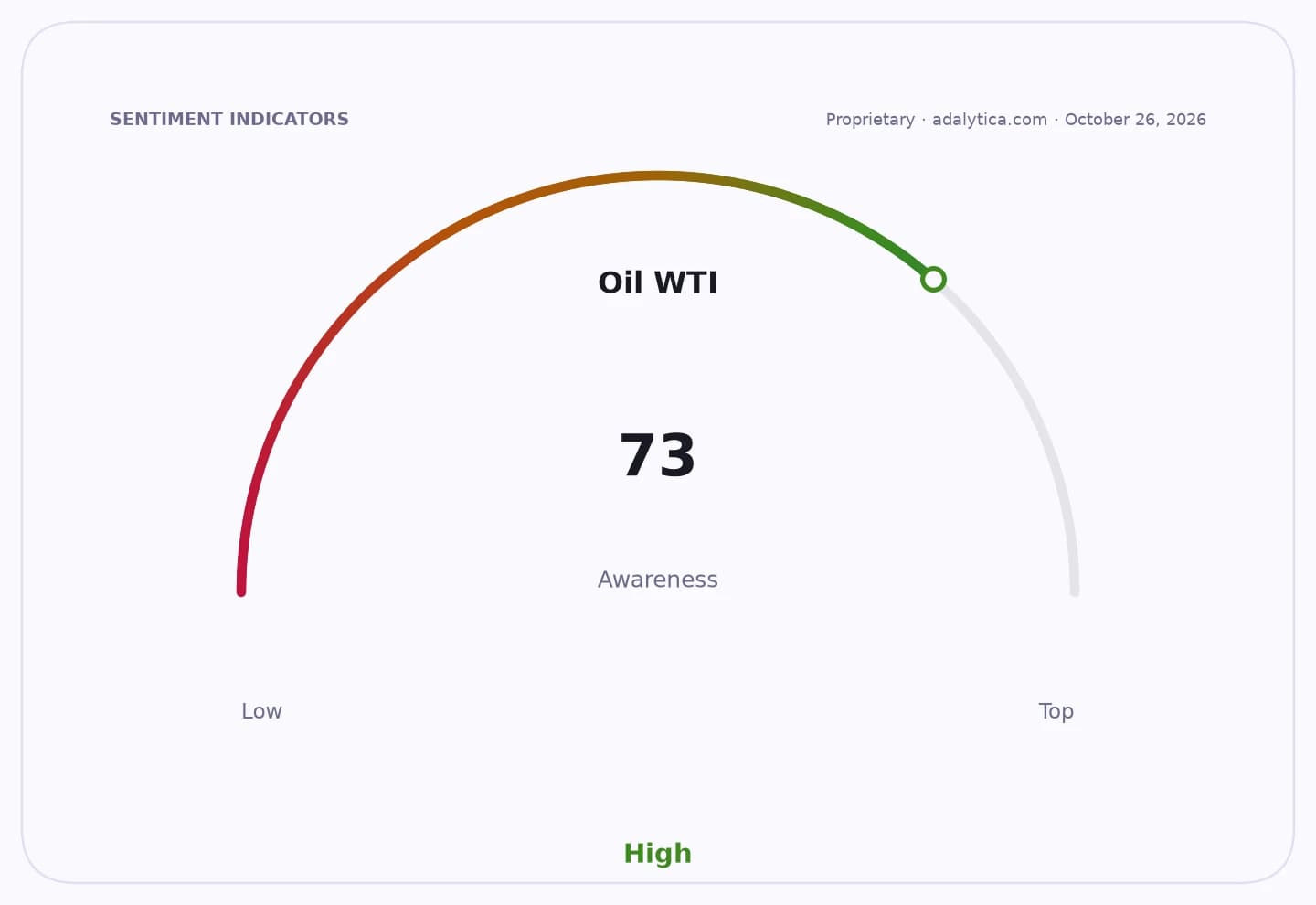
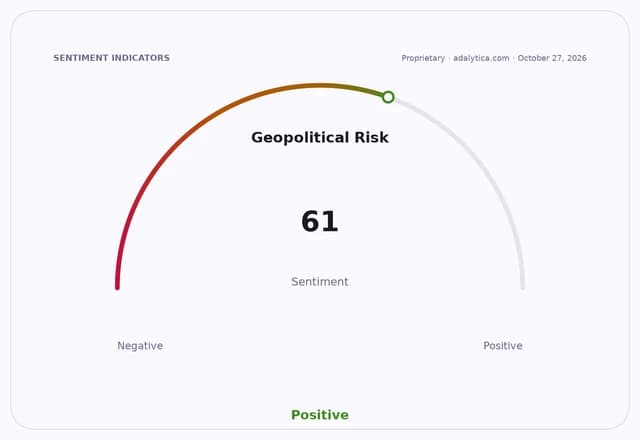
Sentiment IndicatorsⓘProprietary · adalytica.com · October 27, 2026
This is a snapshot — live sentiment, awareness and momentum for 130+ markets update continuously in the dashboard.Open AlphaPulse

This is why the peace narrative is more nuanced than a simple “risk-off” trade. A ceasefire framework would probably cool oil faster than it would cool weapons demand. Energy markets react immediately to the possibility of fewer disruptions, fewer sanctions shocks and less fear of escalation. Defense budgets, by contrast, move on procurement cycles, stockpile replenishment and multi-year contracts. That is a much slower grind, and it is exactly why the market often misprices the second-order winners.
The technical picture reinforces that split. USO has surged far above its 50-day moving average of 147.26 and its 200-day average of 122.08, with RSI readings still elevated at 81.5, suggesting the oil trade is stretched and vulnerable to a headline-driven pullback if negotiations gain traction. XLE is also extended, trading at 69.64 versus a 50-day average of 64.31 and a 200-day average of 57.70. By contrast, ITA has lagged, at 207.16 versus a 50-day average of 217.59 and a 200-day average of 229.12, leaving room for investors to buy defense exposure on weakness if peace talks stall or merely freeze rather than resolve the war.
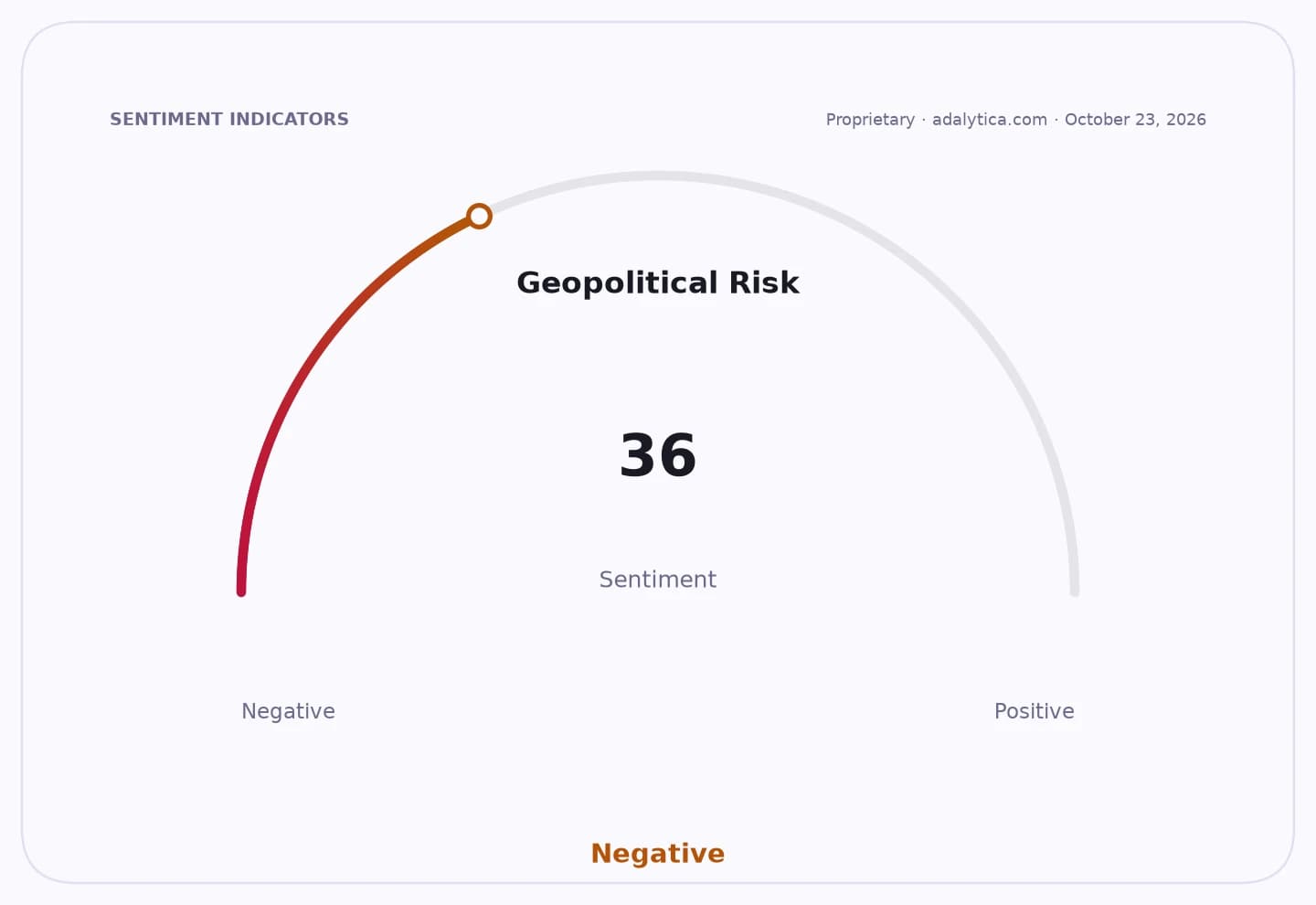
Geopolitical Risk vs USOadalytica.com
Explore this data interactively — full history, time series and cross-market comparisons.Open AlphaPulse
The economic logic is straightforward. A freeze along current lines would not instantly restore Russian energy flows or normalize trade, but it could soften the most acute supply-risk premium embedded in crude. That matters for inflation expectations, transport costs and central-bank calculus. A less tense oil market would ease pressure on consumers and importers, while exporters and energy producers would lose some of the urgency that has driven the latest leg higher.
The global stability backdrop shows how fragile sentiment remains. Adalytica’s Global Stability Sentiment is still only neutral at 61, with awareness in fear territory at 18, underscoring that markets are primed for shock headlines rather than certainty. In oil, Adalytica’s trade signals are flashing extreme fear even as awareness is high, a combination that often precedes violent reversals when the geopolitical story changes.
My view is that the market is underestimating how asymmetric this setup is. If talks fail, oil stays bid and defense names keep a structural tailwind. If talks advance, energy gets hit first, but defense still benefits from years of replenishment and readiness spending. That makes the best relative expression less about chasing crude and more about owning defense and selectively fading the most crowded energy winners.
For now, the trade is clear: keep exposure to aerospace and defense, avoid overpaying for oil strength, and watch the diplomacy closely. A freeze in the battle lines would be a meaningful macro catalyst, but it would reshape sector leadership more than it would end the investment case for security spending.
| Entity | Gains | Losses |
|---|---|---|
| Defense contractors | ▲Multi-year replenishment demand | ▼None immediately |
| USO / crude bulls | ▲Escalation headlines | ▼Peace-talk progress |
| XLE / energy producers | ▲Higher near-term oil prices | ▼Geopolitical risk premium erosion |
| Ukraine peace advocates | ▲Negotiating opening | ▼Hardline war position |