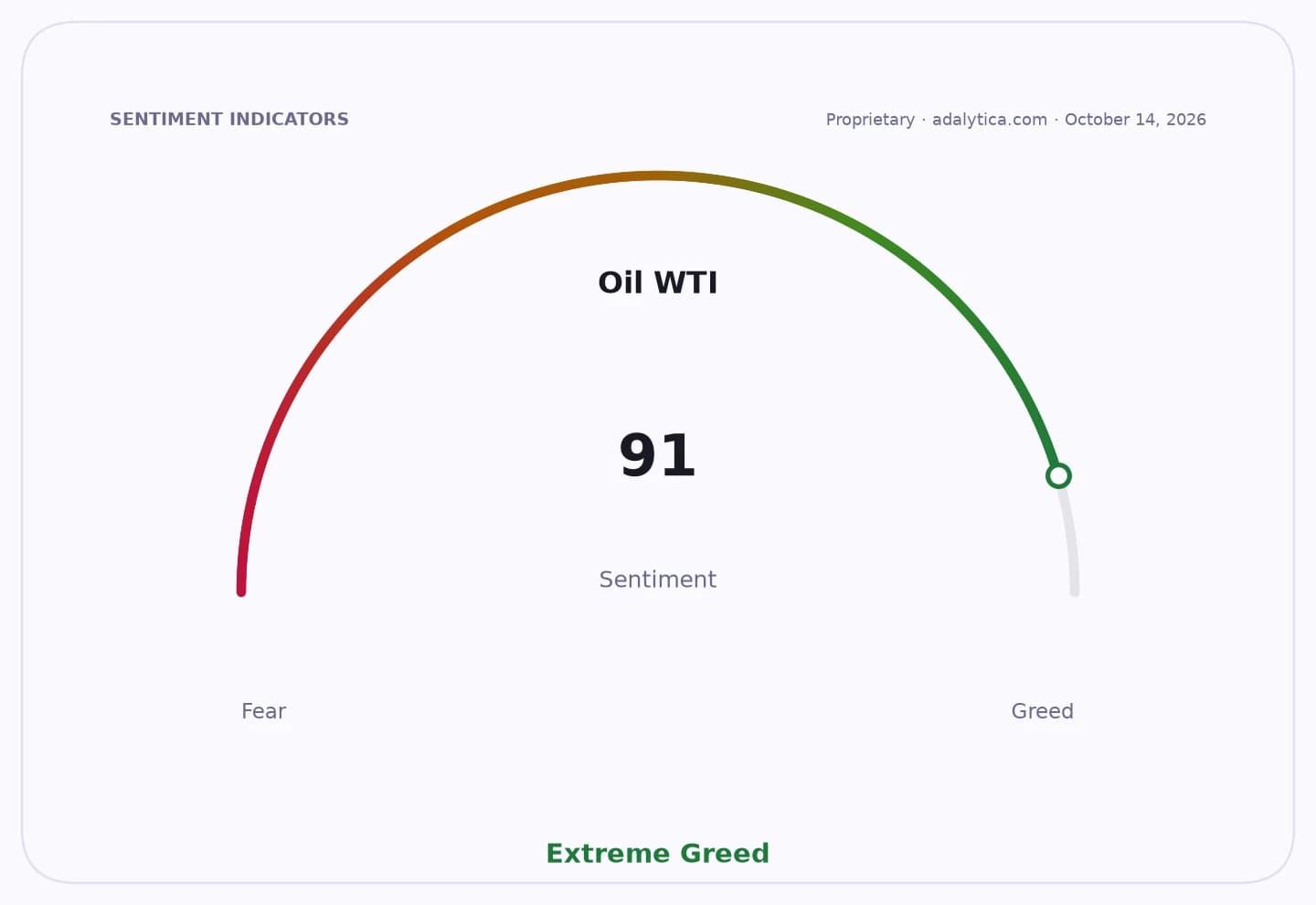
Oil prices are climbing because traders are being forced to price in a bigger and more immediate risk of supply disruption, and that matters for everything from inflation to energy stocks.
Oil Prices Rise on Middle East Supply Risks
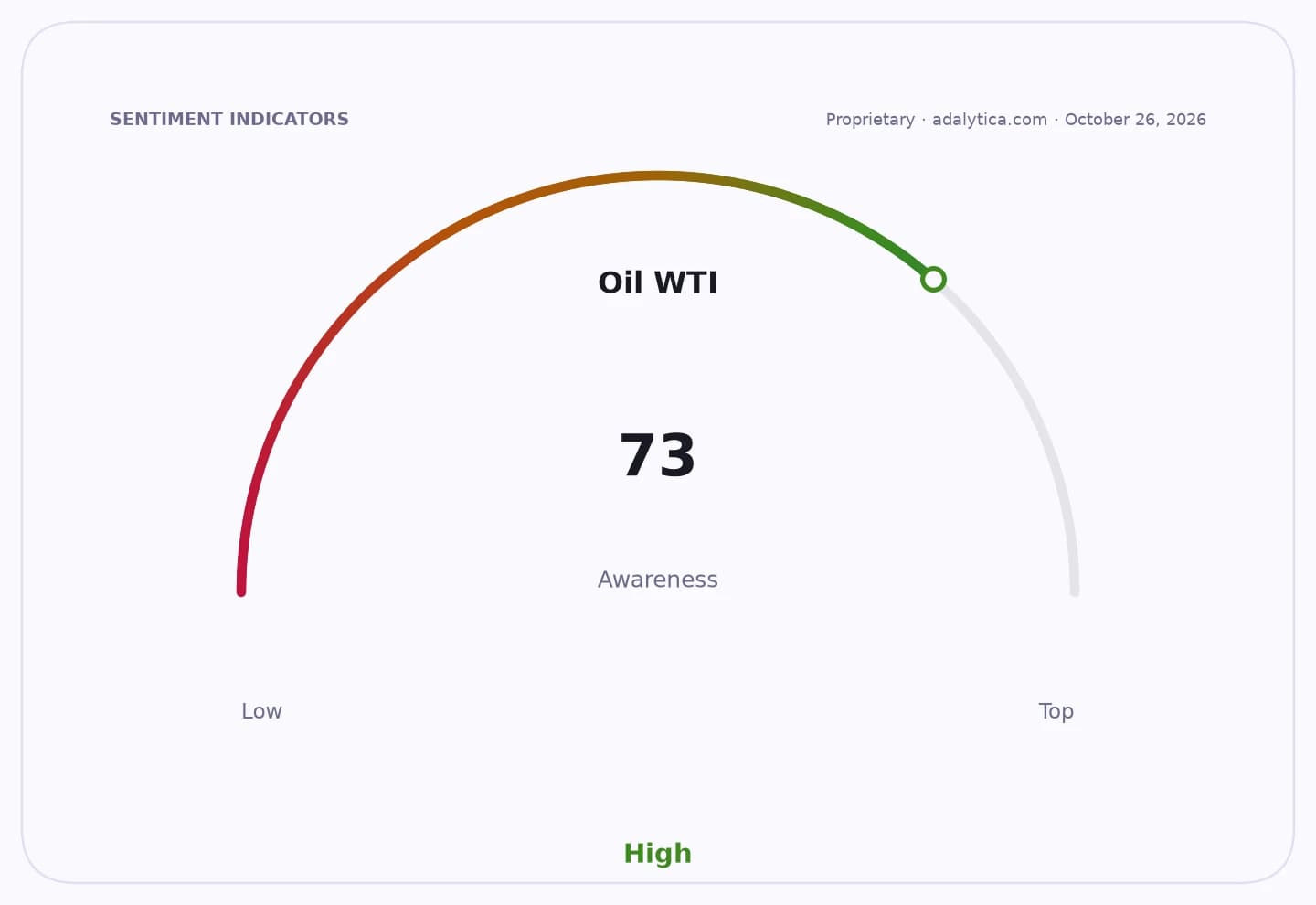
Brent crude rose 1.3% to $110.25 a barrel, while West Texas Intermediate traded at $99.03, after renewed attacks on tankers and energy infrastructure in the Middle East and fresh uncertainty over U.S.-Iran diplomacy pushed benchmark prices higher again. The move lifted crude more than 10% for the month, returning Brent close to a five-month high and underscoring how quickly geopolitical risk can overwhelm short-term optimism about diplomacy.
Sentiment IndicatorsⓘProprietary · adalytica.com · October 26, 2026
This is a snapshot — live sentiment, awareness and momentum for 130+ markets update continuously in the dashboard.Open AlphaPulse
That is the key economic story here: oil is behaving less like a normal commodity and more like a stress asset. When shipping lanes and export infrastructure come under pressure, the market does not wait for barrels to disappear before it reprices them. It charges consumers, airlines, refiners and industrial users upfront for the possibility that they might.
The latest catalyst was the denial that a U.S.-Iran deal was near, which removed one of the few forces calming the market. Traders had been leaning on hopes that mediation through Qatar or Pakistan could ease tensions, but those expectations look increasingly premature. At the same time, attacks on tankers in and around the Gulf and Oman Sea have added a fresh layer of uncertainty, with Kpler saying at least 18 vessel attacks were recorded in the past two weeks. That kind of maritime disruption matters because the Strait of Hormuz remains one of the world’s most important energy chokepoints.
For investors, the implications are straightforward. Higher crude prices are good news for producers, oilfield service companies and integrated majors with strong upstream exposure. They are bad news for refiners, transport companies, chemicals manufacturers and any business with thin margins and heavy fuel exposure. Energy ETFs have already reflected that shift, and the sector has been one of the clearer beneficiaries of the spike. But the bigger question for long-term investors is not whether oil can rally another few dollars; it is whether geopolitical volatility is becoming a durable feature of the market rather than a temporary shock.
That is what makes this move so important. Even with roughly 80% of Middle East oil flows back near prewar levels, the market is still nervous enough to push prices to levels that could ripple through inflation expectations and central bank policy. A sustained move above $100 crude would strengthen cash generation for energy companies, but it would also raise costs across the broader economy and keep pressure on consumers already facing elevated prices.
For buy-and-hold investors, the lesson is not to chase the next headline. It is to remember that energy remains one of the market’s most cyclical and geopolitically sensitive sectors. If you own producers, the rally improves near-term earnings power. If you own airlines, shippers or other fuel-intensive businesses, the same move is a margin headwind. Either way, oil’s climb above $110 is worth watching closely, especially if supply threats stay elevated into the coming weeks.
| Entity | Gains | Losses |
|---|---|---|
| Oil producers | ▲Higher realized prices | ▼Volatility risk |
| Energy ETFs | ▲Sector outperformance | ▼Sharp reversals |
| Airlines and shippers | ▲None | ▼Higher fuel costs |
| Consumers and importers | ▲None | ▼Inflation pressure |