Iran’s fraught relationship with the Taliban is once again feeding directly into energy markets, keeping a geopolitical risk premium embedded in oil even as diplomats press for regional de-escalation.
Oil Prices Rise on Iran-Taliban Tensions
The immediate market implication is higher oil prices and firmer shares in producers such as Exxon Mobil and Occidental Petroleum, a sign that investors are still paying up for supply disruption risk in the Middle East and nearby transit routes. Brent-linked crude benchmarks have remained elevated, while US oil has been trading well above its long-run average, reflecting how quickly traders reprice barrels when security conditions in the region deteriorate.
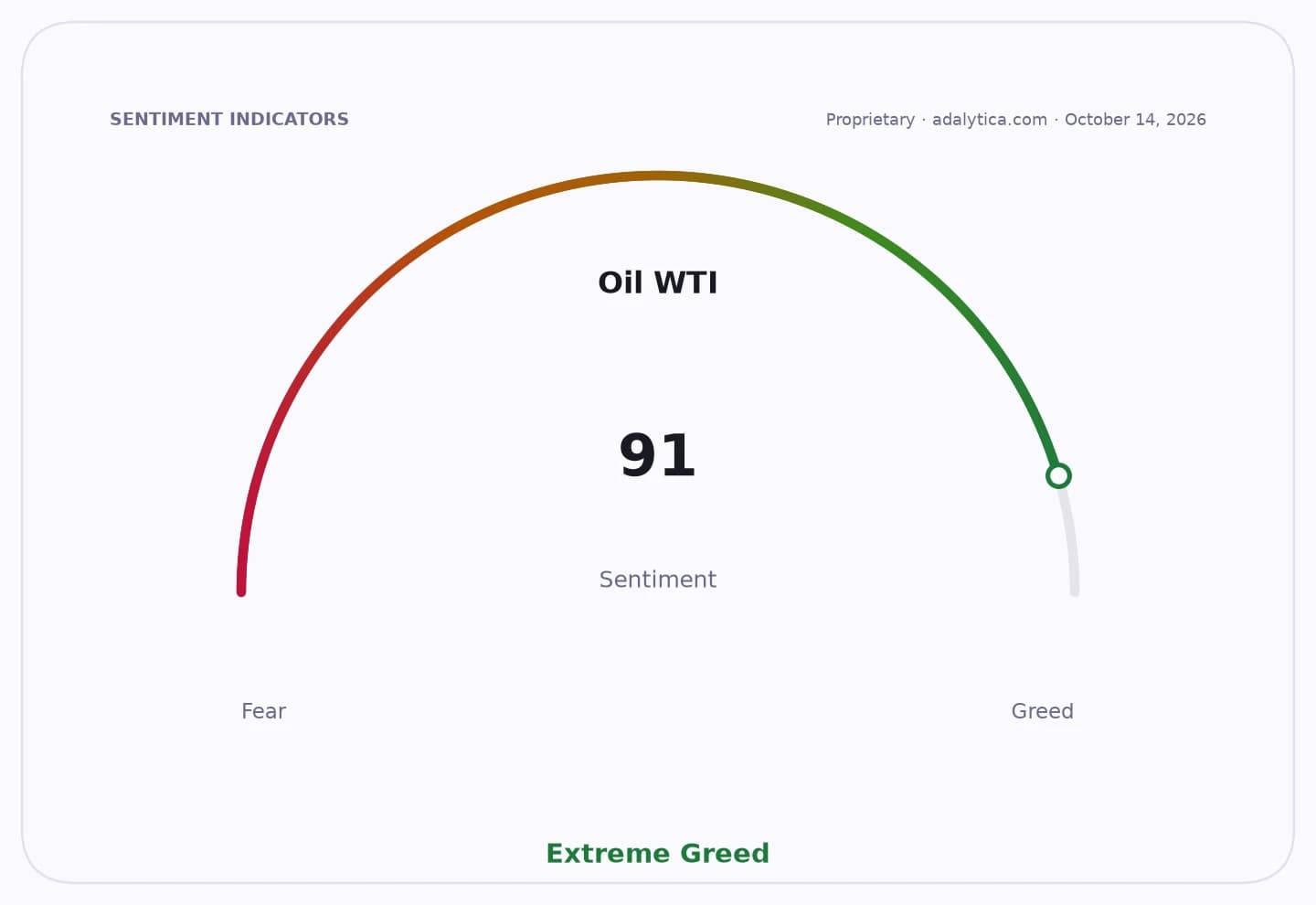
Sentiment IndicatorsⓘProprietary · adalytica.com · October 14, 2026
This is a snapshot — live sentiment, awareness and momentum for 130+ markets update continuously in the dashboard.Open AlphaPulse
The tension matters economically because the Iran-Taliban relationship is no longer just a border-security issue. It sits at the intersection of migration, sectarian violence, trade routes and energy flows across one of the world’s most sensitive regions. An Iranian newspaper’s accusation that the Taliban are waging a “silent war” against Shiites, alongside reports of armed attacks in Balochistan in southeastern Iran, underscores how local unrest can spill into broader perceptions of instability. At the same time, the Taliban’s report that it arrested more than 80 people trying to travel illegally to Iran points to sustained pressure on the frontier and the fragility of cross-border movement.
That fragility has commercial consequences. Iran and Afghanistan have been discussing expanding energy and trade cooperation, but the security backdrop raises questions about how durable any thaw can be. Investors in crude and energy equities are effectively betting that the region will remain vulnerable to intermittent disruptions, even if no single event escalates into a full-blown supply shock. Occidental and Exxon Mobil have both benefited as crude prices held firm; Occidental closed at $61.41 and Exxon at $177.01 on Oct. 14, while USO, the oil ETF, finished at $153.56. The technical picture also reflects persistent strength, with USO still trading above its 50-day and 200-day moving averages.
Geopolitical Risk — 30-day sentimentadalytica.com
Explore this data interactively — full history, time series and cross-market comparisons.Open AlphaPulse
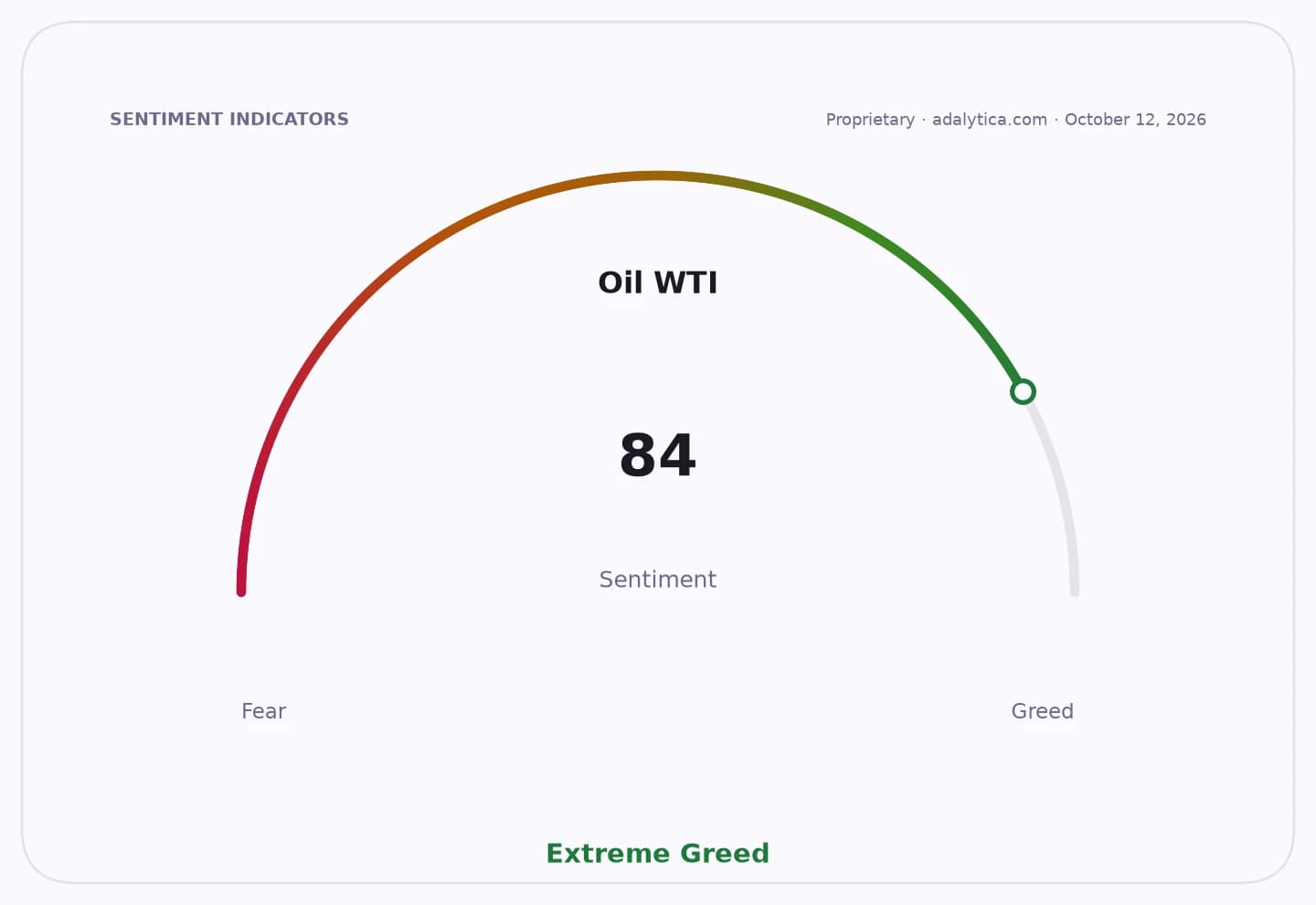
The broader macro backdrop amplifies the effect. Higher oil prices feed inflation expectations, complicate policy decisions for central banks and pressure importers through a larger energy bill. That helps explain why energy remains one of the clearest beneficiaries of Middle East volatility, while refiners, airlines, chemical producers and oil-consuming economies face higher costs. Adalytica’s oil trade signal sits at “Extreme Greed,” a reminder that positioning can become crowded when geopolitics and price momentum reinforce each other.
There is also a diplomatic angle. Pakistan and the United Nations are trying to position themselves as mediators in regional tensions, but the market will not wait for a political breakthrough before pricing risk. For investors, the key question is whether the Iran-Taliban standoff remains a contained border and sectarian problem or becomes another source of broader supply-chain and energy disruption. Until the security picture improves, the oil market is likely to keep treating the region as a live risk rather than a background condition.
| Entity | Gains | Losses |
|---|---|---|
| Oil producers | ▲Higher crude prices | ▼None in the near term |
| USO / oil bulls | ▲Momentum and risk premium | ▼Short crude positions |
| Iran and Afghanistan trade ties | ▲Potential energy dialogue | ▼Stability and execution risk |
| Oil importers | ▲None | ▼Higher fuel and input costs |