Donald Trump said the war with Iran could end “immediately” after the elections, a signal that the biggest near-term market risk in the Middle East may hinge as much on US politics and diplomacy as on battlefield developments.
Trump Iran war comments move oil outlook
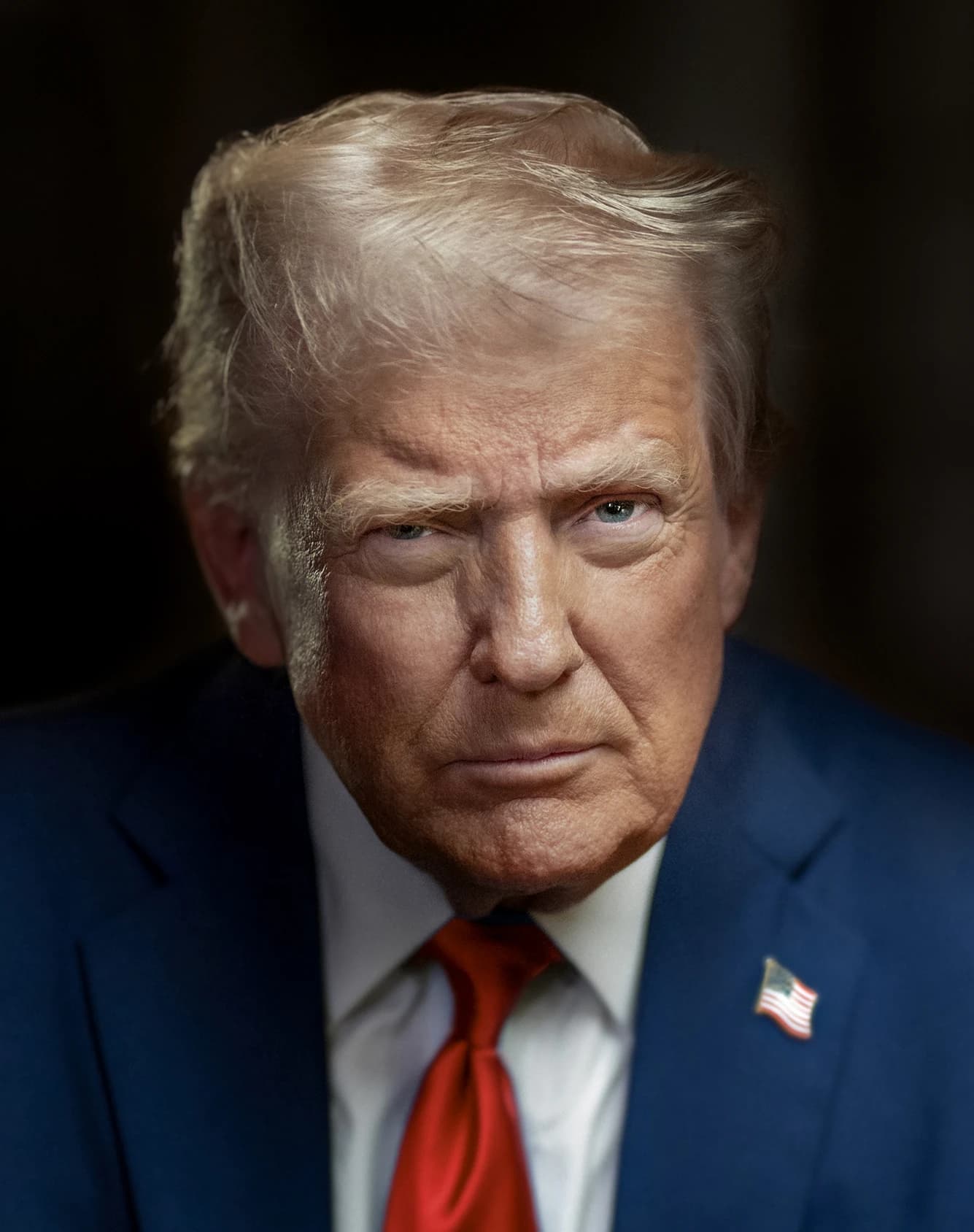
For investors, that matters because the conflict has become a direct driver of energy prices, inflation expectations and risk appetite. Trump linked an end to hostilities with a sharp drop in oil, arguing that crude would “plunge” once the war stops. That is a message with immediate implications for fuel-sensitive consumers, oil producers and the broader inflation outlook in the US and Europe.
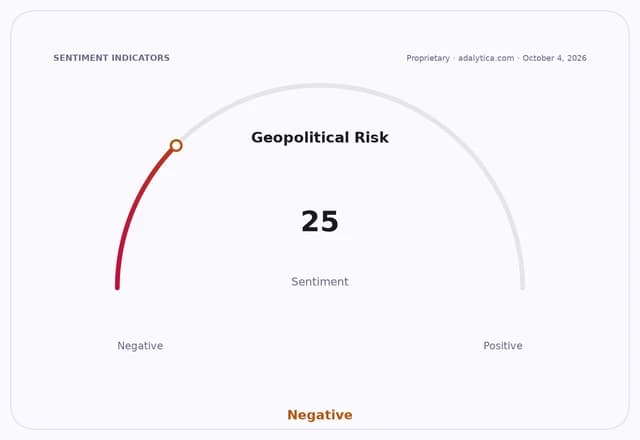
Sentiment IndicatorsⓘProprietary · adalytica.com · October 4, 2026
This is a snapshot — live sentiment, awareness and momentum for 130+ markets update continuously in the dashboard.Open AlphaPulse
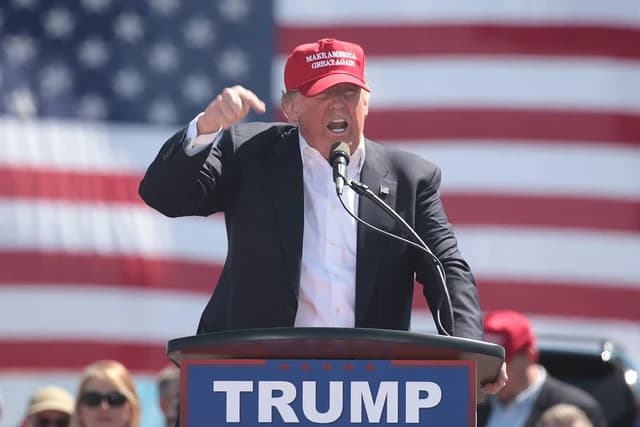
The comments come as the average US gasoline price stands at $4.39 a gallon, underscoring how the war has already fed through to households. US benchmark crude was last trading around $91 a barrel, after having swung violently in recent months, while the energy sector ETF XLE closed at $62.82, well above its 200-day moving average of $55.88 but below recent peaks. The US oil fund USO was at $147.37, with its RSI reading at 41.5, suggesting the market remains volatile but no longer in the most overbought phase seen during the sharpest spikes.
Trump’s remarks are economically significant because they tie an eventual de-escalation to the path of global supply. Iranian exports and Middle East transit routes remain central to the oil balance, and even the prospect of an end to fighting can quickly unwind a geopolitical premium embedded in crude prices. That premium has helped keep inflation sticky and complicated planning for refiners, airlines and chemical producers that depend on steady feedstock costs.
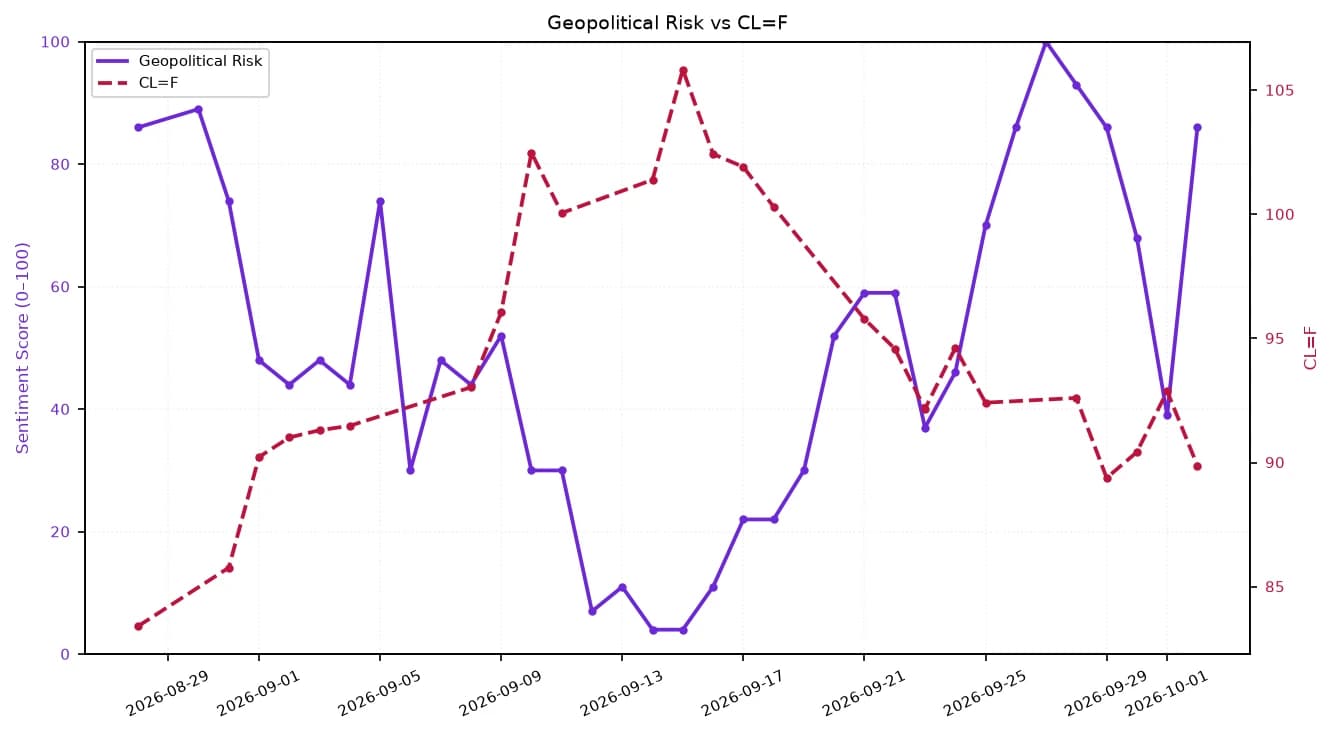
Geopolitical Risk vs USOadalytica.com
Explore this data interactively — full history, time series and cross-market comparisons.Open AlphaPulse
The political backdrop is equally important. Trump said the conflict could end soon and suggested Iran had “played its cards” too aggressively, while Axios reported that top US national security officials met for hours at Camp David to discuss next steps. The meeting, attended by Vice President JD Vance, Secretary of State Marco Rubio, Defense Secretary Pete Hegseth, CIA Director John Ratcliffe and Joint Chiefs Chairman Gen. Dan Caine, points to an administration weighing whether to resume major combat operations as negotiations stall.
That combination of rhetoric and policy planning leaves markets facing a binary setup. If the war eases, crude could slide and relieve pressure on inflation, Treasury yields and consumer spending. If talks fail and fighting escalates, oil could rebound sharply, sustaining support for producers but raising the risk of a broader hit to equities and growth-sensitive sectors.
The biggest beneficiaries of a quick settlement would be airlines, transport companies and consumers, while oil producers and service firms tied to high-price environments would lose some of the war premium that has buoyed their shares. For now, investors are likely to treat Trump’s comments as a reminder that the next major move in oil may come less from supply-demand fundamentals than from diplomacy, elections and the possibility of a sudden shift in the Iran conflict.
| Entity | Gains | Losses |
|---|---|---|
| Consumers | ▲Lower fuel bills | ▼Less relief if war drags on |
| Airlines/transport | ▲Cheaper jet fuel and diesel | ▼Margin pressure if crude stays high |
| Oil producers | ▲Higher revenues if conflict escalates | ▼Lower prices if war ends |
| US equities | ▲Easier inflation backdrop | ▼Risk-off selling if fighting widens |