Oil prices jumped nearly 4% on Wednesday after stalled US-Iran diplomacy kept the Strait of Hormuz risk premium firmly in place, overpowering an unexpected rise in US crude inventories.
Oil Prices Jump on US-Iran Diplomatic Stalemate
Brent settled up 3.86% at $103.08 a barrel and West Texas Intermediate rose 1.81% to $92.16, as traders focused on the lack of progress toward a deal to defuse the conflict and reopen the vital shipping lane. The move pushed Brent back above $100, underscoring how quickly supply fears return when talks show no breakthrough.
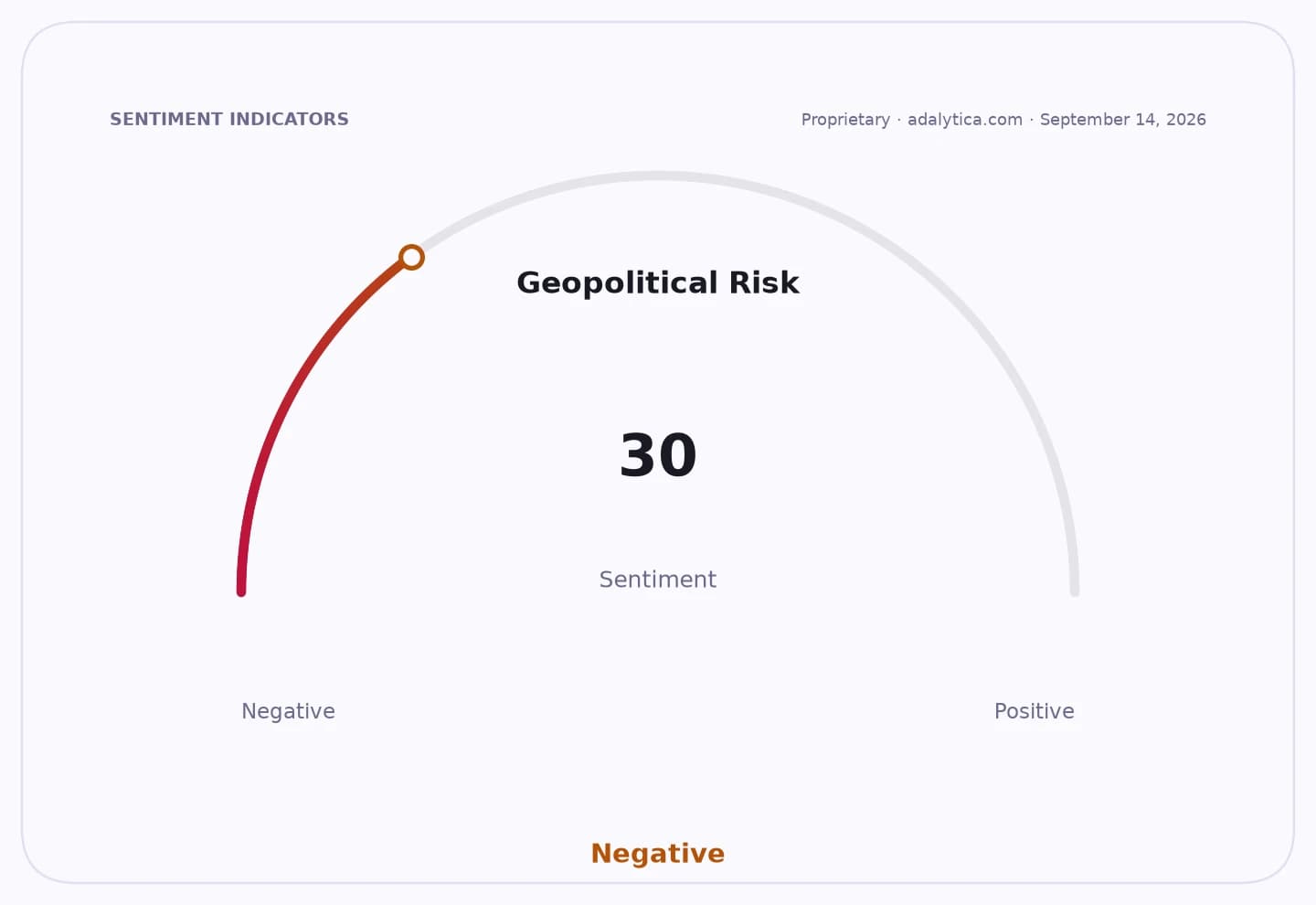
Sentiment IndicatorsⓘProprietary · adalytica.com · September 29, 2026
This is a snapshot — live sentiment, awareness and momentum for 130+ markets update continuously in the dashboard.Open AlphaPulse
The market’s reaction matters because Hormuz is one of the world’s most important oil chokepoints, and any prolonged stalemate threatens flows from the Gulf at a time when spare capacity is already under scrutiny. Even with some barrels moving through alternative routes, the premium tied to disruption remains large enough to outweigh inventory signals that would normally cap gains.
Weekly US Energy Information Administration data showed crude stocks rose by 3 million barrels to 426.4 million in the week ended Sept. 18, against expectations in a Reuters poll for a 641,000-barrel draw. Normally that would pressure prices, but the build was eclipsed by geopolitical risk and by volatility in diesel, where futures fell more than 5% after swinging on reports of a possible US export ban.
For investors, the message is that oil remains driven less by supply-demand fundamentals in the near term than by headline risk around Iran, Hormuz and any US policy move on refined products. Energy shares and crude-linked funds can keep trading with elevated volatility, while refiners face a more uncertain margin outlook as diesel markets react to policy rumors and shifting export expectations.
The broader backdrop is still supportive for a risk premium in energy, with Saudi and Iraqi supply developments only partially easing the squeeze and Treasury yields near 5% adding another layer of macro stress to markets. Traders now turn to the next round of US-Iran headlines, any confirmation on regional shipping flows and fresh government data for signs that the rally can extend or fade.
| Entity | Gains | Losses |
|---|---|---|
| Brent/WTI bulls | ▲Higher prices | ▼Near-term bearish inventory data |
| Oil producers | ▲Better revenue | ▼Demand-sensitive buyers |
| Refiners | ▲— | ▼Wider diesel volatility |
| Importers/consumers | ▲— | ▼Higher fuel costs |