Oil prices rose slightly on Tuesday as traders kept a geopolitical premium in place, even after recent weakness in crude-linked assets left the market technically overbought and vulnerable to a pullback.
Oil Prices Rise as Geopolitical Risk Premium Stays

Brent crude futures added 27 cents, or 0.3%, to $100.59 a barrel, while U.S. West Texas Intermediate gained 30 cents, or 0.3%, to $89.73. The move was modest, but it shows how closely the market is still pricing security risks in the Middle East rather than focusing only on near-term supply and demand fundamentals.
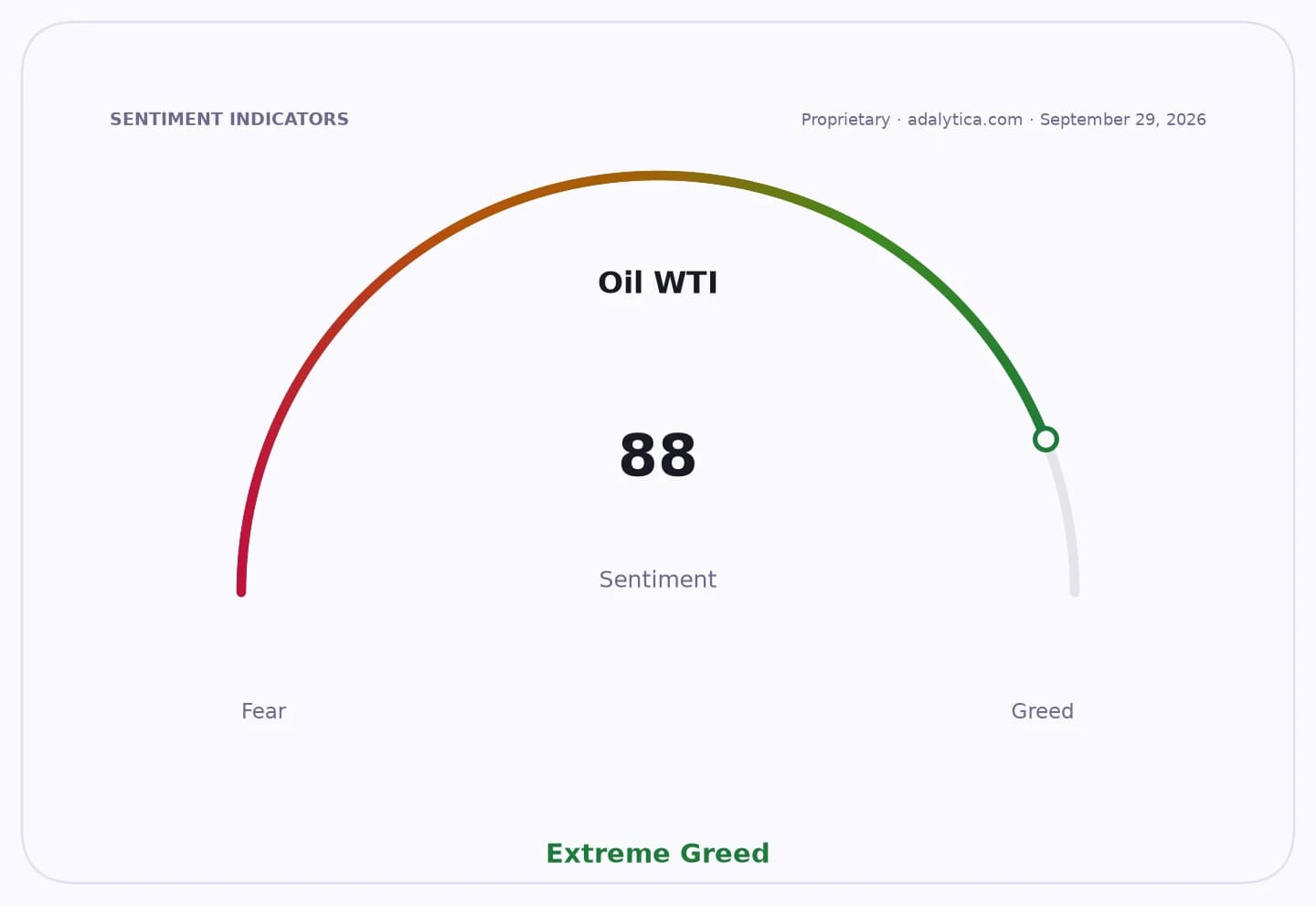
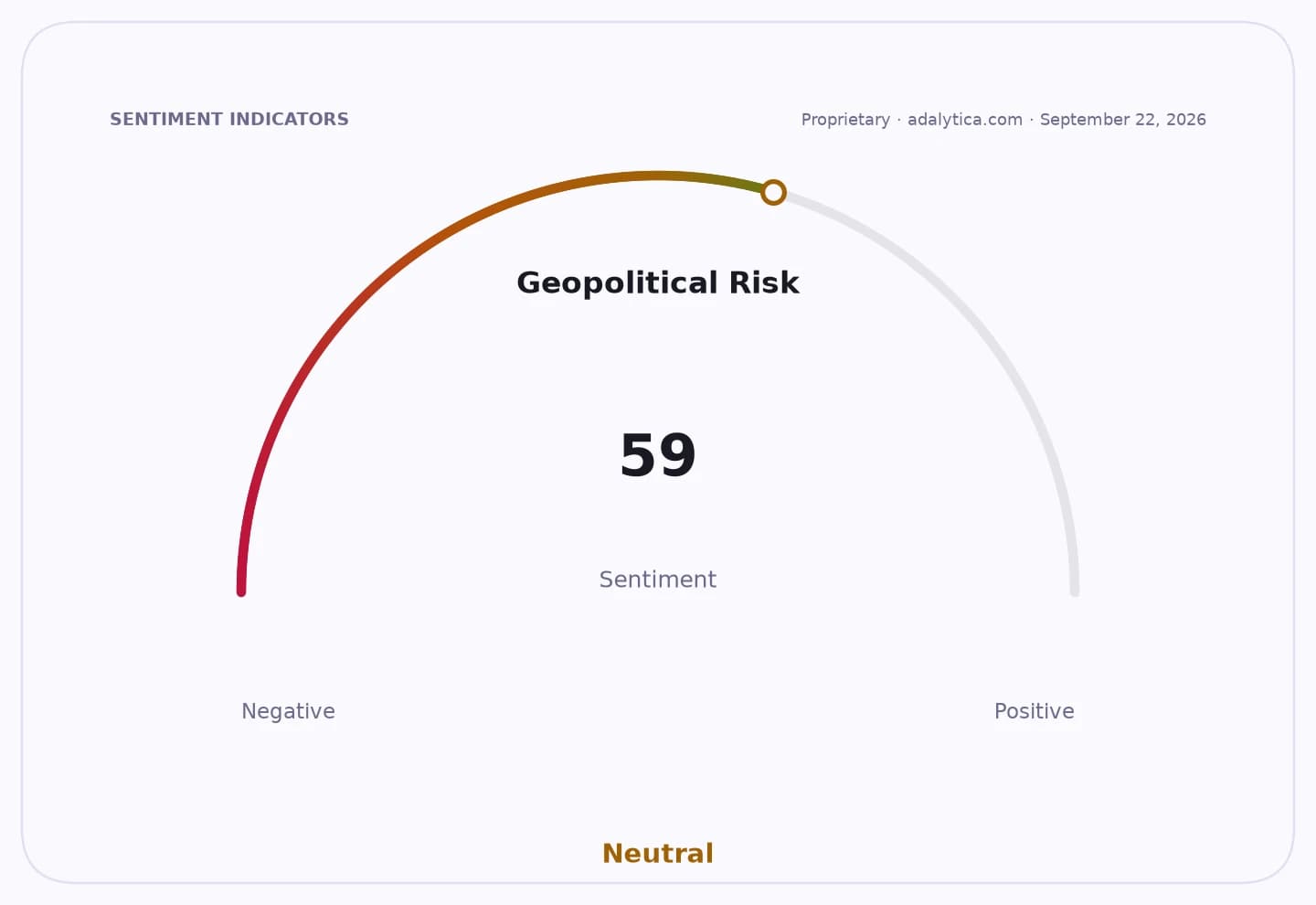
Sentiment IndicatorsⓘProprietary · adalytica.com · October 7, 2026
This is a snapshot — live sentiment, awareness and momentum for 130+ markets update continuously in the dashboard.Open AlphaPulse
The key economic issue is not the size of Tuesday’s gain, but the persistence of a risk premium at a time when oil is already elevated. Higher crude prices feed directly into transportation, petrochemical and power costs, and if sustained they can tighten financial conditions by raising inflation expectations. That matters for central banks, which are trying to judge whether sticky energy costs will complicate disinflation just as growth is cooling in parts of the global economy.
For investors, the market is balancing two competing forces. On one side is the possibility that regional tensions could disrupt flows through major shipping lanes or production hubs, lifting prices further and supporting energy equities, tanker rates and hedges against inflation. On the other is the risk that the premium fades quickly if no disruption occurs, leaving long crude positions exposed to a sharp reversal. Adalytica’s WTI trade signals show sentiment in “Fear” territory at 26, while its global stability gauge points to “Extreme Fear,” underscoring how fragile market confidence remains around geopolitical headlines.
Technical indicators also suggest the recent move has been choppy rather than decisive. USO, the United States Oil Fund, closed at 144.91 on Oct. 6, above its 50-day moving average of 137.92 and its 200-day average of 115.95, but the relative strength index had eased to 38.2 from an overbought reading above 90 in mid-September. That combination implies the broader uptrend remains intact, yet near-term momentum has weakened enough to leave the market sensitive to fresh news.
The broader narrative is that oil is being driven less by a clean fundamental shortage than by a persistent geopolitical overlay. That makes the market more volatile and harder to price: bulls see room for another leg higher if security risks intensify, while bears argue that absent actual supply losses, the premium is likely to erode.
For now, traders are treating the Middle East as a live variable rather than a background concern, and that alone is enough to keep crude supported even on days when the gains are only a few cents.
| Entity | Gains | Losses |
|---|---|---|
| Crude bulls | ▲Higher prices, risk premium | ▼Cheap-entry opportunities |
| Oil producers | ▲Better realized prices | ▼Demand-sensitive buyers |
| Refiners and consumers | ▲— | ▼Higher input and fuel costs |
| Inflation hedges | ▲Renewed bid | ▼Disinflation trades |