Brent crude eased toward $102 a barrel on Thursday after a nearly 4% jump in the previous session as traders scaled back some of the war premium tied to the Strait of Hormuz, even as shipping risks and U.S.-Iran tensions kept the market on edge.
Brent crude eases toward $102 after war premium
The retreat matters because crude is still trading at levels that feed directly into inflation, transport costs and central-bank policy, but the pullback shows how quickly the market will trim risk pricing when supply through the Gulf appears less disrupted than feared. West Texas Intermediate was holding near $91.5 a barrel, underscoring that geopolitical headlines continue to drive the benchmark rather than a clean shift in physical fundamentals.
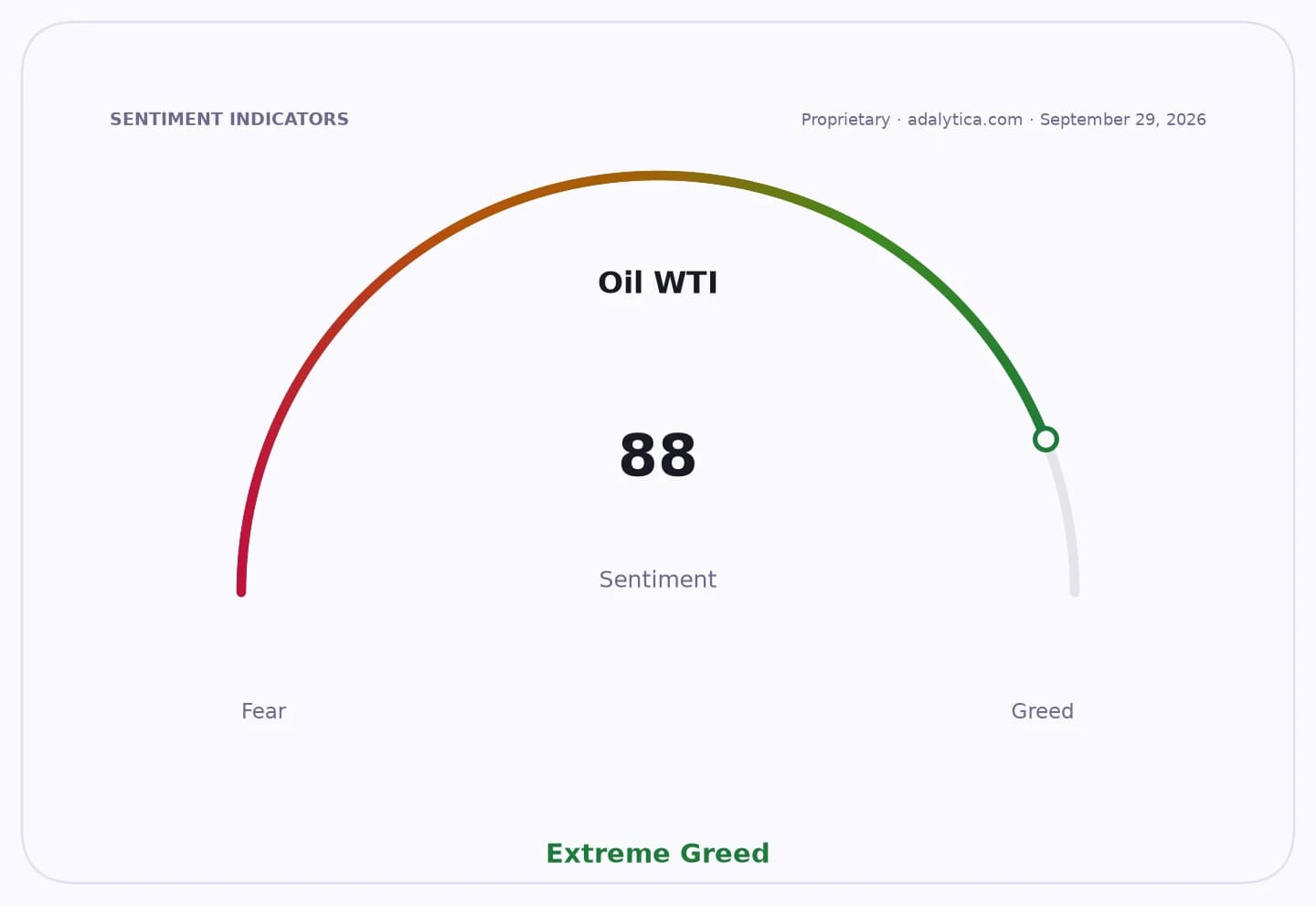
Sentiment IndicatorsⓘProprietary · adalytica.com · September 29, 2026
This is a snapshot — live sentiment, awareness and momentum for 130+ markets update continuously in the dashboard.Open AlphaPulse
U.S. Treasury Secretary Scott Bessent said at times as much as 17 million barrels a day move through the Strait of Hormuz, though Clarksons Research earlier this month estimated flows closer to 8 million barrels a day. The wide gap reflects how uncertain the market remains about the true exposure to any escalation around the narrow waterway, which handles a significant share of seaborne crude exports from the Gulf.
Attention is also on Saudi Arabia’s East-West pipeline, a critical back-up route that ships oil to the Red Sea and helps reduce reliance on Hormuz. Traders are waiting for more detail on how quickly exports can resume after damage from earlier attacks, a reminder that spare infrastructure in the region is now part of the pricing of crude itself.
The broader backdrop is one of persistent supply anxiety. Oil has climbed sharply this year as the U.S.-Iran conflict and the Russia-Ukraine war have constrained flows and damaged energy infrastructure, pushing up gasoline and diesel prices and adding to inflation pressure worldwide.
That has spilled into refined products, where diesel has risen faster than crude and U.S. retail diesel prices have hit records, according to the Greek source material. The jump has prompted U.S. lawmakers to weigh export limits on petroleum products, while President Donald Trump has said he asked advisers to examine a ban on exports.
Markets are also watching Trump’s meeting with Chinese President Xi Jinping, with Iran expected to be on the agenda. China remains a major buyer of Iranian crude, so any diplomatic opening between Washington and Beijing could feed into the wider debate over sanctions enforcement, Gulf security and the path of oil flows out of the region.
Geopolitical risk is still immediate. The UK Maritime Trade Operations agency said a commercial vessel was struck by a projectile in the area, leaving it adrift and ablaze, a fresh signal that the Strait of Hormuz is far from normalized despite the day’s price retreat.
For investors, the message is that crude remains range-bound but highly headline-sensitive: the downside is limited by supply fear, while the upside comes fast whenever attacks, sanctions or diplomatic breakdowns threaten Gulf exports. The next catalyst is likely to come from any update on Saudi pipeline repairs, U.S.-China talks or fresh incidents in the Strait.
| Entity | Gains | Losses |
|---|---|---|
| Oil producers | ▲Higher realized prices | ▼Demand destruction risk |
| Gulf exporters | ▲Premium on supply security | ▼Shipping disruption risk |
| Refiners and fuel users | ▲Some relief from pullbacks | ▼High input costs |
| Consumers and central banks | ▲Lower inflation pressure | ▼Persistent energy volatility |