Brent crude is pressing toward $117 a barrel and European natural gas is back at levels last seen in 2022, underscoring how quickly the Middle East conflict is bleeding into global energy markets and threatening to keep inflationary pressure alive into winter.
Brent crude nears $117 as Europe gas jumps
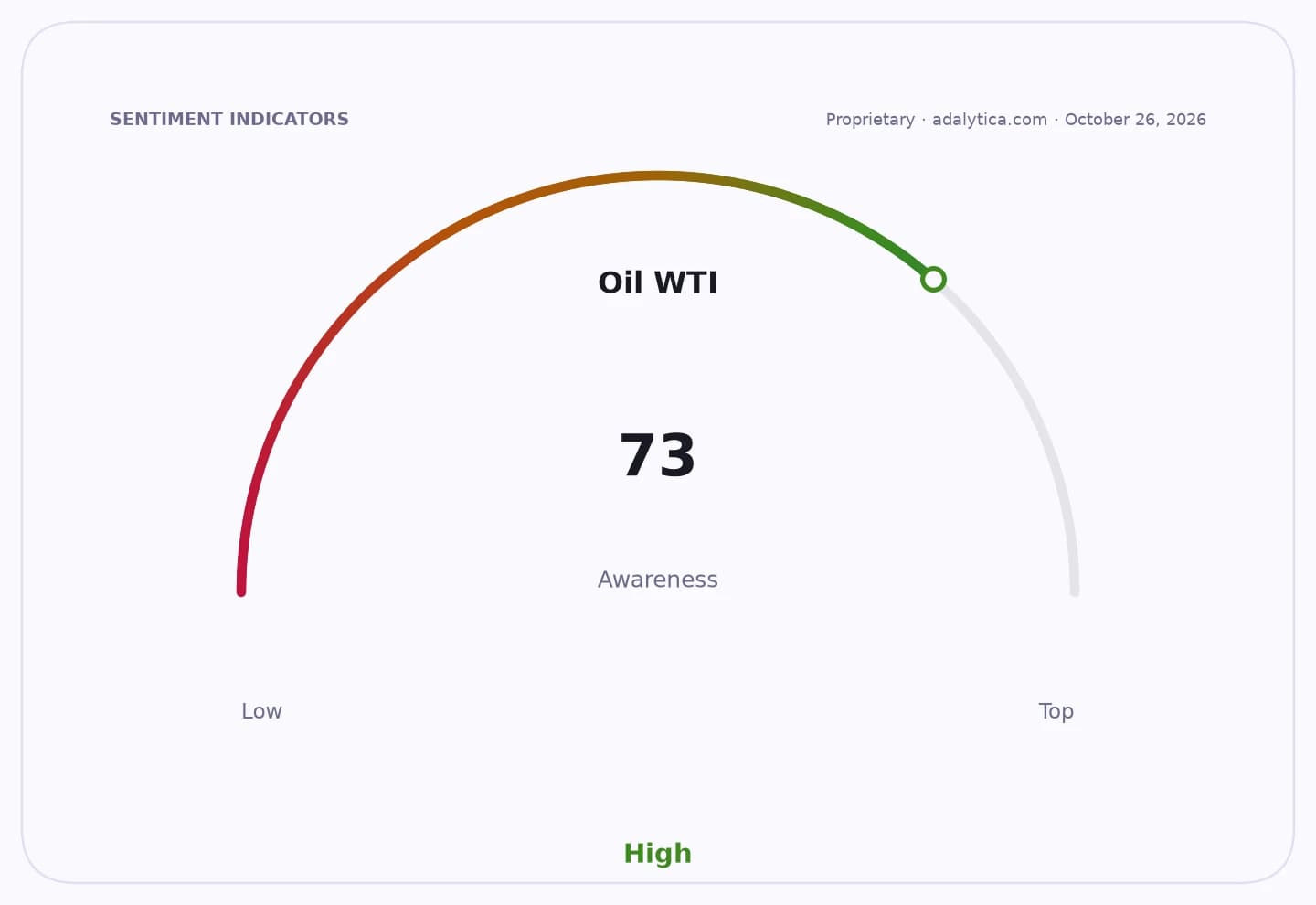
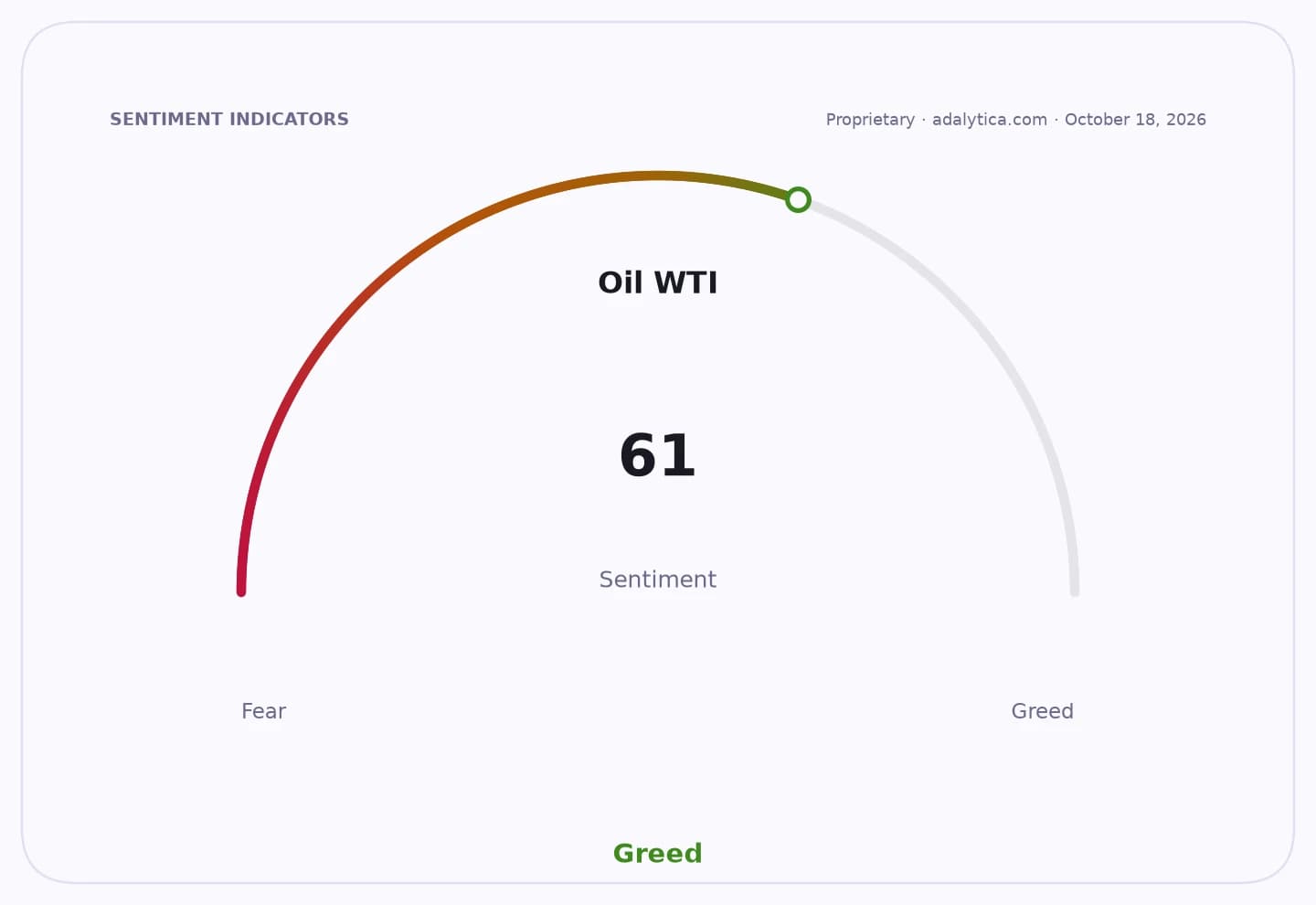
Oil WTI
The move matters because it is not just a one-day spike. Brent settled Friday at $116.72, up 3.14% on the session and about 6.2% for the week, after touching $117.45 intraday, while Europe’s TTF benchmark climbed 4.23% to 93.85 euros per megawatt hour, a roughly 7.2% weekly gain. Reuters has reported that European gas has now reached the highest levels since late 2022, a reminder that a market that had started to normalize is once again being driven by geopolitics rather than fundamentals alone.
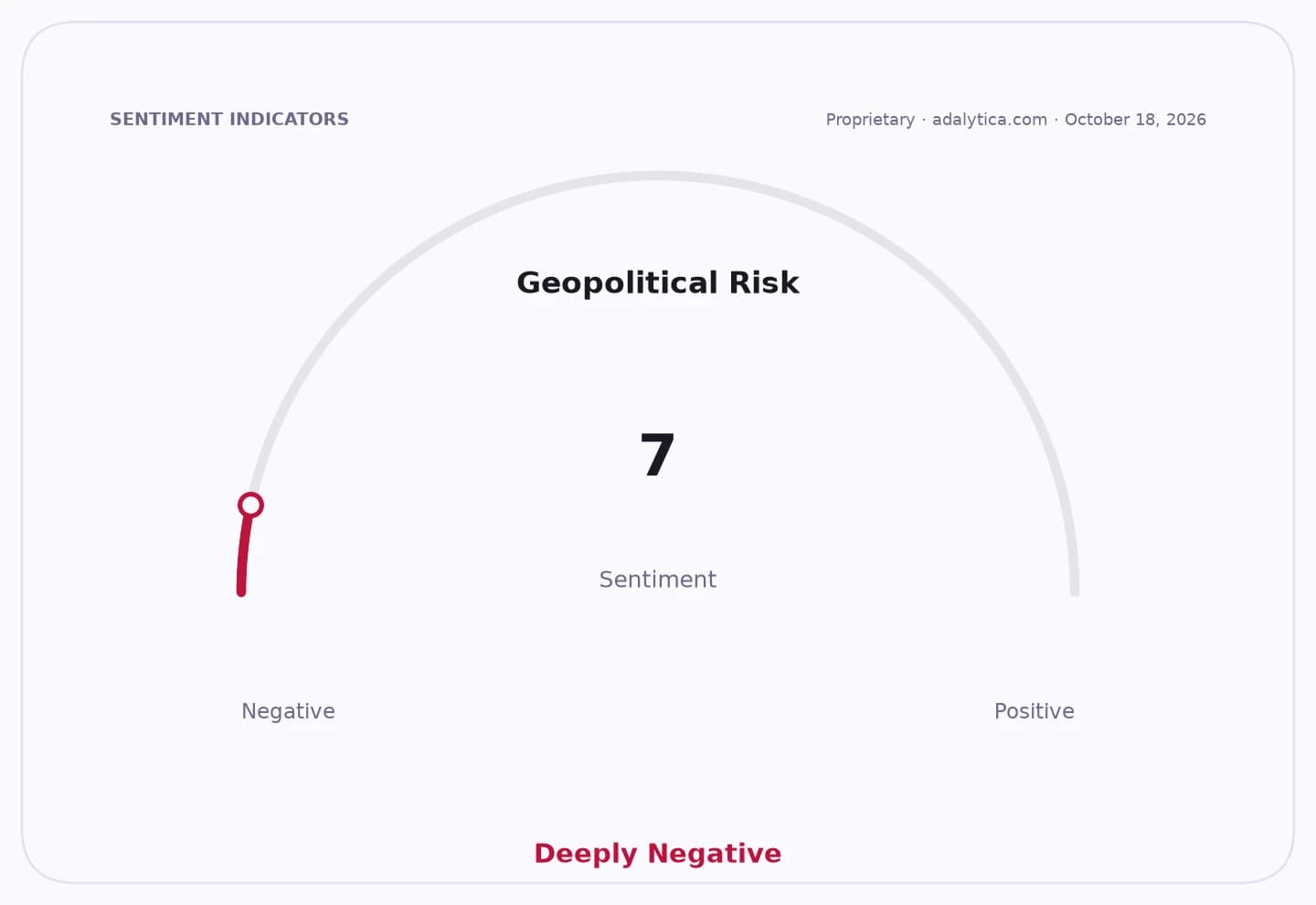
Sentiment Indicators
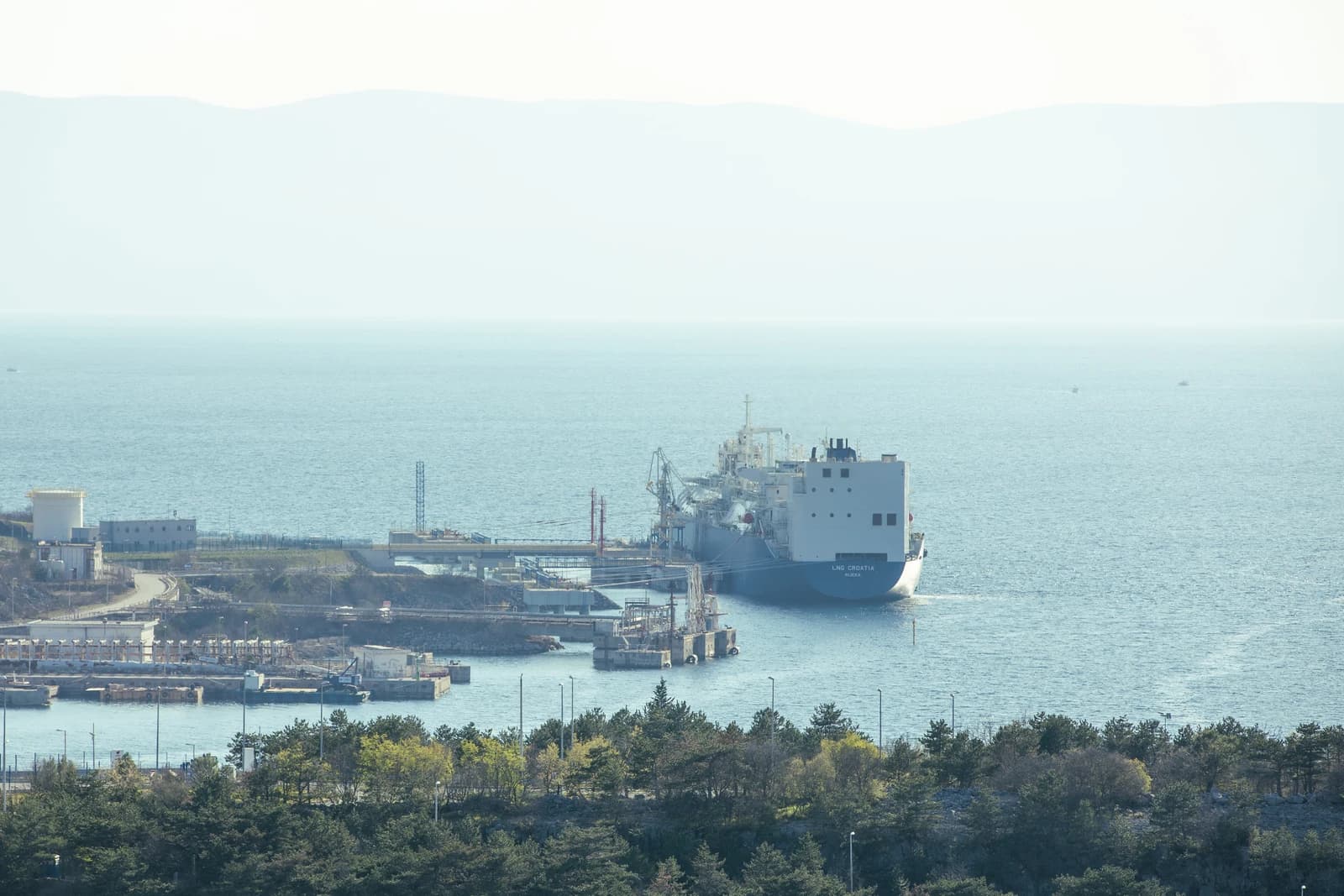
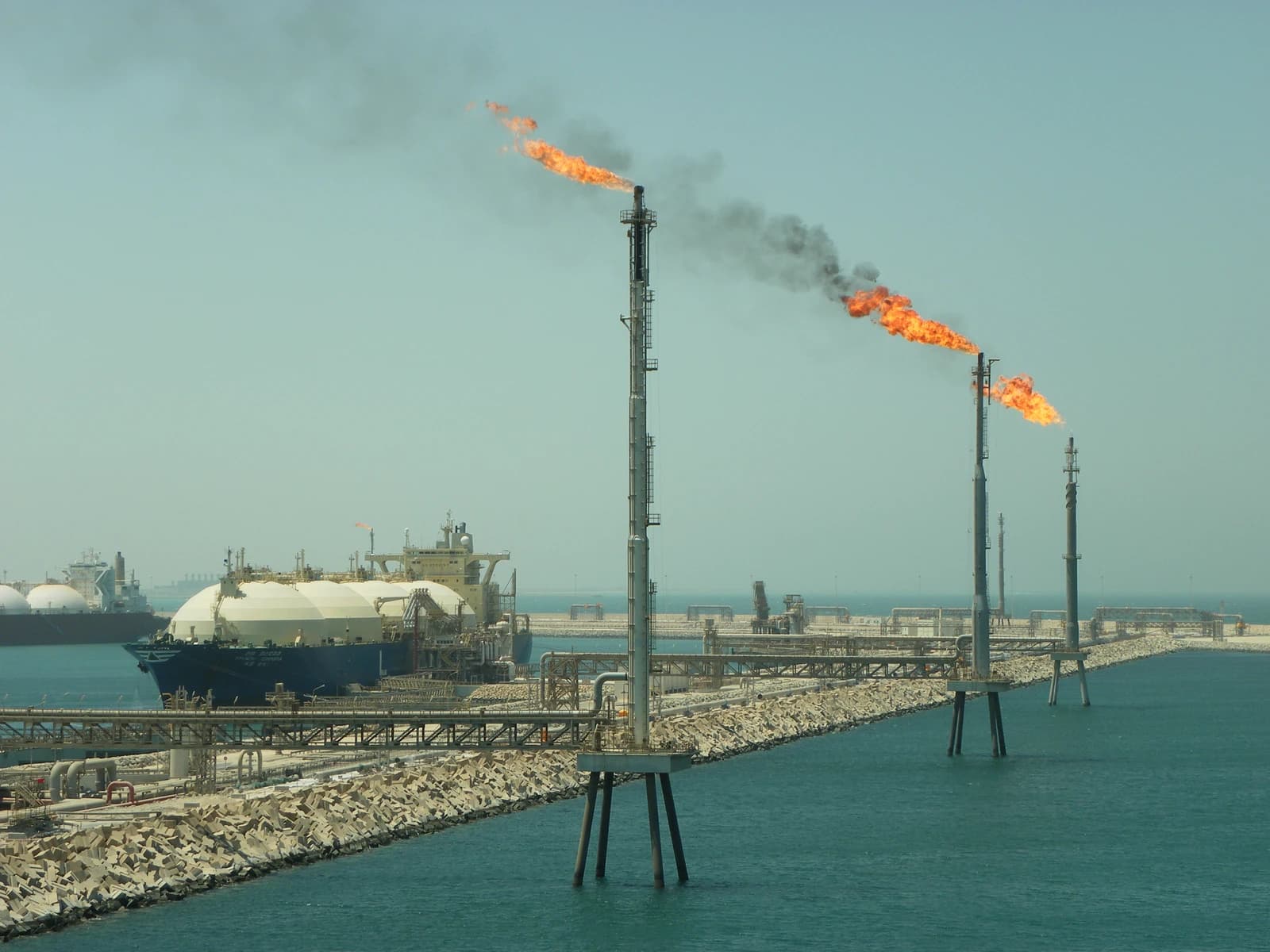
The immediate catalyst is the escalation in the Middle East, where attacks by Houthi rebels on targets in Saudi Arabia have sharpened concern over oil infrastructure and broader shipping lanes. The same conflict is also disrupting liquefied natural gas flows, including from Qatar, one of the world’s key suppliers. For oil traders, the risk is that supply disruption could widen quickly if the conflict spreads further or if key transport routes become less secure. For gas traders, the issue is less about one field or one pipeline and more about the market’s ability to pull in cargoes from around the world at a time when winter demand is about to rise.
That seasonal factor is amplifying the rally. European storage is below typical levels for this point in the year, and competition with Asia for available LNG cargoes is keeping prices elevated. In dollar terms, the gas move is significant because it feeds directly into power costs, industrial input prices and household bills across the region. The Romanian-language report also noted that the TTF price would translate to roughly 985–993 euros per 1,000 cubic meters, depending on the conversion used — a level that makes the economic pain more tangible for utilities, manufacturers and consumers alike.
The market reaction is already visible in energy-linked equities. U.S. oil ETF BNO closed at $71.39 on Oct. 30 after a run that has lifted it well above its 50-day and 200-day moving averages, while XLE ended at $70.02, near the top of its recent range. By contrast, the U.S. natural gas fund UNG closed at $9.08, below both its 50-day and 200-day moving averages, reflecting a weaker domestic gas backdrop even as Europe’s benchmark surges. In technical terms, BNO’s RSI readings around 81 and XLE’s near 68 suggest the rally is extended, but not yet broken. Investors are therefore being asked to weigh momentum against the risk of a sharp reversal if geopolitical fears ease.
The macro consequences are broader. Higher oil and gas prices tend to work their way into transport, heating, fertilizers and electricity, adding to inflation just as central banks are trying to judge how sticky price pressures will be. The U.S. 10-year Treasury yield around 5% shows that financial conditions remain tight, and high-yield credit spreads have widened modestly, indicating that investors are still paying attention to the chance that energy volatility could spill over into growth and corporate margins. European governments, meanwhile, are likely to face renewed pressure to cushion households and industry if prices stay elevated through the heating season.
For energy producers and service companies, the story is more constructive. Higher crude and gas prices improve cash flow and support capital spending for upstream producers, as reflected in recent filings from companies such as ConocoPhillips and Halliburton, which have linked results to commodity-price cycles and drilling activity. Refiners and import-dependent consumers, however, face a less favorable setup if feedstock costs rise faster than product prices. In Europe, that means pressure on utilities, chemical producers and energy-intensive manufacturers; in oil importers, it means a tougher inflation outlook and a bigger political bill.
The key risk now is whether this becomes a durable supply shock or another geopolitically driven surge that fades once market participants judge the threat to be contained. If Middle East tensions keep widening and winter demand accelerates, Brent could stay near or above the $117 mark and European gas could remain close to the 100-euro threshold. If not, the rally may ease — but for now, traders are pricing a world where the energy market is once again hostage to geopolitics.
| Entity | Gains | Losses |
|---|---|---|
| Oil producers | ▲Higher realized prices | ▼Margin pressure if volatility spikes |
| European utilities/importers | ▲— | ▼Higher fuel procurement costs |
| Households and industry in Europe | ▲— | ▼Rising heating and power bills |
| Energy traders | ▲Volatility-driven opportunities | ▼Risk of abrupt reversal |