China has publicly reaffirmed support for Iran’s sovereignty and security, deepening its diplomatic alignment with Tehran at a moment when the Middle East’s security risk is feeding directly into oil markets and broader investor nerves.
China Reaffirms Support for Iran as Oil Prices React
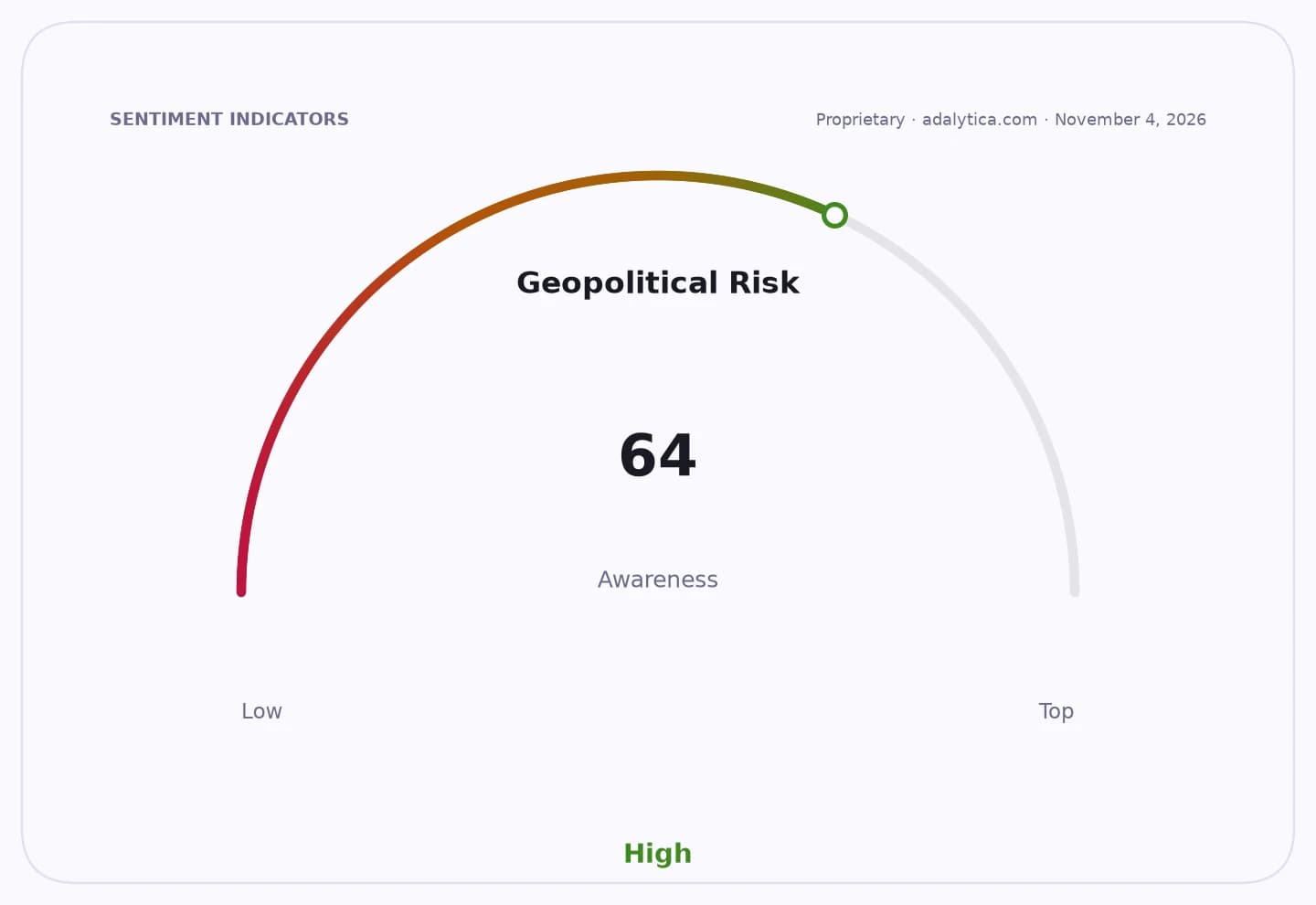
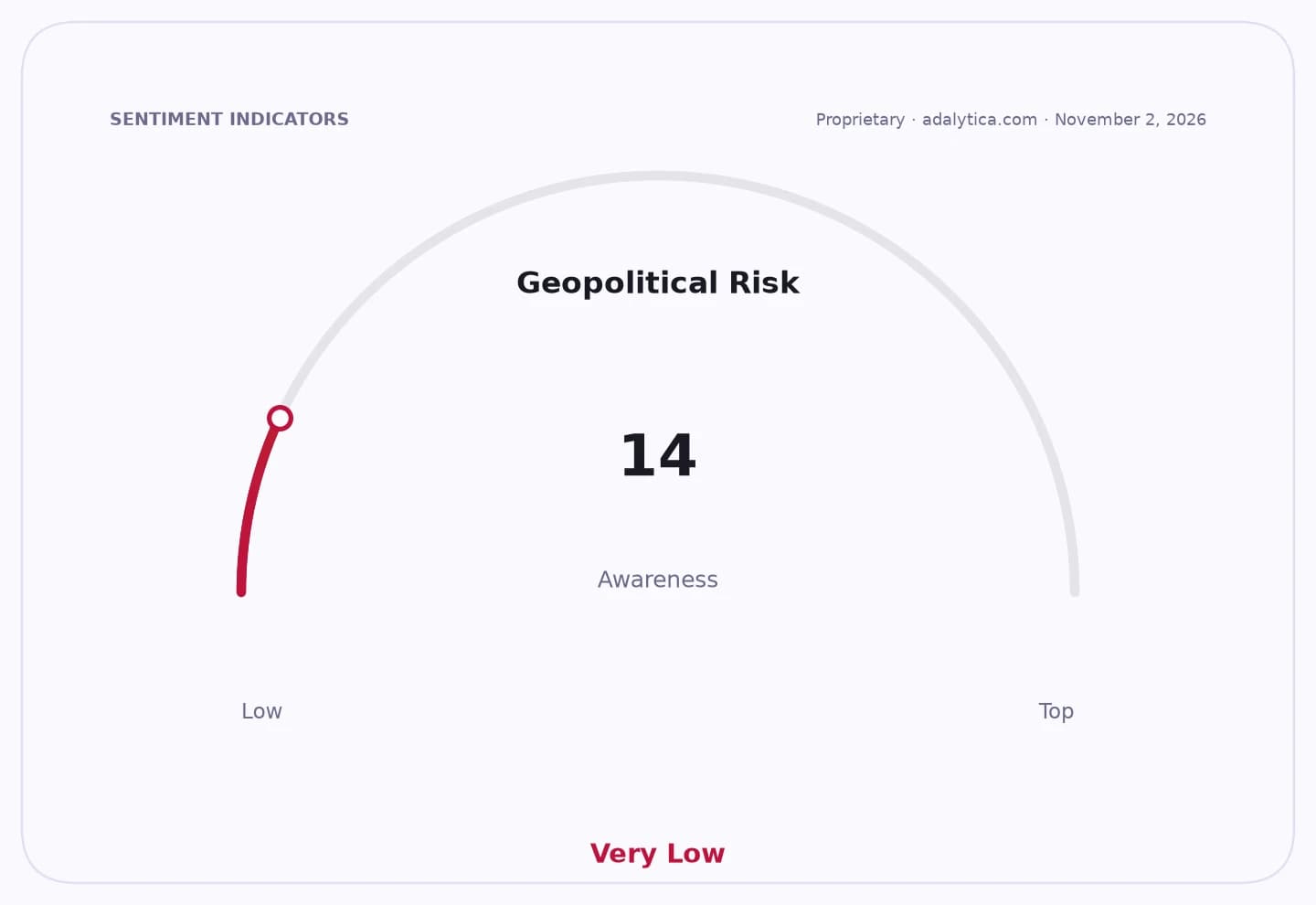
Geopolitical Risk
Foreign Minister Wang Yi told visiting Iranian official Ali Bagheri Kani in Beijing that China supports Iran in defending its national sovereignty and security and is ready to work with Tehran to develop bilateral ties further, according to the Chinese foreign ministry. Wang also said the fighting in the Middle East had gone on “too long” and warned of the risk of neighboring states being drawn into wider conflict, underscoring Beijing’s effort to position itself as a stabilizing force even as it backs one side politically.
Sentiment Indicators
The economic significance lies in energy. China’s message comes as investors continue to price the possibility that a widening regional conflict could threaten shipping lanes, supply chains and the flow of crude out of the Gulf. Brent and US oil benchmarks have already swung sharply on war-risk headlines this year, and the latest diplomatic moves matter because any perceived easing or escalation can feed almost immediately into prices, inflation expectations and central-bank policy assumptions.
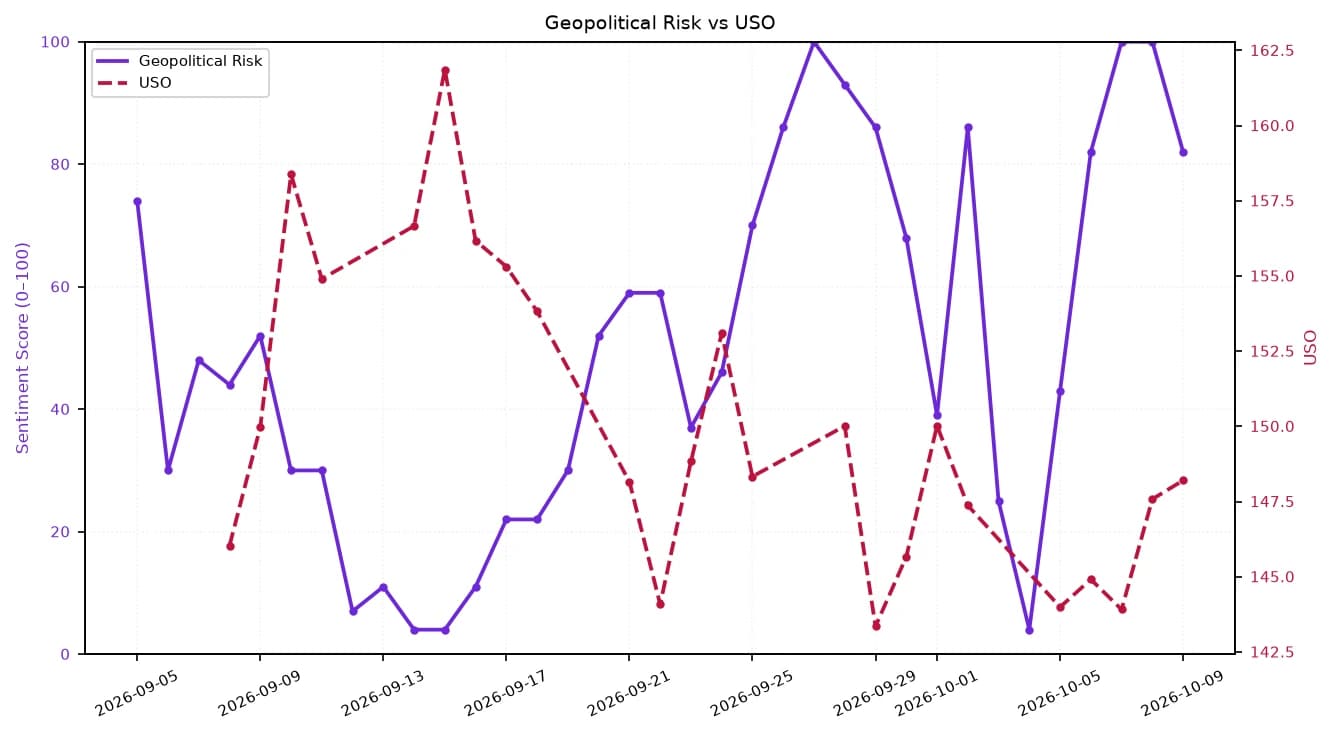
That transmission channel is already visible in market behavior. US oil fund USO rose to $157.96 on Nov. 3 after trading as high as $168.83 on Oct. 30, while the Energy Select Sector SPDR fund XLE has held near the high-60s after briefly touching $70.02 on Oct. 30. Gold has also remained elevated, with GLD trading at $359.83, showing that investors still see geopolitical insurance as worth paying for even after some pullback in crude. A separate geopolitical-risk gauge from Adalytica registered “Extreme Greed” at 100, reflecting how heavily markets remain focused on the chance of further escalation.
Geopolitical Risk vs USOadalytica.com
Explore this data interactively — full history, time series and cross-market comparisons.
For investors, China’s stance matters for three reasons. First, it reinforces the idea that the Iran dispute is not just a regional security issue but part of a broader geopolitical contest involving major powers. Second, it supports the view that Beijing will keep using diplomacy to safeguard energy security, rather than overtly aligning itself with military escalation that could destabilize trade. Third, it raises the odds that oil markets will continue to react to every sign of diplomatic progress or failure, keeping volatility high across energy equities, tanker rates and inflation-sensitive assets.
The bear case for energy bulls is that more active diplomacy from China, and potentially other regional intermediaries, could reduce the odds of a supply shock and cap crude’s upside. The bull case is that any China-Iran alignment, even if framed as support for sovereignty and dialogue, underscores how fragile the region remains and how quickly prices can jump if negotiations fail or if the Strait of Hormuz becomes a flashpoint.
That is why the story matters beyond diplomacy. China is trying to present itself as a broker of stability while preserving its strategic relationship with Iran. Investors, meanwhile, are left balancing two competing forces: the possibility that diplomacy cools the market, and the reality that the Middle East remains a live source of supply risk that can reprice oil, energy stocks and inflation in a matter of hours.
| Entity | Gains | Losses |
|---|---|---|
| China | ▲Diplomatic influence | ▼Perceived neutrality |
| Iran | ▲Political backing | ▼Isolation pressure |
| Oil producers | ▲Higher risk premiums | ▼Demand if peace calms prices |
| Consumers/importers | ▲Lower fuel costs if de-escalation holds | ▼Higher costs if conflict widens |