China is emerging as the biggest beneficiary of America’s exhaustion in a widening Iran conflict, because every surge in crude prices strengthens Beijing’s leverage while the United States absorbs the inflationary and strategic cost.
China, oil prices, and the Iran conflict
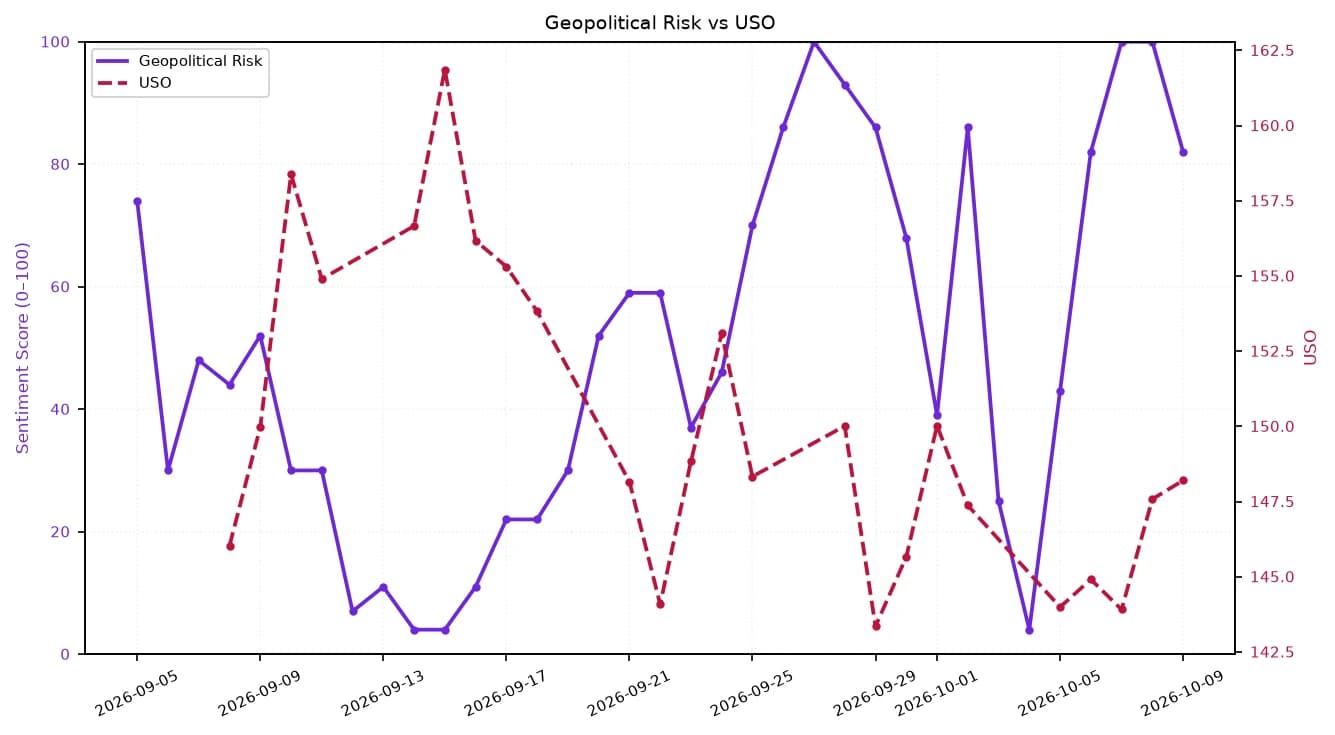
That is the market’s most important takeaway from the latest jump in oil and the renewed pressure on the dollar and emerging markets. Brent-linked shock risk is once again being priced into global assets, with U.S. crude holding near $148 a barrel, far above its 200-day moving average and after a violent run that has left oil ETF USO deep in overbought territory by conventional technical measures. The message is simple: the longer Washington stays bogged down in Middle East escalation, the more China benefits from the resulting strain on U.S. consumers, policymakers and allies.
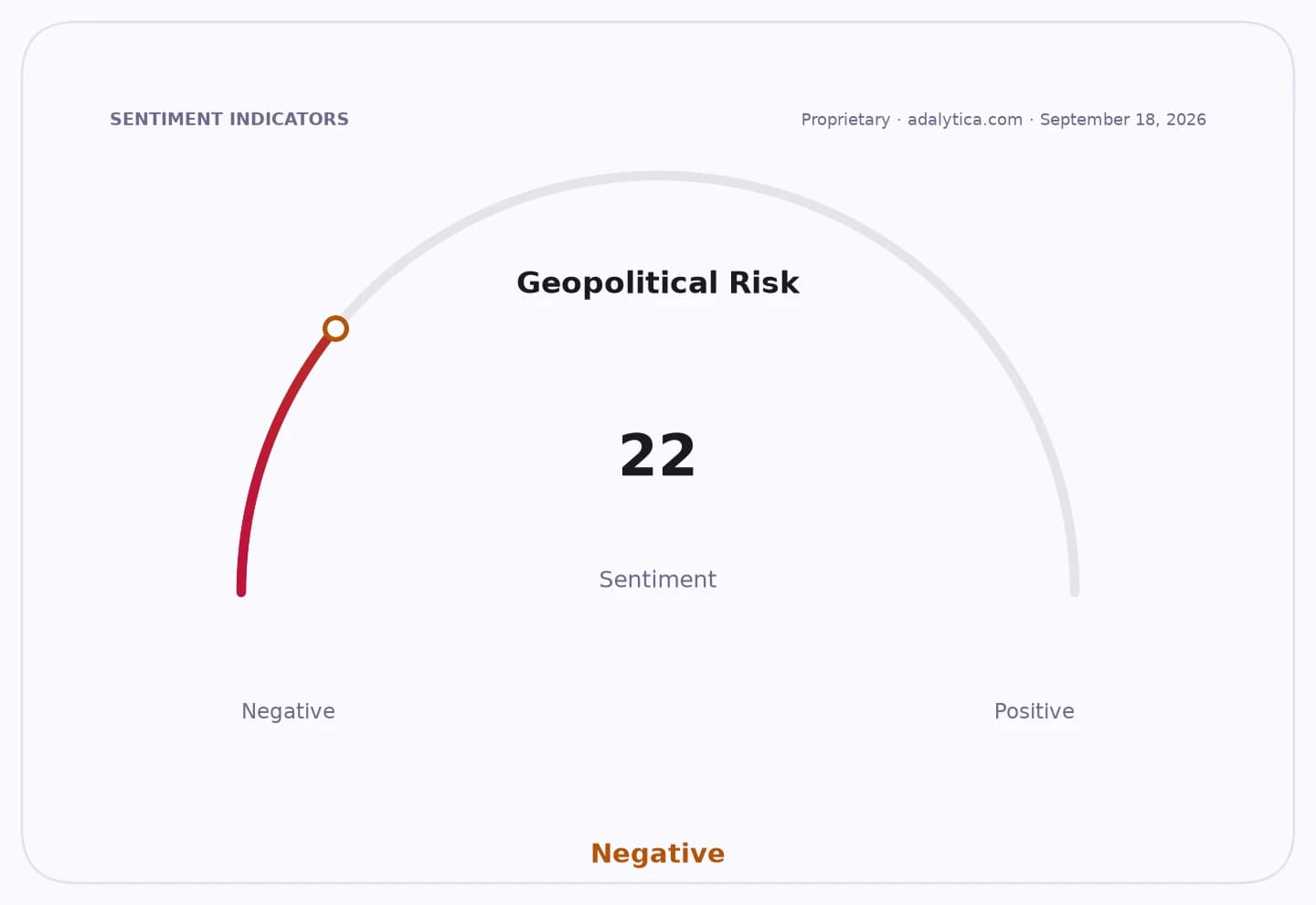
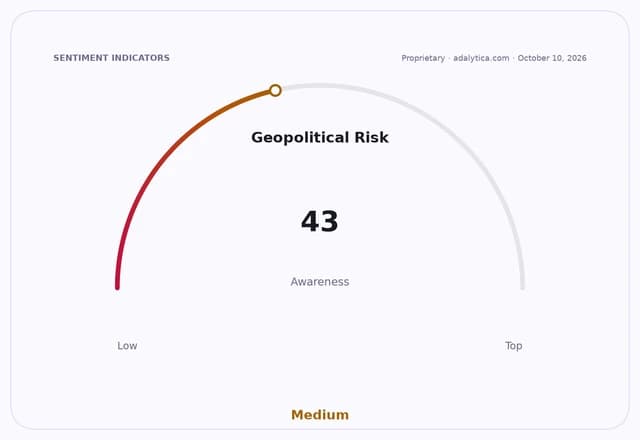
Sentiment IndicatorsⓘProprietary · adalytica.com · October 10, 2026
This is a snapshot — live sentiment, awareness and momentum for 130+ markets update continuously in the dashboard.Open AlphaPulse
This matters economically because expensive energy is a tax on the West and a tailwind for China’s industrial strategy. China remains the world’s largest oil importer, but it has more room than the U.S. to offset the shock through state-directed subsidies, strategic reserves, long-term supply deals and a manufacturing base that can outlast a cyclical spike in fuel costs. The U.S., by contrast, faces higher gasoline prices, stickier inflation and less room for the Federal Reserve to ease. Ten-year Treasury yields near 5.28% show investors are already demanding compensation for that inflation risk.
The cross-asset reaction confirms the shift in stress. The dollar has picked up trade-signal momentum, but emerging-market assets are still vulnerable to oil-driven risk aversion, and the FXI China ETF is trading below its 50-day and 200-day moving averages, a sign that investors are not yet pricing in the relative geopolitical advantage Beijing gains when Washington is distracted. China’s policy sentiment reading remains in extreme fear on Adalytica’s proprietary gauges, which tells you how under-owned and under-appreciated the country still is as a beneficiary of a fragmented world.
The narrative is not that China “wins” a war in any direct sense. It is that U.S. exhaustion creates a more multipolar energy market, where Beijing can buy discounted barrels, deepen ties with sanctioned producers, and present itself as the only major power with enough flexibility to talk to everyone while Washington burns political capital. That asymmetry matters because energy security drives industrial competitiveness, and industrial competitiveness drives capital flows over the next several years.
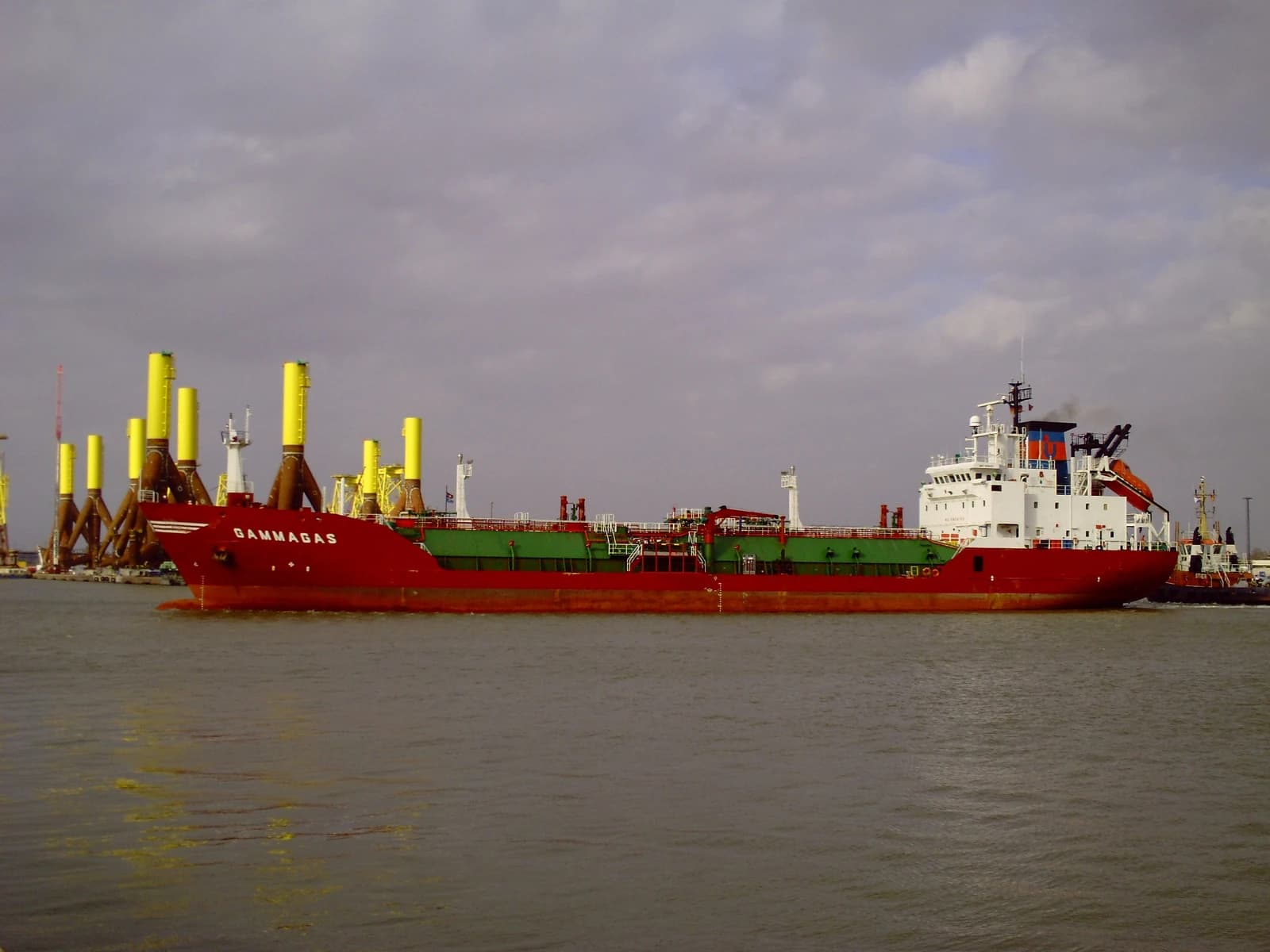
For investors, the opportunity sits in the second-order winners, not the obvious geopolitical headlines. Oil producers, tanker owners, pipeline names and defense contractors all remain positioned for a world of persistent instability. But the bigger strategic trade may be in the beneficiaries of Chinese bargaining power and U.S. policy fatigue: commodity exporters, select emerging markets with leverage to higher crude, and companies tied to China’s push for energy security, shipping, and strategic stockpiling. If oil stays elevated and the conflict drags on, markets will increasingly price in a world where Washington pays the bill while Beijing quietly compounds the advantage.
The trade is to own the infrastructure of a higher-risk world and avoid assuming that America’s military and economic overstretch is neutral. It isn’t. The market underestimates how quickly a Middle East shock becomes a China opportunity.
| Entity | Gains | Losses |
|---|---|---|
| China | ▲Cheaper leverage over rivals | ▼Higher import costs |
| U.S. consumers | ▲None | ▼Fuel inflation |
| Oil producers / tankers | ▲Revenue and freight gains | ▼Demand destruction risk |
| Emerging markets | ▲Select exporters benefit | ▼Importers and fragile currencies suffer |