China’s refineries are shifting to cheaper Iraqi crude as pressure on Iranian exports mounts, a change that could reshape Middle East oil flows, squeeze Tehran’s finances and hand Baghdad a bigger role in supplying the world’s largest crude importer.
China Refineries Shift to Iraqi Crude as Iran Pressure Mounts
The most important development is not that China is buying more oil, but that geopolitical pressure from Washington appears to be altering the economics of Asia’s energy trade. Reuters reported that Chinese refiners booked up to 20 million barrels for October and November from trading houses, with Iraq and Qatar emerging as the likely replacement barrels if sanctioned Iranian supply becomes harder to access.
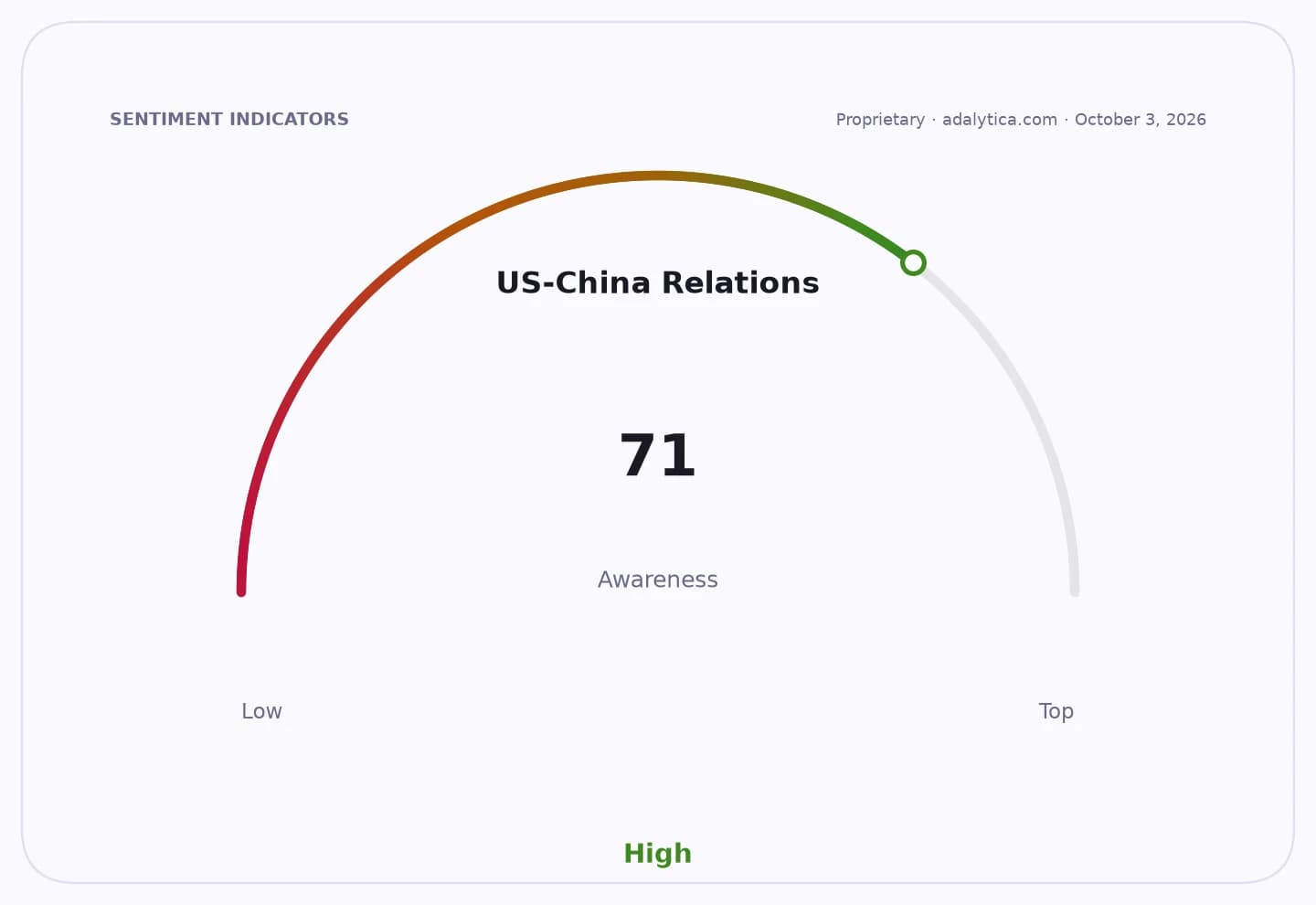
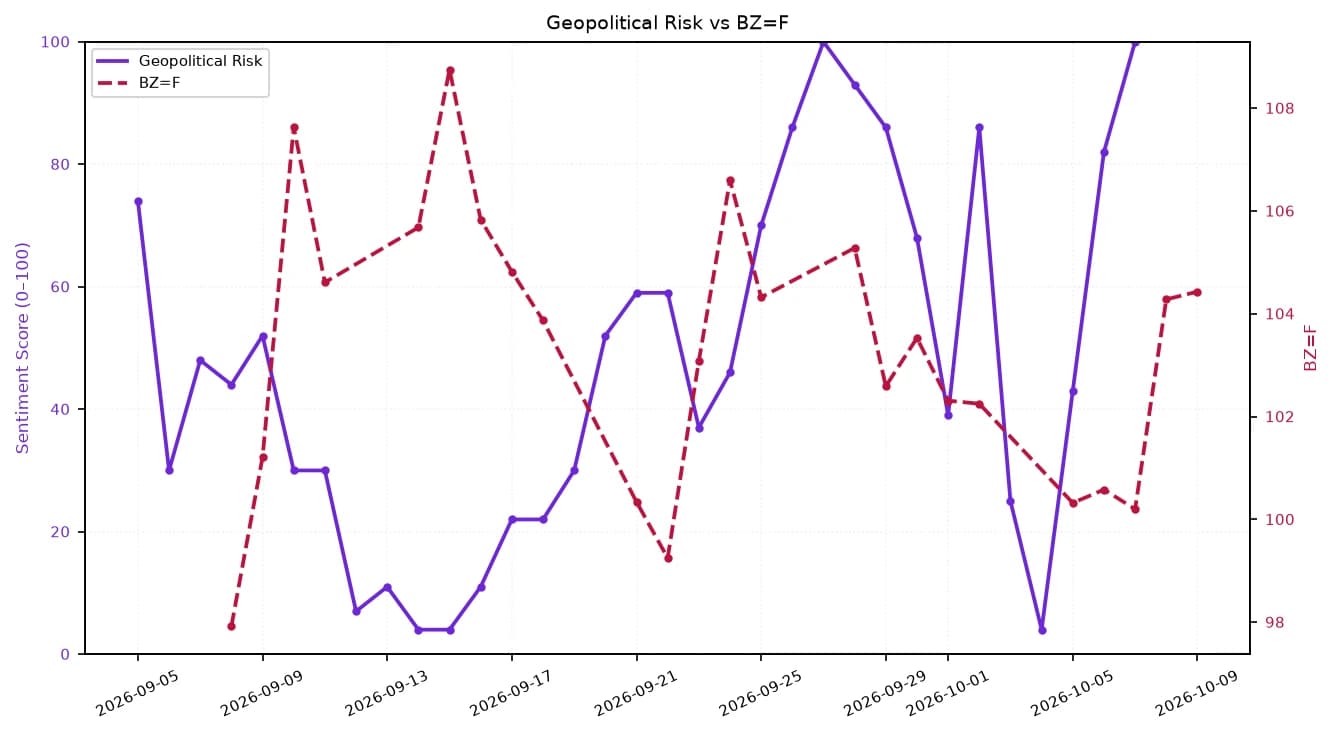
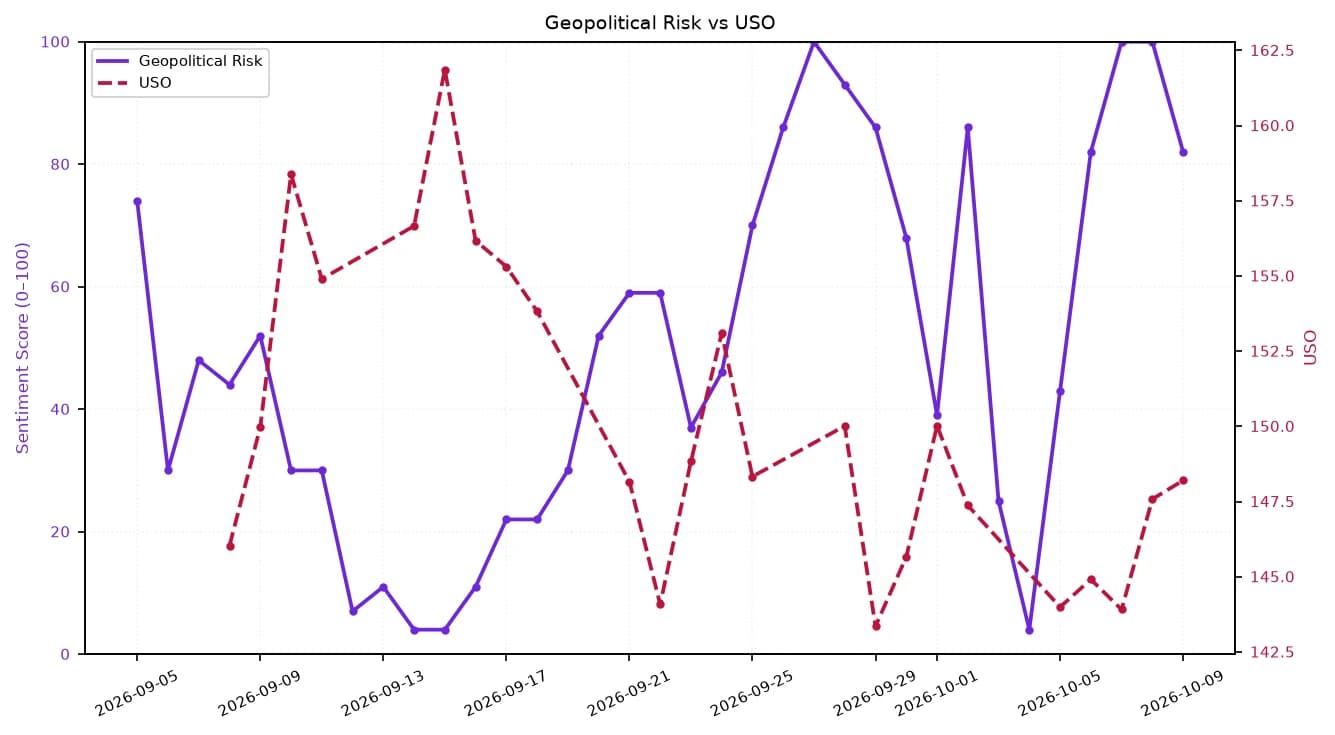
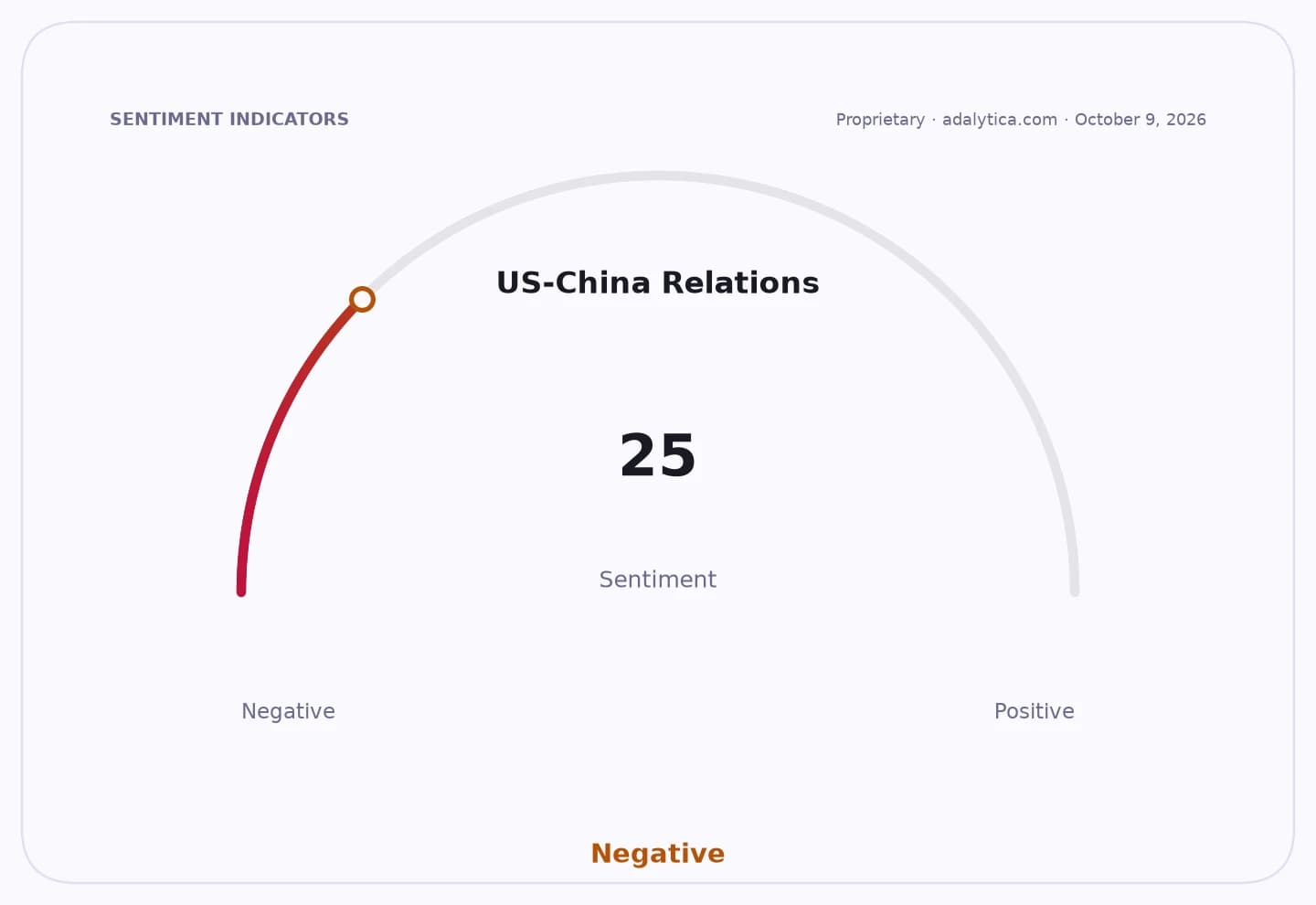
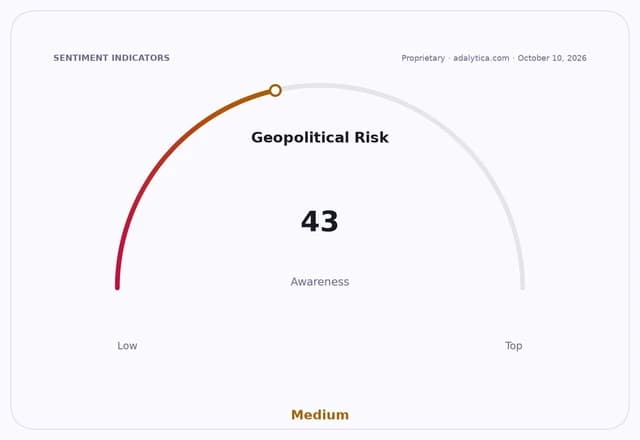
Sentiment IndicatorsⓘProprietary · adalytica.com · October 10, 2026
This is a snapshot — live sentiment, awareness and momentum for 130+ markets update continuously in the dashboard.Open AlphaPulse
That matters because Iran has long depended on China for the bulk of its crude exports. The article cites estimates that roughly 90% of Iranian oil shipments have gone to China, with exports around 1.4 million barrels a day in 2025. If those flows are impeded by naval pressure or tighter enforcement, Beijing’s private “teapot” refiners are likely to do what they have done before: chase discounts rather than take political positions.
For investors, that points to a practical reallocation across oil markets. Iraq stands to gain as buyers seek sanctioned-free barrels that still trade at a discount to global benchmarks. China’s refiners benefit from lower input costs. Iran loses leverage and, potentially, revenue. For US policy makers, the awkward result is that pressure on Tehran may not simply constrain Iranian exports — it may also redirect demand toward other producers operating inside the sanctions perimeter.
The shift also underscores how fragile the logistics of sanctioned oil have become. Iranian crude has often moved through ship-to-ship transfers and opaque routing near the Strait of Malacca and Southeast Asian waters. Those arrangements are harder to sustain when US naval presence and enforcement raise the risk of interception or disruption. In that environment, market participants do not necessarily abandon risk; they price it and reroute it.
Iraq is the clearest beneficiary. China was already its biggest oil customer, reportedly taking about 1.2 million barrels a day. The new trade may be less a fresh alliance than an acceleration of an existing one, but it still matters for Baghdad’s fiscal outlook and for the bargaining power of Iraqi producers and trading houses. More dependable Chinese demand can support export volumes, shipping contracts and state revenue at a time when Iraq is balancing energy dependence, security concerns and ties to Washington.
The larger market implication is that sanctions rarely produce a clean binary outcome. They distort routes, compress margins and reward intermediaries who can manage risk. That can keep discounted crude flowing, but it also shifts the center of gravity away from sanctioned producers and toward those able to sell through more accepted channels. For China, the calculation remains commercial first: how much maritime and political risk is worth a barrel discount.
FXI, the China ETF, has been trading below its 50-day average and below its 200-day average, while RSI readings have stayed in the low-40s, reflecting a market that remains cautious on China exposure. But on the energy side, the immediate winners are easier to identify: Iraqi exporters and Chinese refiners. The losers are Iran’s revenue base and, to a lesser extent, anyone expecting sanctions to choke off trade without simply redirecting it.
What to watch next is whether the shift proves temporary, tied to naval pressure and short-term procurement, or whether Chinese buyers lock in a longer-lasting Iraqi supply preference. If the latter, Trump’s Iran policy may end up warming Iraq’s oil market more than weakening China’s energy security.
| Entity | Gains | Losses |
|---|---|---|
| Iraq | ▲Higher crude demand | ▼None in the near term |
| China refiners | ▲Cheaper replacement barrels | ▼Greater supply-chain exposure |
| Iran | ▲None | ▼Lost export volumes, lower revenue |
| US sanctions policy | ▲Pressure on Iran’s trade | ▼Limited if flows simply reroute |