The Trump administration is moving to squeeze China’s access to energy, shipping lanes and regional leverage across multiple theaters in 2026, a broad campaign that is already hitting Chinese-backed assets from Venezuela to Panama and tightening military pressure around the first island chain.
China access to oil, ports and shipping faces pressure
The strategy matters economically because it targets the cheapest and most strategic inputs to China’s growth model: discounted crude, port control, rare earth access and industrial supply routes. It also matters to investors because the confrontation is increasingly showing up in commodity flows, shipping bottlenecks, defense spending and emerging-market risk, with China-focused assets under pressure and U.S. security-linked sectors gaining.
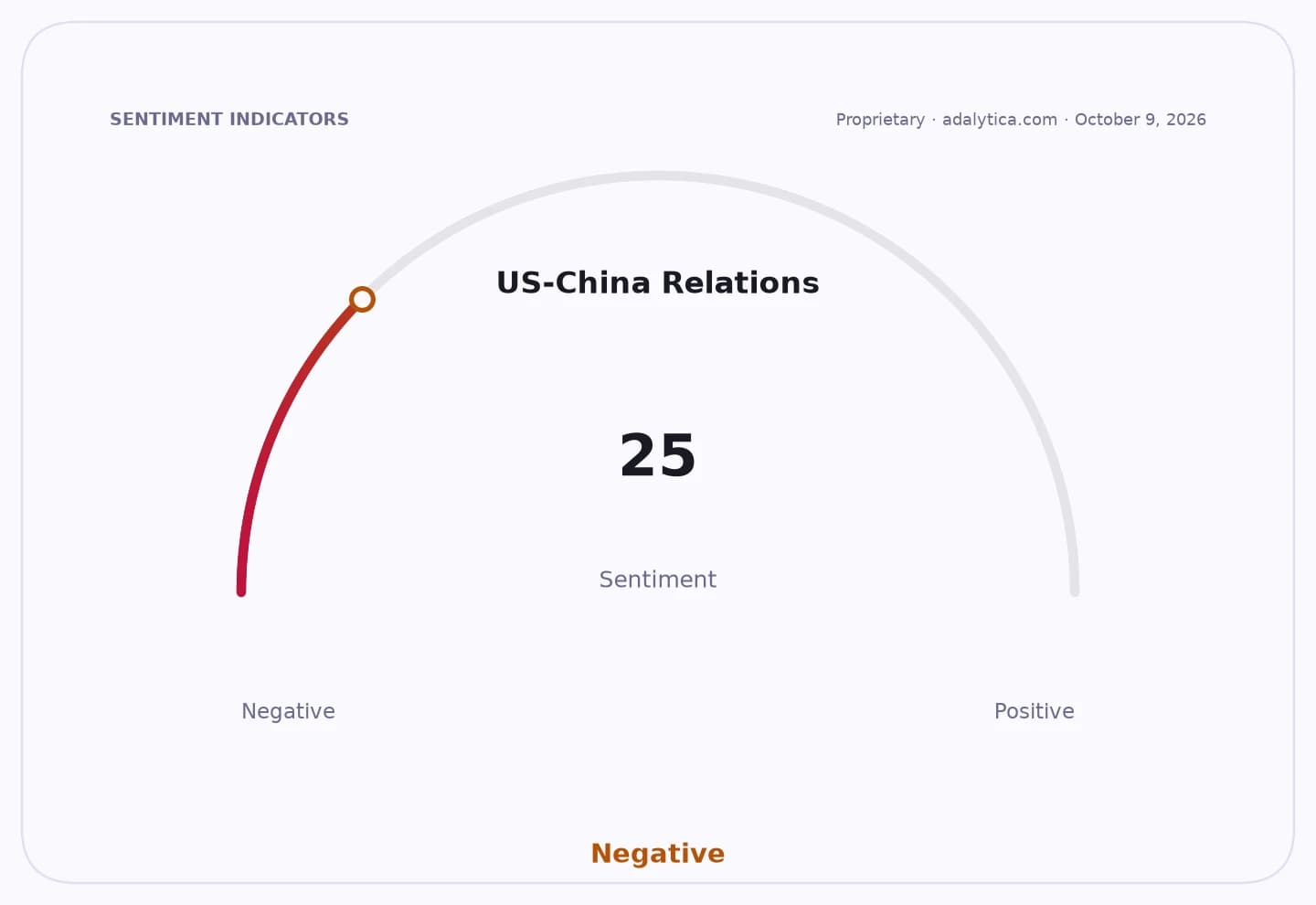
Sentiment IndicatorsⓘProprietary · adalytica.com · October 9, 2026
This is a snapshot — live sentiment, awareness and momentum for 130+ markets update continuously in the dashboard.Open AlphaPulse
In Venezuela, Washington’s intervention has cut off a major source of discounted oil that had been flowing to China through intermediaries. The context points to 600,000 to 700,000 barrels a day of Venezuelan exports before the takeover, with 70% to 80% of that volume heading to China at discounts of $12 to $18 a barrel, alongside $10 billion to $15 billion in outstanding Chinese lending tied to oil-for-loan deals.
Panama has become another flashpoint. A Supreme Court ruling voided CK Hutchison’s concession at the Balboa and Cristóbal ports, stripping Chinese-linked operators of a foothold at facilities that handle about 40% of container capacity around the canal. Beijing’s response — delaying clearance for more than 30 Panama-flagged ships and pursuing arbitration over more than $2.5 billion — underscores the commercial spillover risk for shipping and port operators.
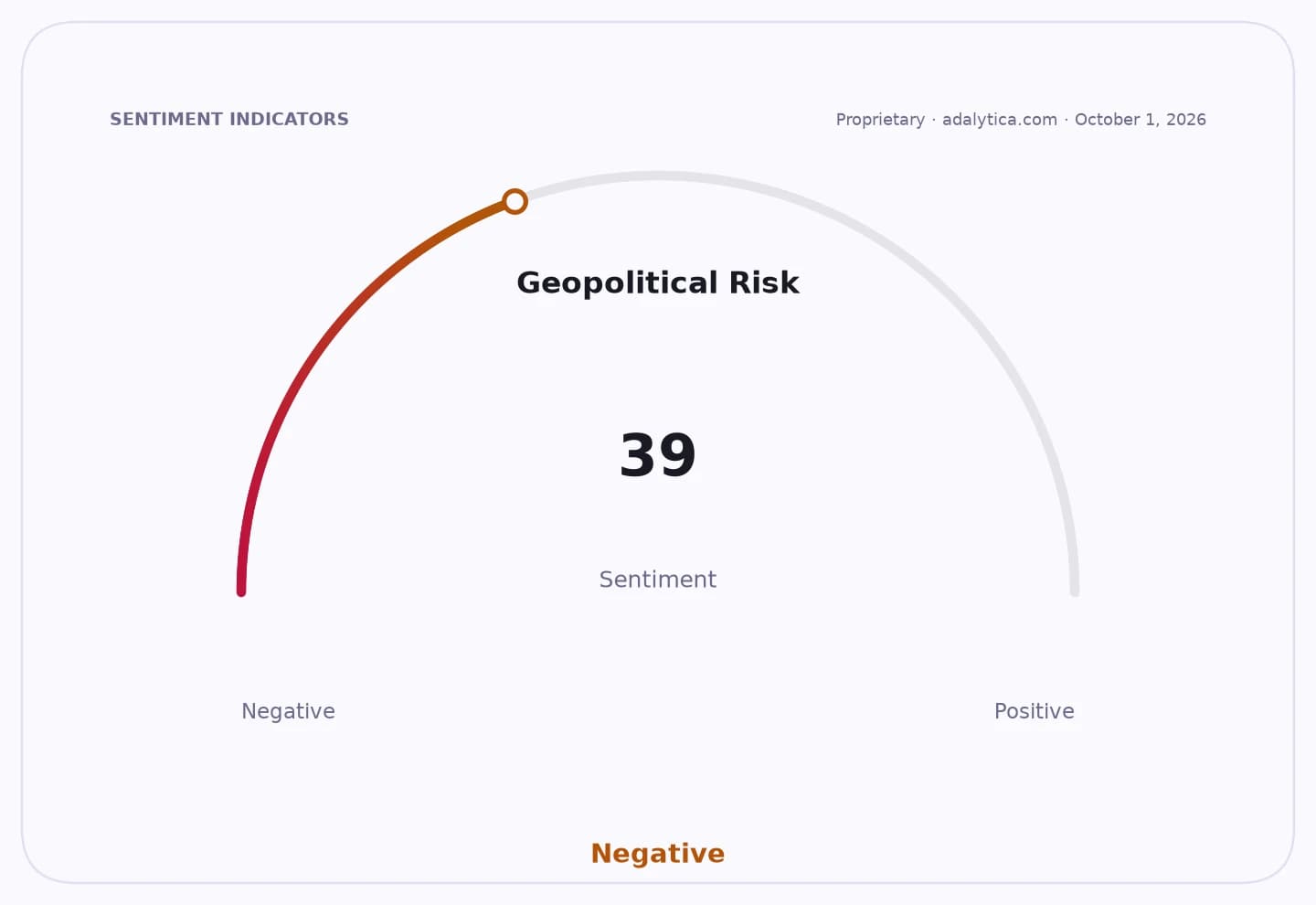
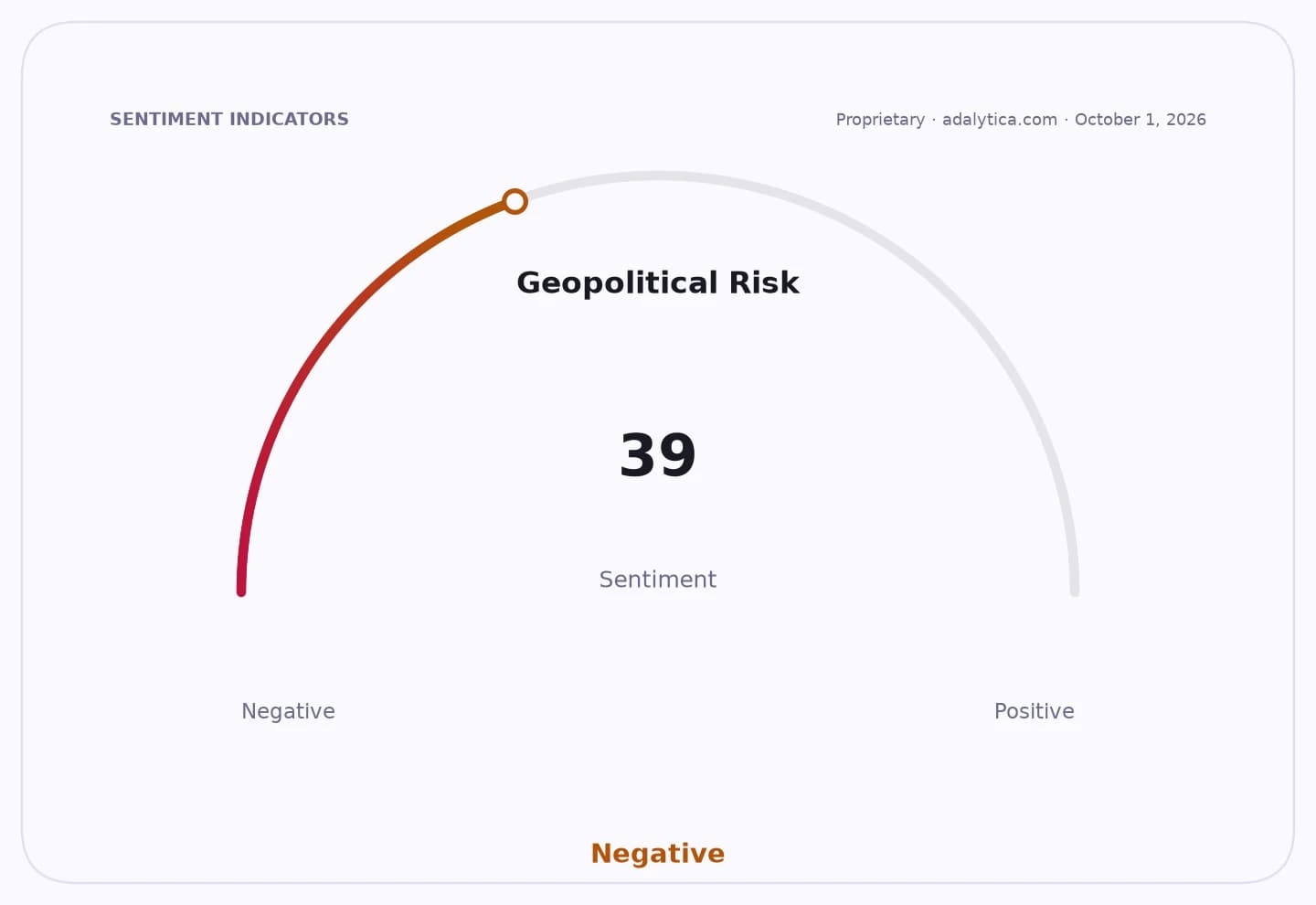
Geopolitical Risk vs FXIadalytica.com
Explore this data interactively — full history, time series and cross-market comparisons.Open AlphaPulse
Washington is also hardening the military perimeter around China. Japan is accelerating deployment of 400 Tomahawk missiles and lifting defense spending to a record $58 billion, while South Korea has raised its budget to $44 billion and deepened real-time missile-data sharing with Washington and Tokyo. In the Philippines, the U.S. has activated the Camilo Osias air base in Cagayan and tested Typhon missiles there, putting parts of China’s southeast coast and the Bashi Channel in range.
Taiwan remains central to the pressure campaign. The U.S. has approved a $3.2 billion military support package and a separate $1 billion drawdown from Pentagon stocks, including Harpoon coastal defense systems, HIMARS launchers with ATACMS missiles, F-16V fighters and large volumes of Javelin, Stinger and Switchblade systems. For investors, that supports U.S. and allied defense names while keeping a geopolitical risk premium on Asian equities and shipping.
The energy front is equally consequential. U.S.-Israeli strikes on Iran and the blockade around Hormuz have cut Iranian crude exports to below 300,000 barrels a day from as much as 1.8 million, reducing a cheap source of supply for China’s independent refiners and forcing buyers toward costlier alternatives. The same campaign has also disrupted proxy groups in Yemen and Lebanon, narrowing the strategic room for Beijing’s partners in the region.
Market pricing reflects the strain. FXI, the iShares China Large-Cap ETF, has fallen to $33.45 from $40.34 in mid-January and remains below both its 50-day and 200-day moving averages, with RSI readings near 40 and MACD still negative, a sign of weak technical momentum. The leveraged China ETF YINN has slumped to $23.63 from $48.83 in January, while the dollar ETF UUP has held near $29, consistent with a cautious, risk-off macro backdrop.
Adalytica’s sentiment gauges also show the shift: global-stability sentiment is at 100, or “Extreme Greed,” while its U.S.-China relations measure has collapsed to 25, labeled “Fear,” and China CCP policy direction sits at 4, or “Extreme Fear.” That combination suggests markets are pricing in escalation, not de-escalation.
The next catalysts are likely to be retaliatory trade moves from Beijing, new sanctions or tariffs on Chinese-linked supply chains, and any escalation in the South China Sea or Taiwan Strait. For investors, the key question is not whether U.S.-China rivalry persists, but how quickly it turns into measurable damage for trade, commodities, defense budgets and China-sensitive assets.
| Entity | Gains | Losses |
|---|---|---|
| U.S. defense contractors | ▲Larger orders, higher budgets | ▼— |
| China-linked asset holders | ▲— | ▼Port access, cheap oil, leverage |
| U.S. allies in Asia | ▲Stronger security guarantees | ▼Higher regional tensions |
| Shipping and commodity traders | ▲Select route re-pricing | ▼Canal, Hormuz and sanction risk |