China has deployed its biggest naval presence around Taiwan in almost three decades, escalating pressure on the island and sharpening fears that Beijing is rehearsing a blockade rather than merely staging another show of force.
China deploys large naval force near Taiwan
Taiwan’s defense ministry said the current buildup is the largest since China held military drills around the island ahead of Taiwan’s 1996 presidential election, and that the threat is more pronounced than in earlier exercises. A Taiwan security source said the number of Chinese navy and coast guard vessels in the region was around 90, a level officials described as “very alarming.”
Sentiment IndicatorsⓘProprietary · adalytica.com · October 1, 2026
This is a snapshot — live sentiment, awareness and momentum for 130+ markets update continuously in the dashboard.Open AlphaPulse
The operation matters because a sustained maritime cordon around Taiwan would be far more disruptive than short-lived air sorties or missile drills. Taiwan sits at the center of global semiconductor supply chains, and any move that constrains shipping lanes in the first island chain would threaten trade, insurance costs and regional manufacturing far beyond the strait itself. It would also test how far Washington and its allies are willing to go to protect freedom of navigation in one of the world’s most sensitive geopolitical flashpoints.
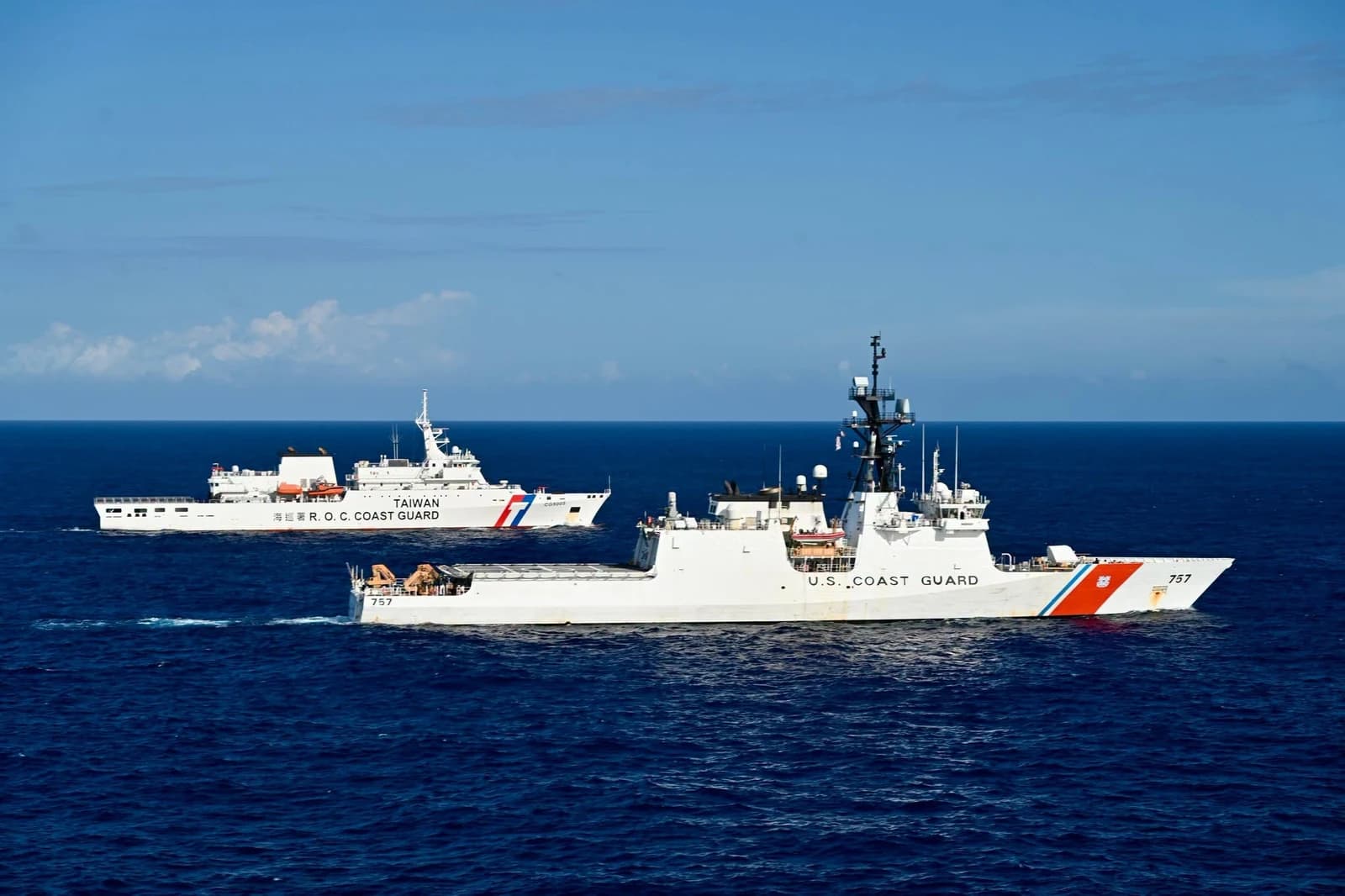
Taipei said China had “reserved” airspace and sent navy and coast guard ships into waters stretching from southern Japanese islands to the South China Sea. Taiwan reported 47 Chinese military aircraft, 12 navy vessels and nine “official” ships in the past 24 hours, while intelligence officials said Chinese aircraft were simulating attacks on foreign naval vessels and practicing deterrence against both military and civilian aircraft as part of a blockade drill.
The timing is important. Beijing appeared to be responding to Taiwanese President Lai Ching-te’s Pacific trip, which included stops in Hawaii and Guam, and to Taipei’s increasingly explicit warnings that any blockade would amount to an act of war. China has not confirmed drills, but it has repeatedly treated Taiwan as a core sovereignty issue and a red line for the United States.
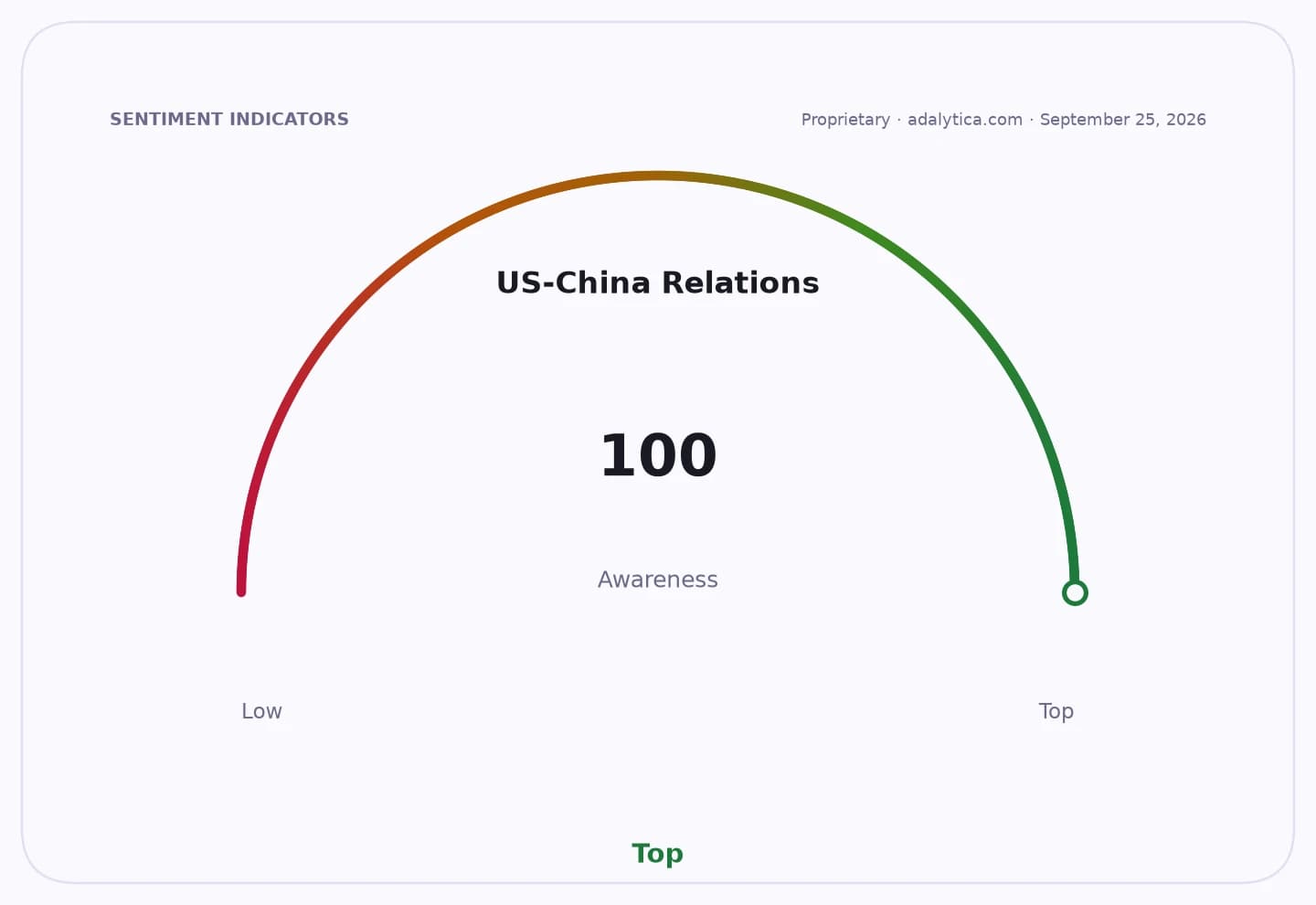
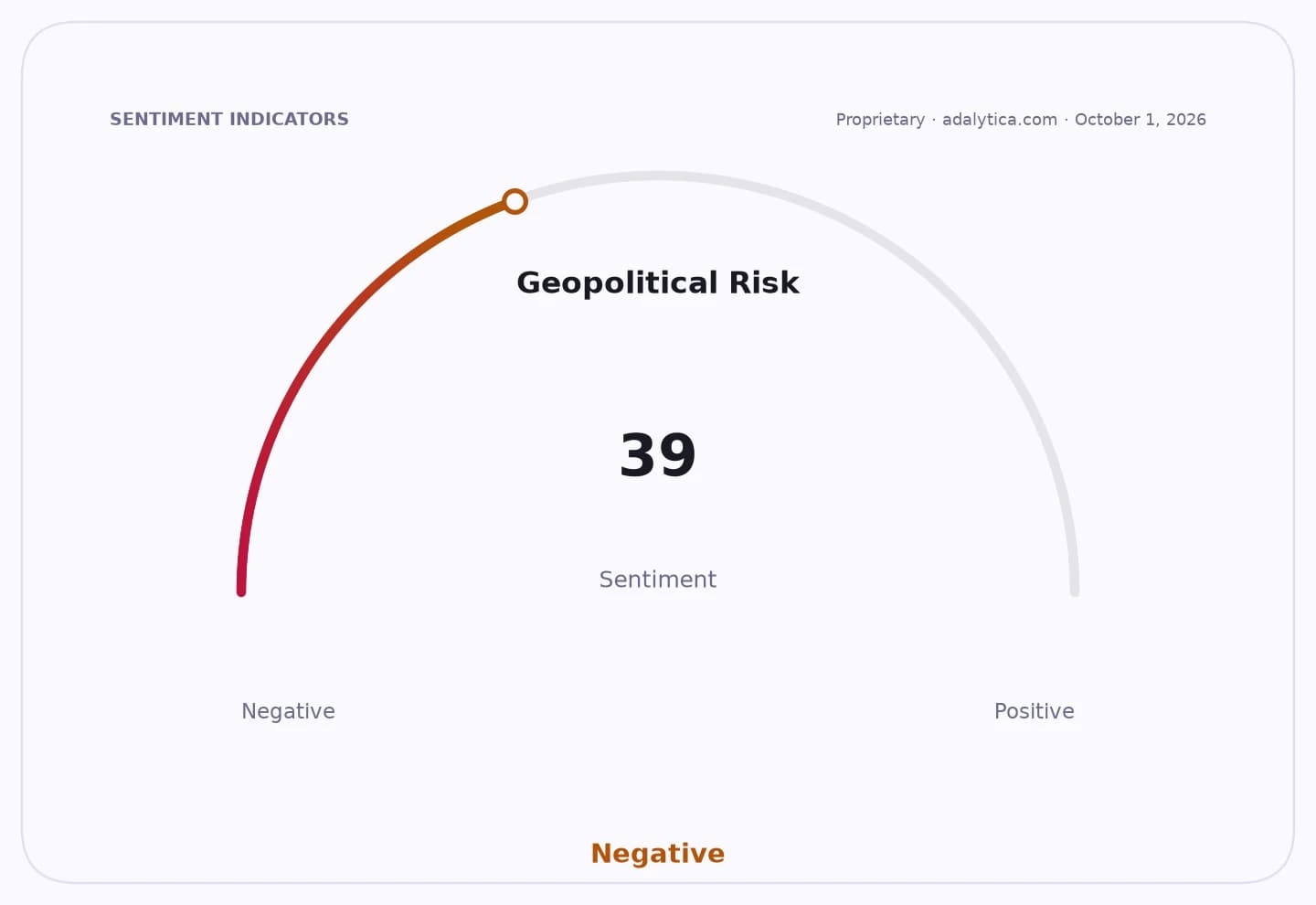
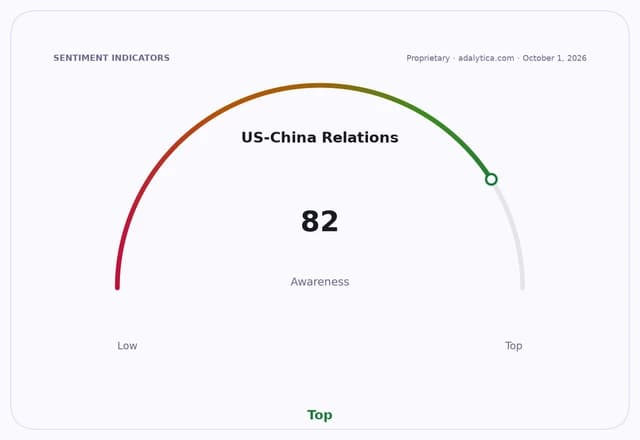
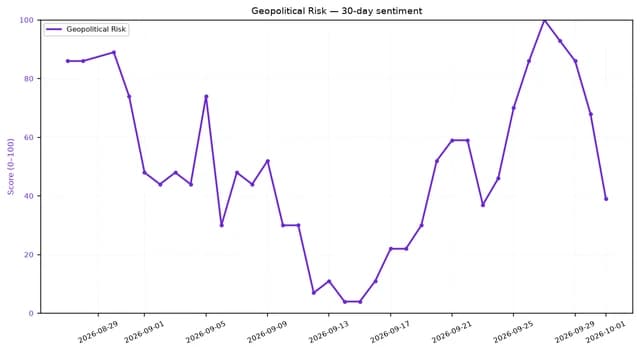
For investors, the immediate market impact is less about day-to-day trading than about risk repricing across Asia. Taiwan-focused funds, shipping names, defense contractors and semiconductor supply-chain proxies all become more sensitive when the prospect of a blockade enters the discussion. The latest move also comes against a backdrop of already strained US-China relations, with Adalytica’s US-China Relations Sentiment gauge at 79, even as its broader Global Stability Sentiment fell sharply to 39, a sign that geopolitical risk is again moving to the forefront.
The market reaction in Taiwan-linked assets has been mixed rather than panicked, suggesting investors still see escalation risk as manageable for now. The Taiwan ETF, EWT, recently traded at $112.31, well above its 200-day moving average of $88.46, while the iShares China Large-Cap ETF, FXI, was at $33.99, below its 200-day average of $36.09. That split reflects a familiar pattern: Taiwan assets can hold up when tensions are seen as episodic, but China equities remain weighed down by policy, growth and geopolitical overhangs.
The underlying risk is that repeated drills begin to normalize a higher level of military pressure and gradually change how markets price Taiwan exposure. A full blockade remains unlikely in the near term, but the scale of this deployment raises the cost of miscalculation and narrows room for diplomatic repair. For investors, the key question is no longer whether tensions around Taiwan will flare again, but whether Beijing is using larger and more frequent deployments to make the Strait look and feel more like a controlled buffer than an international waterway.
| Entity | Gains | Losses |
|---|---|---|
| China | ▲military leverage | ▼regional trust |
| Taiwan | ▲stronger defense focus | ▼security pressure |
| Taiwan-linked ETFs | ▲volatility premium | ▼calm market pricing |
| Semiconductor supply chain | ▲urgency for diversification | ▼blockade risk |