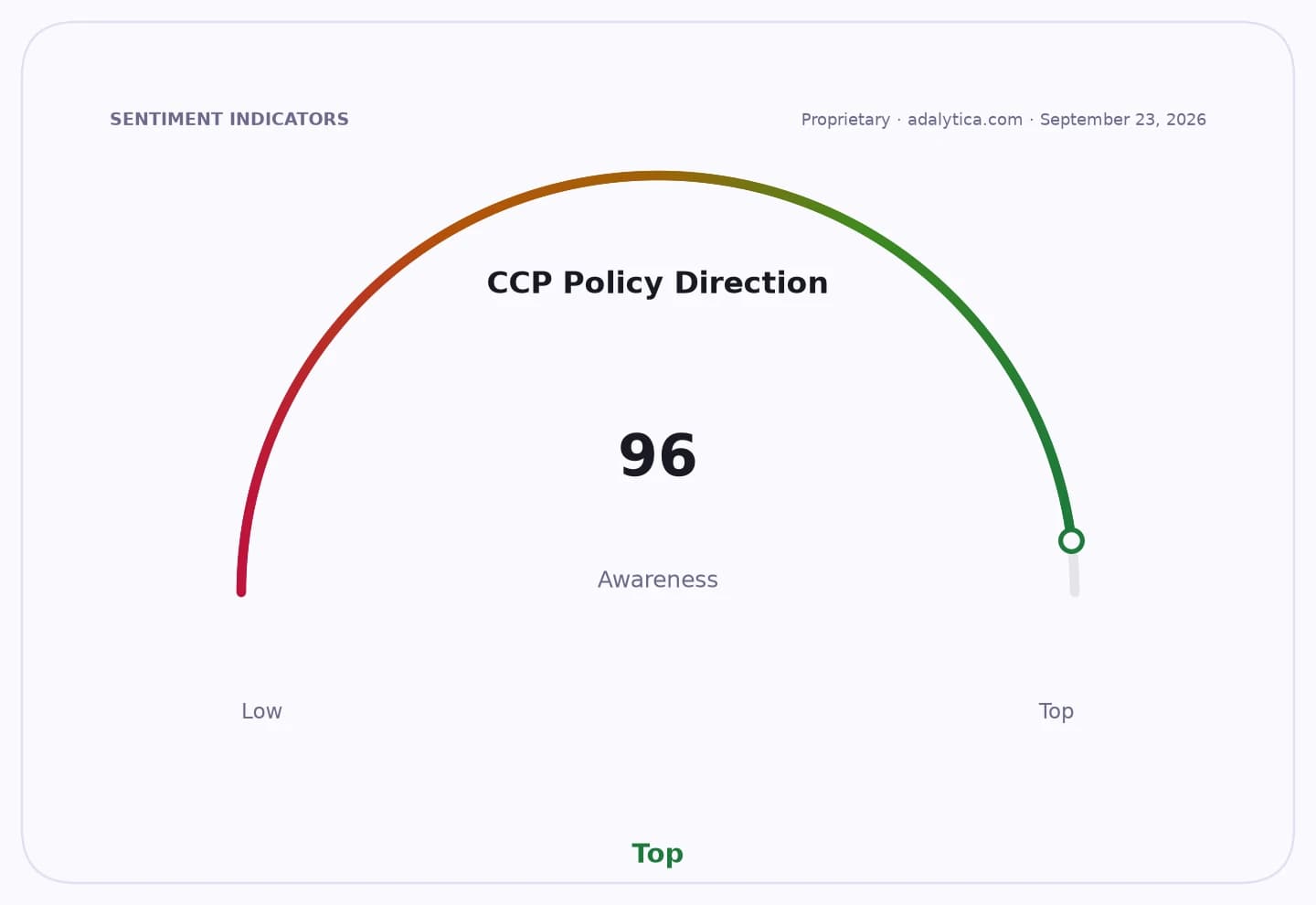
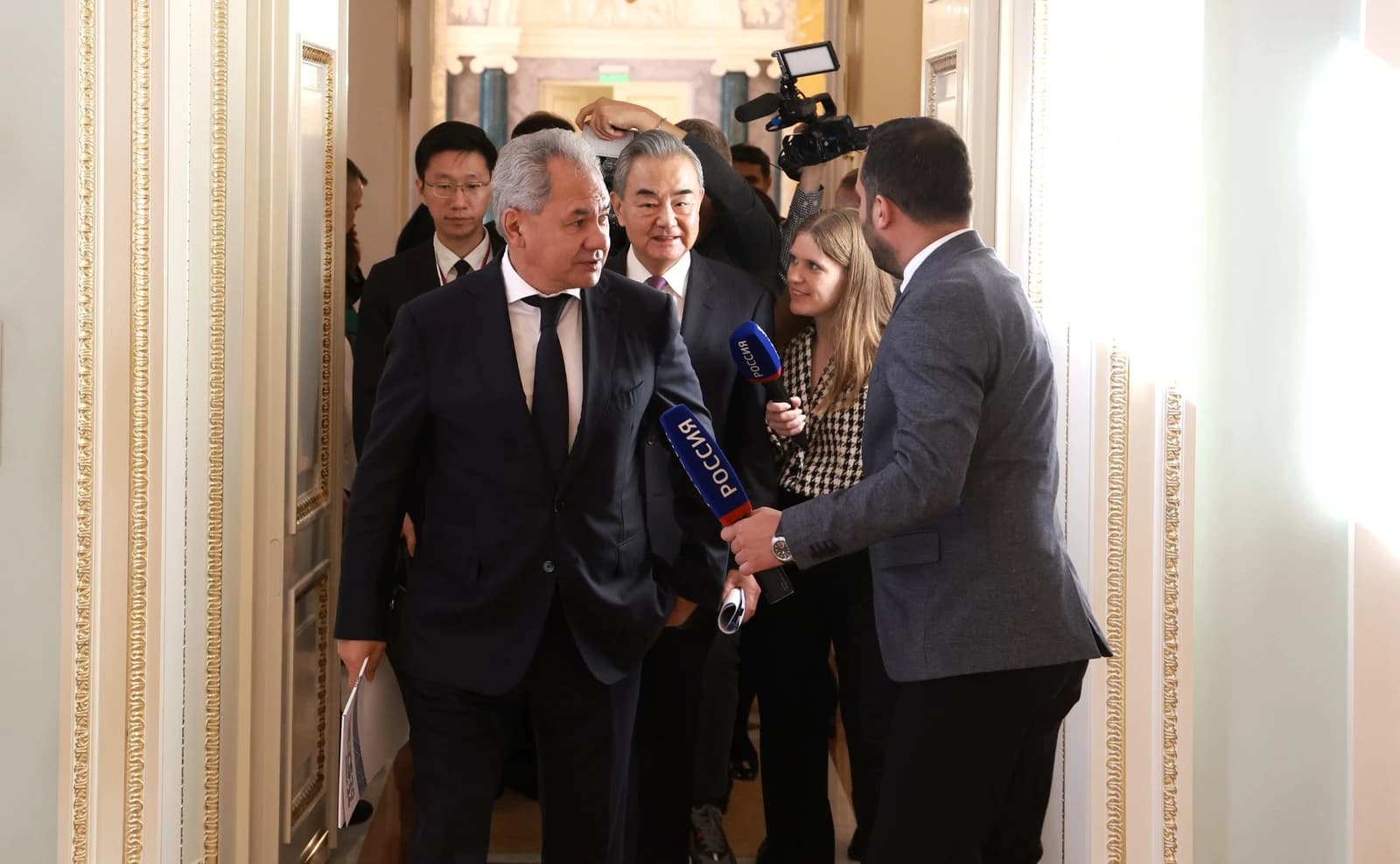
Washington’s assessment that China does not plan to invade Taiwan in 2027 eases one of the market’s most disruptive geopolitical timelines, but it does not remove the strategic risk premium built into Asia assets, semiconductor supply chains and U.S.-China relations.
Taiwan invasion risk eases on 2027 timeline
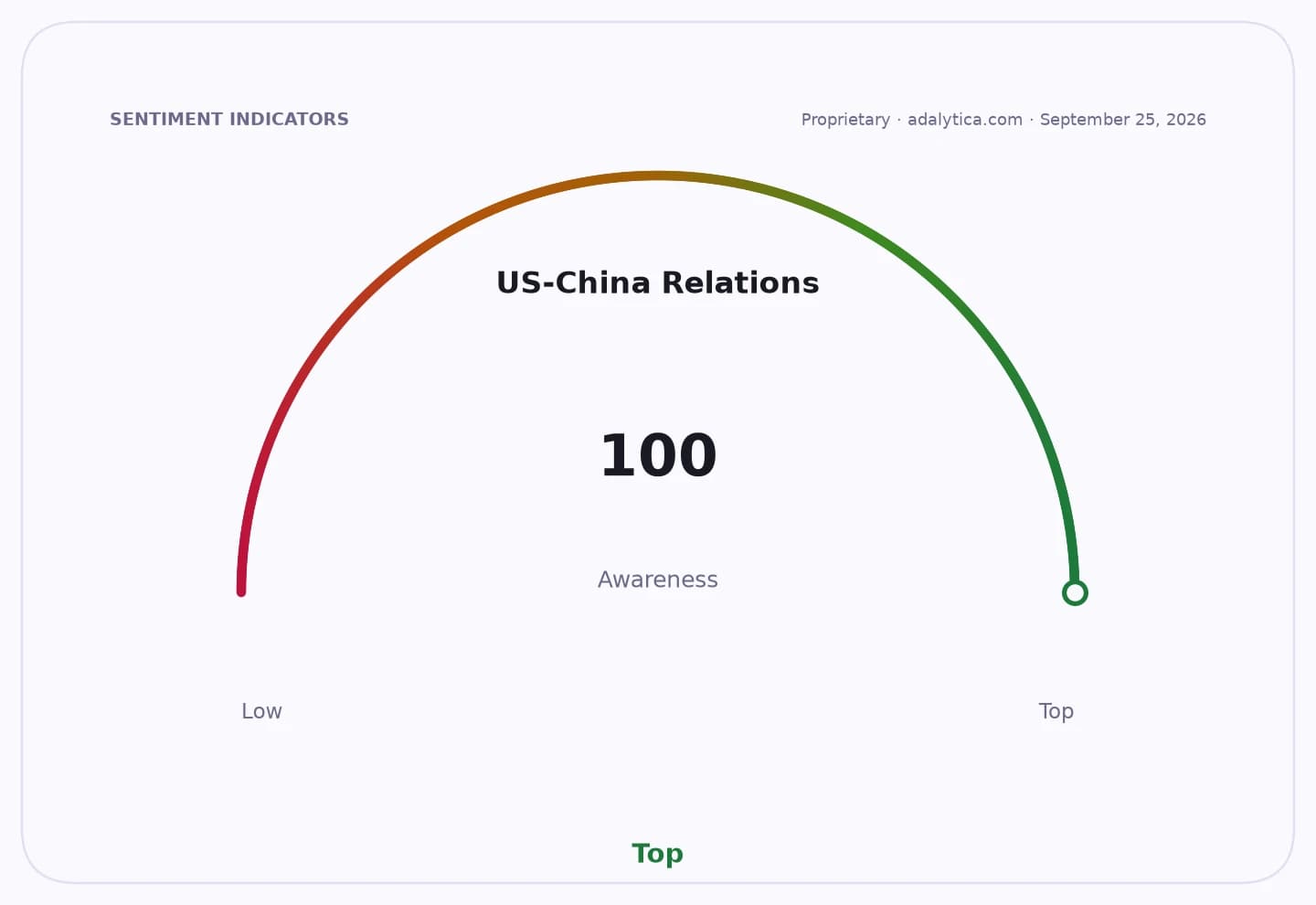
The intelligence view matters because 2027 had become a widely watched marker for possible conflict, forcing investors, multinationals and defense planners to hedge against a scenario that would threaten global trade, chip production and military escalation. By pushing the most likely decision point further out, U.S. analysts are effectively saying Beijing still sees the costs and odds of a direct amphibious assault as too high, particularly if Washington intervenes.
Sentiment IndicatorsⓘProprietary · adalytica.com · September 25, 2026
This is a snapshot — live sentiment, awareness and momentum for 130+ markets update continuously in the dashboard.Open AlphaPulse
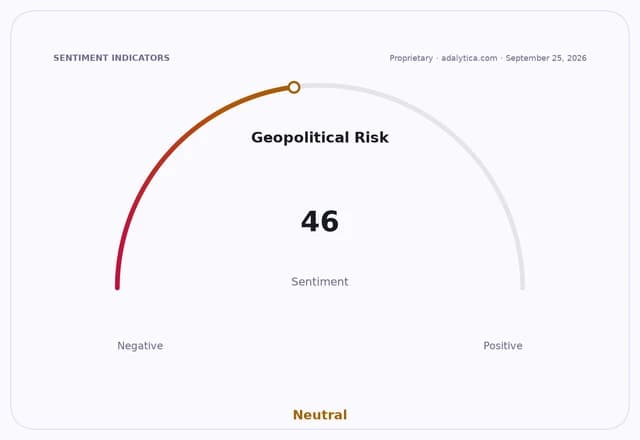
That distinction is economically important. Taiwan sits at the center of the global semiconductor supply chain, and any credible invasion risk carries implications for pricing, capex, insurance, shipping and inventory strategy across technology and industrial sectors. The intelligence assessment suggests China is more likely to keep using coercive pressure — military drills, air and naval activity and political signaling — to shape the environment rather than trigger a war that could backfire militarily and economically.
For investors, the report argues for nuance rather than complacency. It may support risk assets tied to Taiwan’s economy and its chip ecosystem if fears of a near-term conflict ease, but it also reinforces the case for staying hedged against tail risk. TSMC, the world’s most important contract chipmaker, remains the critical name to watch: its U.S.-listed shares were trading around $447 in recent sessions, well above the 200-day moving average near $380, showing that markets are still assigning value to its earnings power even as geopolitical uncertainty lingers. Taiwan’s equity benchmark has also recovered sharply, with the Taiwan ETF recently around $101 after a volatile year, while the China ETF has lagged near $34, reflecting a broader divergence between Taiwan’s strategic importance and China’s policy overhang.
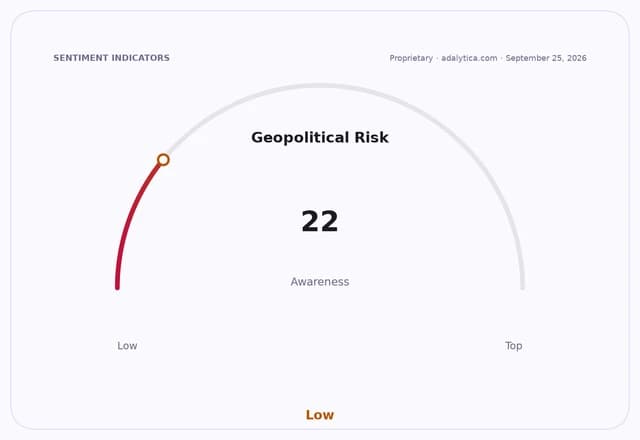
The message from the intelligence picture is not that the Taiwan problem is receding. China still claims the island as its territory and continues to pressure it militarily, while Taiwan is pressing European and Indo-Pacific partners to publicly oppose any unilateral change to the status quo. What changes is the timing: if Beijing is using 2026 to prepare the ground for possible unification without force, then the next 12 to 18 months become a contest over deterrence, diplomacy and military posture rather than an imminent invasion countdown.
That leaves markets in a familiar position. The base case may be lower than feared for outright war in 2027, but the bear case remains severe enough that portfolios, supply chains and defense policy will continue to price Taiwan as one of the world’s most consequential geopolitical flashpoints.
| Entity | Gains | Losses |
|---|---|---|
| Taiwan equities | ▲Lower near-term war premium | ▼Still exposed to coercion |
| TSMC and chip buyers | ▲Less immediate disruption risk | ▼Ongoing geopolitical overhang |
| U.S. and allies | ▲More time for deterrence | ▼Need to maintain support spending |
| China | ▲More room for pressure campaign | ▼Less credibility on quick force option |