Brent crude jumped more than 4% after reports that the US may be preparing fresh strikes on Iran reignited fears of a supply shock in a region that handles a large share of the world’s seaborne oil.
Brent Crude Rises on Iran Strike Fears
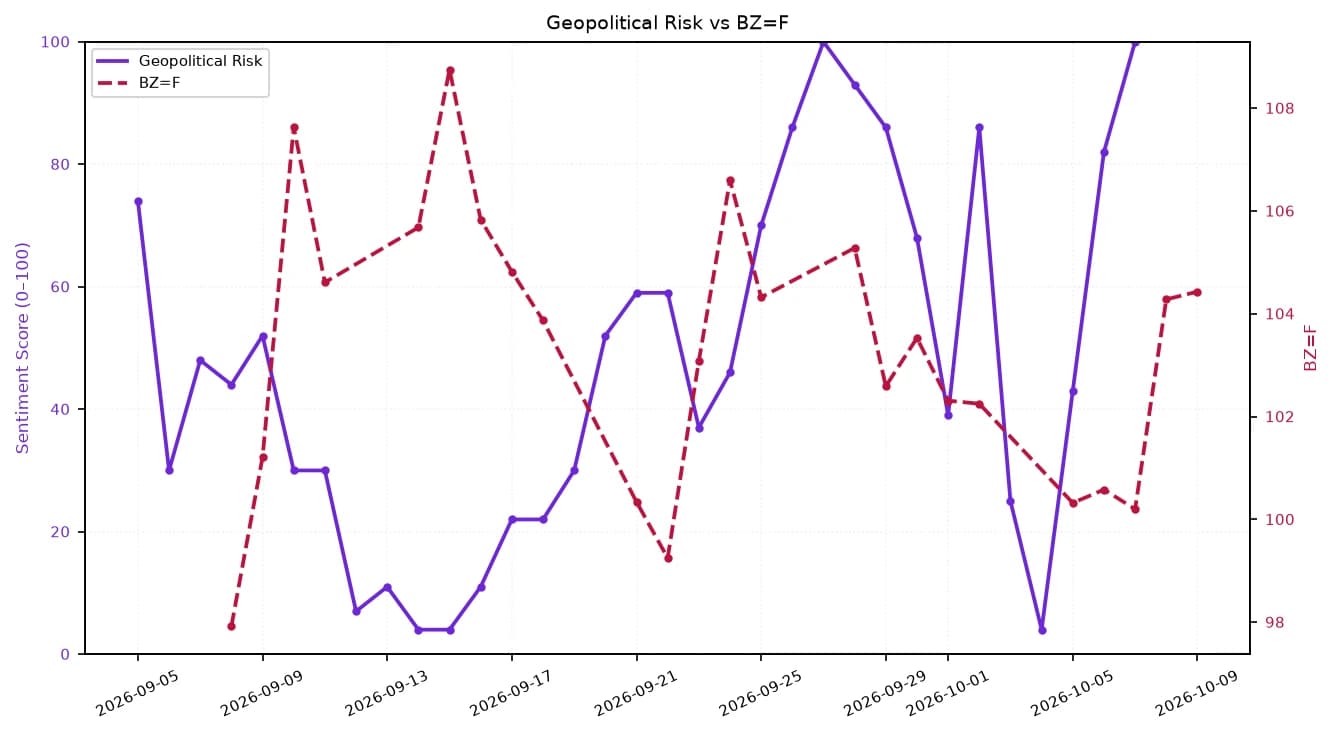
The benchmark rose to $104.43 a barrel in afternoon trading, after touching $102.59 earlier, as traders priced in the risk that any renewed conflict could target Iranian energy infrastructure or disrupt shipping through the Strait of Hormuz and nearby alternate routes. West Texas Intermediate for November delivery traded at $91.95, underscoring a broader rally driven by geopolitics rather than demand.
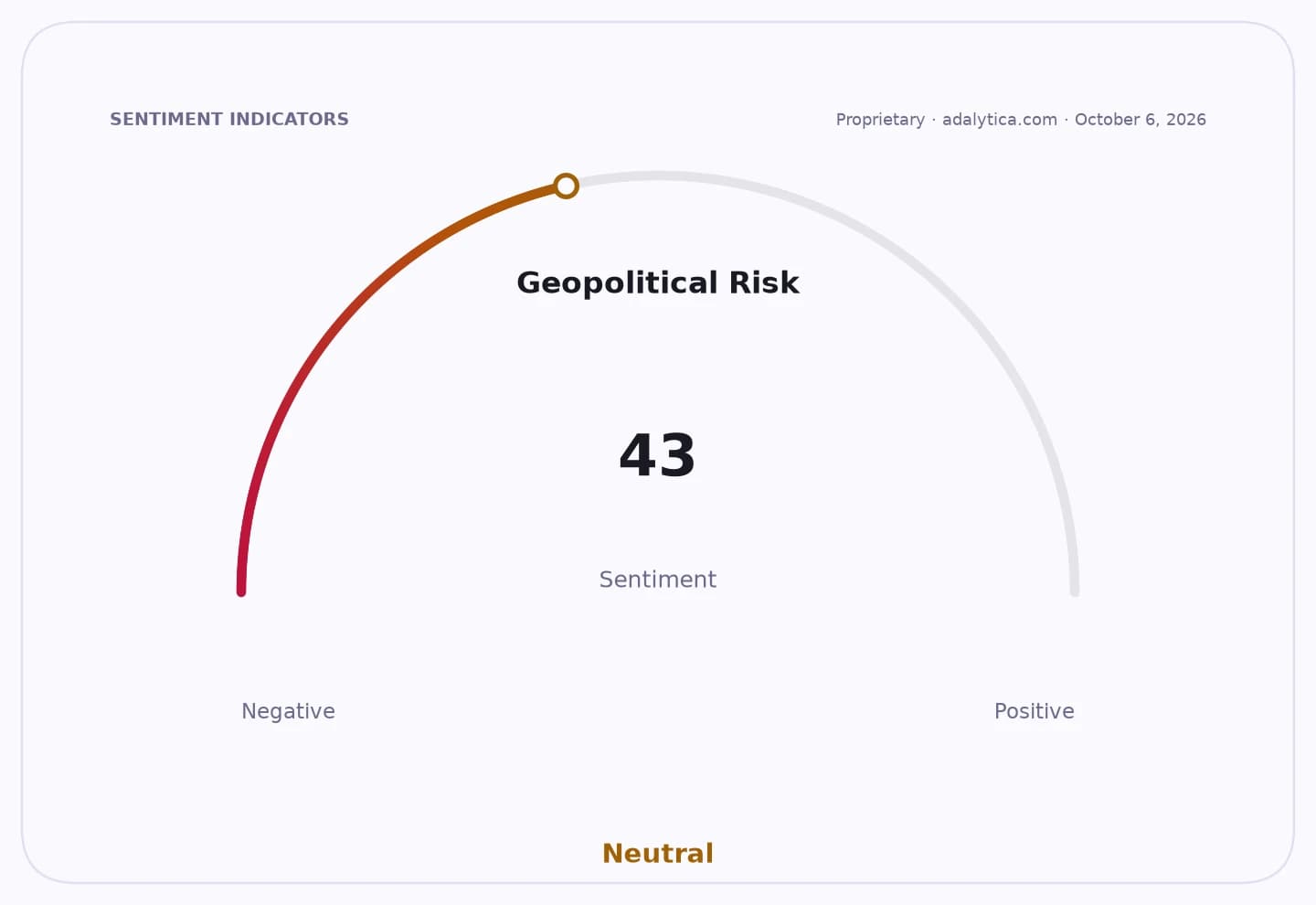
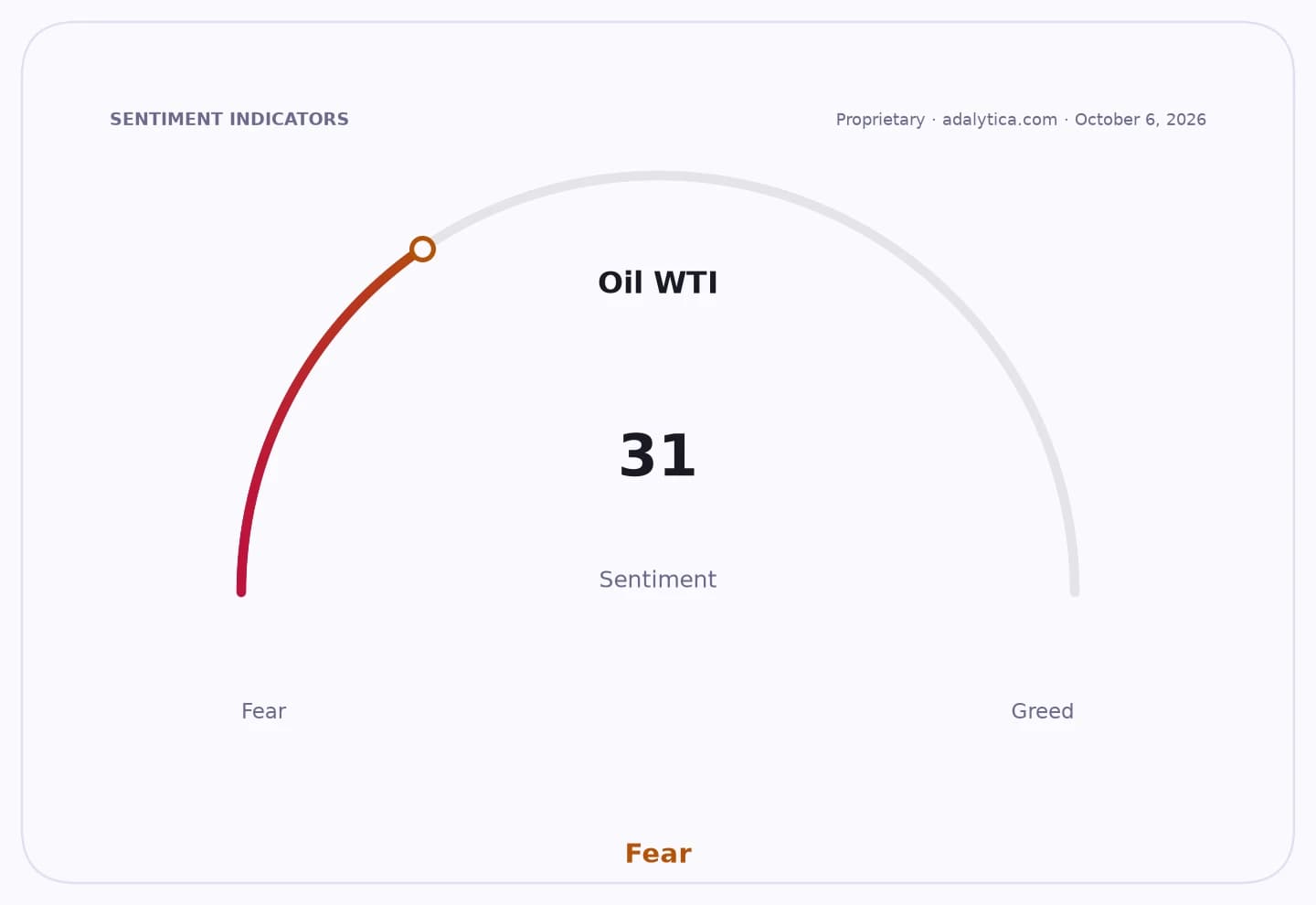
Sentiment IndicatorsⓘProprietary · adalytica.com · October 10, 2026
This is a snapshot — live sentiment, awareness and momentum for 130+ markets update continuously in the dashboard.Open AlphaPulse
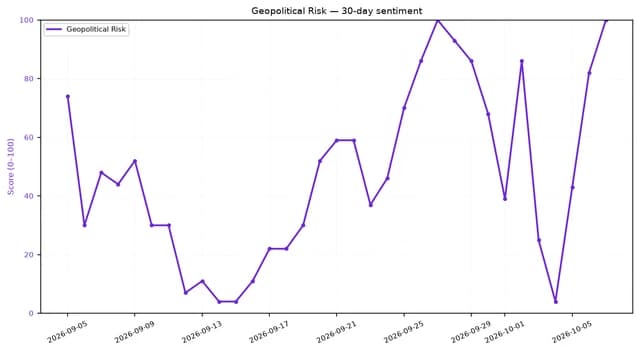
The move matters because the oil market is reacting less to actual lost barrels than to the possibility of lost barrels. Iran sits at the center of a narrow but critical supply corridor, and even a limited escalation could raise freight costs, tighten prompt crude availability and force refiners to bid up physical cargoes. For importers, that means a higher inflation impulse just as central banks are still wrestling with sticky energy prices. For exporters and producers, it improves near-term revenue prospects, but it also raises the odds of policy intervention, strategic reserve releases and volatility across energy-linked assets.
The latest price spike was triggered by reports that the Pentagon had been told to complete preparations for possible attacks on Iran, with no date set and President Donald Trump still weighing timing. US and Israeli sources were cited as saying any strike could come before upcoming elections in both countries, heightening the market’s focus on political risk as much as military risk. Iran has said it would answer US proposals through intermediaries.

Tehran’s own rhetoric added to the premium. Comments from an adviser to Iran’s Revolutionary Guards that alternative routes around the Strait of Hormuz would be closed quickly intensified worries about crude flows through the Gulf. Any disruption in or around Hormuz would matter well beyond Iran, because the chokepoint is one of the most important export lanes for producers across the Middle East.
The rally is being reinforced by tighter physical fundamentals in the US. Hurricane-related outages in the Gulf of Mexico have shut in production at several offshore facilities, with roughly 511,619 barrels a day, or about a quarter of regional output, taken offline, according to the US Minerals Management Service. Shell, Chevron and other operators have curtailed activity, removing another source of supply at the margin.
At the same time, the US Energy Information Administration said commercial crude inventories fell by about 3.2 million barrels to 424.1 million barrels last week, against expectations for a 1.9 million-barrel build. Strategic petroleum reserves also declined. That combination of lower stocks and weather-related shutdowns gives traders a near-term reason to chase prices even before factoring in geopolitical risk.
Technical positioning also points to a market under stress. Brent has pushed above its 50-day and 200-day moving averages, while RSI readings have recovered from a recent dip, indicating momentum is turning higher after a volatile autumn. US oil-linked funds have shown similar strain, with risk gauges on crude shifting back toward higher-activity trading despite still-muted broad sentiment.
For investors, the key question is whether this is a short-lived geopolitical spike or the start of a broader repricing of Middle East risk. If the US and Iran remain in a war of threats without direct damage to infrastructure or shipping, some of the premium could fade quickly. But any strike on energy assets, any retaliation near Hormuz, or any prolonged outage from Gulf storms could keep Brent elevated and widen the gap between crude benchmarks and the broader energy equity trade.
The immediate winners are producers, oilfield services firms and holders of long crude exposure. The losers are refiners, airlines, fuel-intensive industries and importing economies that are already vulnerable to another energy-led inflation shock.
| Entity | Gains | Losses |
|---|---|---|
| Oil producers | ▲Higher realized prices | ▼Greater policy backlash risk |
| Brent longs | ▲Geopolitical premium | ▼Volatility if tensions ease |
| Refiners and airlines | ▲— | ▼Higher input and fuel costs |
| Oil importers | ▲— | ▼Larger inflation and bill pressure |