The U.S. and China are in what Russian experts described as a limited thaw, but they see it as a tactical pause rather than a durable reset, with the next major flashpoints likely to come from rare earth controls, technology restrictions and a growing military buildup.
U.S.-China Tensions Ease on Rare Earths and Tech
That matters because even a temporary easing of tensions between the world’s two largest economies can affect supply chains, commodity flows, defense spending and risk appetite across global markets. But the consensus from the roundtable cited by Vedomosti was that the current calm is thin, interest-driven and vulnerable to reversal once either side believes it has leverage.
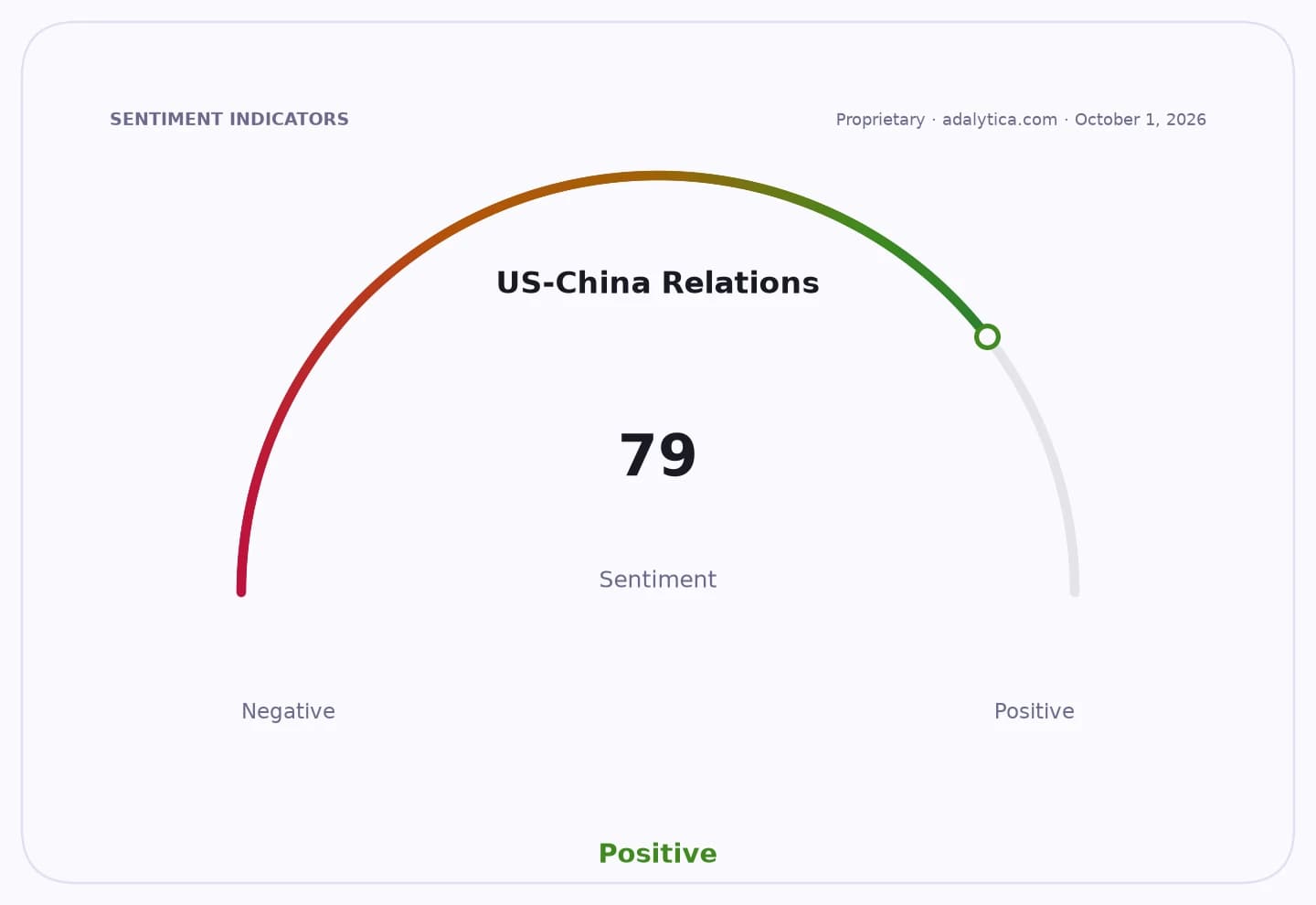
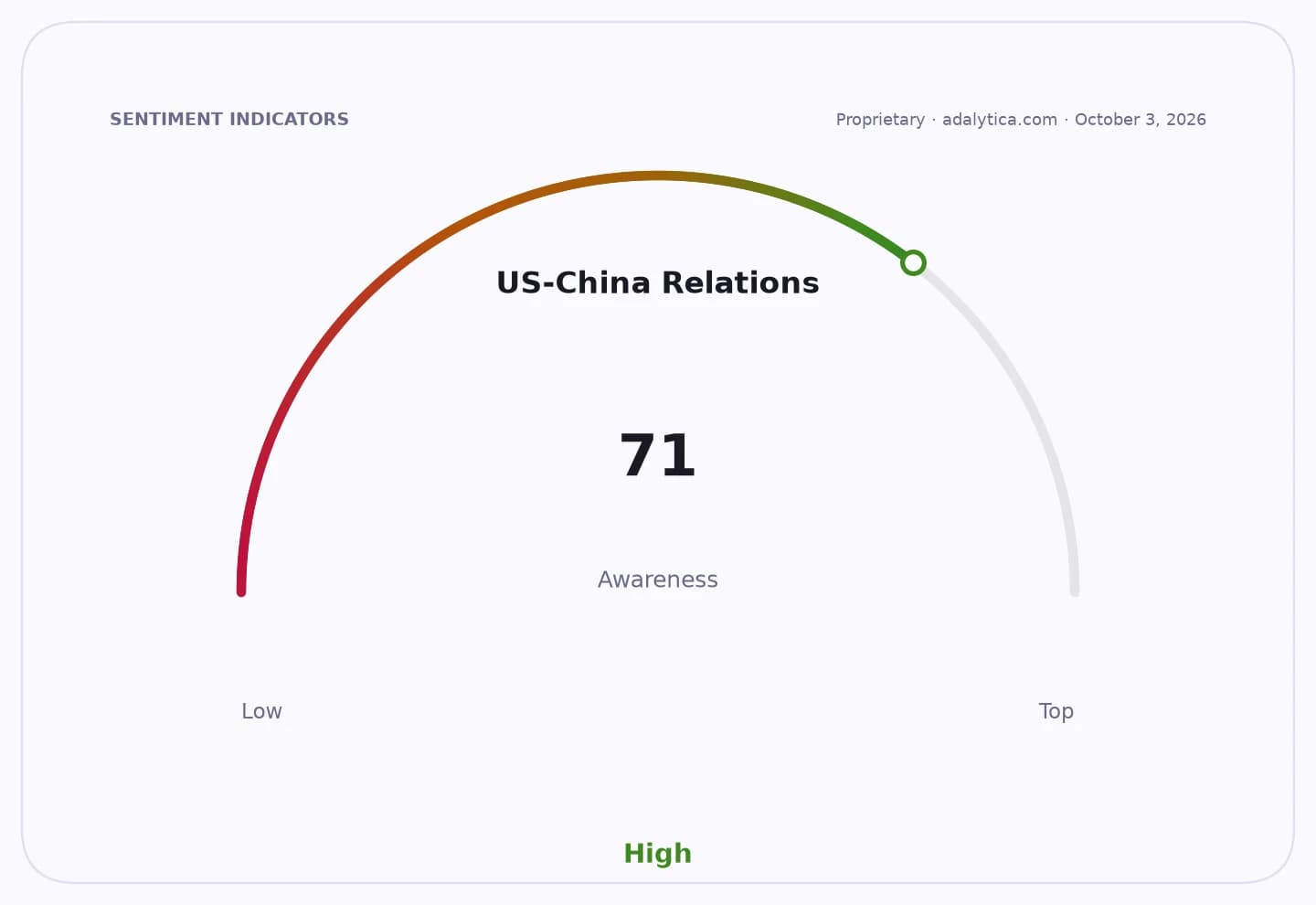
Sentiment IndicatorsⓘProprietary · adalytica.com · October 7, 2026
This is a snapshot — live sentiment, awareness and momentum for 130+ markets update continuously in the dashboard.Open AlphaPulse
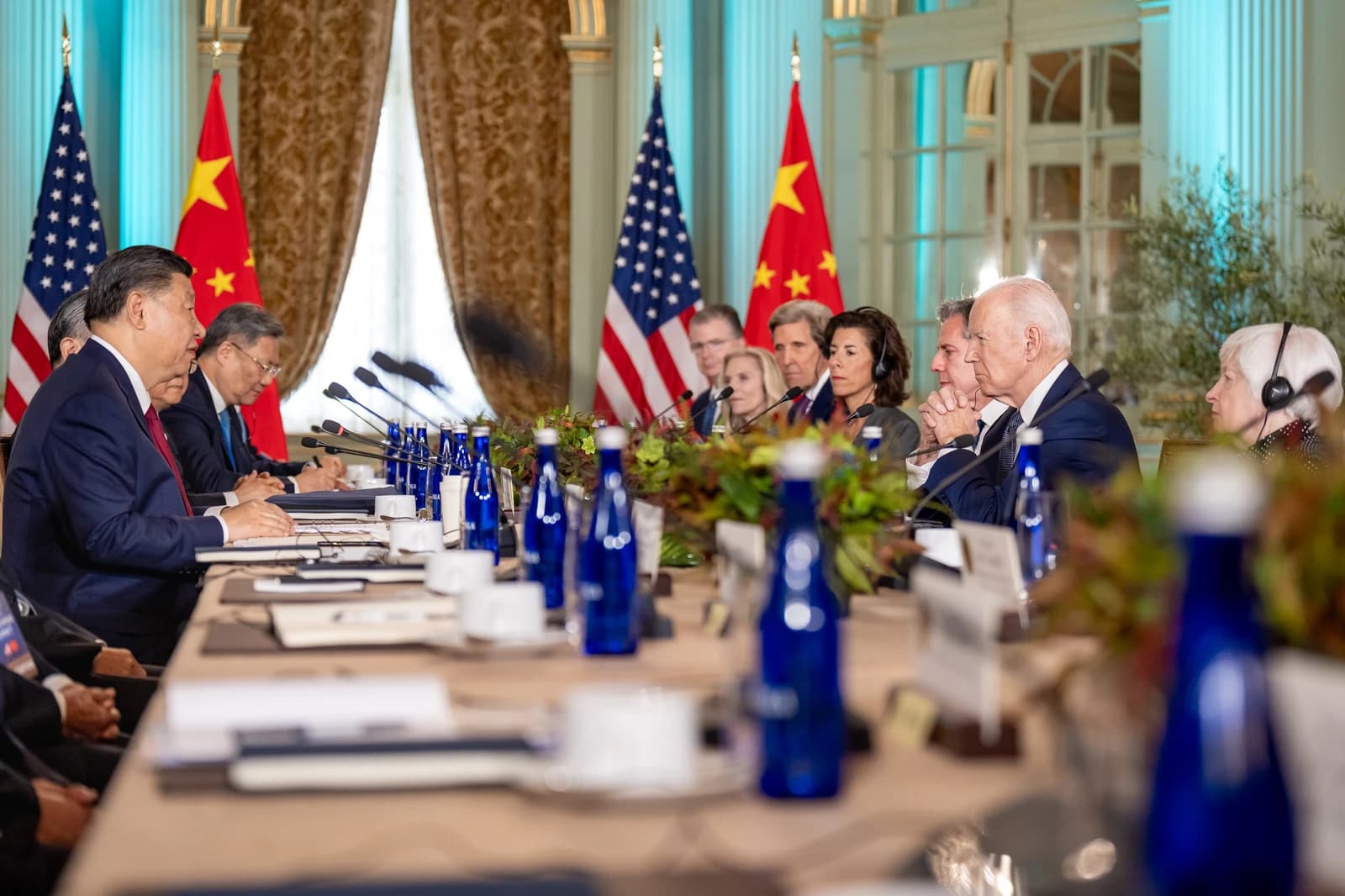
Vasily Kashin of the Higher School of Economics said Washington sees the current detente as lasting only months, while Beijing is hoping to stretch it for years, buying time before any direct confrontation. He argued that a recent high-profile visit by Chinese President Xi Jinping to the U.S. amounted to little more than an economic truce. In his view, the deeper force shaping the relationship is an intensifying arms race, especially China’s rapid expansion of nuclear submarine construction, which he said points to a phase of rivalry closer to the U.S.-Soviet confrontation of the Cold War.
For investors, that implies the bilateral relationship is moving from broad trade conflict toward a more structural contest over strategic industries, military power and access to critical technology. Markets have already seen how quickly political decisions can reshape sector winners and losers, from 5G equipment to semiconductors. A limited thaw may reduce immediate tariff and sanction risk, but it does not remove the possibility of renewed pressure on industries tied to artificial intelligence, advanced manufacturing, telecoms and defense.
Yana Leksyutina of the Institute of China and Modern Asia said the present calm is also tied to China’s export controls on rare earths, which she described as a meaningful lever over the U.S. economy. That gives Beijing a temporary shield, she argued, but only until Washington decides it can absorb the pain or diversify supply. The economic significance is clear: rare earths and other critical minerals sit at the center of electric vehicles, renewable energy, defense systems and consumer electronics, making them a strategic choke point rather than a narrow trade issue.
Her comments also underscore why the relationship remains economically brittle. China is trying to strengthen domestic demand and build more resilient supply chains, but it remains dependent on imported energy and food, while the U.S. and Europe are tightening barriers to advanced technology transfer. That combination suggests the next phase of competition will be defined less by headline tariffs than by efforts to protect value-added chains, stockpile inputs and redirect trade and investment flows.
Ivan Zuenko of MGIMO said China is facing a more hostile external environment, the loss of its low-cost labor advantage and a weakening growth model, even as power becomes more centralized around Xi. He framed technology as Beijing’s answer to those pressures, but also as the main source of friction with Washington, especially in artificial intelligence. That raises the stakes for companies exposed to cross-border data, chips, cloud services and industrial software, where policy shifts can quickly alter revenue assumptions and valuation multiples.
Adalytica’s U.S.-China Relations Sentiment gauge points to that fragility as well, showing fear levels and sharply deteriorating awareness over the past month, even as the broader global stability gauge has swung into extreme-greed territory. For markets, that combination suggests investors are pricing a period of relative calm while remaining wary of abrupt escalation.
The base case, according to the experts cited, is not reconciliation but managed competition: a temporary pause in escalation, followed by renewed pressure once the balance of leverage shifts. The bull case is that both sides keep the peace long enough to preserve trade flows and limit market disruption. The bear case is that the truce breaks down around rare earths, AI or security policy, forcing a new round of sanctions, export controls and allied pressure.
For investors, the message is to treat any improvement in U.S.-China rhetoric as tactical rather than cyclical. The relationship still matters because it shapes capital spending, supply-chain resilience, defense budgets and the outlook for technology sectors that remain central to global growth.
| Entity | Gains | Losses |
|---|---|---|
| China | ▲Time to strengthen leverage | ▼Risk of broader containment |
| United States | ▲Short-term supply stability | ▼Exposure to rare earth dependence |
| Tech and AI firms | ▲Temporary policy calm | ▼Export-control uncertainty |
| Defense sector | ▲Higher strategic demand | ▼Fewer immediate de-escalation benefits |