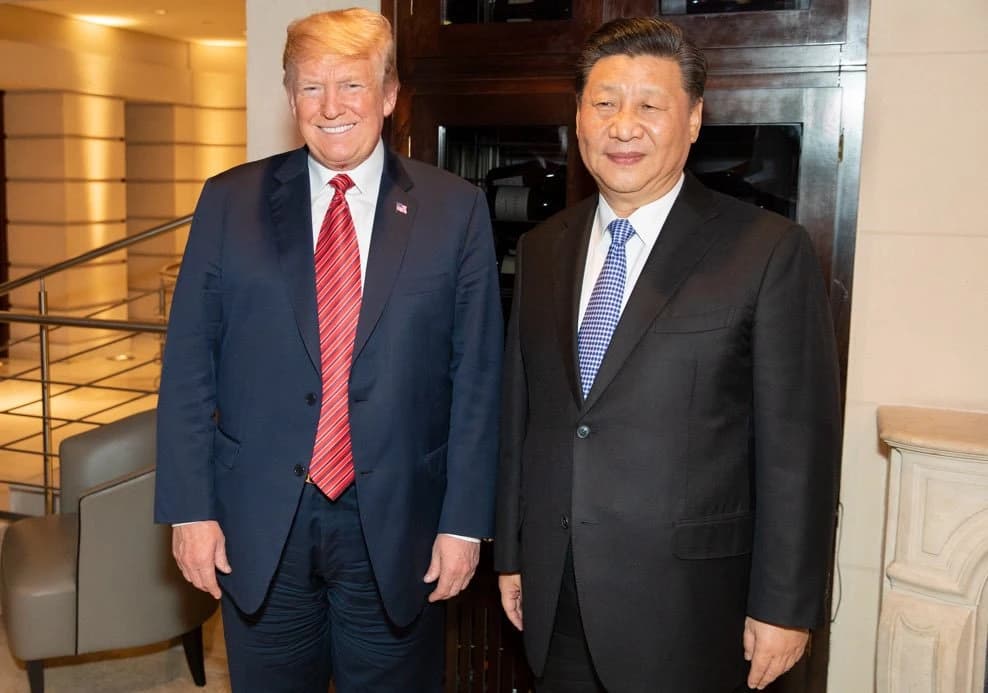
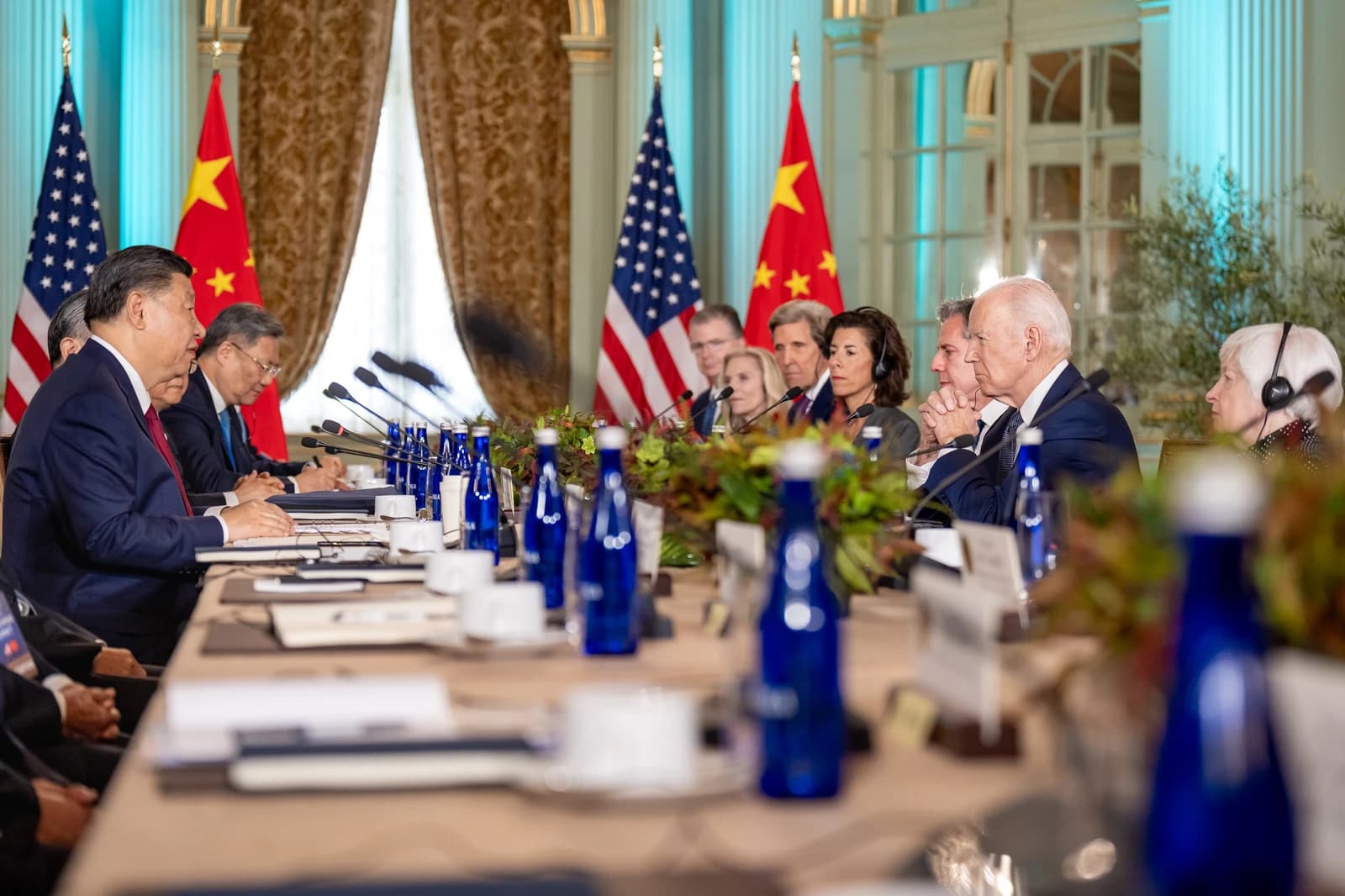
Xi Jinping and Donald Trump’s public commemoration of the China-U.S. alliance in World War II points to a tactical thaw in the world’s most economically important rivalry, but markets should read it as a pause, not a reset.
China-U.S. thaw lifts trade and risk appetite
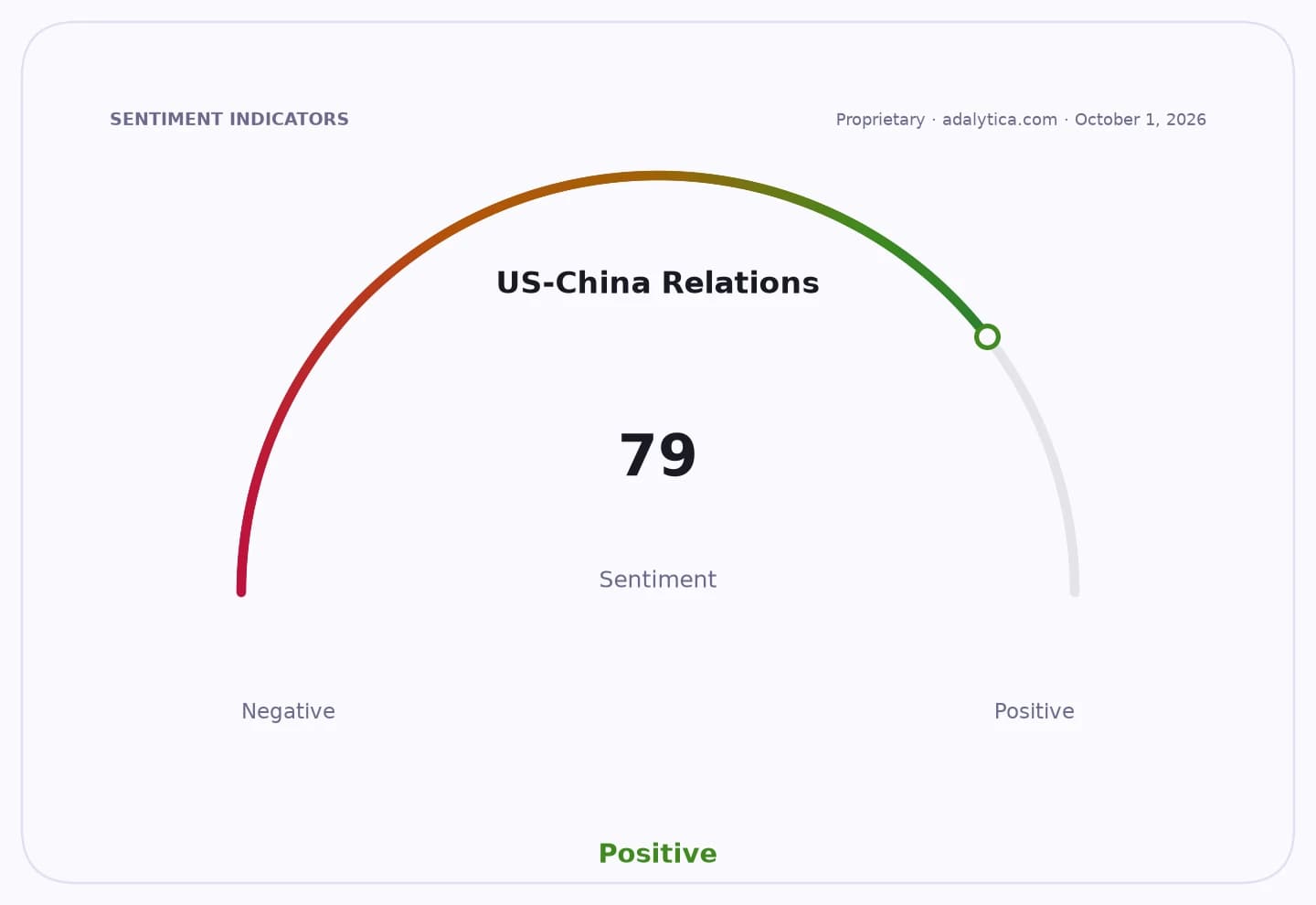
The symbolism matters because even modest de-escalation between Washington and Beijing can move capital, trade expectations and risk appetite across semiconductors, industrials, defense, shipping and commodities. The Adalytica US–China Relations Sentiment gauge is still in “Greed” territory at 79, but it has fallen 4 points in a day and 21 points over the past week, suggesting the market is pricing less immediate friction after a sharp run-up in optimism. At the same time, global stability sentiment has dropped to 39, with “Extreme Fear” awareness at just 4, underscoring how fragile the broader geopolitical backdrop remains even when diplomatic tone improves.
Sentiment IndicatorsⓘProprietary · adalytica.com · October 1, 2026
This is a snapshot — live sentiment, awareness and momentum for 130+ markets update continuously in the dashboard.Open AlphaPulse
That split is exactly why this story matters economically. A softer U.S.-China tone can ease pressure on supply chains, reduce the odds of fresh tariff escalation and support cyclical assets tied to cross-border commerce. But it also risks lulling investors into underestimating how quickly the relationship can deteriorate again. The 30-day jump in US–China sentiment of 37 points shows how fast positioning can swing on headlines, and that volatility itself is becoming a tradable feature of the relationship.
For investors, the implication is not to chase the handshake story, but to focus on the second-order winners of any sustained détente. Exporters, industrial machinery makers, logistics names and multinational technology firms with China exposure can benefit if trade frictions stay contained. Semiconductor equipment suppliers and AI infrastructure providers could also see a better backdrop if rhetoric cools and capex planning becomes more predictable. But the bigger opportunity may be in the hedge: defense contractors, cyber-security companies and supply-chain reshoring plays remain essential because any improvement in tone is unlikely to erase strategic competition over technology, Taiwan and industrial policy.
US-China Relations — 30-day sentimentadalytica.com
Explore this data interactively — full history, time series and cross-market comparisons.Open AlphaPulse
The market is underestimating how often Washington and Beijing can alternate between symbolism and confrontation. A WW II commemoration is politically useful, economically supportive at the margin and investable only if it marks the start of a calmer phase. Until there is follow-through in tariffs, export controls and capital access, this remains a tactical truce inside a structural rivalry. The right move for investors is to own the beneficiaries of lower geopolitical temperature while keeping durable exposure to the companies that profit when the temperature rises again.
| Entity | Gains | Losses |
|---|---|---|
| Exporters and multinationals | ▲Easier China access | ▼Fewer safe-haven flows |
| Industrials and logistics | ▲Trade normalization | ▼Freight-risk premium |
| Semiconductor equipment makers | ▲Capex visibility | ▼Escalation hedges |
| Defense and cyber stocks | ▲Strategic rivalry persists | ▼Détente sentiment |