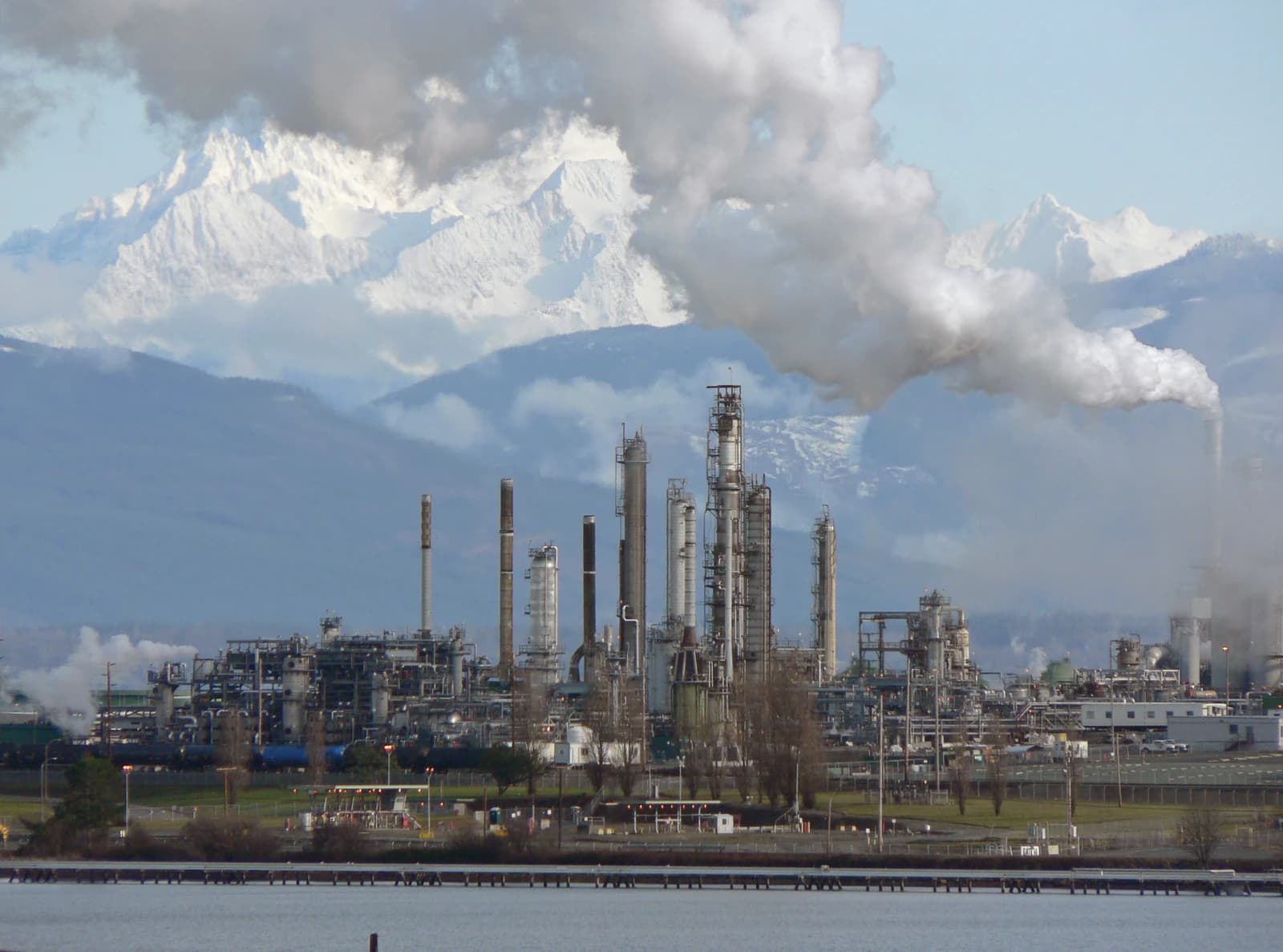
Iran’s war is starting to look less like a distant foreign-policy test and more like a pocketbook issue that could shape the U.S. midterms, with gasoline prices and inflation fears feeding directly into voter frustration with Donald Trump’s handling of the crisis.
Iran war, gas prices, and U.S. midterm politics
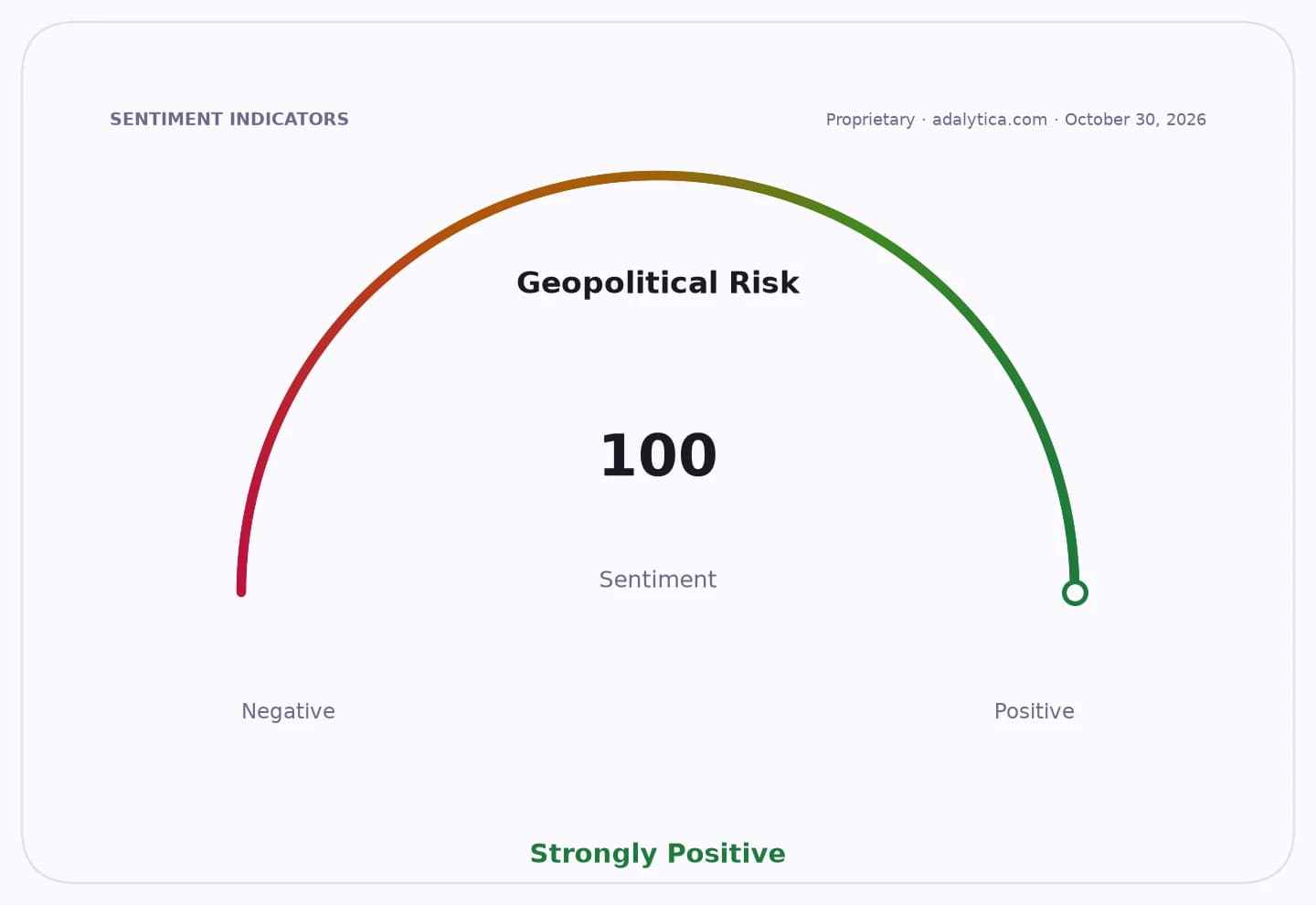
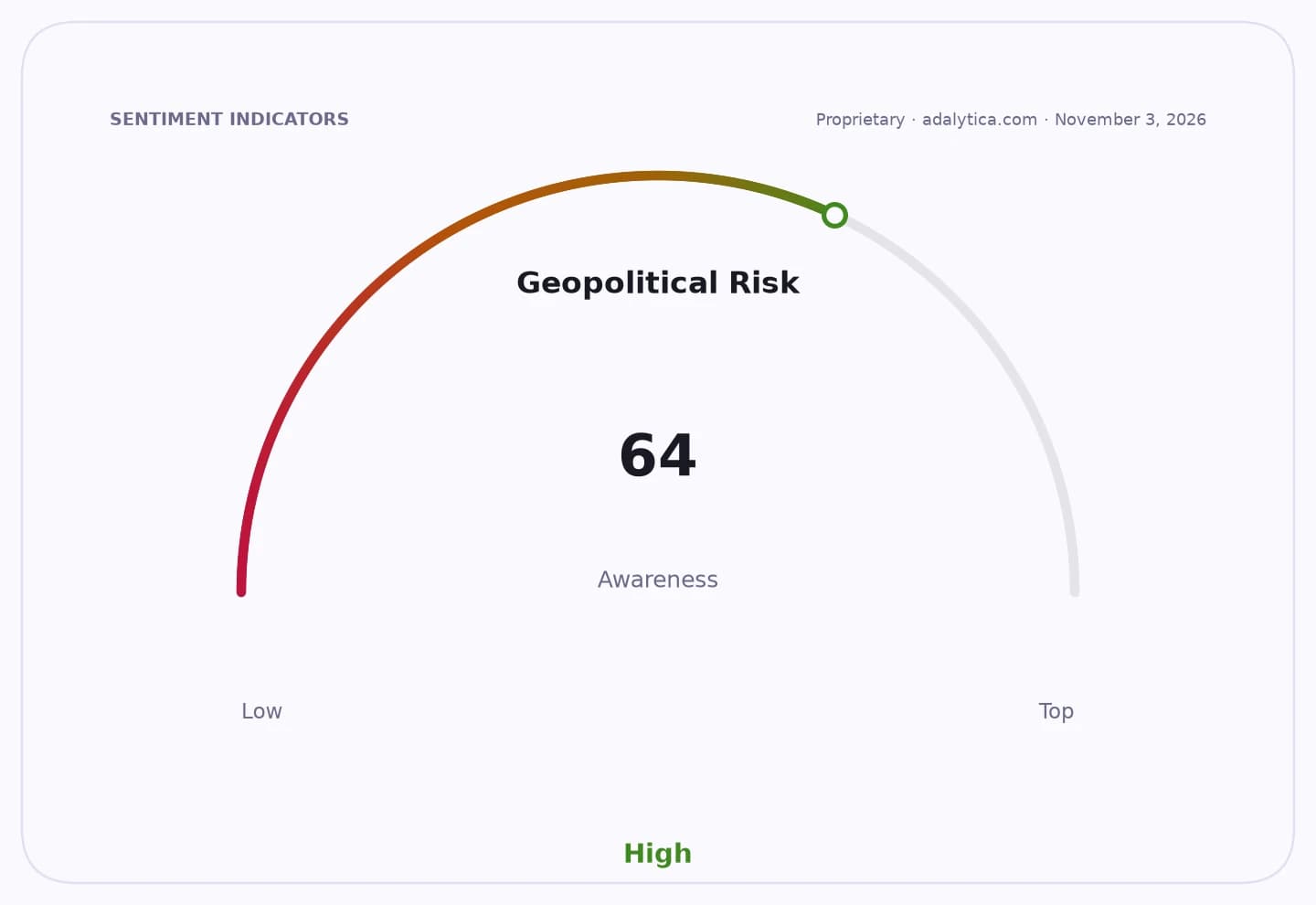
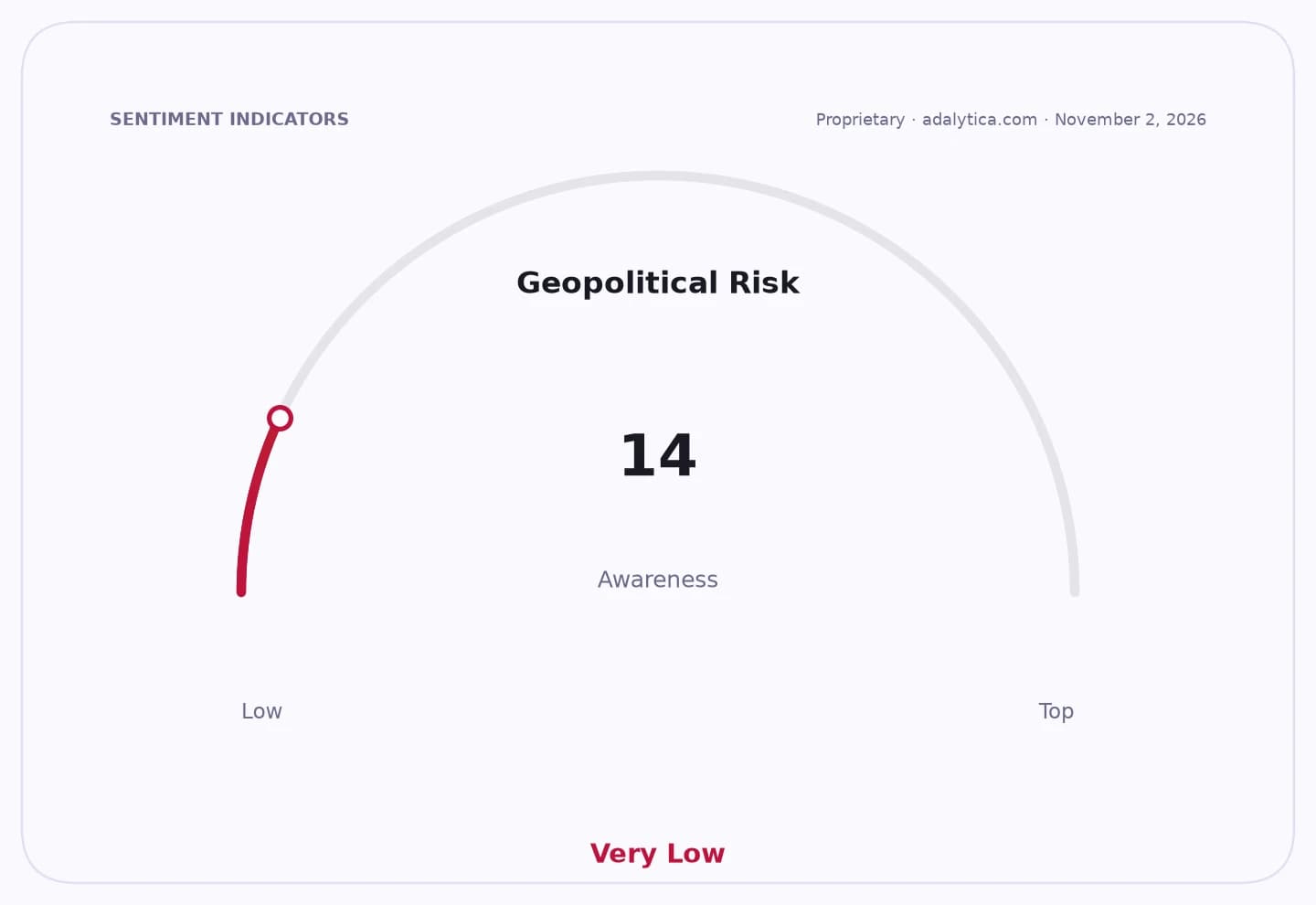
Geopolitical Risk
That matters because elections are now colliding with a classic energy shock. When a conflict in the Middle East pushes up fuel and transport costs, it ripples through household budgets, shipping, travel and consumer prices — exactly the terrain where incumbents get punished. Polling shows the issue is breaking through: 85% of AP-NORC respondents say the economy is a top voting issue, 84% say the cost of living is, and 64% are also including the Iran war among their priorities. A Gallup survey found 47% of registered voters see it as very important.
Sentiment Indicators
Presidential Approval
The economic transmission is already visible. AP reported disruptions to Middle East oil shipments have lifted fuel and freight costs, with the average U.S. gasoline price at $4.33 a gallon, 45% above pre-war levels. That is not just pain at the pump. It raises costs across the economy, from air travel to parcel delivery, and threatens to keep inflation sticky just when voters are most sensitive to household bills.
That is why the war is becoming politically toxic for the White House. In the AP-NORC survey, 69% of Americans said the war was not worth fighting, while approval of Trump’s handling of Iran was just 28%. Even if Trump is not on the ballot, the election is turning into a referendum on the costs his foreign-policy choices have imposed on consumers.
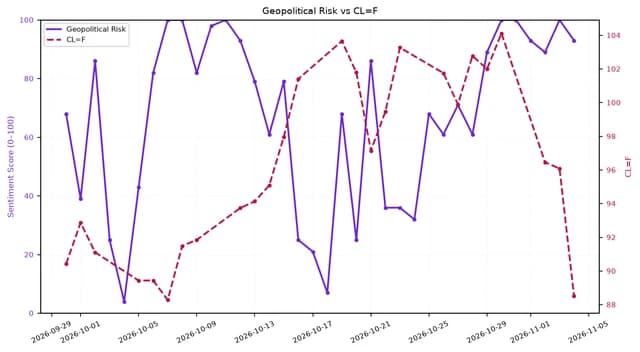
For investors, the message is straightforward: geopolitics is once again an inflation trade. Oil at roughly $100 a barrel, U.S. benchmark crude near $96 and the energy sector outperforming broader equities show the market is pricing a persistent risk premium into supplies. That helps producers and defense names while pressuring airlines, shippers, consumer discretionary stocks and the broader market if energy costs stay elevated. XLE has held up far better than the S&P 500 over the past year, underscoring where capital is hiding when Middle East risk rises.
The other underappreciated angle is policy. If voters decide the war has become a kitchen-table issue, the pressure on Washington to contain escalation will intensify, regardless of strategic rhetoric. That is the setup investors should watch: not just whether conflict widens, but whether domestic backlash forces a de-escalation that cools oil, eases transport costs and relieves the inflation squeeze.
For now, the trade is asymmetric. Energy, defense and select industrial suppliers still have a tailwind from elevated geopolitical risk, but the bigger opportunity may come from recognizing how quickly the market could reprice if voters and policymakers decide the bill for Iran’s war has become too expensive to ignore.
| Entity | Gains | Losses |
|---|---|---|
| Oil producers | ▲Higher crude prices | ▼Demand-sensitive sectors |
| Defense contractors | ▲More security spending | ▼Diplomatic de-escalation |
| Airlines and shippers | ▲— | ▼Fuel and freight costs |
| U.S. voters | ▲Political leverage on policy | ▼Higher household costs |