Trump’s declaration that U.S.-Iran talks are “constructive” and that Washington will not attack Tehran before the elections is the biggest near-term market signal out of the Middle East because it lowers the odds of an immediate supply shock in crude while preserving the broader geopolitical risk premium.
Trump Iran Talks Ease Immediate Oil Shock Risk
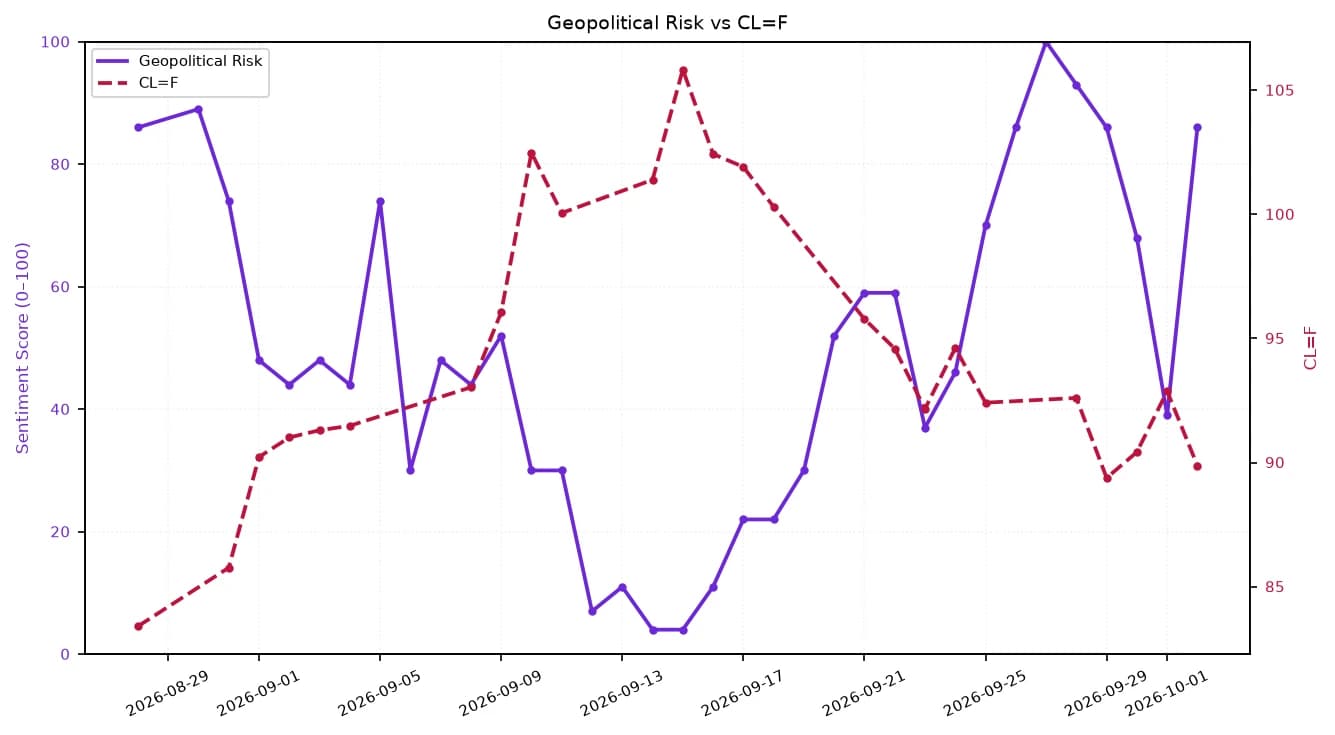
Geopolitical Risk
For investors, that matters in two opposite ways at once: it eases the fear of a sudden Brent-style spike tied to a U.S. strike, but it does not eliminate the strategic tension that has kept energy, defense and shipping names bid. The market is being asked to price a pause, not a peace deal.
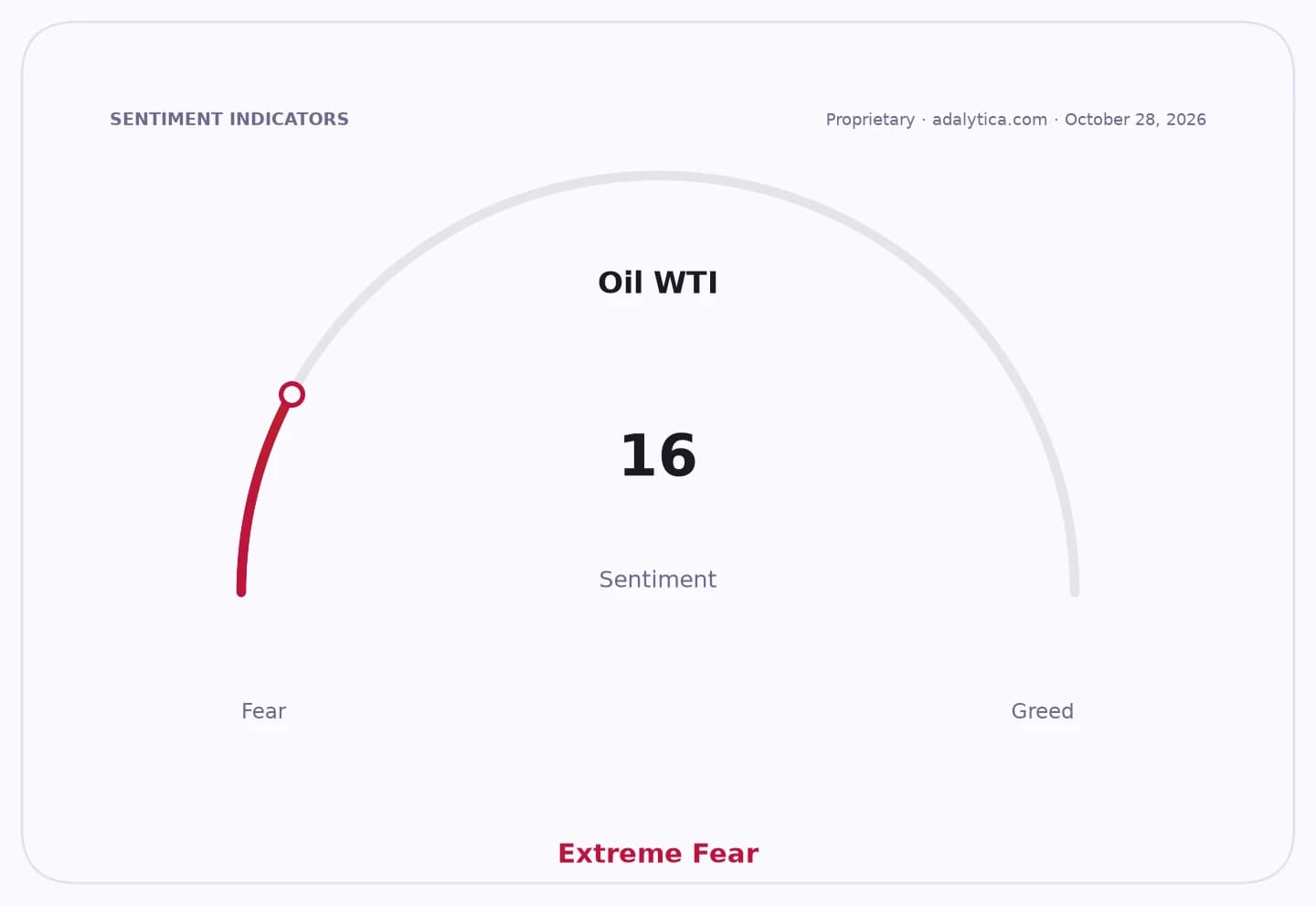
Sentiment Indicators
Geopolitical Risk
Crude is already trading as if traders want insurance. WTI settled at $102.95 on Oct. 30, well above its 50-day average of $94.61 and 200-day average of $86.34, with RSI readings around 65, a sign the market is still technically strong even after the latest pullback. The Energy Select Sector SPDR has climbed to $70.02, while the iShares U.S. Aerospace & Defense ETF sits at $209.74 after recovering from recent weakness. That combination says capital is still flowing toward assets that benefit from geopolitical stress, even when the most immediate escalation is delayed.
The message is not just about oil. A restrained U.S. posture before the election reduces the probability of a disruption to Gulf flows, but it also keeps the region in a negotiation-heavy holding pattern where every headline can move commodity prices, defense budgets and shipping rates. Adalytica’s Global Stability Sentiment gauge is flashing extreme greed, while awareness remains extremely low, a sign that markets are comfortable with the headline risk but still under-positioned for a sharper move if talks fail or the posture changes.
Geopolitical Risk vs CL=Fadalytica.com
Explore this data interactively — full history, time series and cross-market comparisons.
That creates an asymmetric setup. If diplomacy extends, crude may cool and relieve pressure on consumers, airlines and importers. But if talks break down, the market will quickly reprice the possibility of strikes, retaliation against energy infrastructure or even threats to the Strait of Hormuz. Iran’s warning that it could broaden its response, including against internet cables at sea, only reinforces how many second-order risks remain embedded in this standoff.
The investable takeaway is straightforward: stay overweight the picks-and-shovels of geopolitical uncertainty. Energy producers, integrated majors, defense primes and select shipping names still offer the best hedge against a Middle East shock, while refiners and transport stocks are the more obvious losers if crude spikes. The market may be relieved by Trump’s no-strike signal, but investors should treat it as a temporary pause in risk, not the end of the trade.
| Entity | Gains | Losses |
|---|---|---|
| Oil producers | ▲Higher risk premium | ▼Demand-sensitive sectors |
| Defense contractors | ▲Sustained security spending | ▼Peace-sensitive valuations |
| Airlines and transport | ▲Lower immediate fuel shock | ▼Rising oil costs |
| Importers / consumers | ▲Short-term relief | ▼Geopolitical escalation risk |