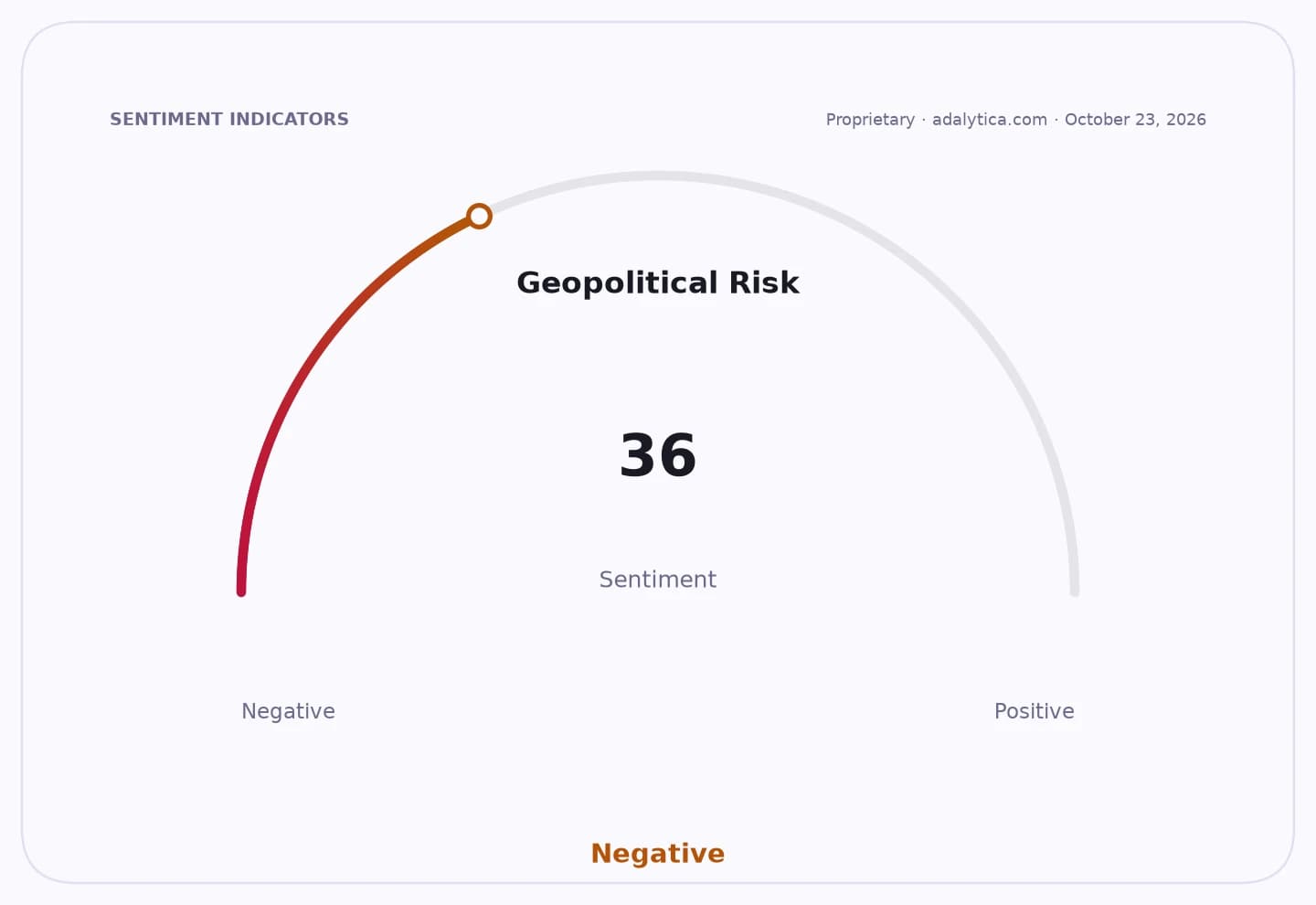
The war with Iran is emerging as the key variable shaping both Trump’s foreign policy and Ukraine’s ability to keep fighting, with higher oil prices, a diesel squeeze and Moscow’s opportunistic role all feeding a geopolitical trade-off that could leave Kyiv weaker.
Oil prices, Ukraine, and Iran tensions

If Washington pushes for a harder line against Tehran, the immediate economic consequence is a tighter global fuel market. A disruption to Saudi crude flows through the Red Sea has already sent oil above $100 a barrel and created a diesel shortfall equal to about 25% of global output, according to the supplied background. That matters far beyond energy markets: Europe is the main rear base for Ukraine’s war effort, and persistent fuel inflation would hit industrial activity, transport costs and government finances at the same time as defense spending stays elevated.
Sentiment Indicators
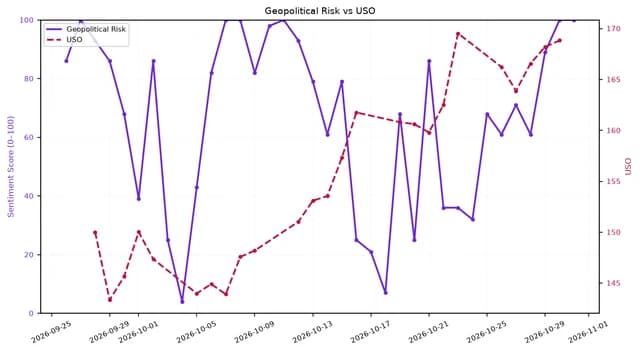
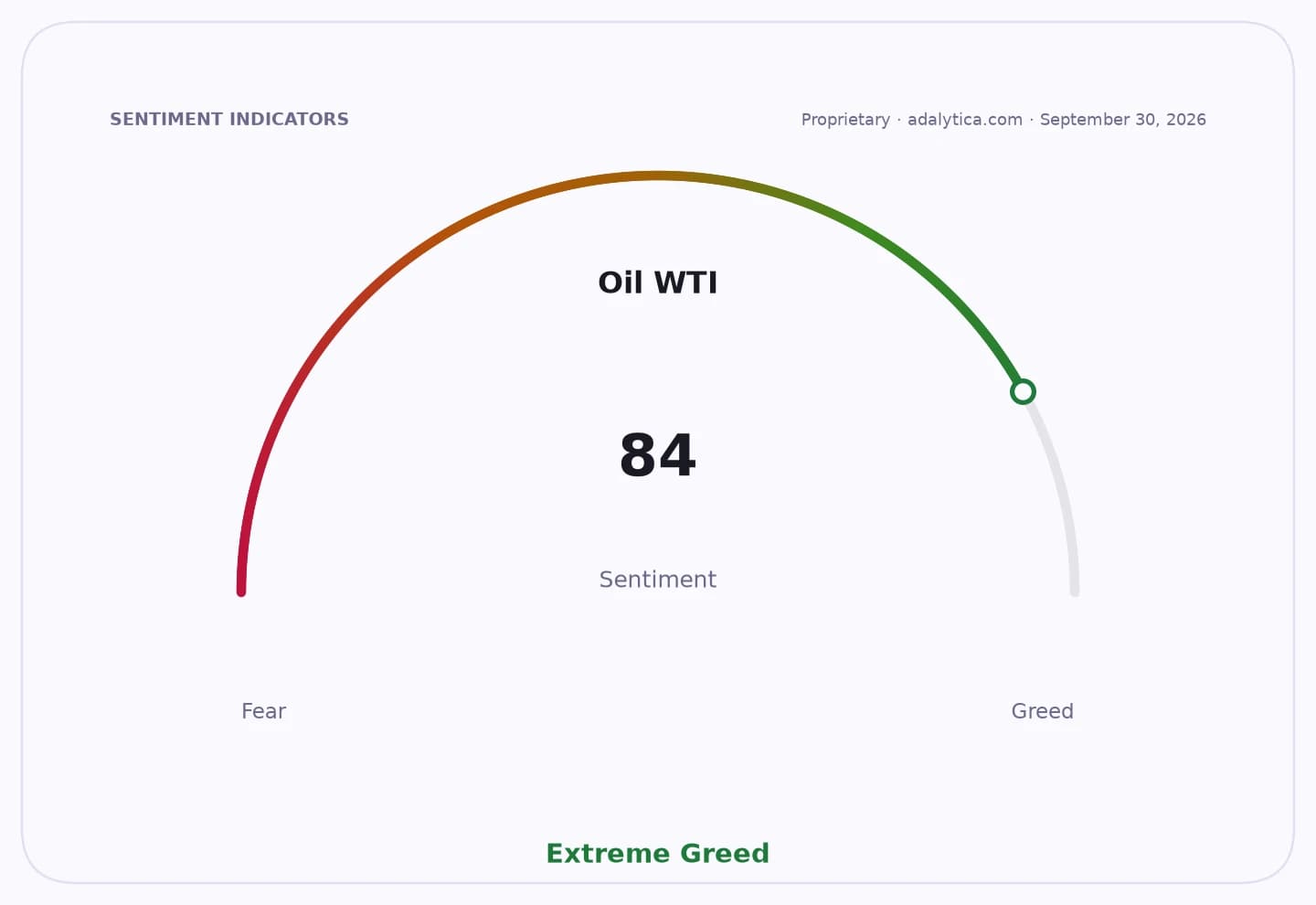
Russia is trying to exploit that pressure, but it cannot fully replace the lost barrels or diesel. Even in better years, the country supplied no more than 5% of global diesel, leaving it structurally unable to offset the shortage. That limits Moscow’s economic leverage in the long run, yet in the near term it still benefits from any rise in crude prices. Higher oil has already been supportive for USO, which has climbed to $168.83, far above its 50-day moving average of $150.09 and 200-day average of $123.98. The fund’s RSI reading of 77 suggests the rally is stretched, but the trend remains decisively bullish.
Gold has not been the primary beneficiary this time. GLD fell to $355.78 on Oct. 30, below both its 50-day and 200-day moving averages, even as geopolitical risk stayed elevated. That divergence suggests investors are treating the shock less as a pure safe-haven event and more as an energy and inflation story, with the dollar also firmer on a trade-signals basis. UUP closed at 29.00, above both its 50-day and 200-day averages, indicating demand for dollar exposure alongside the wider geopolitical stress.
Oil WTI
The deeper issue is strategic. Trump appears to be using rapprochement with Moscow as leverage over Europe, forcing allies to weigh support for Ukraine against the risk of being dragged into a broader Middle East confrontation. That would complicate NATO politics just as ammunition stocks, air defense systems and fiscal space remain tight. If Europe is asked to back a major operation against Iran or the Houthis, the trade-off could become direct: less room to sustain Ukraine’s defense, especially if energy prices keep squeezing budgets and defense production.
Moscow’s behavior also underscores how little it fears public confrontation with Washington. The supplied material cites sanctions on Russian company A7 over payments for Iran, followed by senior Russian officials joining its supervisory board, and Rosatom expanding its staff at Bushehr. Those moves suggest Russia sees room to cooperate with Iran while testing how far the US will go in enforcing pressure. For investors, that raises the probability of a prolonged geopolitical premium in energy and defense assets, while keeping pressure on Europe’s growth outlook.
The bullish case for Ukraine is that a decisive Western settlement with Iran could eventually reduce oil’s geopolitical premium and weaken Russia’s energy leverage in Europe. The bearish case is that the near-term path is the opposite: a more volatile Middle East, sustained diesel tightness and a Trump administration willing to subordinate Ukraine to a larger strategic bargain. Until the market gets clarity on whether Washington wants de-escalation or a broader confrontation, energy prices, not battlefield headlines, may do the most damage to Kyiv’s margin of safety.
| Entity | Gains | Losses |
|---|---|---|
| Russia | ▲Higher oil revenue, diplomatic leverage | ▼Cannot fully cover diesel shortage |
| Ukraine | ▲Potential long-term easing if Iran tension fades | ▼Ammunition and air-defense squeeze |
| Europe/NATO | ▲Possible strategic leverage in a deal | ▼Higher fuel costs, weaker fiscal room |
| Oil producers | ▲Elevated prices and margins | ▼Demand risk if growth slows |