Russia and Iran are trying to frame the latest Middle East escalation as a diplomatic problem, but markets are still pricing it as an energy and security risk.
Russia and Iran Discuss Iran Crisis at UN
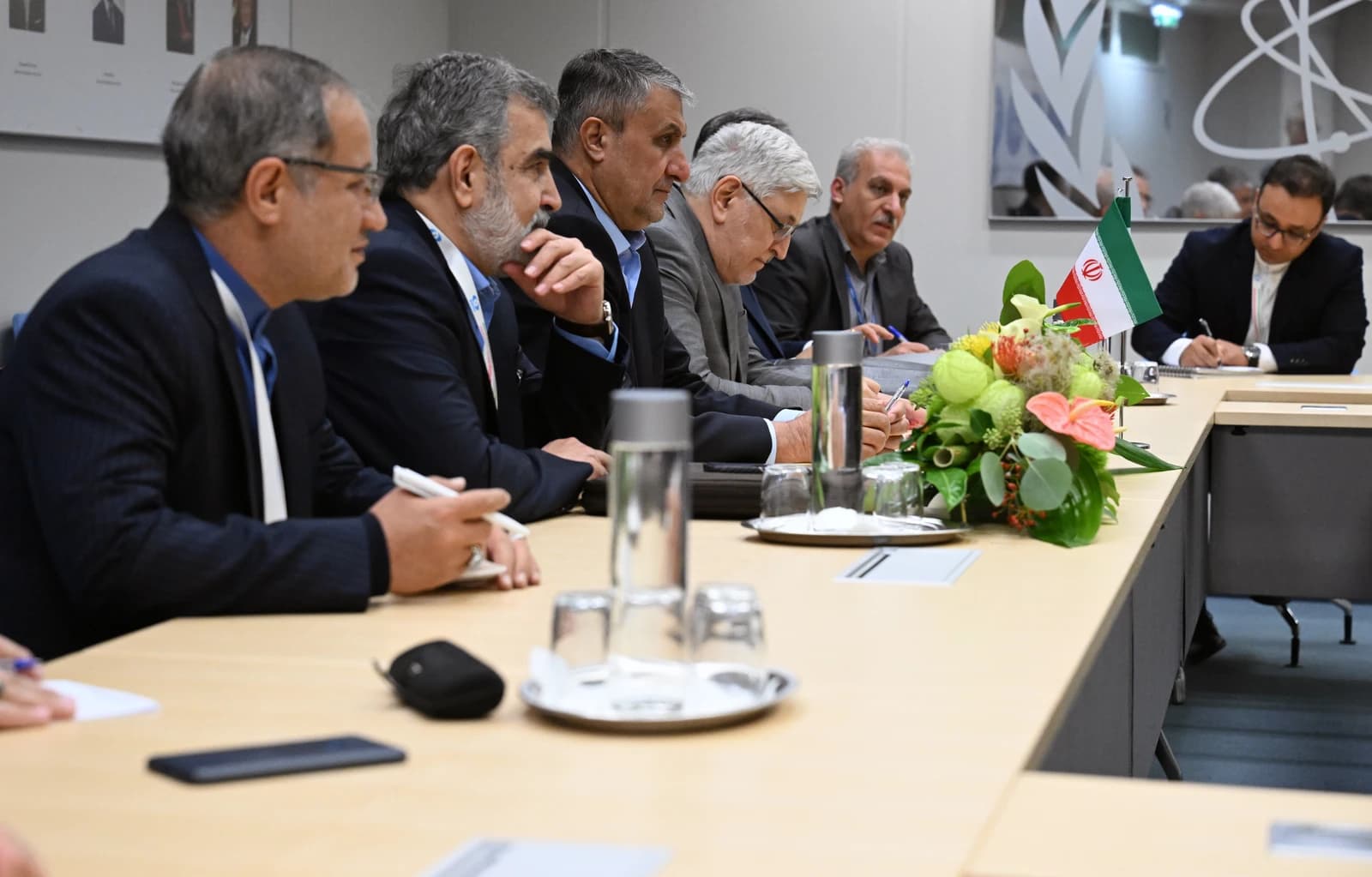
Russian Foreign Minister Sergei Lavrov and Iranian Foreign Minister Abbas Araqchi said there was “no alternative” to a negotiated settlement around Iran after meeting on the sidelines of the UN General Assembly, with Moscow blaming the crisis on U.S. and Israeli actions. The message matters because it comes as Washington has threatened to intensify pressure on Tehran after attacks linked to the conflict around the Strait of Hormuz, a chokepoint that carries a large share of global seaborne oil.
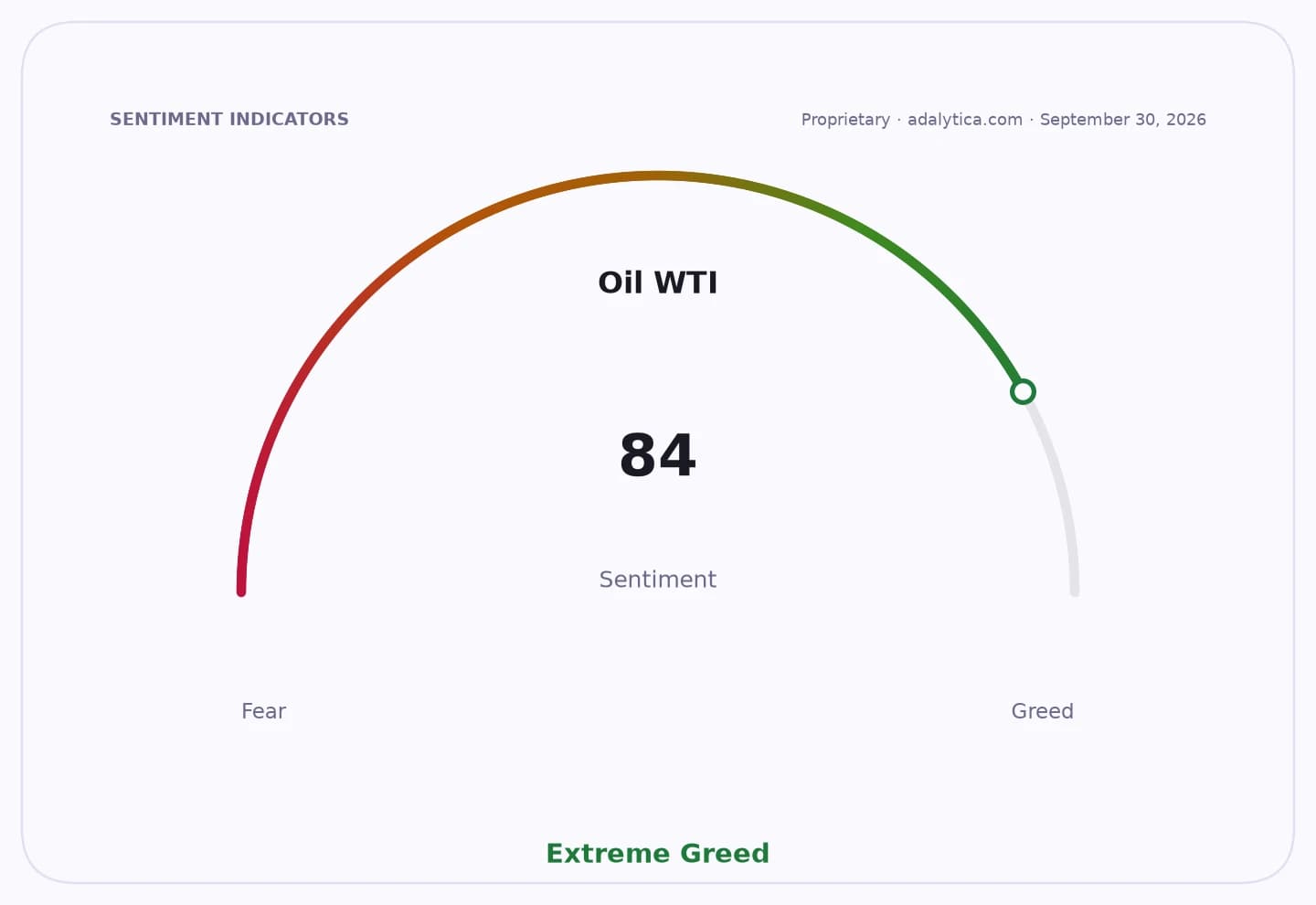
Sentiment IndicatorsⓘProprietary · adalytica.com · September 30, 2026
This is a snapshot — live sentiment, awareness and momentum for 130+ markets update continuously in the dashboard.Open AlphaPulse
The economic significance is immediate. Any sustained threat to shipping lanes around Iran raises the odds of higher crude prices, wider freight and insurance costs, and a more persistent inflation impulse just as markets are already sensitive to supply shocks. Brent-linked energy exposure has been bid up in recent months, and U.S. crude benchmark signals remain elevated even after sharp swings. In the latest trading snapshot, the U.S. Oil Fund was still near $143 a share, while energy equities through the XLE ETF closed at $61.54, both well above levels seen earlier this year, showing how quickly geopolitical risk has been transferred into asset prices.
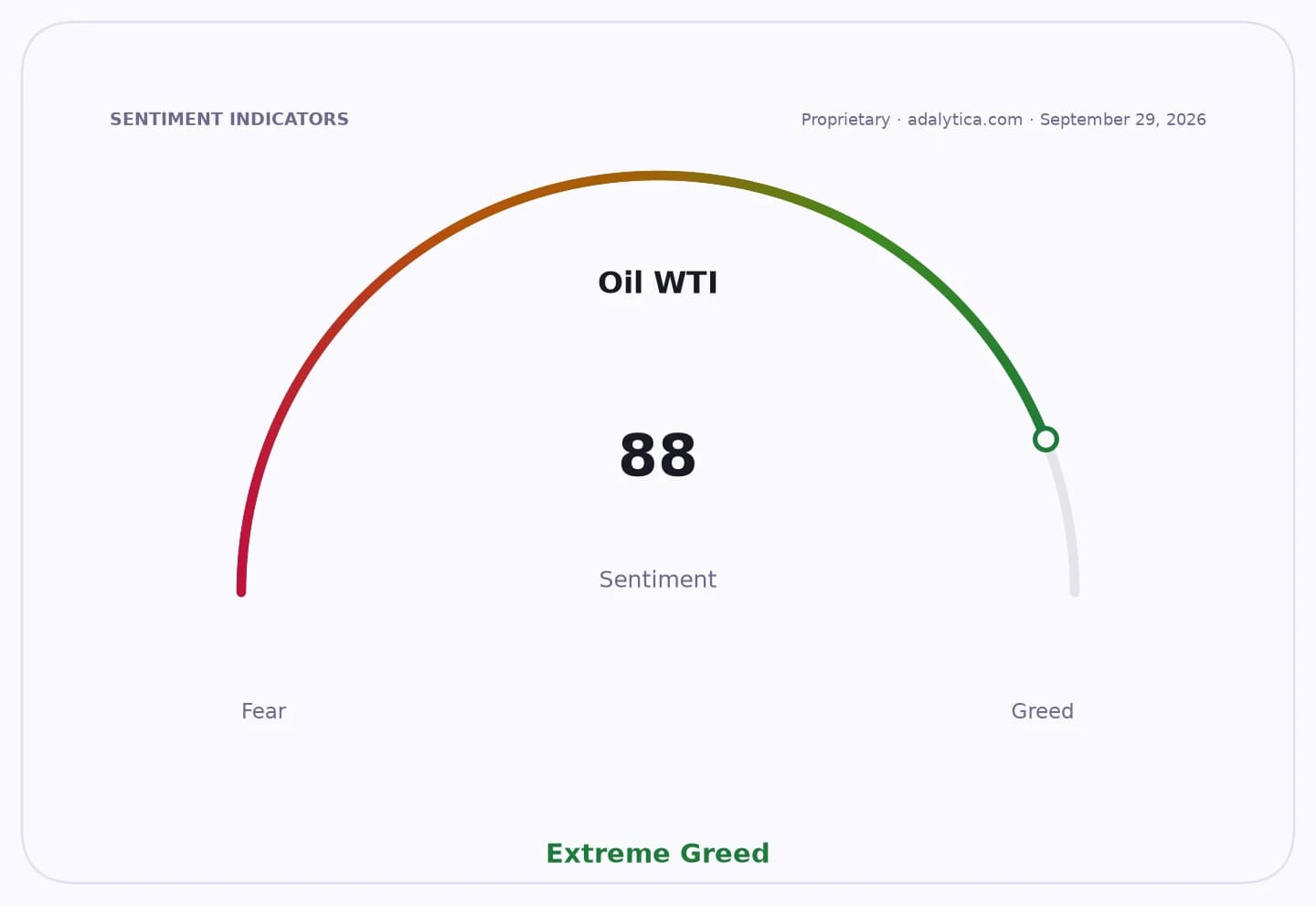
That reaction is consistent with the broader market backdrop. Adalytica’s global stability gauge still sits in “Extreme Greed” at 86, but its “awareness” reading is only 4, suggesting investors are aggressively positioned while underestimating the probability of another shock. In oil, Adalytica’s trade-signal snapshot shows “Greed” at 84. The technical picture also shows the rally has not fully unwound: XLE remains above its 200-day moving average, even after pulling back from recent highs, while USO, though off its peaks, remains far above long-term support levels.
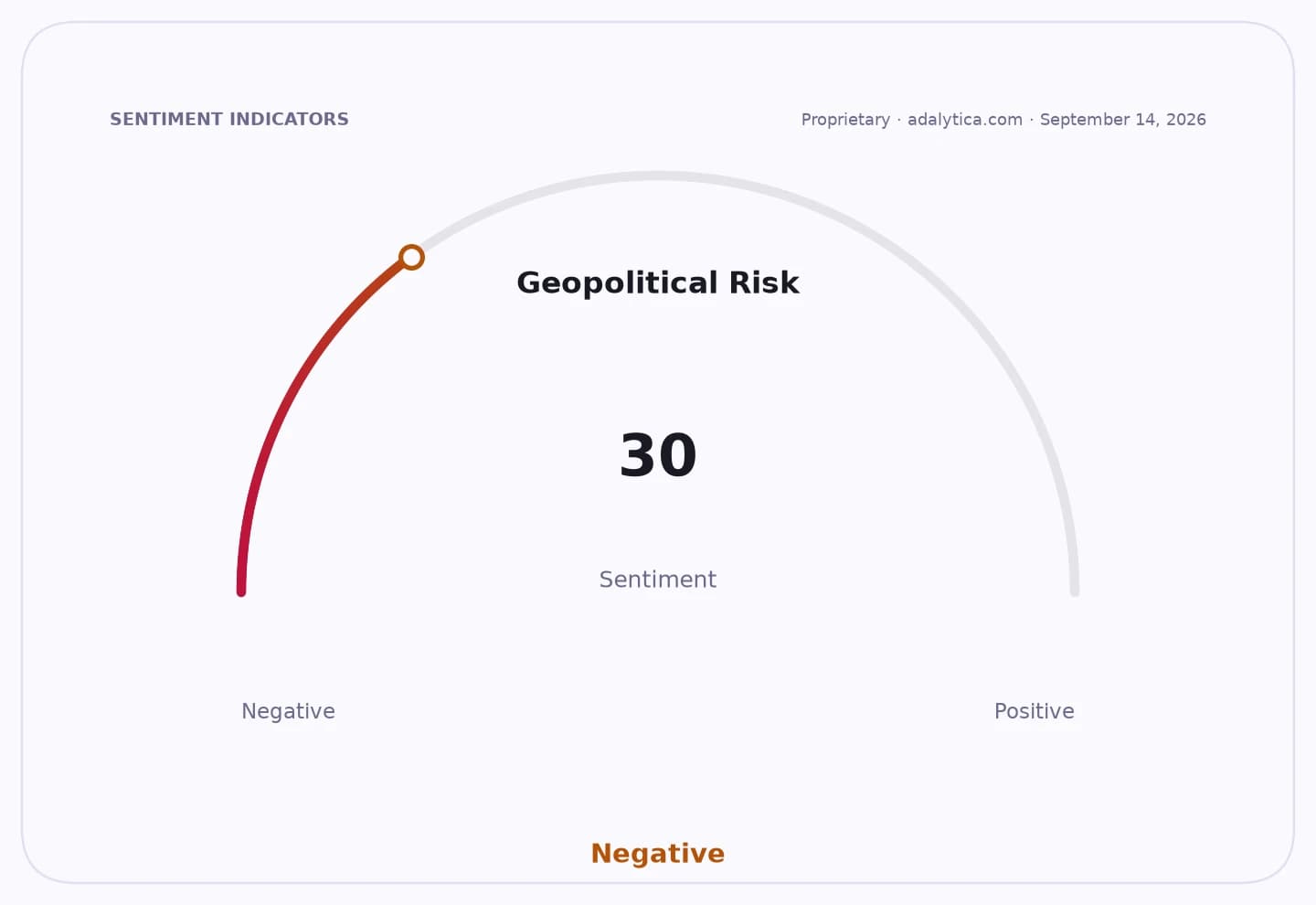
Geopolitical Risk — 30-day sentimentadalytica.com
Explore this data interactively — full history, time series and cross-market comparisons.Open AlphaPulse
For investors, the key question is not whether Russia and Iran want diplomacy — they clearly do — but whether rhetoric can contain a conflict that is increasingly being driven by military escalation and U.S. threats. If shipping through the Strait of Hormuz is disrupted or if the confrontation widens, the winners are energy producers, tanker-linked names and defense contractors. The losers are airlines, industrials, consumer companies facing higher input costs, and any portfolio built on the assumption that inflation was steadily fading.
That is why the story also has cross-asset implications beyond oil. The dollar is flashing stress, with Adalytica’s U.S. Dollar trade-signal snapshot showing “Extreme Fear” and a 0 sentiment reading, a sign that investors are treating geopolitical instability as a macro shock, not just a regional one. Treasury yields have stayed elevated as well, with the 10-year near 5.2%, leaving policymakers little room to absorb a renewed energy-driven inflation surge.
The strategic partnership Russia and Iran signed this year underscores how durable the alignment has become, even without a mutual defense clause. Moscow and Tehran are not offering a breakthrough so much as signaling that they intend to coordinate politically while the conflict around Iran remains unresolved. With Washington threatening more force and Gulf states watching the Strait of Hormuz closely, the market’s next move will depend less on the language of diplomacy than on whether the confrontation stays contained or spills further into energy infrastructure and shipping.
| Entity | Gains | Losses |
|---|---|---|
| Oil producers | ▲Higher realized prices | ▼Demand destruction risk |
| Defense contractors | ▲More demand for weapons | ▼No immediate downside |
| Airlines and transport | ▲None | ▼Higher fuel and insurance costs |
| Consumers/importers | ▲None | ▼Inflation and margin pressure |