Democrats’ control of the House after the U.S. midterm elections is unlikely to change President Donald Trump’s foreign policy, with the White House expected to keep the upper hand on sanctions, tariffs and most aid decisions.
House Democrats, Trump Policy, and Market Impact
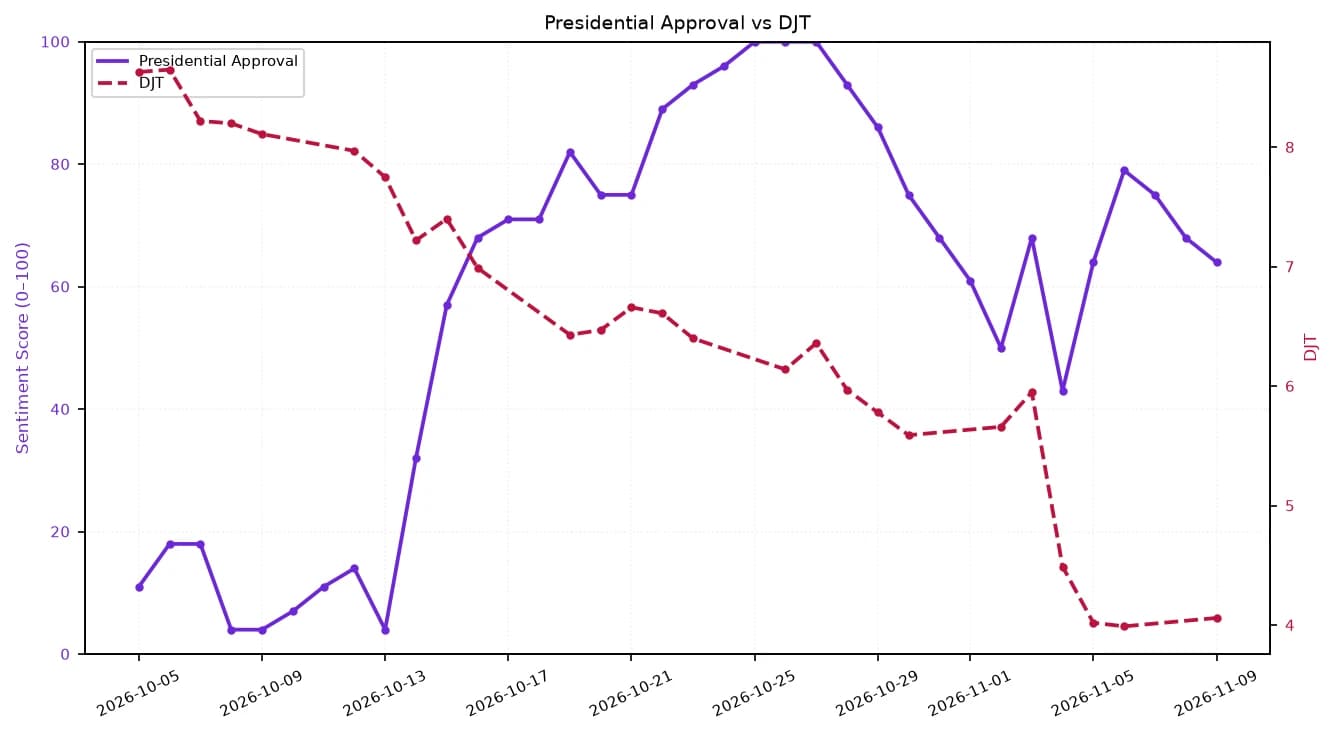
Presidential Approval
That matters because the president retains broad constitutional authority to move on his own in trade and foreign affairs, limiting the immediate market impact of a divided Congress. For investors, the key takeaway is that U.S. policy toward allies, rivals and trade partners is likely to stay concentrated in the executive branch, keeping headline risk high but making legislative checks slower and less predictable.
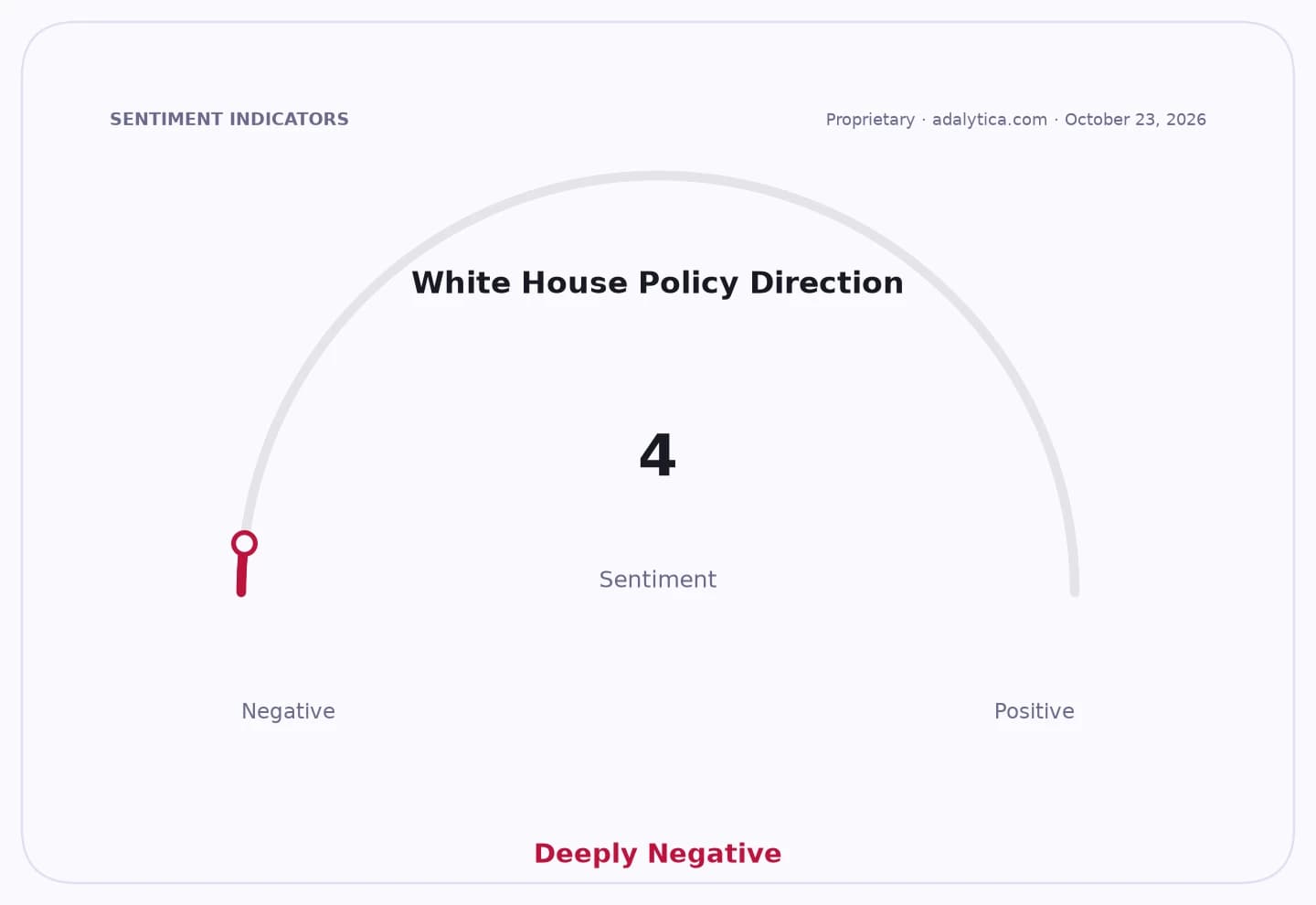
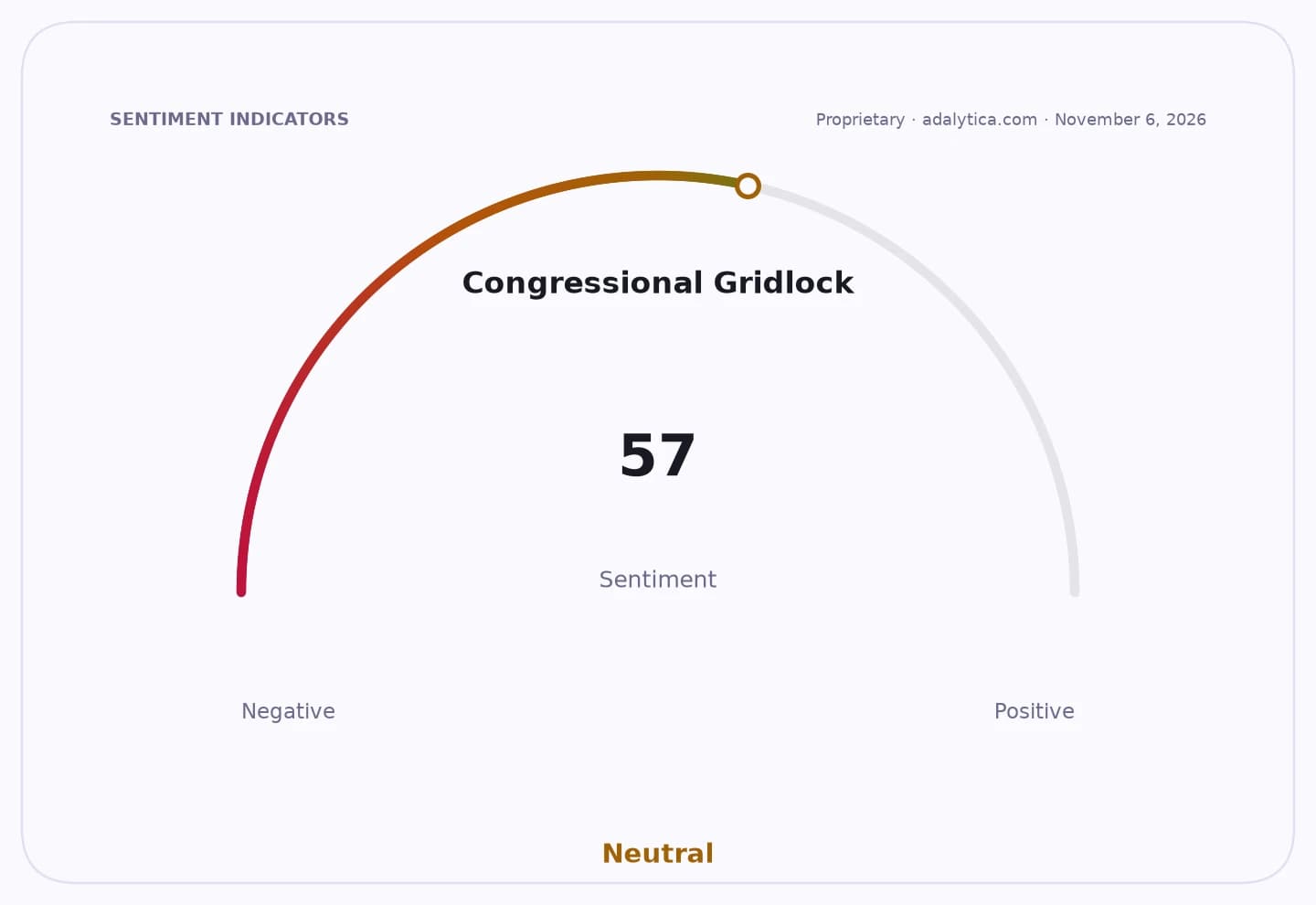
Sentiment Indicators
The Wall Street Journal reported that Democrats may use budget leverage to cut funding for some programs, but most operational decisions on sanctions and assistance will still sit with the administration. Congress could influence defense spending, including aid to Ukraine, and pass new sanctions laws, but the White House would still drive the day-to-day foreign policy response.
The setup suggests more friction in Washington rather than a policy reset. Lawmakers are likely to open investigations and slow confirmations, which could complicate the administration’s agenda, but the president can continue to act through executive orders, unilateral sanctions and tariff changes.
For markets, that means less chance of an immediate legislative brake on White House policy and more focus on executive actions that can hit currencies, commodities, defense names and multinationals with little warning. It also keeps geopolitical pricing sensitive to the administration’s next move, especially on Russia, Ukraine and trade.
Adalytica’s U.S. Congressional Gridlock sentiment sits at 96, indicating extreme expectations for paralysis on Capitol Hill, while its Global Stability reading is also in extreme-greed territory at 86, reflecting confidence that broad policy direction remains contained for now. The next test is whether Congress turns to spending fights or sanctions legislation as the White House presses ahead.
| Entity | Gains | Losses |
|---|---|---|
| White House | ▲Policy control | ▼Congressional restraint |
| Democrats in Congress | ▲Oversight leverage | ▼Direct policy influence |
| Defense contractors | ▲Spending visibility | ▼Budget cut risk |
| Markets | ▲Policy clarity from executive power | ▼Higher headline volatility |