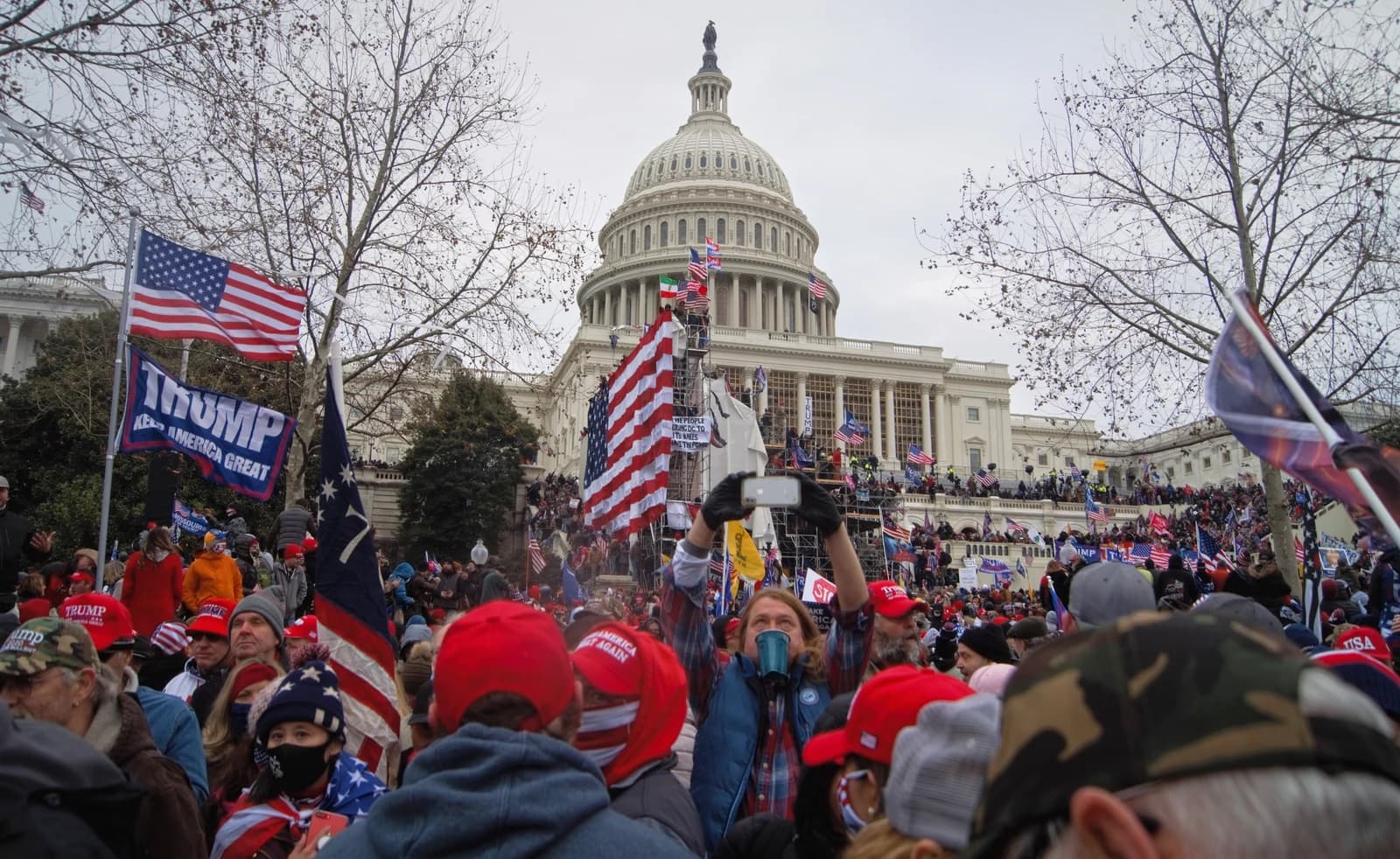
Democrats’ win in Congress is setting up a sharper phase of scrutiny for Donald Trump, with fresh investigations, more aggressive oversight and potential budget fights that could complicate the White House’s policy agenda and keep legal risk front and center for investors.
DJT Falls as Congress Shift Raises Trump Oversight Risk
The biggest economic issue is not the election outcome itself, but what it unlocks: more committee power, more subpoenas and a higher chance that Washington’s attention shifts from campaigning to investigations and confrontation. That raises the odds of delayed policymaking, government funding standoffs and headline risk across sectors exposed to federal spending, regulation and enforcement.
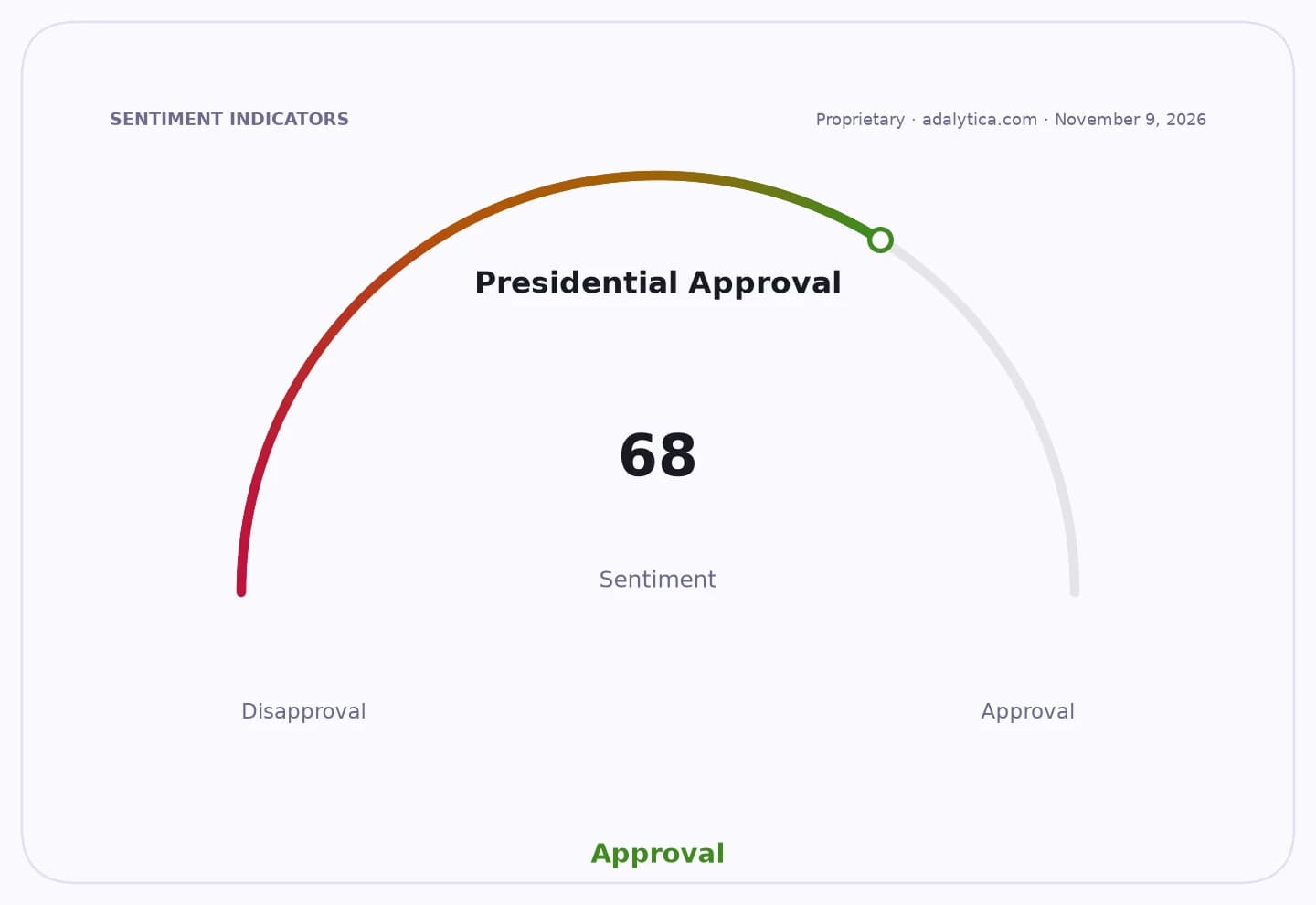
Sentiment Indicators
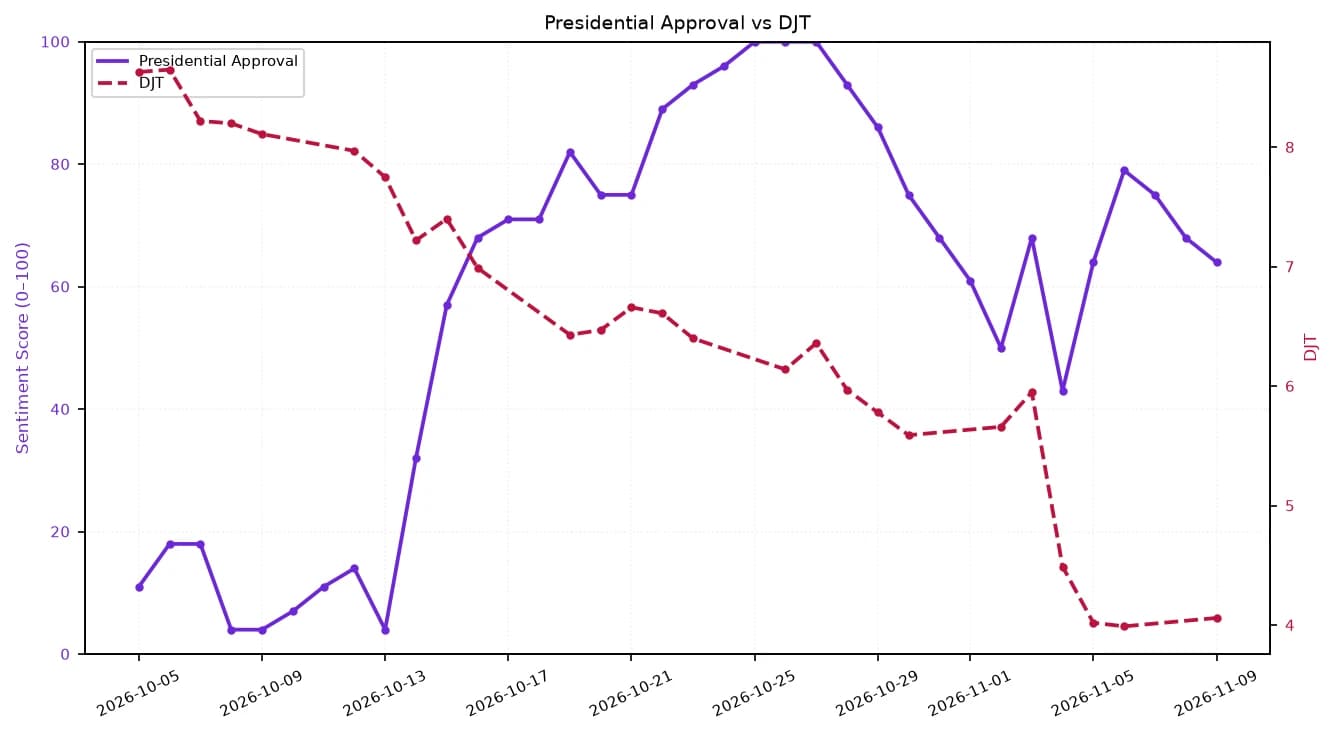
Markets are already treating the Trump political trade as more fragile. Shares of Trump Media & Technology Group, which trades under the DJT ticker, fell to $4.06 on Nov. 9 from $9.52 on Sept. 3, leaving the stock far below its 50-day moving average of $7.72 and 200-day moving average of $9.02. The latest close also came with an RSI reading of 20.5, a level that typically reflects deeply oversold conditions in conventional technical analysis, while the broader move has been accompanied by heavy volume and a deteriorating MACD trend.
The selloff matters because DJT has become a proxy for Trump-linked political risk. Investors in the stock are not just weighing media fundamentals; they are also pricing the legal and regulatory backdrop around Trump and his circle, including ongoing federal investigations and related court filings disclosed by the company.
At the same time, policy sentiment remains elevated around the White House, with Adalytica’s US White House Policy Direction Sentiment at 82, or “Greed,” and awareness at an “Extreme Greed” 100. That suggests markets and policymakers are still focused on the administration’s next moves even as congressional control shifts and the tone in Washington turns more adversarial.
The broader macro backdrop makes the stakes higher. The 10-year Treasury yield is forecast around 4.829%, while the fed funds rate is seen near 3.89% in November, leaving borrowing costs elevated and giving lawmakers less room to absorb fiscal shocks from a budget fight or government shutdown. In that environment, any escalation in Washington can hit equities, especially names tied to defense, infrastructure, healthcare oversight and regulatory-sensitive sectors.
For Trump, the Democratic win means less freedom to set the tempo and more exposure to investigations, hearings and legislative resistance. For investors, it means the next phase of the Trump trade is likely to be driven less by campaign headlines and more by legal risk, funding deadlines and whether Washington can keep policy moving at all.
| Entity | Gains | Losses |
|---|---|---|
| Democrats in Congress | ▲Investigatory power | ▼Trump’s political leverage |
| Trump and allies | ▲— | ▼Oversight and legal exposure |
| DJT shareholders | ▲Volatility trading opportunities | ▼Stock value and sentiment |
| Federal agencies and contractors | ▲Clarity from funding deals | ▼Shutdown and budget uncertainty |