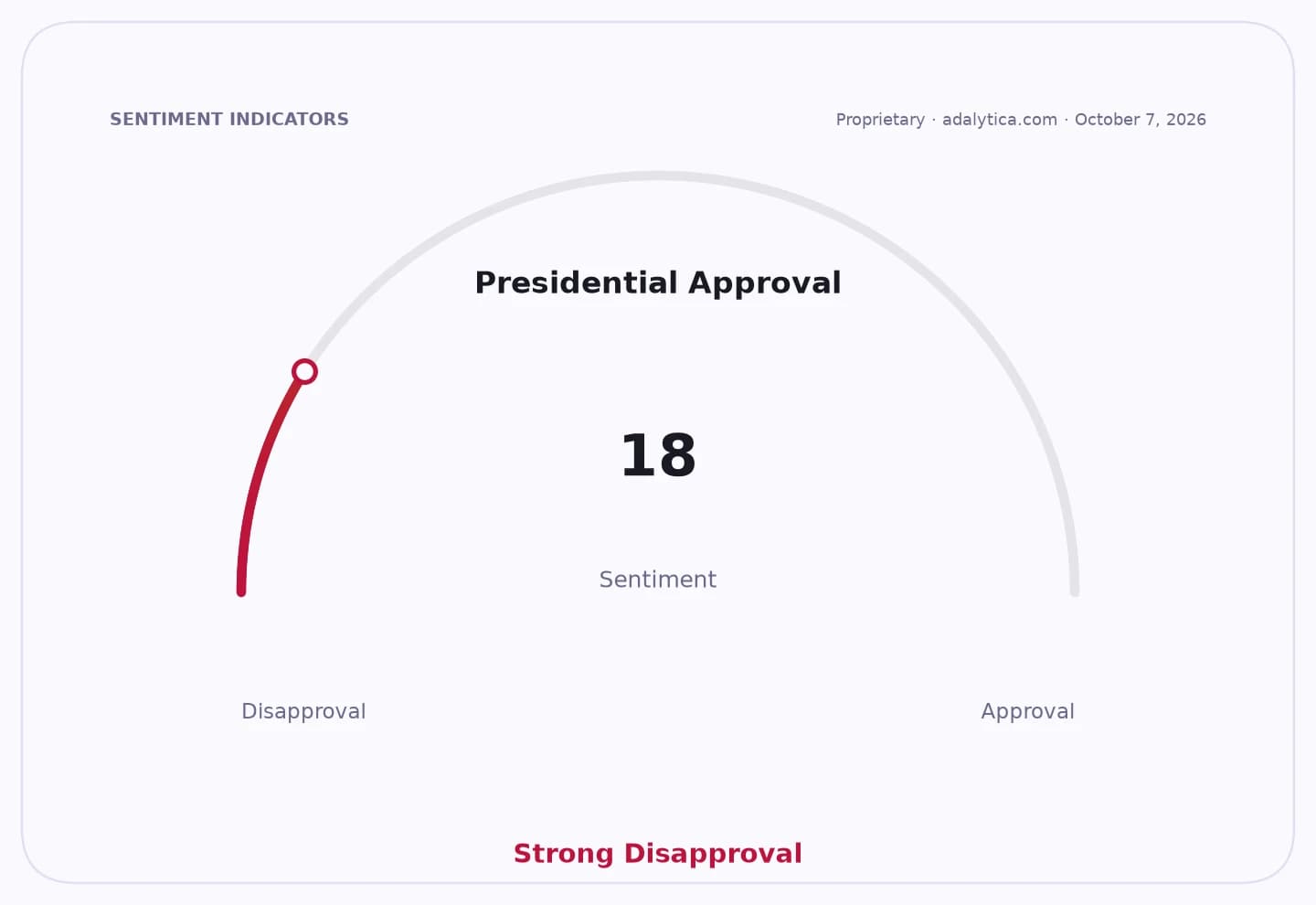
Donald Trump’s approval rating has fallen to a record low 33% just two weeks before the US midterm elections, a deterioration that raises the odds of a Republican setback in the House and reflects deep voter dissatisfaction with his economic stewardship.
Trump approval falls to record low before midterms
A Washington Post-ABC News-Ipsos poll shows Democrats leading Republicans by 8 points in the battle for the House, up from 3 points in July, while 58% of registered voters want a Democratic-controlled Congress that can restrain Trump. Support for the president among likely voters is even weaker, at 38%, versus 62% disapproval.
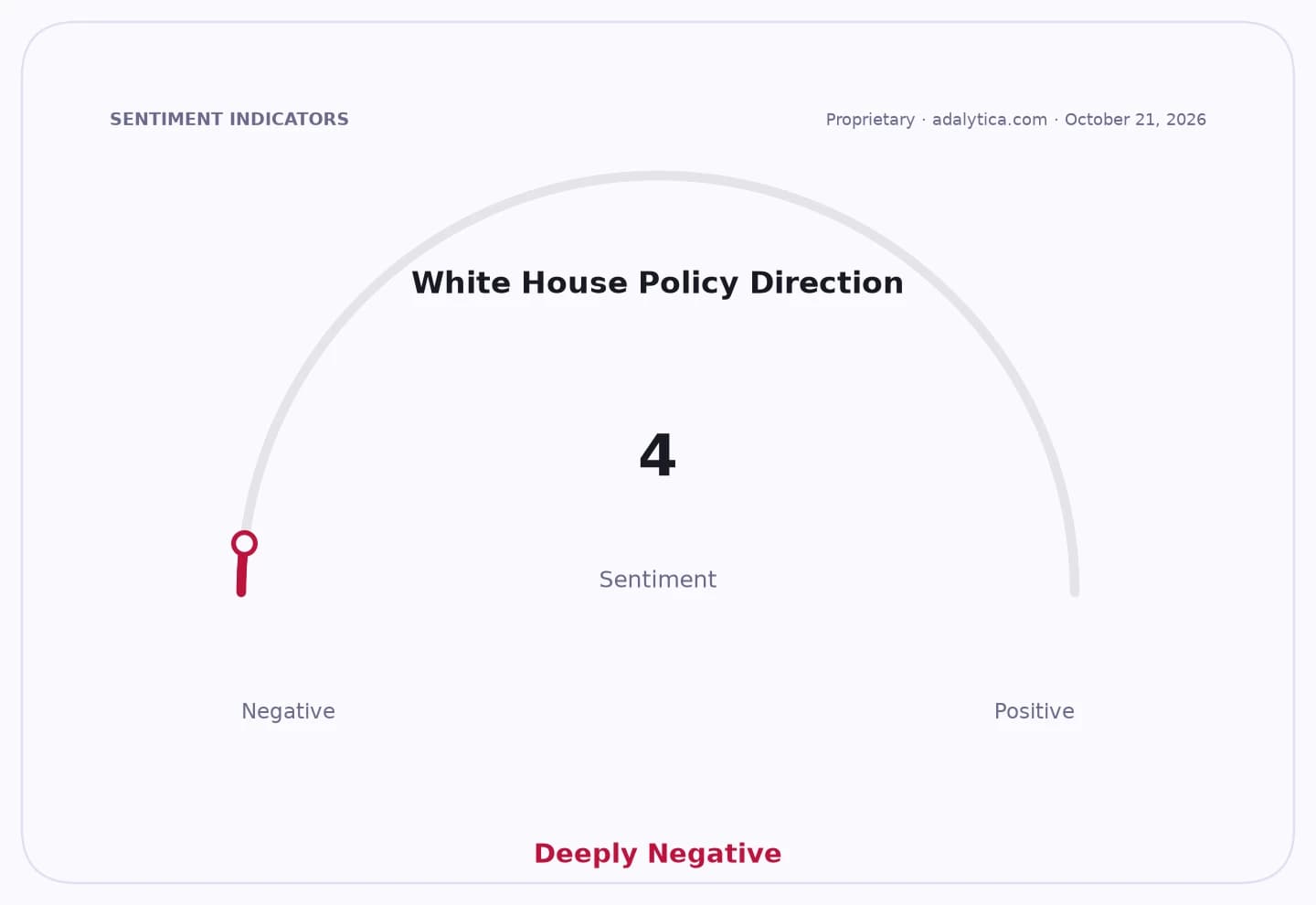
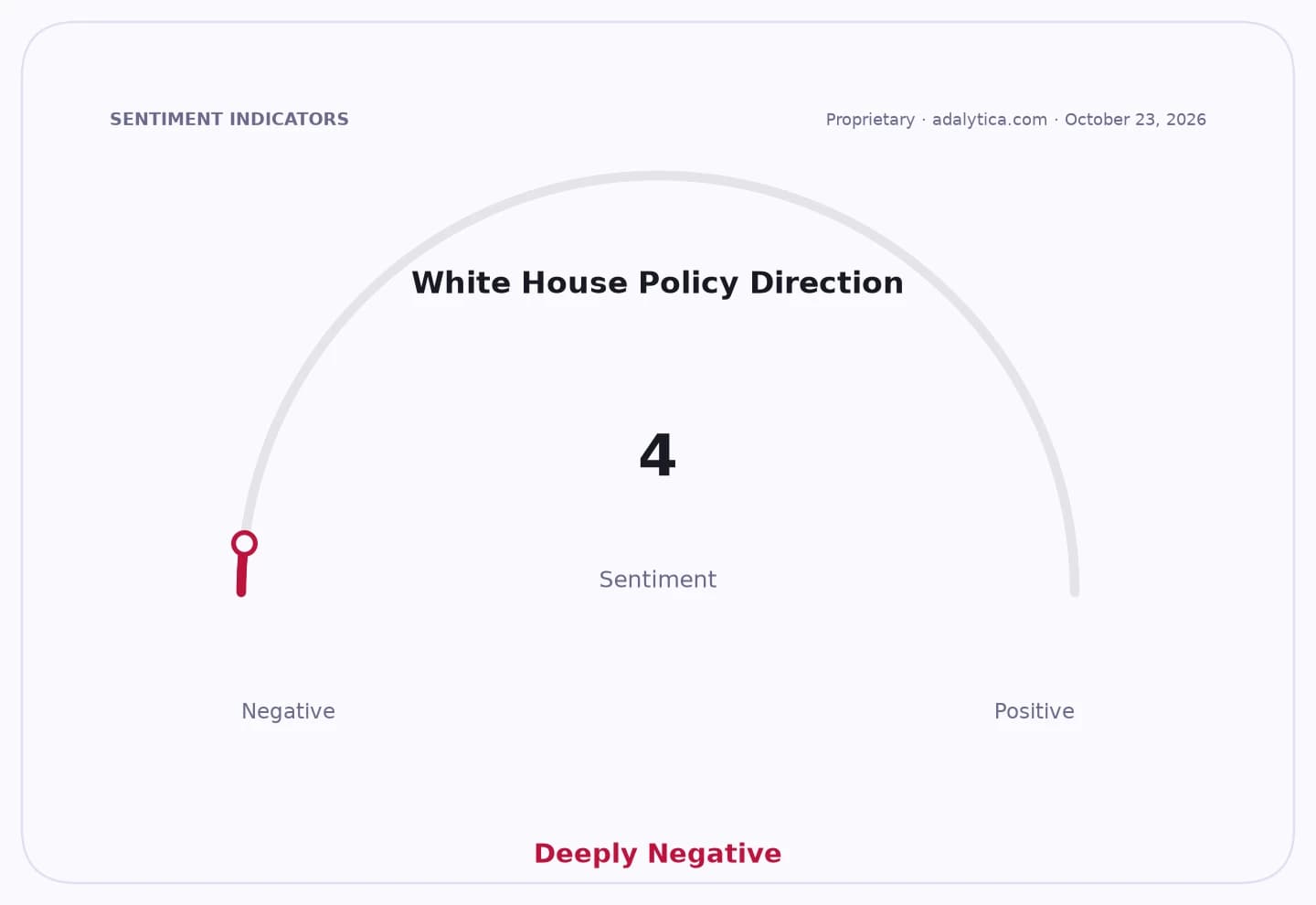
Sentiment IndicatorsⓘProprietary · adalytica.com · October 23, 2026
This is a snapshot — live sentiment, awareness and momentum for 130+ markets update continuously in the dashboard.Open AlphaPulse
The numbers matter because they point to a broad political drag on the Republican Party at a moment when control of Congress is on the line. The poll suggests Trump is not just unpopular in the abstract: his standing is deteriorating on the issues that typically decide elections, especially the economy, inflation and the cost of living.
Only 28% of Americans approve of Trump’s economic policy, down from 41% in February, and about three-quarters criticize his handling of inflation and living costs. Nearly half of respondents, 48%, say their financial situation has worsened since his return to the White House in 2025, the highest reading in Washington Post-ABC surveys since 1986.
That economic anger is feeding into wider discontent. Washington Post said 72% of respondents believe the country is heading in the wrong direction, 66% think Trump is using the presidency for personal gain and 56% say he has gone too far in deporting undocumented immigrants. On foreign policy, 65% of Americans say launching military action was a mistake.
For investors, the political backdrop matters because it increases uncertainty around taxes, regulation, trade, immigration and fiscal policy at a time when markets are already sensitive to growth and inflation. Adalytica’s US White House Policy Direction Sentiment sits at 4, labeled “Extreme Fear,” underscoring how sharply expectations around policy direction have deteriorated.
The poll also suggests Republicans may struggle to hold the House unless turnout improves. Seventy-five percent of registered Democrats say they will vote, versus 67% of Republicans, a gap that could prove decisive if it holds through election day.
| Entity | Gains | Losses |
|---|---|---|
| Democrats | ▲House momentum | ▼Republican incumbents |
| Republicans | ▲Presidential base loyalty | ▼Control of the House |
| Trump critics | ▲More congressional oversight | ▼Policy continuity |
| Investors | ▲Possible checks on policy volatility | ▼Higher election uncertainty |