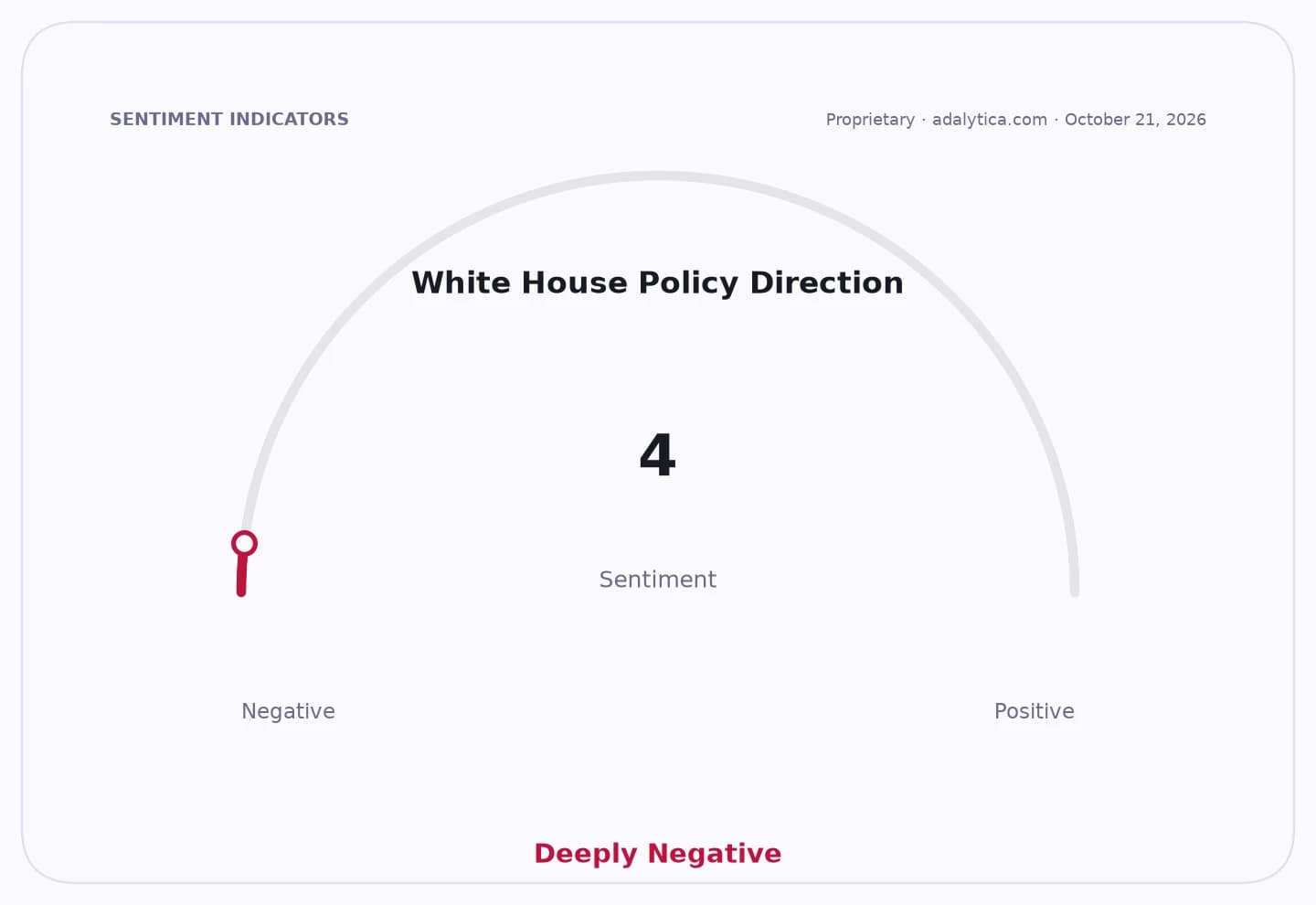
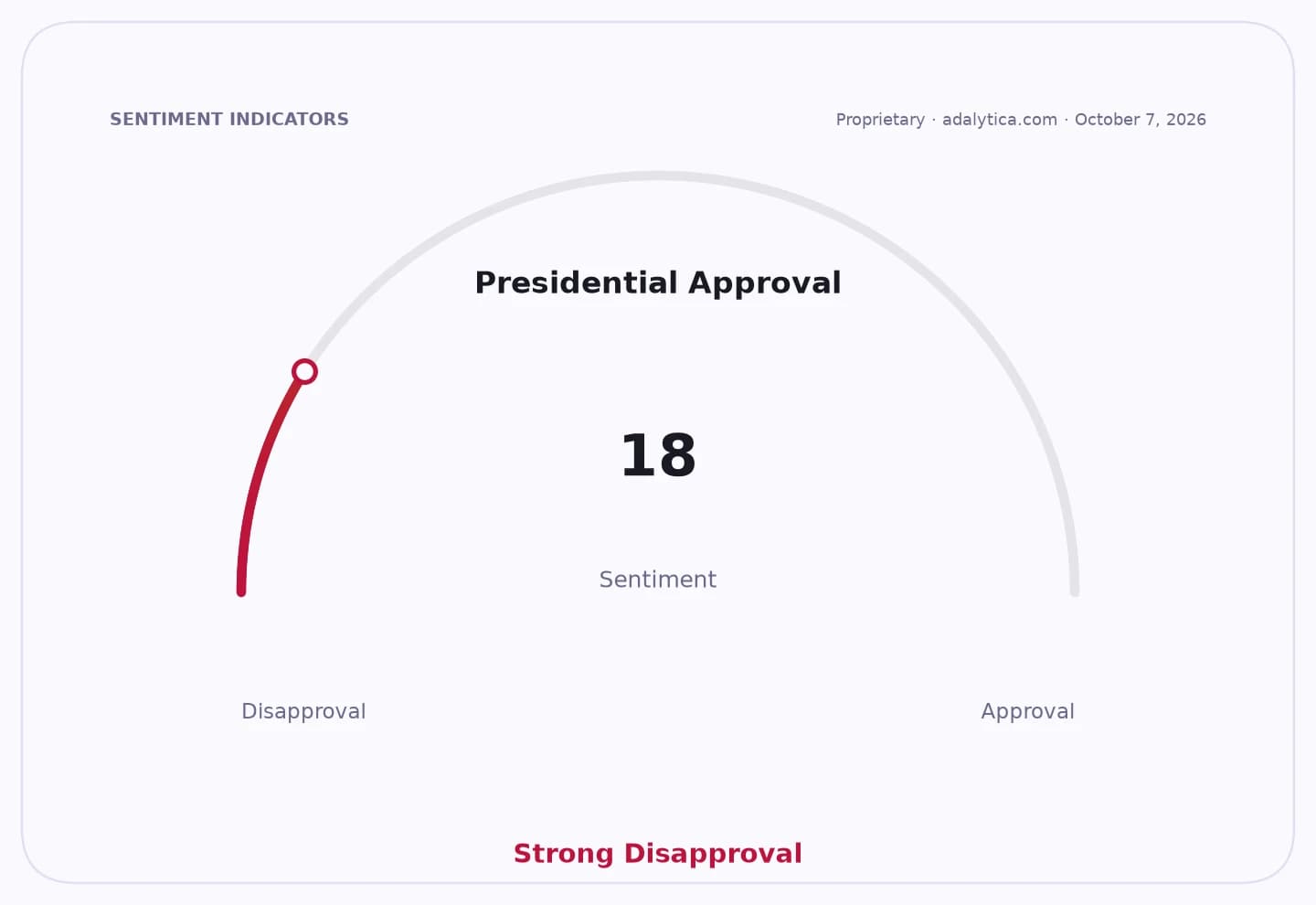
Democrats are trying to make Donald Trump, not just their own agenda, the central issue of the 2026 midterm campaign, betting that voter anger over prices, instability abroad and a chaotic White House will outweigh Republican incumbency advantages.
Trump and 2026 midterms reshape policy outlook
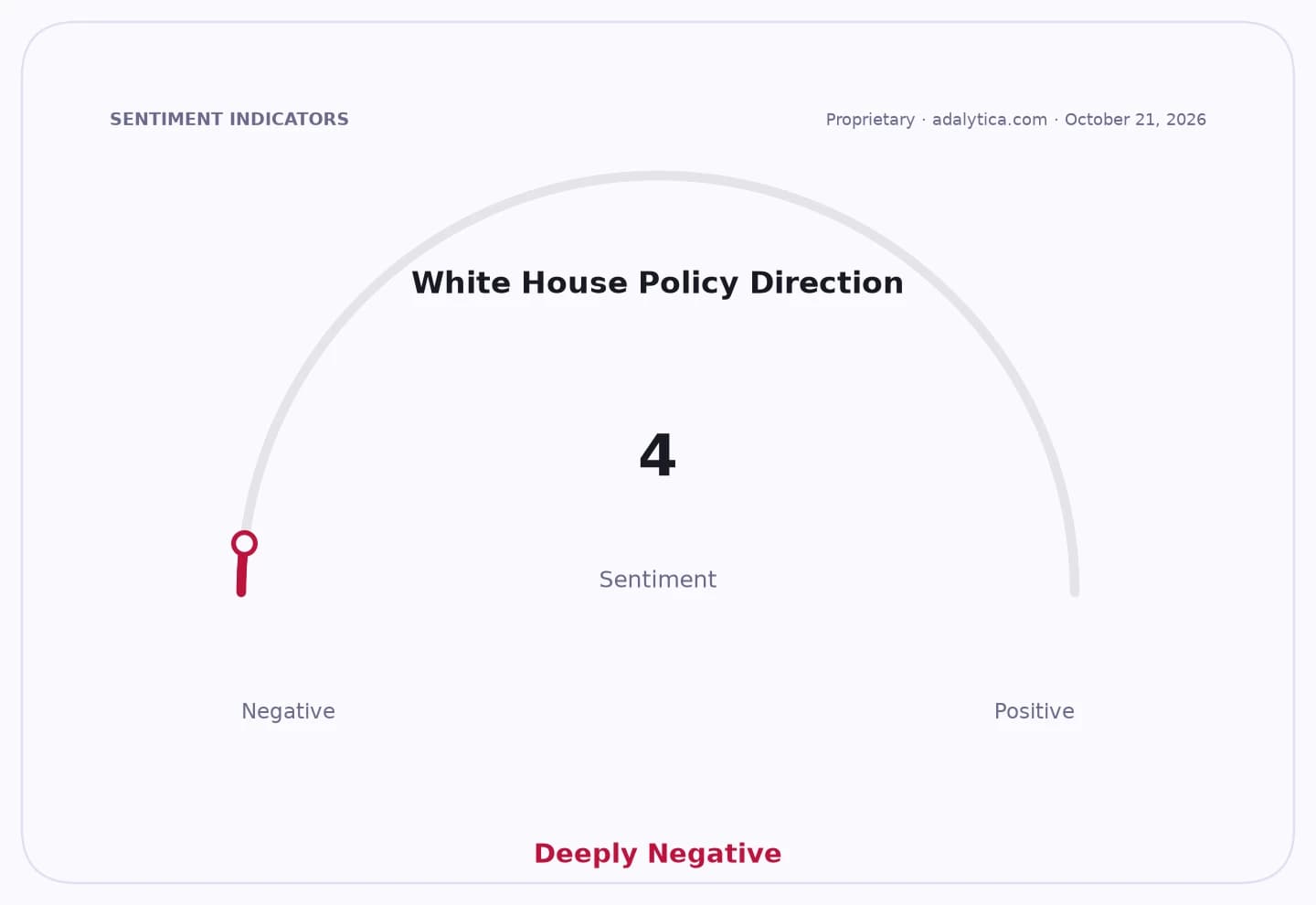
That is the economically important shift. When a midterm turns into a referendum on the president, markets have to price not just the balance of power in Congress, but the odds of a sharper policy swing on taxes, spending, regulation and tariffs after Nov. 3. For investors, that means the next few weeks are less about the polls themselves than about whether Washington is headed toward divided government or a second-term Trump mandate with more room to push his economic agenda.
Sentiment IndicatorsⓘProprietary · adalytica.com · October 21, 2026
This is a snapshot — live sentiment, awareness and momentum for 130+ markets update continuously in the dashboard.Open AlphaPulse
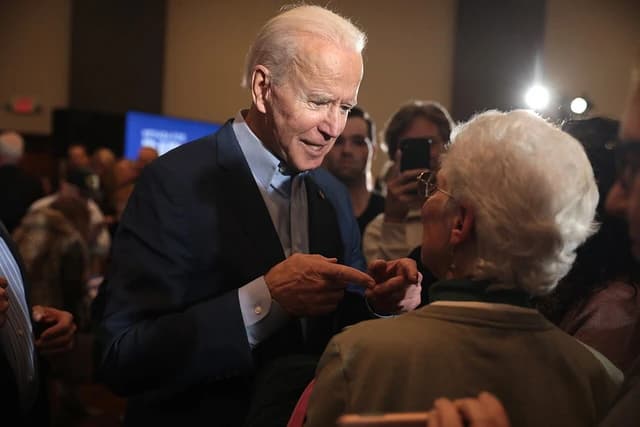
The strategy is already visible on the trail. In Georgia, Sen. Jon Ossoff mocked Trump’s recent rally and blasted the president’s handling of the economy and the Iran conflict, a sign Democrats see foreign policy and household costs as politically linked. Trump has answered by attacking Democratic candidates personally and urging voters to preserve GOP control of Congress, framing the election as a judgment on his second-term program rather than on individual candidates.
That matters because the campaign is colliding with the very issues that move both voters and markets: inflation, gasoline prices and geopolitical risk. Trump’s rally in Kentucky leaned into those themes, including a promised $100 million federal investment in a pharmaceutical manufacturing facility, a reminder that industrial policy, campaign politics and capital allocation are increasingly intertwined. If Democrats can sustain the argument that Republican control has worsened costs and overseas instability, it could narrow GOP margins in the House and Senate and limit the policy scope of Trump’s agenda.
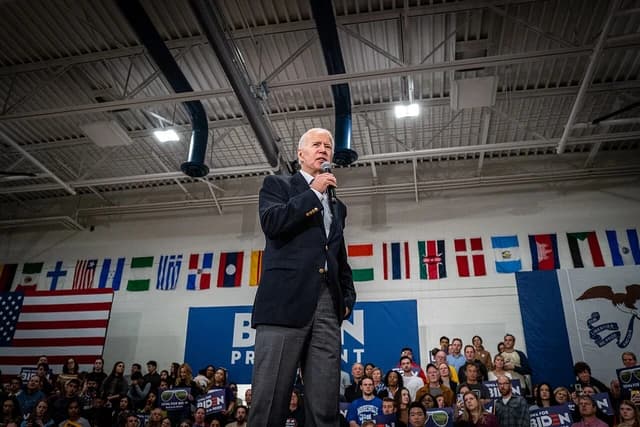
House Speaker Mike Johnson’s confidence that Republicans will keep a “working majority” suggests the GOP still believes the structural map favors it. But the fact that Democratic leaders are already sketching out first-100-days plans shows how real the opportunity is if turnout and anti-Trump sentiment break their way. The market implication is straightforward: a tighter Congress would likely restrain sweeping fiscal moves, temper regulatory shocks and reduce the odds of a rapid escalation in trade or industrial policy.
For investors, the bigger point is that midterms are moving from political theater to policy catalyst. If Trump’s attacks on Democrats help nationalize the race, that improves the odds of a high-volatility outcome in Washington — and high-volatility politics usually mean higher premiums for defense, energy security, domestic manufacturing and select infrastructure plays, while more rate-sensitive and tariff-exposed sectors could swing sharply on the result. The window to position for that is now.
| Entity | Gains | Losses |
|---|---|---|
| Republicans | ▲Legislative control | ▼If anti-Trump backlash rises |
| Democrats | ▲Midterm turnout momentum | ▼If race stays local |
| Defense and energy stocks | ▲Higher geopolitical risk premium | ▼A calmer policy backdrop |
| Rate-sensitive equities | ▲Less policy shock risk if divided government wins | ▼If Trump gets a stronger mandate |