Trump’s core rural voters are turning more pessimistic about the economy, a warning sign for the White House as higher prices and a softer labor backdrop squeeze the households that helped deliver his electoral wins.
Rural Voter Pessimism Rises on Economy

A new survey showing roughly half of rural respondents saying the economy is worse off underlines a politically potent problem: even with unemployment near 4.1% and inflation cooling from its 2022 peak, many voters are still not feeling real gains in their day-to-day budgets. That matters because rural consumers are especially exposed to food, fuel and borrowing costs, and those categories tend to feed directly into perceptions of economic competence.
Sentiment IndicatorsⓘProprietary · adalytica.com · September 28, 2026
This is a snapshot — live sentiment, awareness and momentum for 130+ markets update continuously in the dashboard.Open AlphaPulse
The macro picture is mixed but not reassuring for the administration. The unemployment rate has been broadly stable around 4.1%, and a forecast for 4.02% next month suggests no immediate labor-market deterioration. But consumer prices, while no longer surging, are still elevated: the CPI has risen to 334.131 from 332.813 in July, extending a long period in which cumulative price levels have stayed far above pre-pandemic norms. For households that do not see wages keeping pace, the arithmetic feels like stagnation rather than recovery.
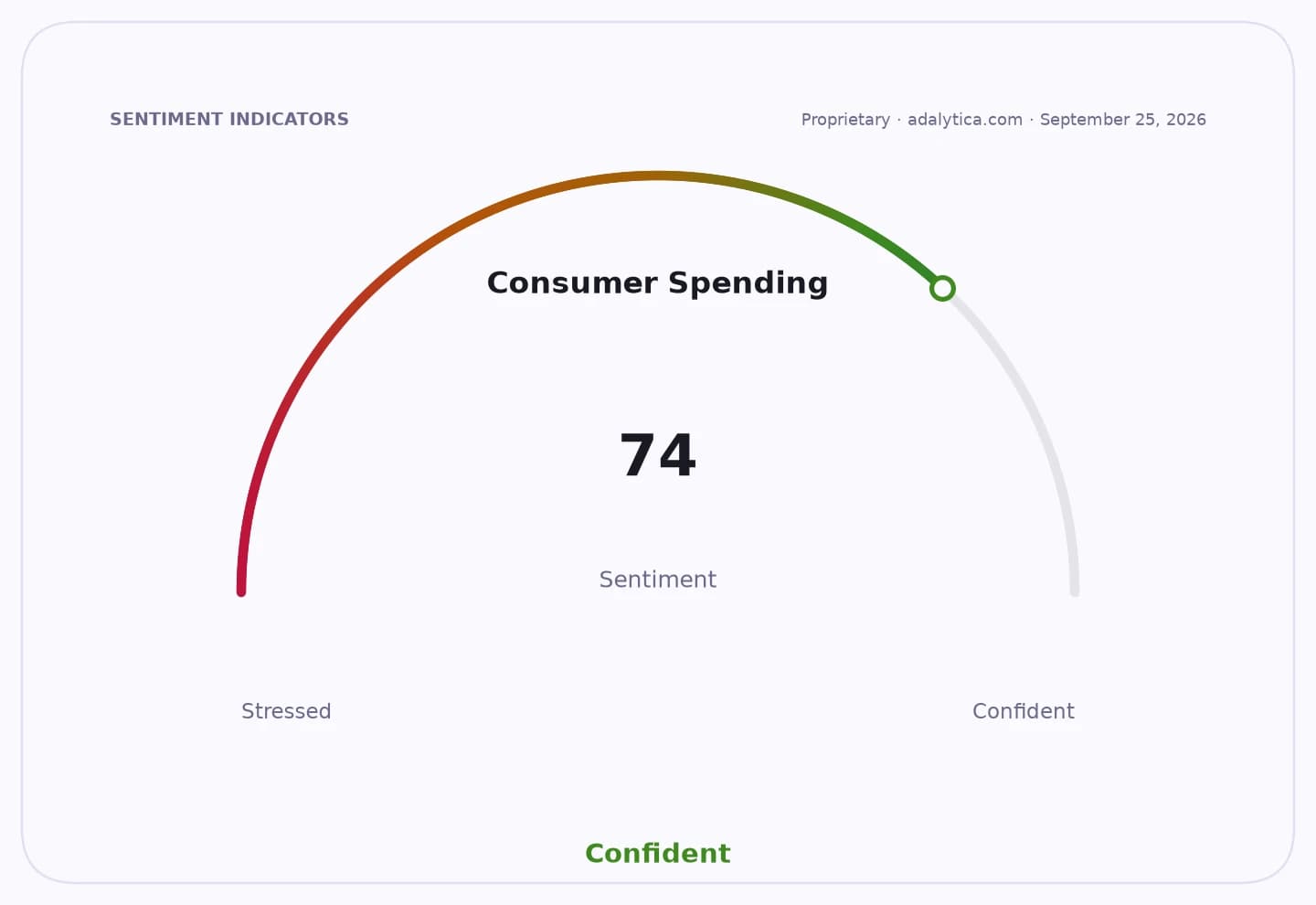
That helps explain why sentiment is weakening even when some hard data looks acceptable. The University of Michigan’s consumer sentiment index slipped to 51.7 in August from 55.2 in July, remaining near historically depressed levels. For rural voters, who tend to have higher transportation costs and less room to absorb price shocks, the gap between headline growth and lived experience can be especially wide. In political terms, that is dangerous: affordability grievances often matter more than unemployment rates in shaping approval of incumbents.
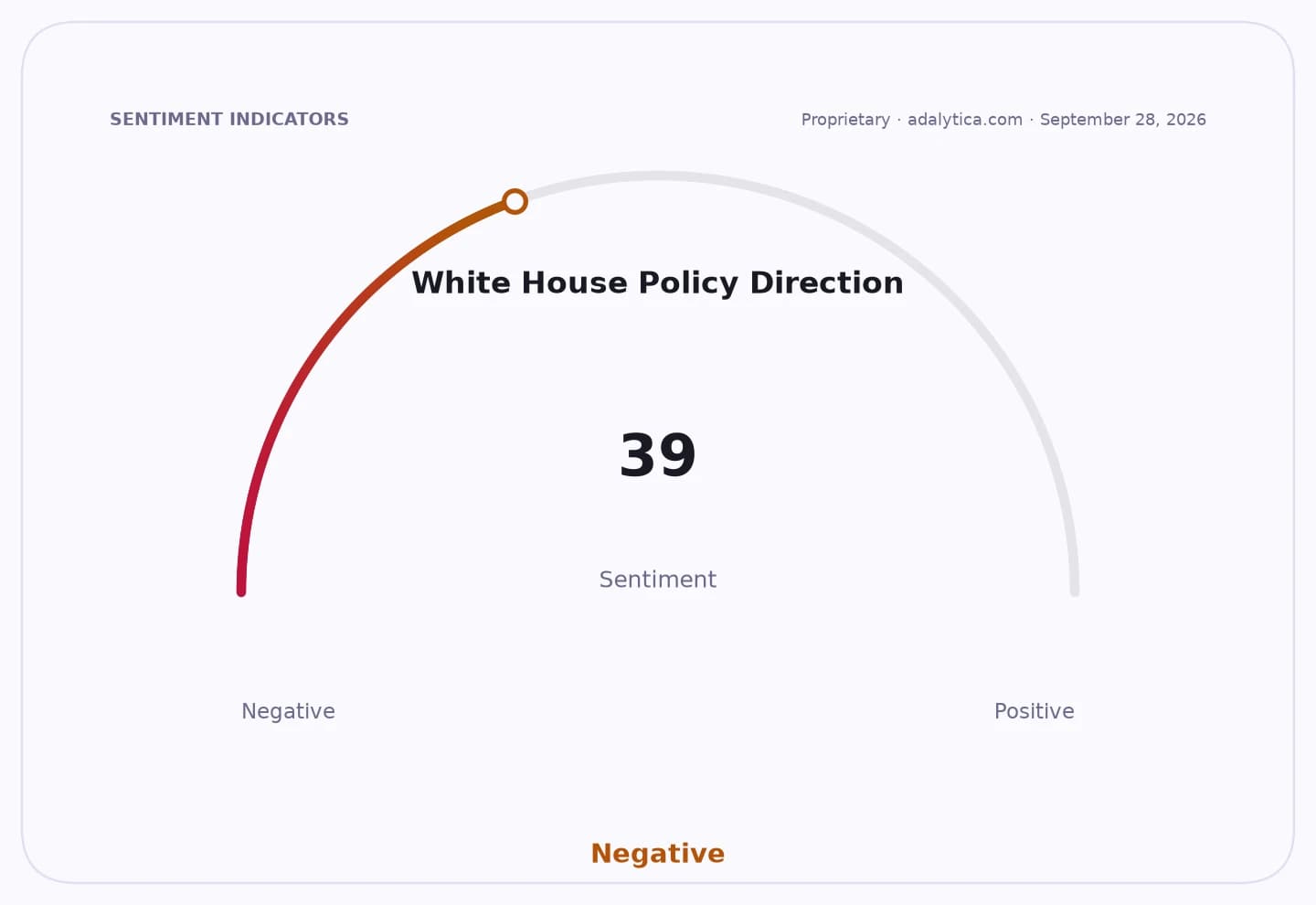
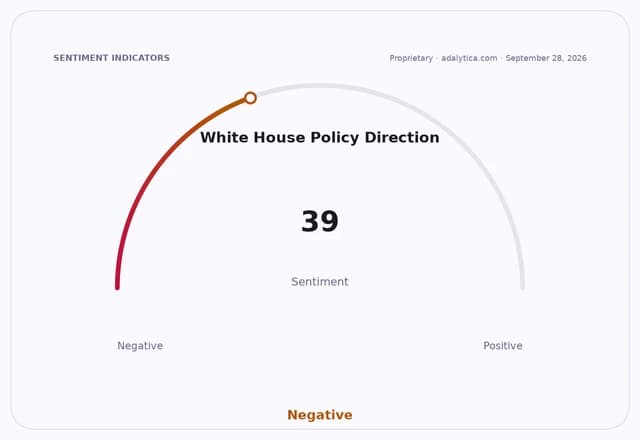
The survey also intersects with a broader shift in political mood. Adalytica’s US White House Policy Direction Sentiment gauge sits in neutral territory at 39, while its US Presidential Approval Sentiment remains high at 93, showing a still-contentious but deeply polarized environment. That combination suggests the economy is not driving a uniform national swing, but it is feeding a sharper regional and class divide — one that could leave Trump more vulnerable among voters he cannot afford to lose, particularly in rural counties and small-town America.
For investors, the message is that the consumer remains fragile beneath the surface. If rural households keep retrenching, the pressure will show up first in discretionary spending, farm equipment, autos, travel and lower-end retail, while staples and discount chains may hold up better. It also raises the odds that the White House leans harder on tariffs, subsidies or targeted relief to address cost-of-living pain, which could sustain political support but complicate the inflation outlook.
The next catalyst is whether improving growth and a steady job market can finally translate into better sentiment, or whether persistent price levels keep voters focused on what they have lost rather than what the economy has regained. For now, the survey suggests Trump’s rural coalition is still intact — but increasingly uneasy.
| Entity | Gains | Losses |
|---|---|---|
| Rural consumers | ▲Potential relief from slower inflation | ▼Higher food, fuel and borrowing costs |
| Trump White House | ▲Pressure to target affordability issues | ▼Support among core rural voters |
| Discount retailers | ▲More value-seeking shoppers | ▼Higher-income discretionary sellers |
| Consumer discretionary sector | ▲Stable labor market if spending holds | ▼Demand softness from pessimistic households |