Consumer confidence in the euro area slipped more than expected in September, deepening signs that households are still under pressure from high energy costs and a fragile growth backdrop.
Euro area consumer confidence falls to -16.5

The European Commission said its gauge for the bloc fell to -16.5 from -15.5 in August, weaker than the -16 reading economists had expected. The drop matters because household sentiment is one of the earliest signals of how consumers may behave on spending, savings and big-ticket purchases — and that feeds directly into the region’s already soft economic momentum.
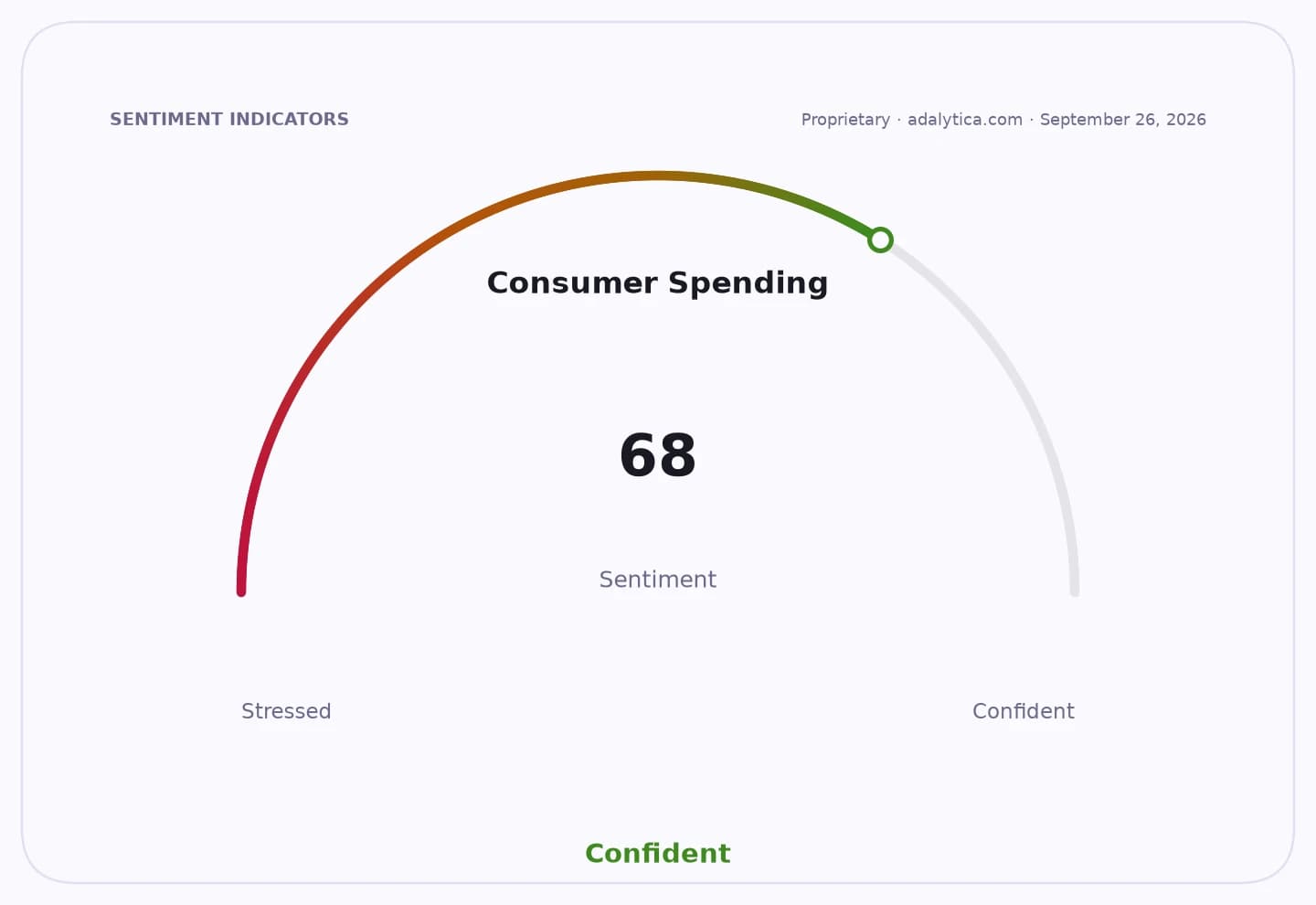
Sentiment IndicatorsⓘProprietary · adalytica.com · September 26, 2026
This is a snapshot — live sentiment, awareness and momentum for 130+ markets update continuously in the dashboard.Open AlphaPulse
A reading well below zero means pessimists still far outnumber optimists, underscoring how quickly confidence has faded after brief periods of improvement. The September decline suggests euro-area consumers remain cautious even as inflation has eased from last year’s peaks, with energy bills continuing to weigh on real disposable income in parts of the bloc. That is especially relevant for an economy that relies heavily on domestic demand to offset weak external trade.
For markets, the data reinforces the case that the European Central Bank may keep a close eye on demand-side weakness even as it continues to battle inflation. Softer consumer confidence usually points to slower retail sales, weaker service-sector activity and less pricing power for companies focused on Europe’s home market. That combination can weigh on earnings expectations for retailers, travel groups and consumer discretionary stocks.
The broader market reaction has been muted, but euro-area sentiment remains a key variable for European equities, bonds and the currency. Investors are watching whether deteriorating household mood starts to show up in hard data such as retail spending and industrial output, or whether it remains a lagging reflection of past energy shocks. If confidence continues to erode, it would strengthen the argument that growth in the euro area will stay subdued into year-end.
Bullish investors will argue that sentiment readings often lag actual spending and that labor markets remain relatively resilient. The bearish view is that a sub-zero confidence index, combined with persistent energy pressure, points to a consumer-led slowdown that could limit any rebound in growth. The next few releases on retail activity and inflation will show whether September’s drop was a wobble or the start of a deeper deterioration.
| Entity | Gains | Losses |
|---|---|---|
| ECB | ▲More room to watch growth risks | ▼Harder to justify hawkish stance |
| European consumers | ▲Potential relief if inflation eases further | ▼Lower purchasing power |
| Retailers & discretionary stocks | ▲None immediate | ▼Slower spending and weaker margins |
| Eurozone government bond bulls | ▲Softer growth may cap yields | ▼None immediate |