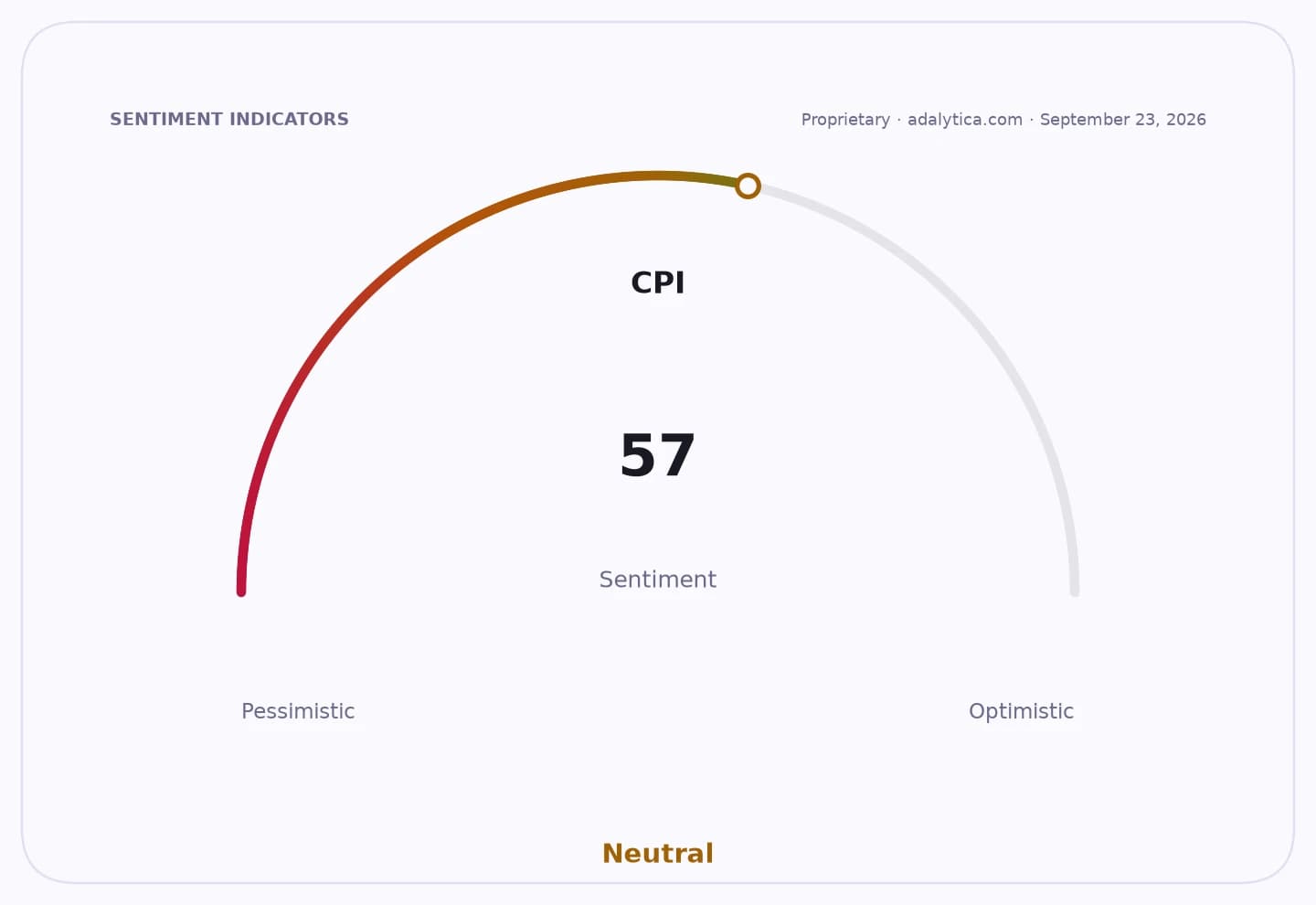
Republican lawmakers are sharpening their attack on government spending as inflation remains stubborn and household affordability stays under pressure, turning the cost-of-living squeeze into a central political fight heading into the next round of fiscal debates.
Republicans attack spending as inflation stays sticky
Consumer prices rose to 334.131 in August from 333.979 in May, according to the CPI series in the data, while core inflation climbed to 337.765 from 336.121 over the same period. That leaves price levels far above pre-pandemic norms and keeps pressure on wages, rents and borrowing costs even as headline monthly gains ease.
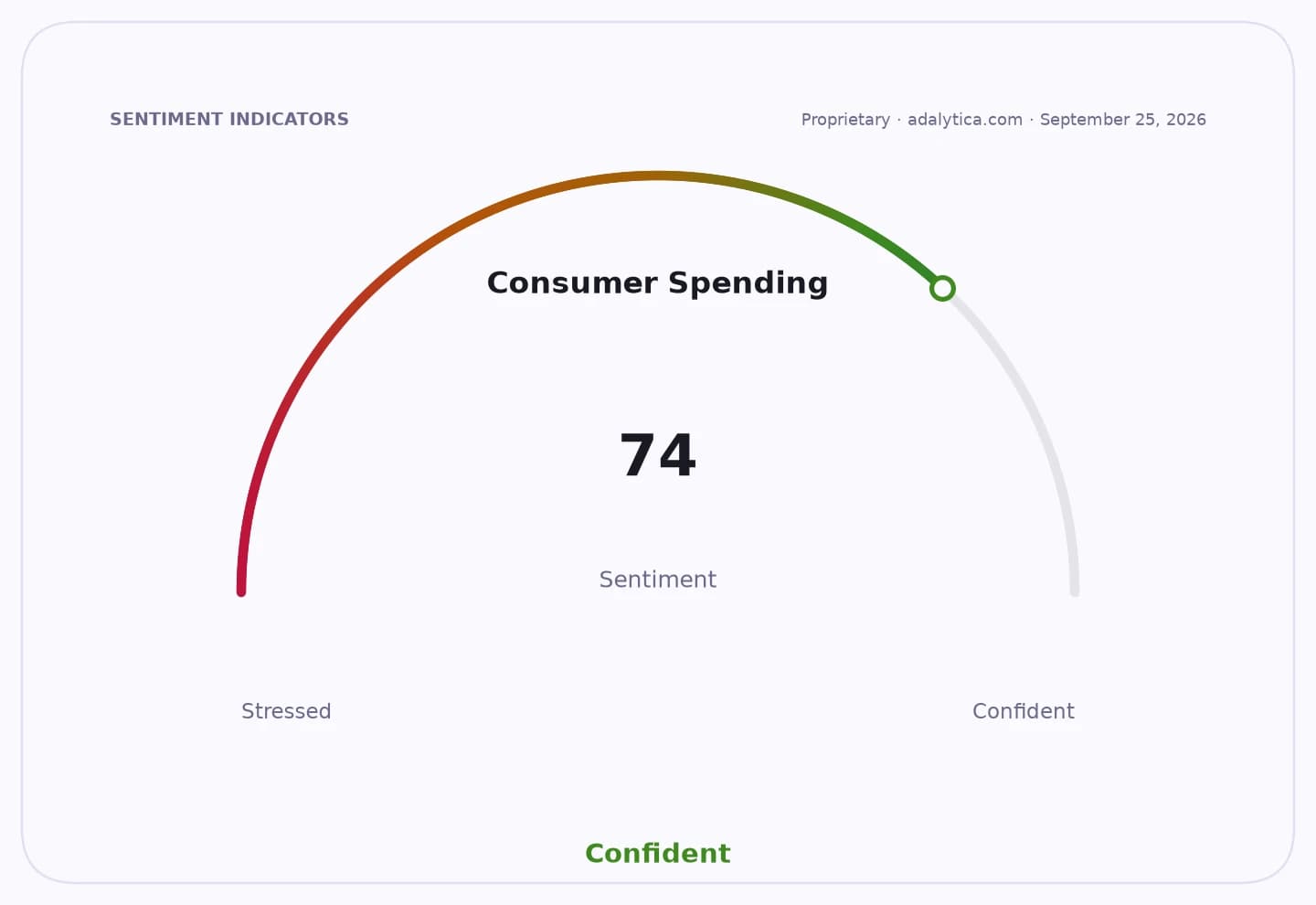
Sentiment IndicatorsⓘProprietary · adalytica.com · September 25, 2026
This is a snapshot — live sentiment, awareness and momentum for 130+ markets update continuously in the dashboard.Open AlphaPulse
The affordability strain is showing up beyond the broad inflation gauges. Consumer spending sentiment in the Adalytica snapshot sits at 74, labeled greed, but with awareness at an extreme fear reading of 4, suggesting households remain highly sensitive to day-to-day price pressures. A separate consumer confidence recession sentiment measure is at 93, or extreme greed, after jumping 56 points in a week, underscoring how quickly expectations can swing when voters are focused on the cost of living.
Housing remains one of the clearest pain points. The data context points to a deepening affordable housing shortage and a policy debate over whether governments have done enough to expand social housing supply in places where workers can actually live and commute. That matters economically because shelter costs are one of the biggest drivers of persistent inflation and a major reason consumers keep feeling poorer even when headline price gains cool.
CPIAUCSL vs CPILFESL — macro contextadalytica.com
Explore this data interactively — full history, time series and cross-market comparisons.Open AlphaPulse
For investors, the message is that affordability is no longer just a political slogan — it is a macro risk that can affect consumer demand, local housing markets, rate expectations and election-year policy. If lawmakers respond with tighter spending, tax shifts or housing measures, the impact could ripple through retailers, homebuilders, landlords and rate-sensitive sectors.
The next catalyst is whether Washington turns the spending fight into concrete fiscal policy or leaves households with the same inflation squeeze heading into year-end, keeping housing and consumer prices at the center of the economic debate.
| Entity | Gains | Losses |
|---|---|---|
| Republicans | ▲Political leverage | ▼If spending cuts stall |
| Households | ▲Potential relief rhetoric | ▼Persistent affordability pressure |
| Homebuilders/Landlords | ▲Policy support if supply rises | ▼Higher costs, weaker demand |
| Retailers/Consumer stocks | ▲Stabilization if inflation cools | ▼Softer discretionary spending |