UK house prices are expected to rise more slowly than inflation this year and next, underscoring how elevated borrowing costs are restraining transactions even as the rental market tightens and keeps pressure on households.
UK house prices seen rising slower than inflation
A Reuters poll of 16 housing market experts taken between Sept. 7 and 18 showed average home values rising just 1.3% in 2026, down from 1.8% forecast in June, before a 2.0% gain in 2027 and 3.3% in 2028. That implies another period of real-terms price declines for buyers after inflation, which Reuters’ separate poll puts at 3.1% this year.
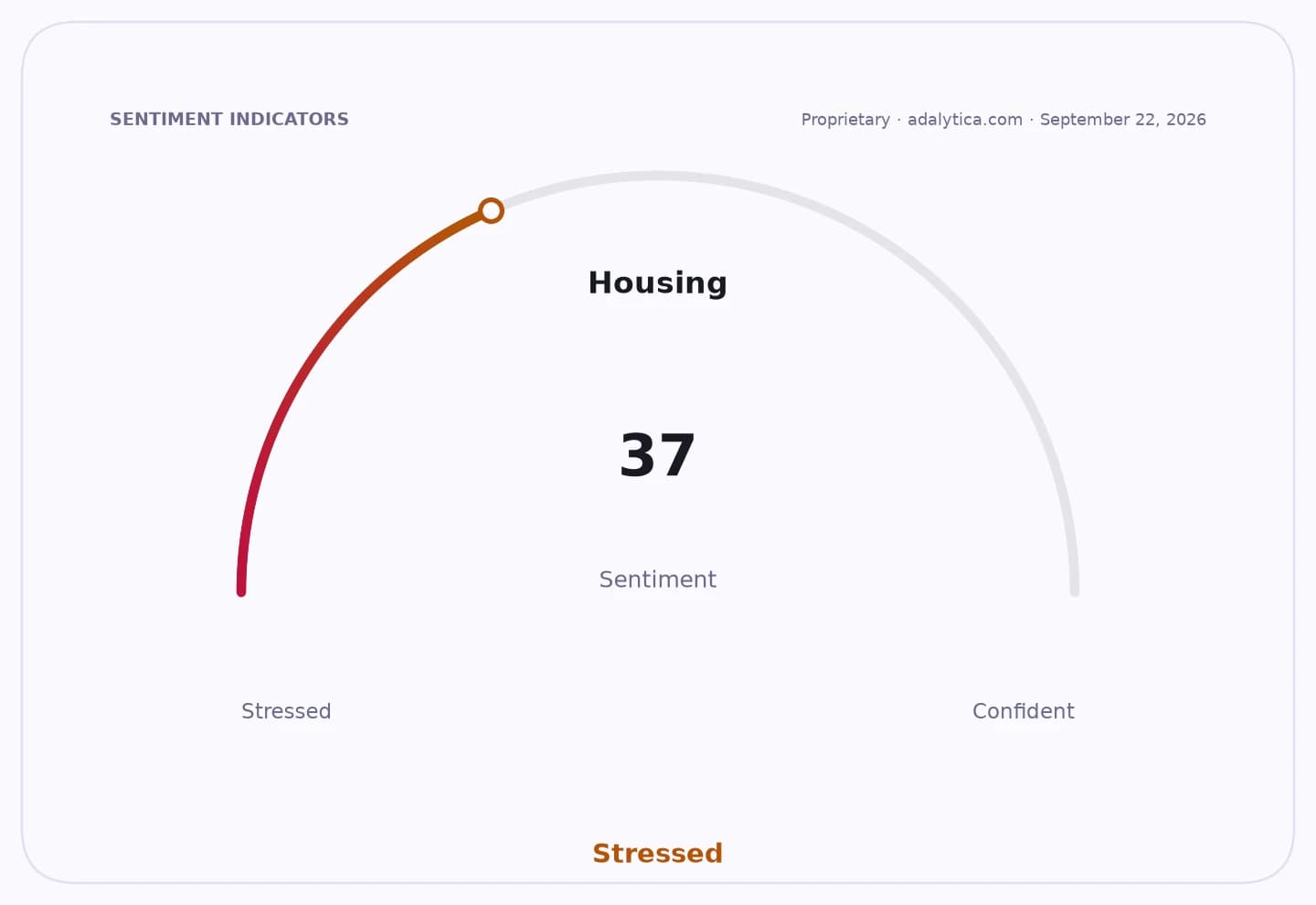
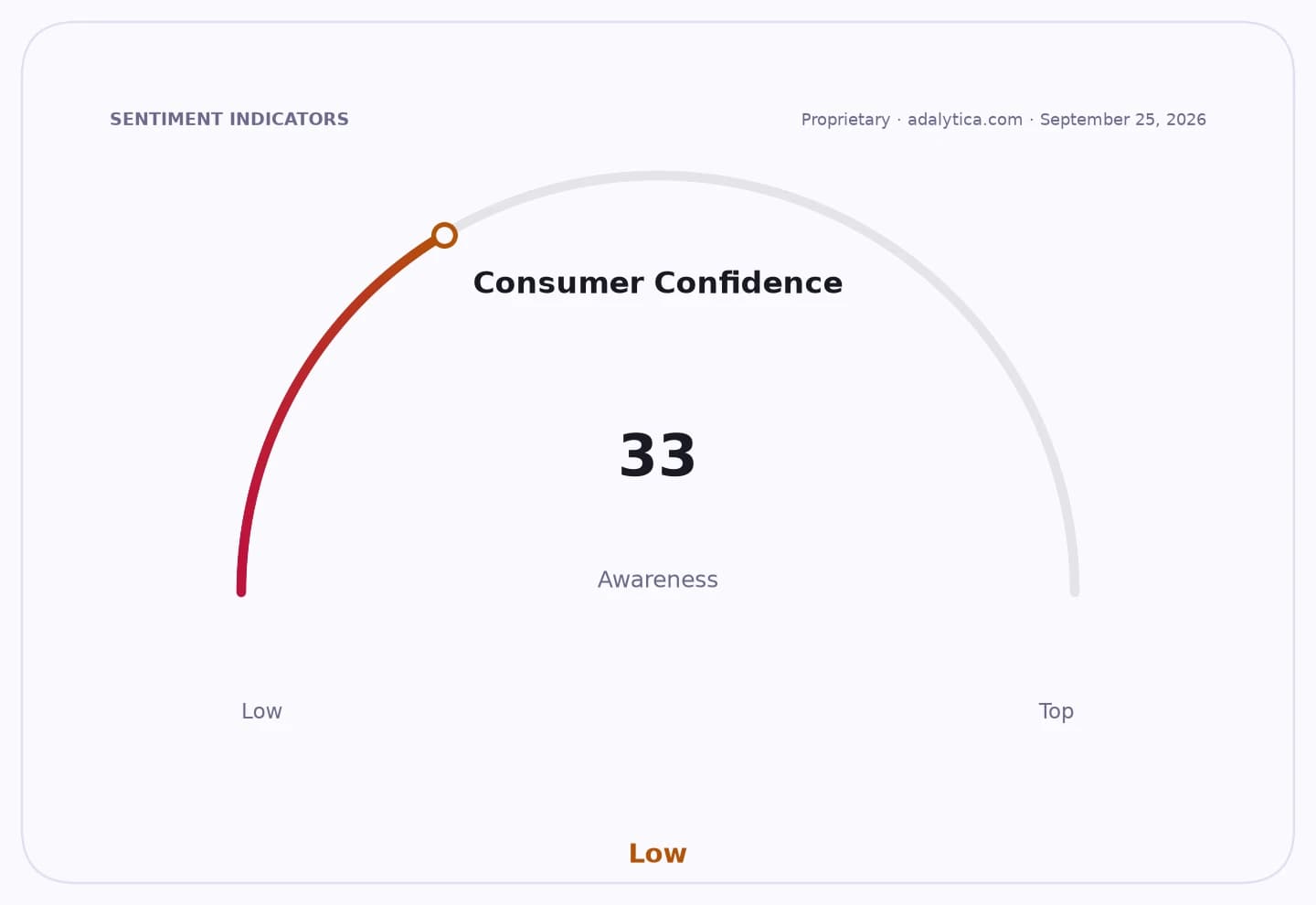
Sentiment IndicatorsⓘProprietary · adalytica.com · September 20, 2026
This is a snapshot — live sentiment, awareness and momentum for 130+ markets update continuously in the dashboard.Open AlphaPulse
The gap between house prices and consumer inflation matters because it signals that housing is not acting as a broad wealth engine for households, even though mortgage affordability remains stretched. Higher rates have slowed movers, reduced transaction volumes and discouraged first-time buyers, while weak price growth in real terms also limits the ability of homeowners to refinance their way into cash or capital gains.
“High mortgage rates and no stimulus leave us expecting prices to be broadly flat,” said Marcus Dixon at JLL, adding that modest increases may only start to appear in 2027. The survey also pointed to a wide range of outcomes for 2027, from stagnation to growth of 3.5%, reflecting uncertainty over how quickly the Bank of England can ease policy and whether inflation stays sticky.
The backdrop remains difficult for the property market. The Bank of England left rates unchanged on Thursday, and Governor Andrew Bailey warned that a prolonged Middle East conflict could still force tighter policy. At the same time, official data showed inflation quickening to a five-month high of 3.1% in August, while mortgage lending for home purchases in July fell to its weakest since January 2024.
That combination helps explain why the market is cooling rather than collapsing. The Royal Institution of Chartered Surveyors said buyer demand and agreed sales had moved away from recent lows, suggesting the slowdown may be stabilizing, but Barratt Redrow’s decision to cut its delivery target this week showed how planning bottlenecks and cautious buyers are still weighing on the sector.
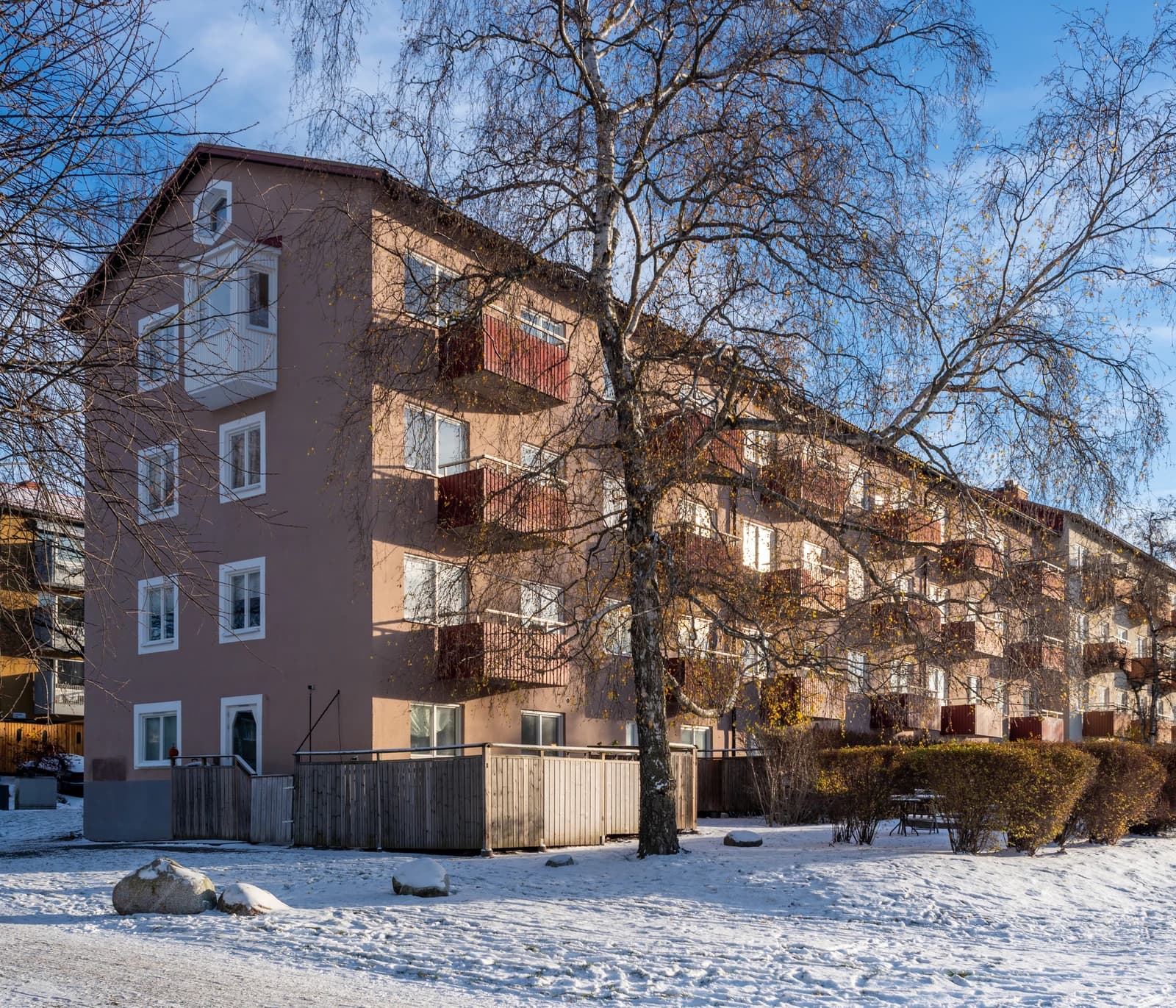
Regional disparities remain stark. London is expected to be the weakest major market, with prices forecast to fall 1.4% this year and recover only 0.9% in 2027. At an average £646,451 in August, according to Rightmove, the capital remains priced out for many would-be buyers, especially those trying to get onto the ladder for the first time.
For investors, the more important story may be in rentals. The Reuters poll points to private rents rising 3.0% this year and next, with 2.8% growth in 2028, as fewer landlords exit the sector and high mortgage costs push frustrated buyers into renting instead. Liam Daly at the CEBR said the dual squeeze on supply and demand “leaves room for strong rent growth going forward.”
That is a mixed picture for listed housing and homebuilding names. Slower house-price growth and weaker volumes are a headwind for developers and brokers, but firmer rents support landlords, build-to-rent operators and mortgage lenders with exposure to the rental market. With UK inflation still above target and rates likely to stay restrictive for longer, the housing market’s main short-term role is shifting from engine of price gains to barometer of affordability stress.
| Entity | Gains | Losses |
|---|---|---|
| UK renters | ▲Tighter supply supports rents | ▼Face faster rent increases |
| Homebuyers | ▲Slightly less price pressure | ▼Still hit by weak affordability |
| UK landlords | ▲Rental yields improve | ▼Exit risk and regulation pressure |
| Housebuilders | ▲Stabilizing demand possible | ▼Lower sales volumes and targets |