The race to succeed Donald Trump is already taking shape, with leading Democrats and Republicans using the midterm campaign to build national profiles, court early-state voters and position themselves for a presidential contest that is still more than two years away.
2028 Presidential Race and Market Policy Risks
That matters because the 2028 campaign is no longer an abstract parlor game inside Washington. For investors, the emerging field points to a prolonged period of policy uncertainty around taxes, regulation, trade, immigration and the future of the Republican Party’s MAGA coalition — all issues that can move sectors, rates and the dollar long before the first primary votes are cast.
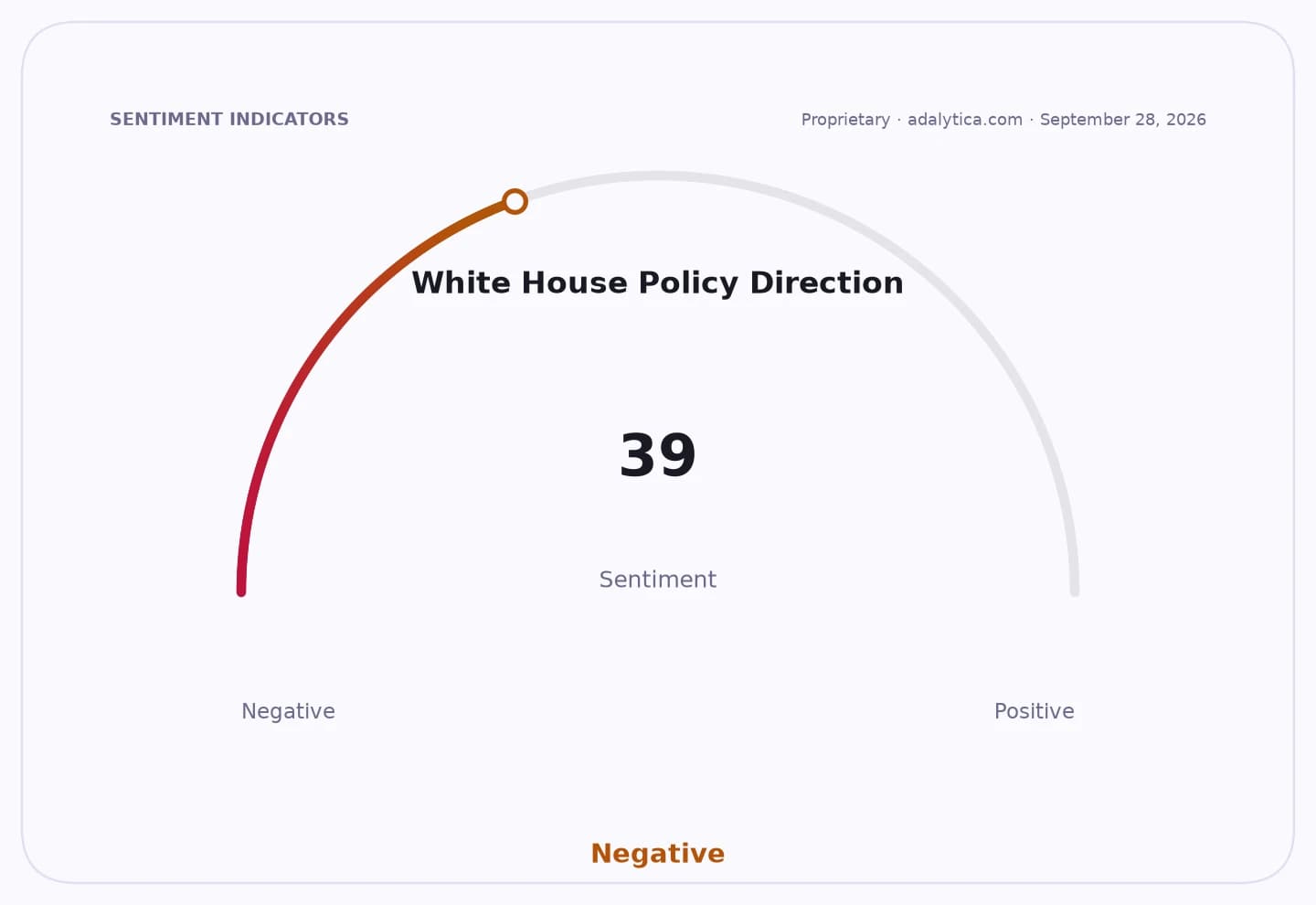
Sentiment IndicatorsⓘProprietary · adalytica.com · September 28, 2026
This is a snapshot — live sentiment, awareness and momentum for 130+ markets update continuously in the dashboard.Open AlphaPulse
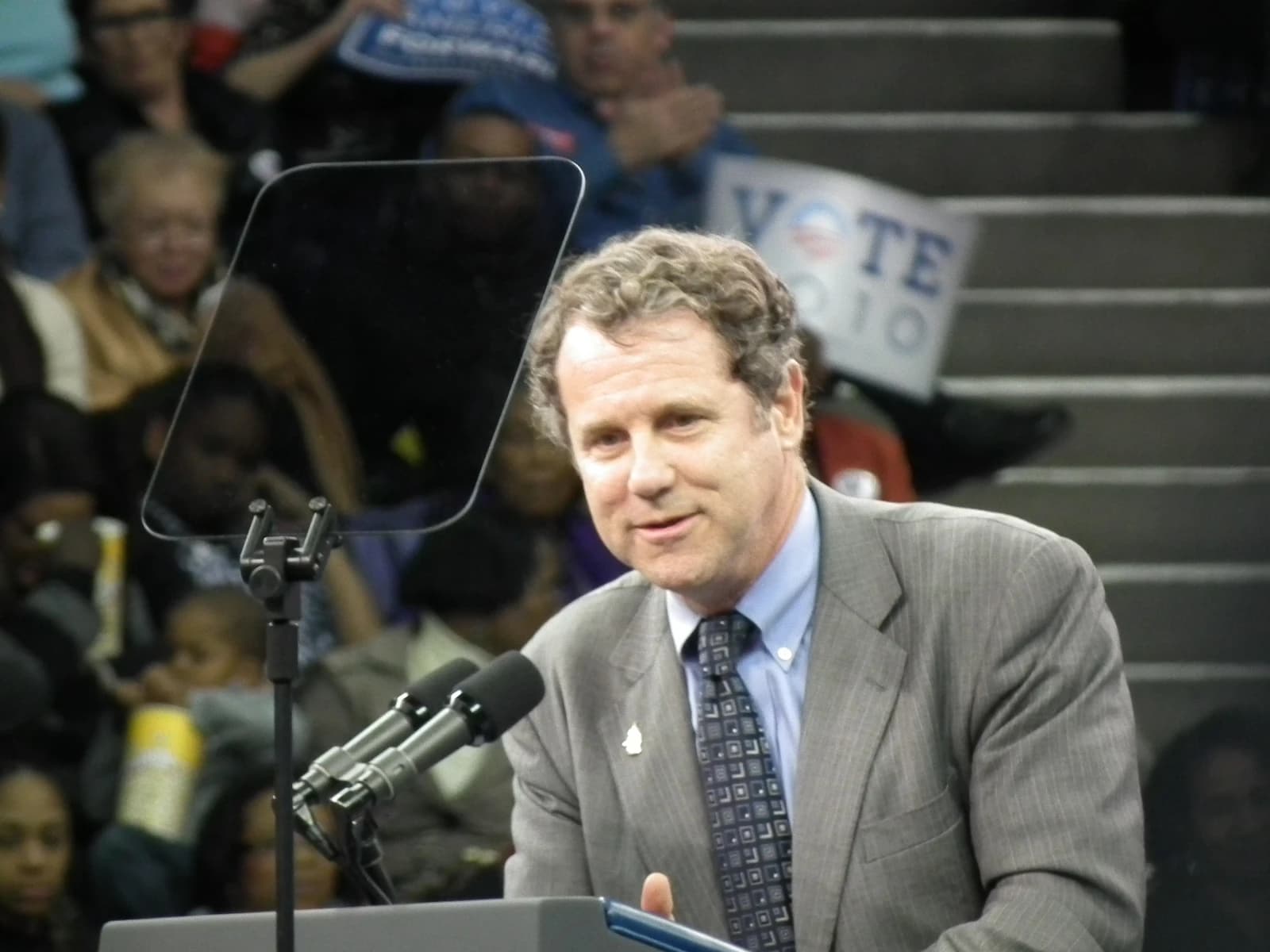
On the Democratic side, Alexandria Ocasio-Cortez, Kamala Harris, Jon Ossoff, Josh Shapiro, Andy Beshear, JB Pritzker and Mark Kelly are all drawing attention, each in different ways. Ocasio-Cortez has left the door open to a run and is moving closer to the kind of grassroots national network that powered Bernie Sanders’ insurgent campaigns. Harris, who has not decided whether to run again, has returned to Michigan, one of the battleground states she lost in 2024, underscoring how quickly the party’s next nominee is likely to be judged on whether they can rebuild support in swing states.
The broader Democratic challenge is structural as much as personal. The party is weighing whether a future nominee should come from its progressive wing, from the pragmatic state-level governors who have built records in red or purple states, or from a former national candidate with the highest name recognition. Shapiro has been pushing into issues such as artificial intelligence regulation, while Beshear and Pritzker are trying to project broader appeal without formally committing. That mix suggests the party is still searching for a formula that can bridge its ideological factions and reverse recent losses.
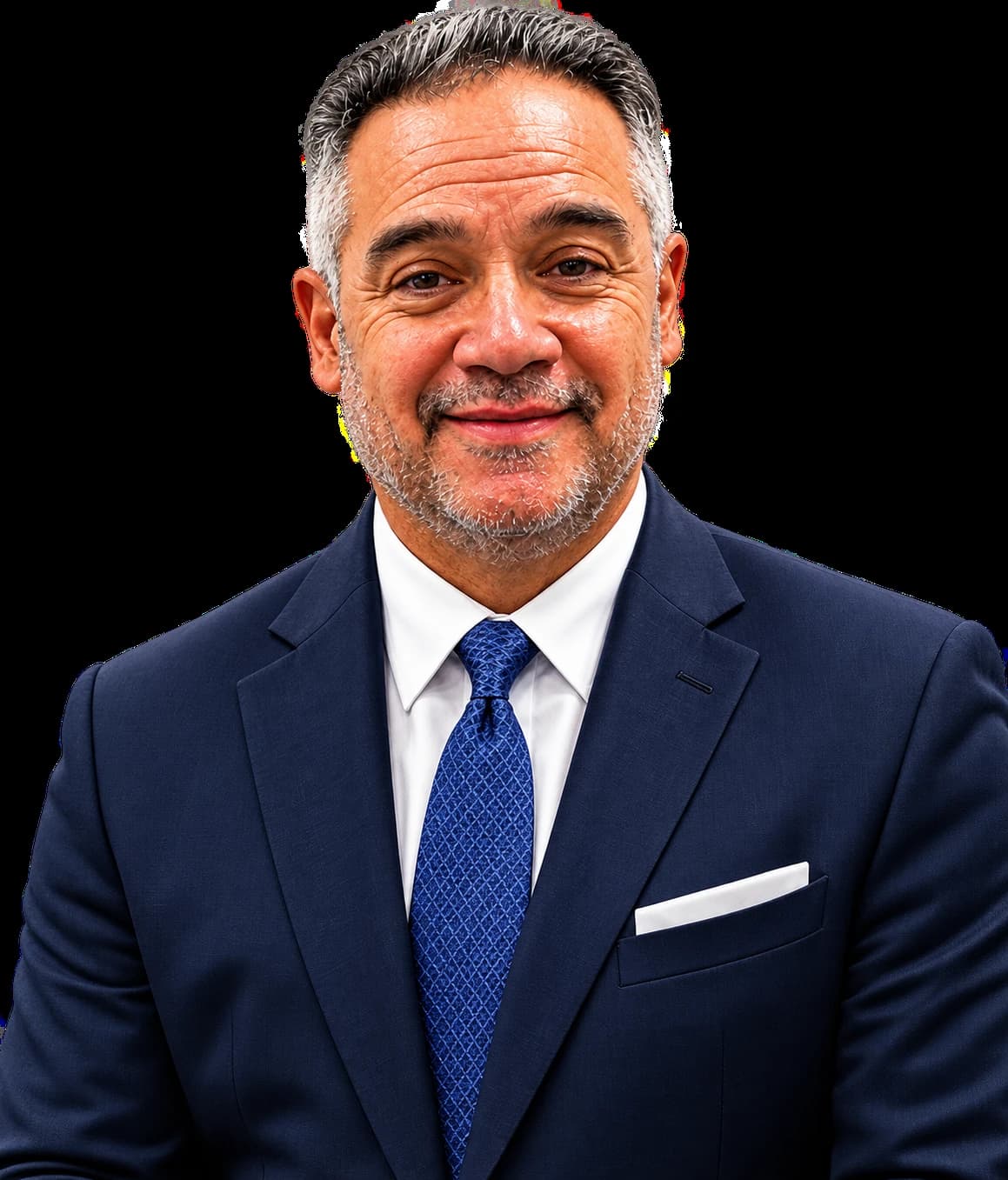
Republicans face a different question: what comes after Trump, and what survives of MAGA without him. JD Vance is the obvious early favorite in the conversation, and his recent trip to Iowa — a crucial early primary state — is being watched as a signal of ambition even if his political résumé is still short. Trump has also floated Marco Rubio as a possible successor, though CNN noted no sign that Rubio is actively preparing a bid. Ted Cruz and Rand Paul, both veterans of the 2016 primary fight, have left the door open, while Greg Abbott, Ron DeSantis and Rick Scott remain plausible alternatives if the party wants a less Trump-dependent standard-bearer.
The market relevance lies in the policy map these candidates imply. A Vance-led or Trump-aligned Republican field would likely preserve a more nationalist, tariff-friendly agenda, extending pressure on import-sensitive industries and global supply chains. A Cruz- or Paul-style candidacy would revive a more orthodox pro-market, anti-tariff message that could appeal to business groups even if it struggles with the broader MAGA base. On the Democratic side, candidates such as Shapiro, Pritzker or Kelly could signal a less confrontational stance on regulation and trade, though the party’s internal divide on technology, labor and industrial policy would remain a live issue.
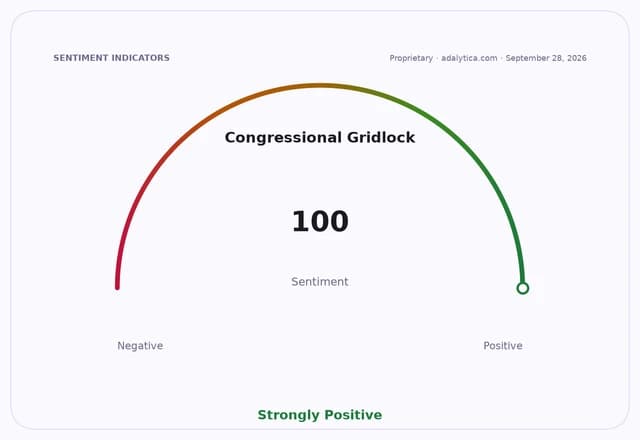
That helps explain why investors are already looking past the formal 2026 midterms and toward 2028. Adalytica’s S&P 500 trade signals are flashing extreme greed, while Congressional gridlock sentiment is also elevated, suggesting markets are already trading on the assumption that Washington will remain politically constrained even as the presidential field changes shape. The SPY has also held above its 200-day moving average, while the 50-day moving average and RSI readings point to a market that is still resilient but stretched. Small-cap stocks, tracked by IWM, are weaker, while long-duration Treasuries in TLT remain under pressure — a combination consistent with investors favoring larger, quality names and staying cautious on policy-sensitive growth.
The early maneuvering does not mean the 2028 field is settled. Midterms still come first, and many of the names being discussed could decide not to run or be overtaken by events. But the key shift is that both parties are already building the infrastructure, fundraising networks and message discipline that usually precede a presidential bid. That makes the next two years important not only for who becomes the nominee, but for how investors position around the possible end of the Trump era and the next phase of U.S. economic policy.
| Entity | Gains | Losses |
|---|---|---|
| Early 2028 contenders | ▲National exposure | ▼Low-profile status |
| MAGA-aligned Republicans | ▲Succession momentum | ▼Policy clarity |
| Democrats seeking reset | ▲Time to build networks | ▼Internal unity |
| Investors | ▲Early policy visibility | ▼Certainty on regulation |