Foreign investors are pulling back from U.S. debt just as Treasury yields sit near multidecade highs and the dollar’s appeal is being tested by shifting rate expectations and policy uncertainty.
Foreign Investors Pull Back From U.S. Treasuries
That matters because foreign buying has long been a stabilizing force for the world’s deepest bond market. When offshore demand weakens, the U.S. government may have to offer still more yield to clear supply, raising borrowing costs across the economy and making market pricing more fragile. It also raises the risk that even modest changes in overseas appetite could produce outsized moves in Treasuries, the benchmark for mortgages, corporate debt and global asset valuation.
Sentiment Indicators
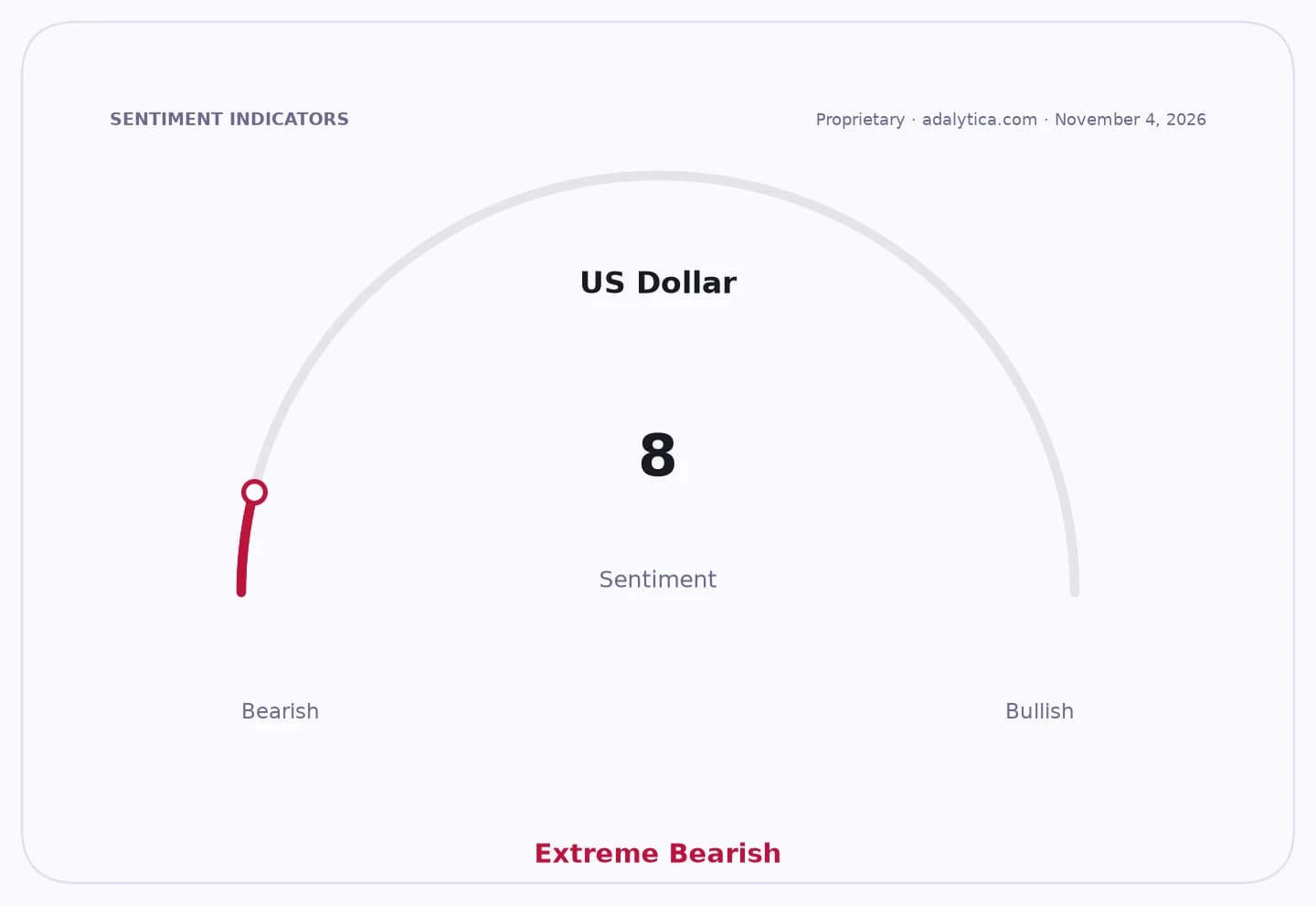
The latest market backdrop underscores the tension. The 10-year Treasury yield is around 5.1%, a level last seen in the inflation shock era and far above the 0.73% low reached in 2020. The 10-year/2-year curve, at about 27 basis points, has steepened from deep inversion but remains historically compressed, suggesting investors expect slower growth even as long-end funding costs stay elevated. At the same time, the dollar fund UUP has climbed to 29.64, near its highest in the available data, with its 50-day moving average above its 200-day average and RSI readings in overbought territory. Yet Adalytica’s U.S. dollar trade signal shows “Extreme Fear,” pointing to a market split between price action and sentiment.
For investors, the key issue is not simply whether foreign holdings fall, but what causes the decline. If overseas investors are demanding a bigger term premium because U.S. fiscal deficits remain large and Treasury issuance keeps climbing, bond prices may stay under pressure even if the Federal Reserve holds rates steady. That would keep the 10-year yield elevated and reinforce tighter financial conditions. If the retreat reflects currency hedging costs, reserve diversification or political unease, then the message is broader: foreign capital is becoming more selective about holding dollar assets, which could weaken one of the key supports for the U.S. external balance.
Treasury ETFs reflect that tension. TLT is trading around 80.25, below its 200-day moving average of 82.64, while IEF is just above its 50-day average but still under its longer-term trend. The technical picture suggests the bond market has stabilized from earlier lows, but not enough to imply a durable foreign-led bid for duration. Adalytica’s Treasury bond trade signal remains neutral, with low awareness, implying the market has not yet fully internalized the implications of weaker offshore demand.
The narrative is ultimately about the cost of U.S. dominance. As foreign holders step back from foreign debt, the Treasury market loses a source of price-insensitive demand that helped absorb deficits and suppress volatility for years. That can leave yields more sensitive to inflation data, Fed messaging and auction results, while strengthening the dollar in the short run but complicating the financing of the U.S. current account and fiscal gap over time. For investors, the next catalysts are foreign auction participation, hedging flows and any sign that overseas demand is becoming a structural headwind rather than a temporary pause.
| Entity | Gains | Losses |
|---|---|---|
| U.S. Treasury issuers | ▲Higher yield clearing level | ▼Cheaper financing |
| Foreign bond sellers | ▲Reduced duration exposure | ▼Carry from Treasuries |
| Dollar bulls | ▲Support from safe-haven flows | ▼— |
| Duration longs | ▲— | ▼Mark-to-market pressure |