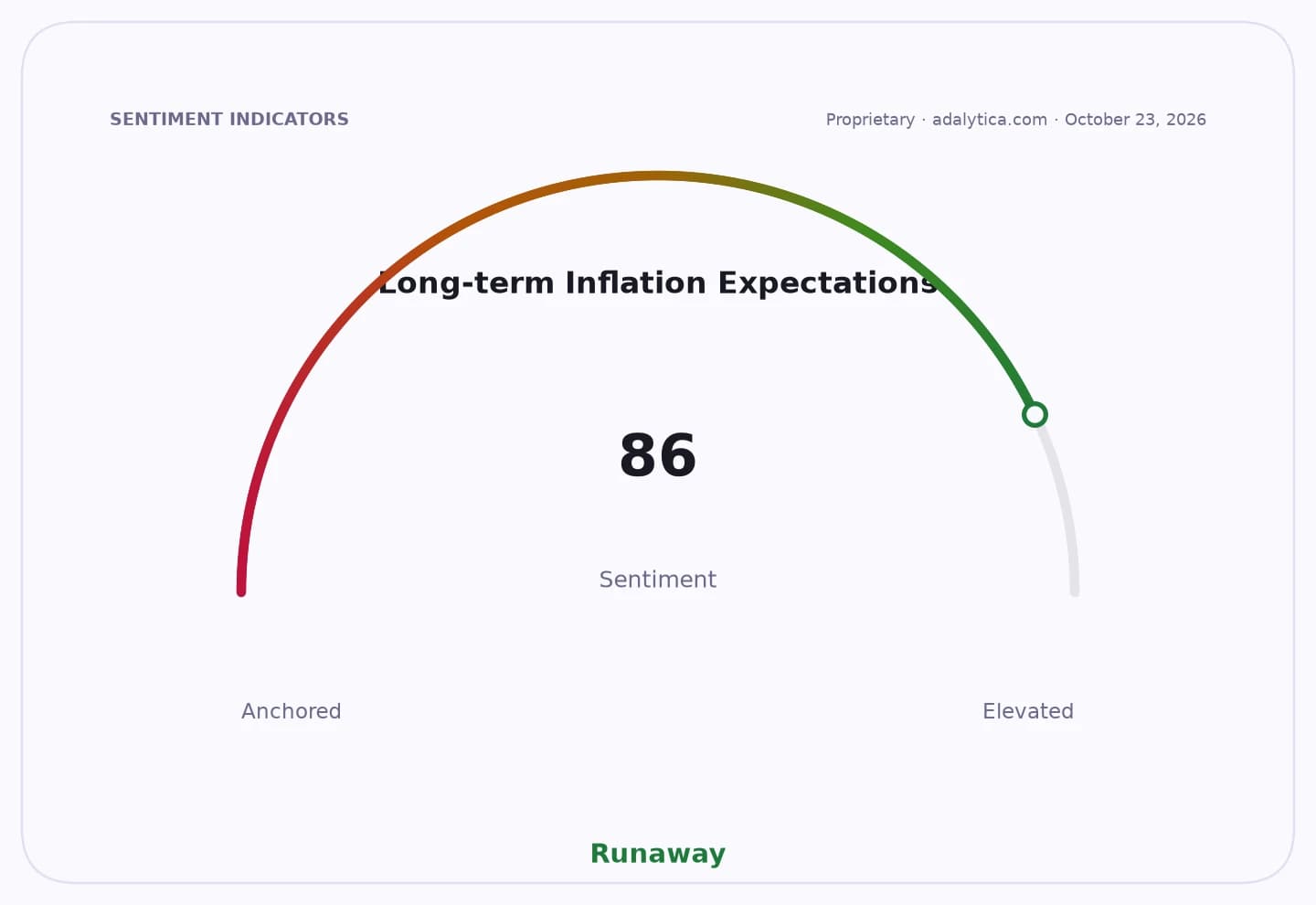
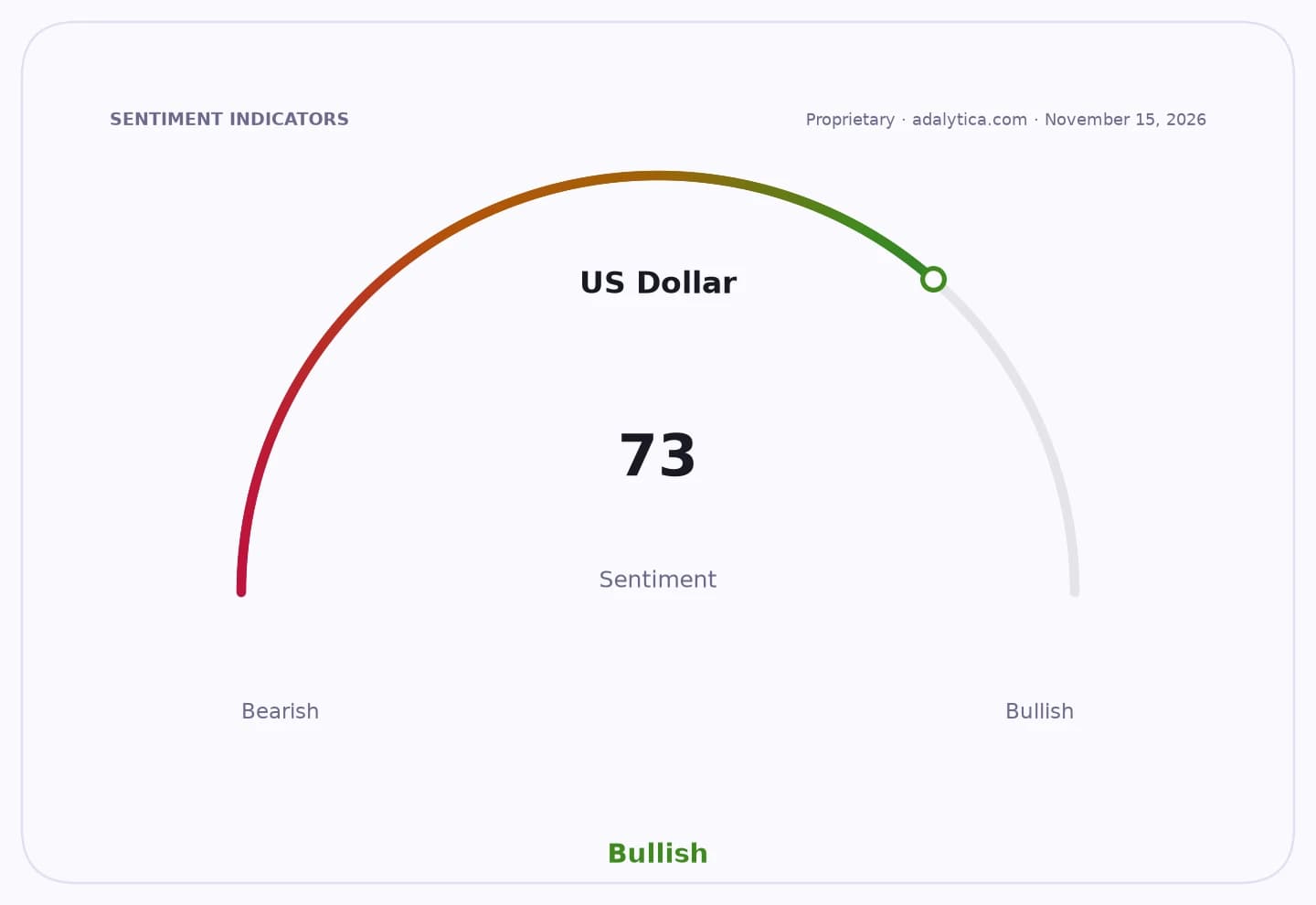
The Canadian dollar firmed while benchmark Treasury yields slipped, reflecting a repricing of U.S. rate expectations that is easing some of the pressure on the loonie.
Canadian Dollar Firms as U.S. Treasury Yields Ease
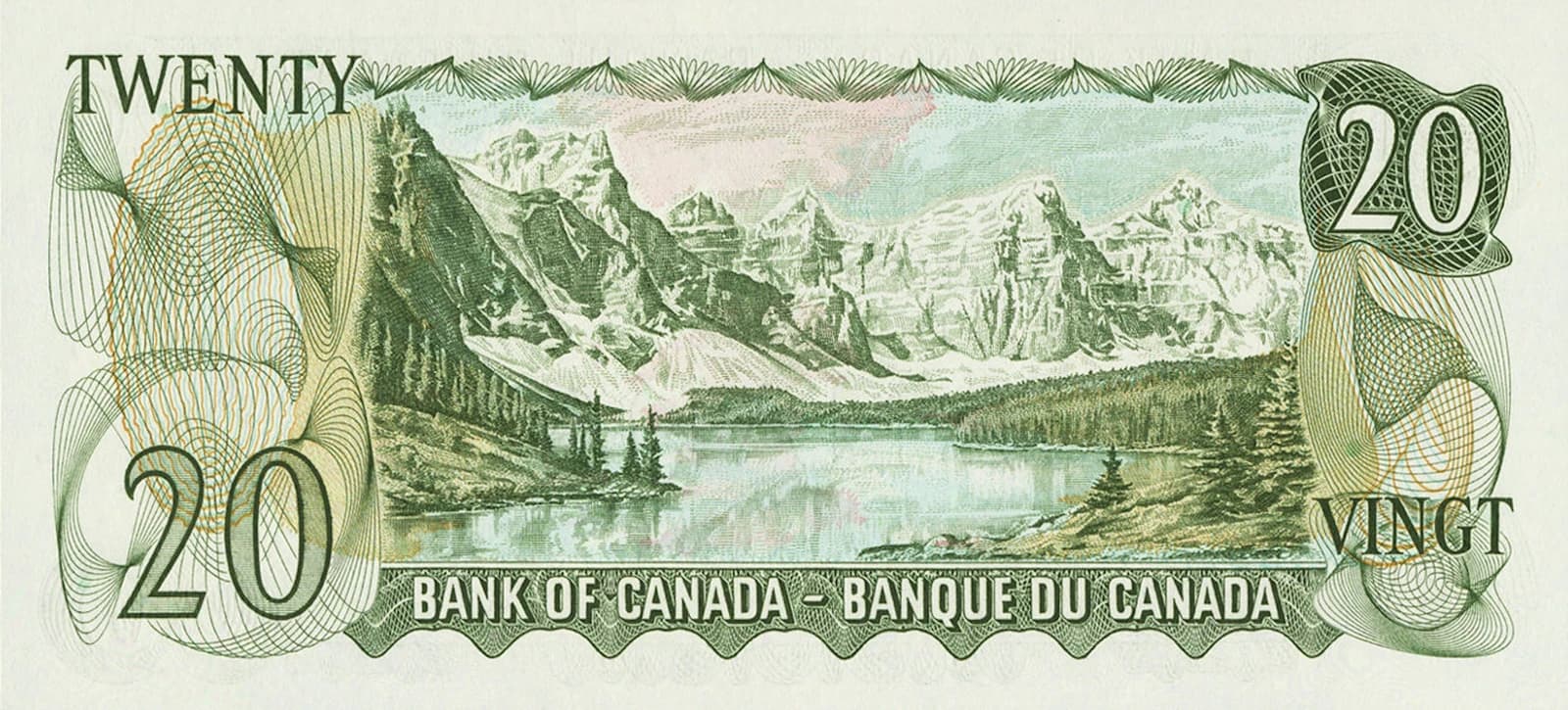
The currency traded around 0.70 against the U.S. dollar on Nov. 16, after briefly touching 0.70 in the prior sessions, while the U.S. 10-year yield held near 5.14% after peaking at 5.15% and the 2-year yield hovered around 4.86%. The move matters because the Canadian dollar has been increasingly driven by the gap between Canadian and U.S. rates, and a pullback in U.S. yields narrows that advantage for the dollar.
Sentiment Indicators
Markets have been adjusting to a still-hawkish Fed backdrop, but the latest shift suggests bond investors are less willing to chase Treasury yields higher after the 10-year climbed above 5% earlier in the week. The Fed funds rate is projected near 3.89%, keeping policy restrictive, yet the recent easing in long-dated yields is enough to improve risk appetite and reduce immediate support for the greenback.
For Canada, that helps stabilize a currency that has been buffeted by trade concerns, softer domestic growth and the relative appeal of U.S. assets. The Canadian dollar remains below its 50-day moving average of 0.71 and 200-day average of 0.72, with RSI readings near 22 to 24, showing the pair is still technically weak despite the latest bounce.
The bond side is also pivotal for investors. Adalytica’s U.S. Treasury bond signal remains in “Extreme Fear,” while the S&P 500 gauge sits in “Extreme Greed,” underscoring a market split between equity optimism and caution in fixed income. That backdrop leaves the loonie vulnerable to any renewed surge in U.S. yields, but supported if Treasury markets continue to cool.
Investors will now watch whether incoming inflation data and Fed commentary keep long rates near current levels or push them back toward the recent highs, which would likely renew pressure on the Canadian dollar and other rate-sensitive currencies.
| Entity | Gains | Losses |
|---|---|---|
| Canadian dollar | ▲Less pressure from U.S. yields | ▼Rate-differential headwind eases |
| U.S. Treasury bulls | ▲Yield pullback support | ▼Recent yield spike fades |
| U.S. dollar | ▲Softer upside momentum | ▼Some safe-haven demand slips |
| Canadian exporters | ▲Slightly softer currency support | ▼Import costs stay elevated |