The U.S. dollar firmed against the Canadian dollar as higher Treasury yields and a sharp pullback in oil prices reinforced demand for the greenback and weakened a currency closely tied to energy markets.
USD/CAD Rises on Higher Yields and Lower Oil

The move matters because it brings together three of the main forces that drive USD/CAD: the U.S. rate advantage, Canada’s exposure to crude, and broader risk appetite. The 10-year Treasury yield rose to 4.95% on Nov. 3 from 4.91% a day earlier, before easing slightly to 4.885% in the forecast for Nov. 4, keeping U.S. fixed-income returns elevated relative to peers. At the same time, WTI crude fell to $99.64 a barrel on Nov. 3 from $107.56 on Oct. 30 and a projected $98.203 on Nov. 4, a decline that tends to pressure the Canadian dollar by reducing expected export revenues and worsening Canada’s terms of trade.
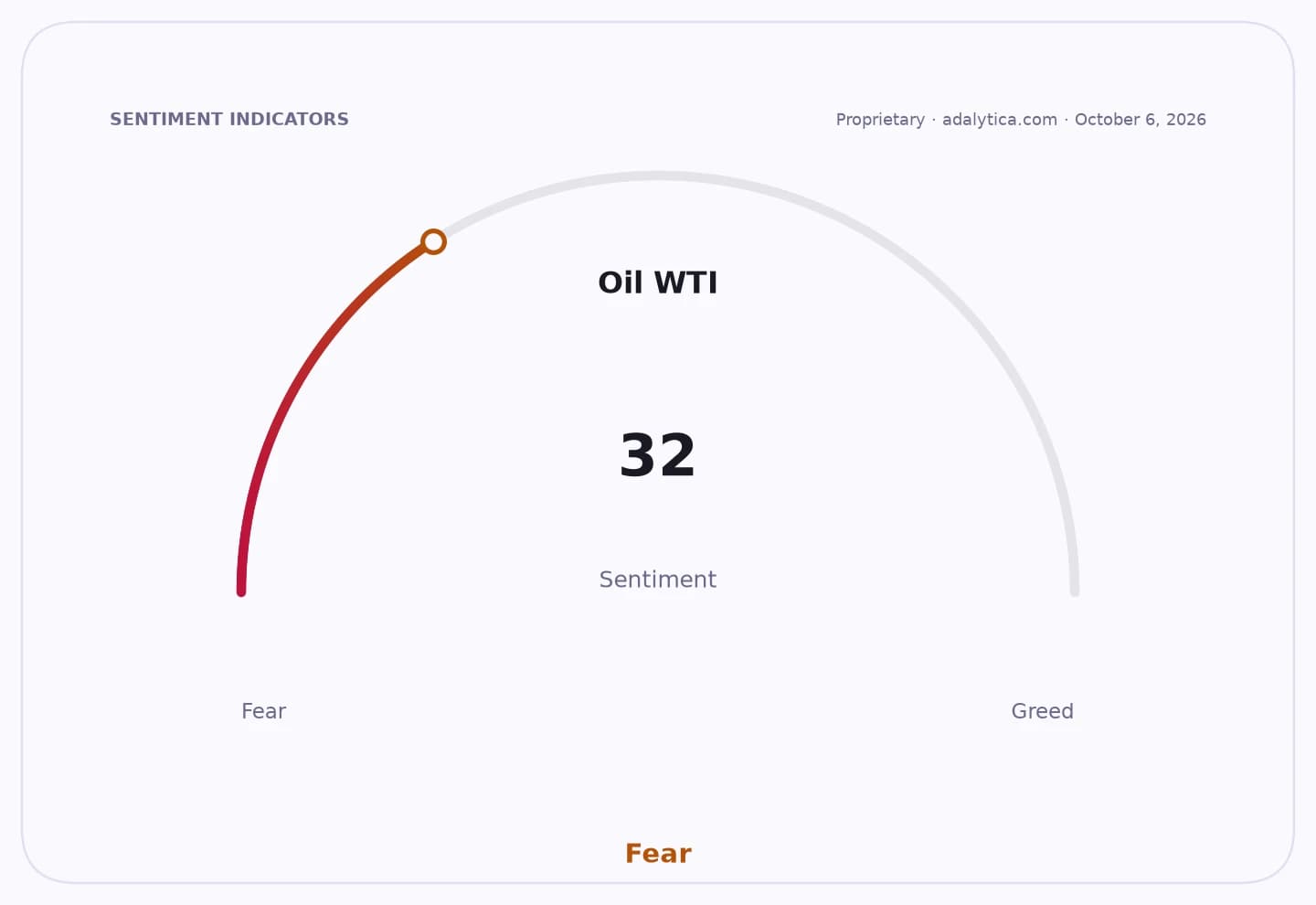
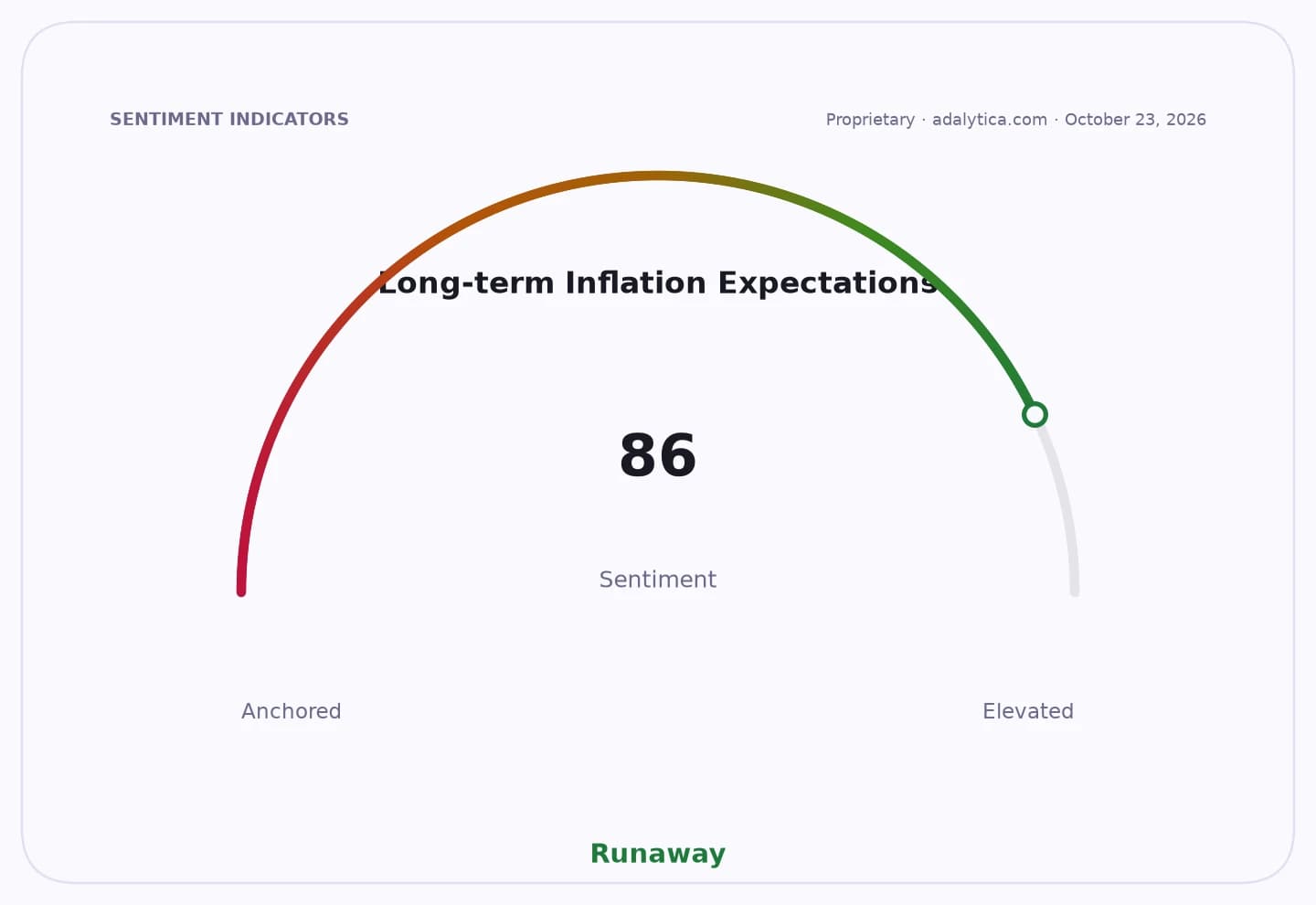
Sentiment Indicators
Oil WTI
That combination helped the U.S. Dollar Index fund UUP hold near the top of its recent range, closing at 28.90 on Nov. 4 and 28.90 again on Nov. 5, above both its 50-day average of 28.66 and 200-day average of 27.96. The ETF’s RSI reading of 48.4 suggested momentum had cooled from earlier overbought levels, but the broader trend remained constructive. By contrast, the Canadian-dollar proxy FXC stayed under pressure at 69.87 on Nov. 5, still below its 200-day average of 70.36, with its RSI at 70.7 indicating the recent bounce had already become stretched.
For investors, the message is that the dollar’s support is not coming from one factor alone. Rising yields make U.S. assets relatively more attractive, while weaker oil directly hits a key support for the Canadian currency and raises questions about near-term growth expectations in commodity-linked economies. The 10-year and 2-year Treasury spread at 0.32 percentage point on Nov. 4 also pointed to a still-positive, if modest, curve term premium that can keep foreign capital flowing toward dollar assets even as recession fears remain subdued.
The setup leaves USD/CAD sensitive to the next move in crude and U.S. rates. If oil stabilizes and Treasury yields ease, the Canadian dollar could recover some ground; if yields remain near 5% and energy prices continue to slip, the dollar is likely to keep the upper hand. For now, the market narrative is straightforward: higher U.S. yields and lower oil are pulling in the same direction, and that favors the greenback over the loonie.
| Entity | Gains | Losses |
|---|---|---|
| U.S. dollar | ▲Higher yield support | ▼None near term |
| Canadian dollar | ▲Oil rebound | ▼Export-linked pressure |
| U.S. Treasury holders | ▲Better income | ▼Price volatility |
| Oil exporters | ▲Higher prices earlier | ▼Lower crude prices |