The Canadian dollar may be cheap, but investors are being warned not to mistake that discount for an easy trade.
Canadian Dollar Undervalued as Desjardins Sees Slow Recovery

Desjardins says the loonie is about 22% undervalued against the US dollar on purchasing-power-parity measures, but argues the gap could persist unless Canada’s long investment drought ends and the US-Canada interest-rate spread narrows further.
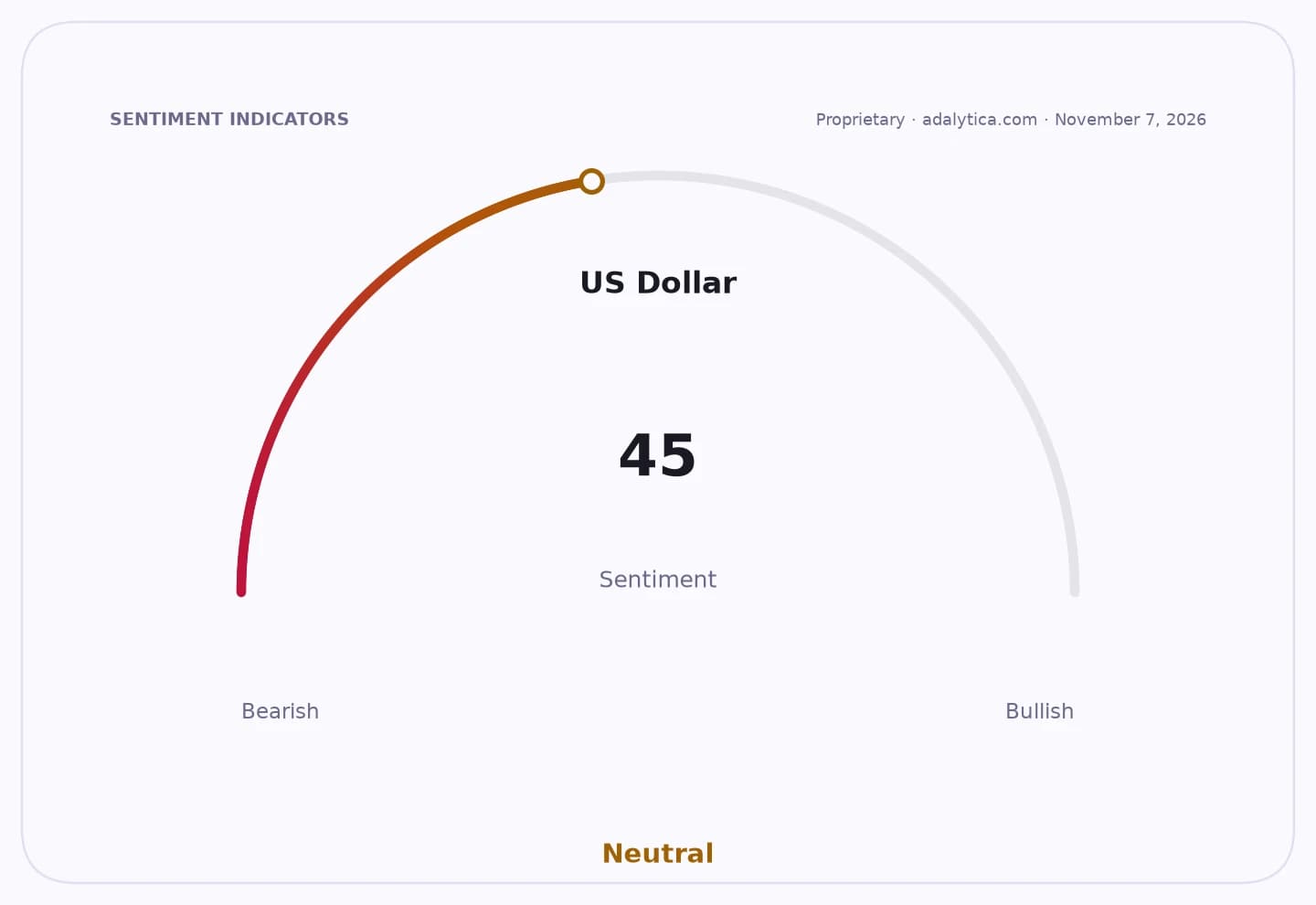
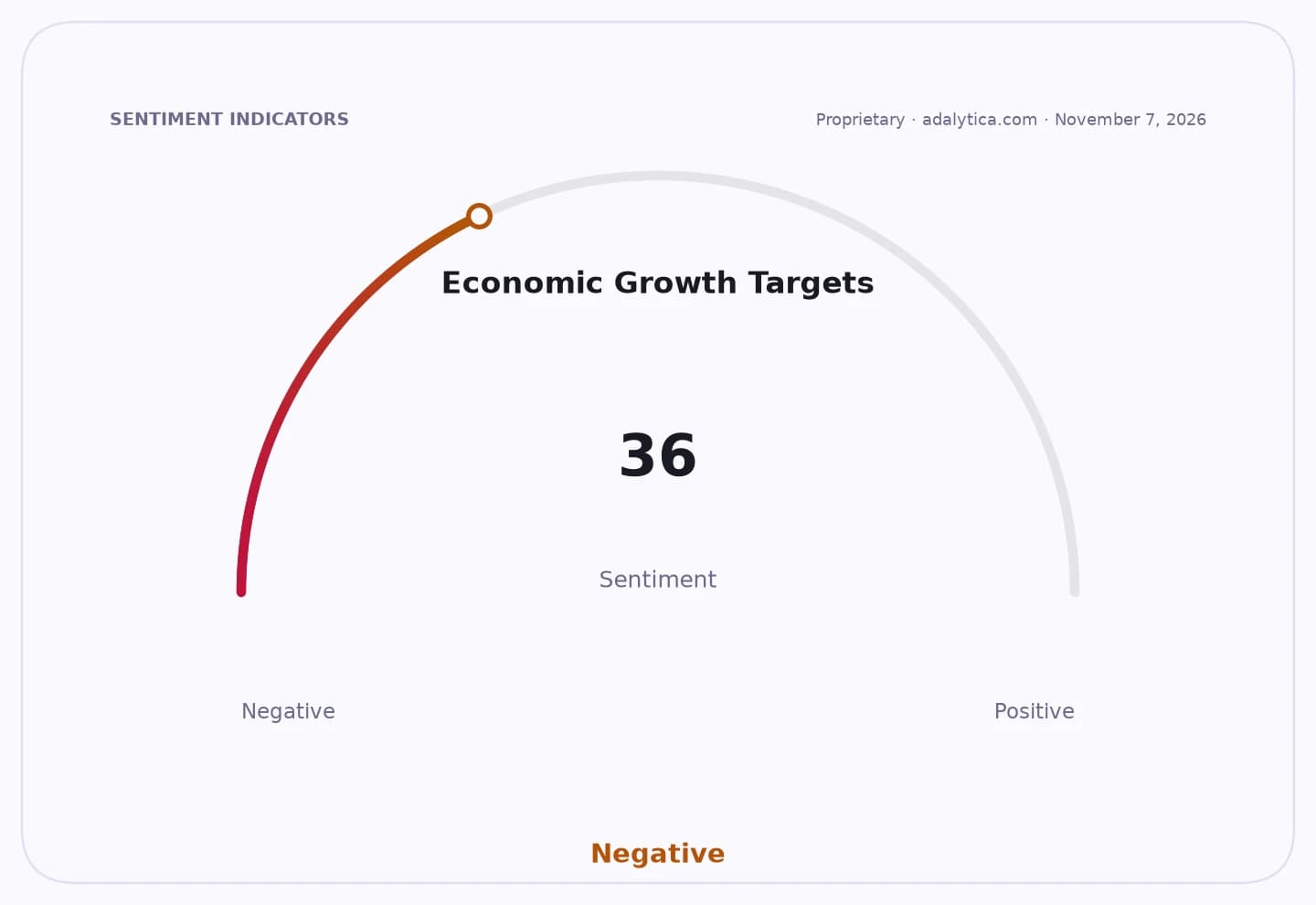
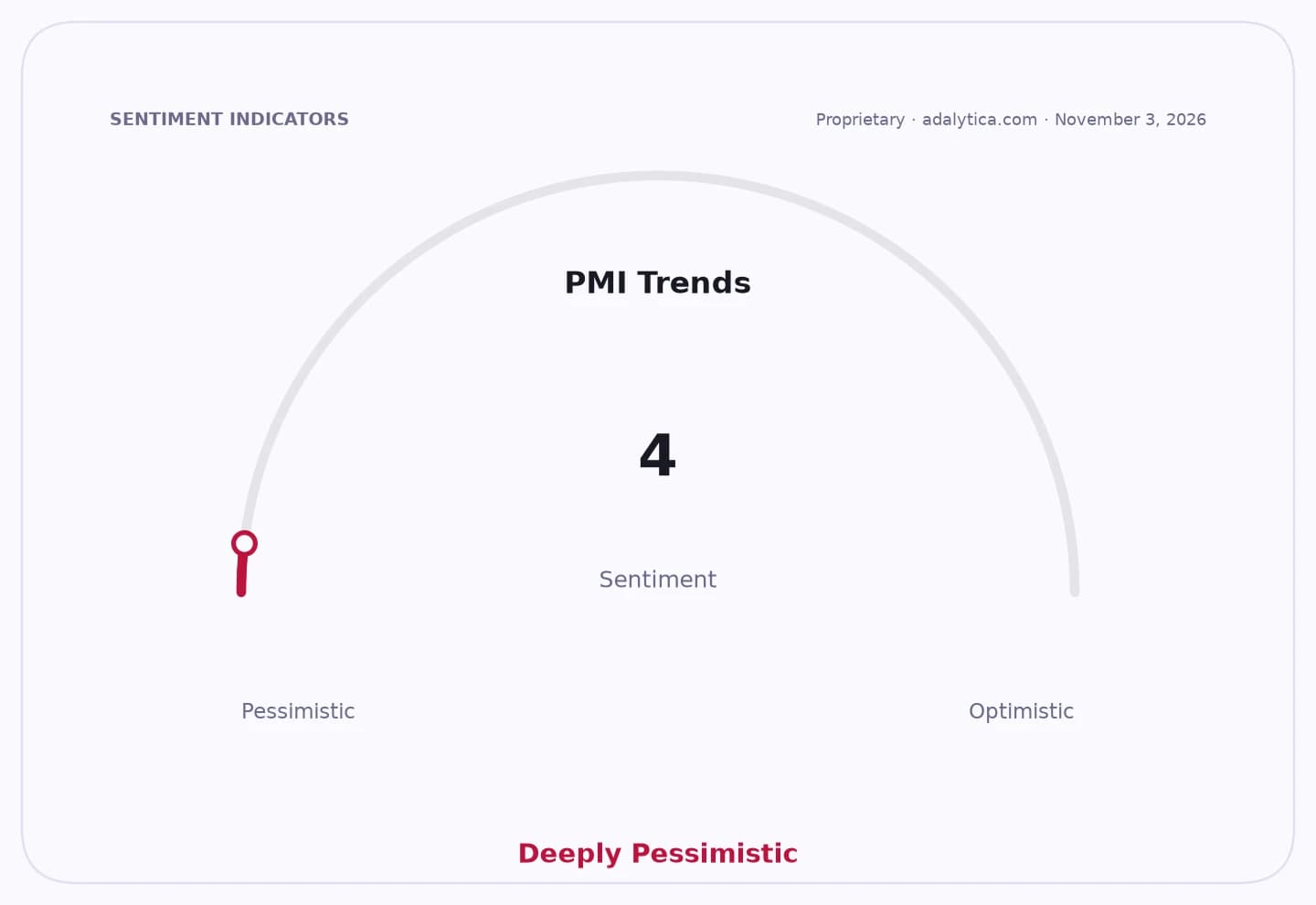
Sentiment Indicators

That matters because currencies can stay mispriced for years when the forces behind the discount do not change. Desjardins says the current overshoot is already 20 months old, with previous moves of 20% to 25% taking roughly three years to unwind once they crossed that threshold.
The bank points to three structural drags: Canadian productivity growth has lagged the US by about 1.1% a year over the past decade, business investment has slumped for years, and Canadian savings have been flowing into US artificial-intelligence stocks instead of domestic assets. Desjardins says productivity alone explains more than half of the gap to fair value.
US Dollar
That combination helps explain why the loonie’s usual link to oil has weakened. Brent crude has swung sharply, dropping from above $115 a barrel on Monday to below $95 on Wednesday, but USD/CAD was little changed at 1.3982, underscoring that oil is no longer the dominant driver it once was.
For investors, the key question is whether the currency’s cheapness becomes a catalyst or a trap. Desjardins sees the loonie starting to recover only if Canada’s investment cycle turns and the Federal Reserve begins cutting rates, which would narrow the two-year US-Canada swap spread further from about 125 basis points.
The near-term backdrop remains mixed. The Bank of Canada lifted rates to 2.50% on Oct. 28 while the Fed held, helping narrow the spread from a peak near 155 basis points. Desjardins still sees USD/CAD at 1.41 by year-end and 1.38 by end-2027, implying only a modest move from spot before a gradual recovery in the Canadian unit.
For sterling traders, the same logic points to a weaker GBP/CAD path over time, with Desjardins forecasting 1.83 by year-end and 1.86 by end-2027. The broader risk, however, is that policy uncertainty and trade friction keep the loonie pinned for longer, including threatened 50% US tariffs on Canadian autos from Jan. 1, 2027.
| Entity | Gains | Losses |
|---|---|---|
| Canadian exporters | ▲More competitive pricing | ▼Translation costs on imports |
| US importers | ▲Cheaper Canadian goods if CAD stays weak | ▼Higher costs if CAD rebounds |
| Canadian savers in US assets | ▲Stronger US-return currency exposure | ▼Domestic currency underperformance |
| Loonie bulls | ▲Cheap valuation entry point | ▼Prolonged value trap risk |