Canada’s services sector contracted for a fifth straight month in October, a sign the country’s largest employer is losing momentum as trade uncertainty with the U.S. and stubborn cost pressures erode demand.
Canada Services PMI Contracts for Fifth Straight Month
Economic Growth Targets
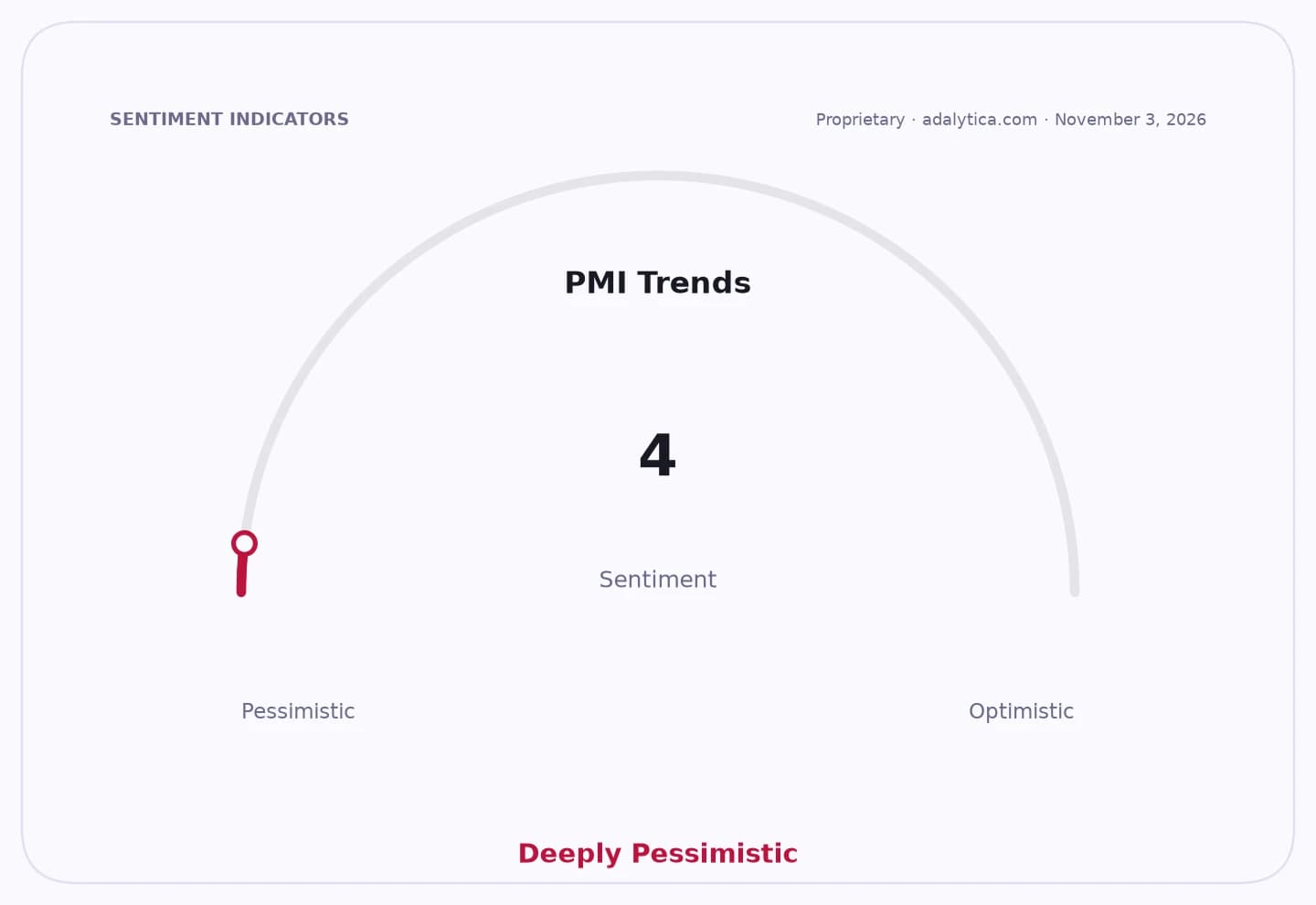
The S&P Global Canada services business activity index slipped to 48.1 from 48.3 in September, staying below the 50 threshold that separates expansion from contraction. The reading matters because services dominate Canada’s economy and employment, making the prolonged weakness a broader warning signal for growth just as manufacturing also tipped back below 50 in October.
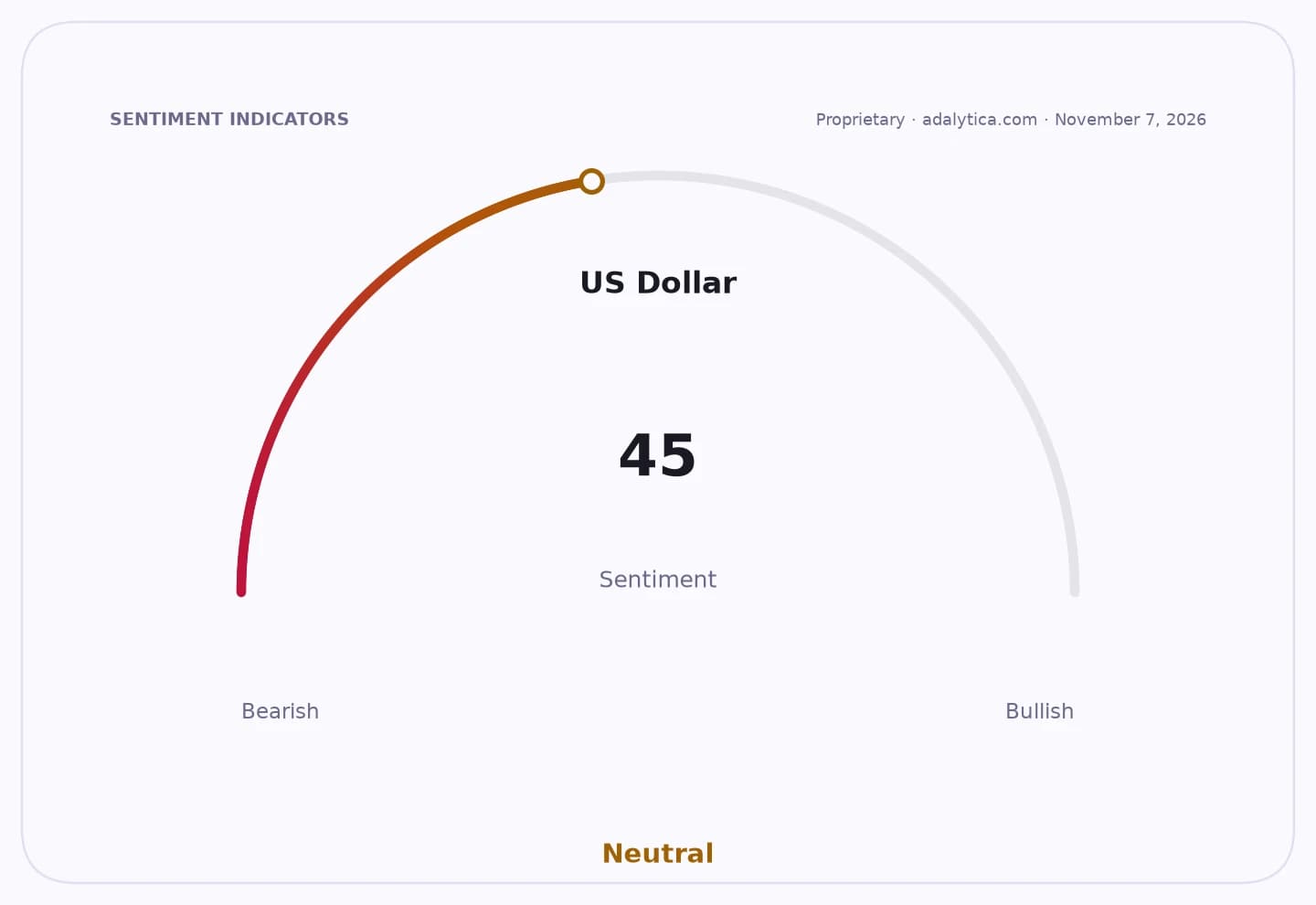
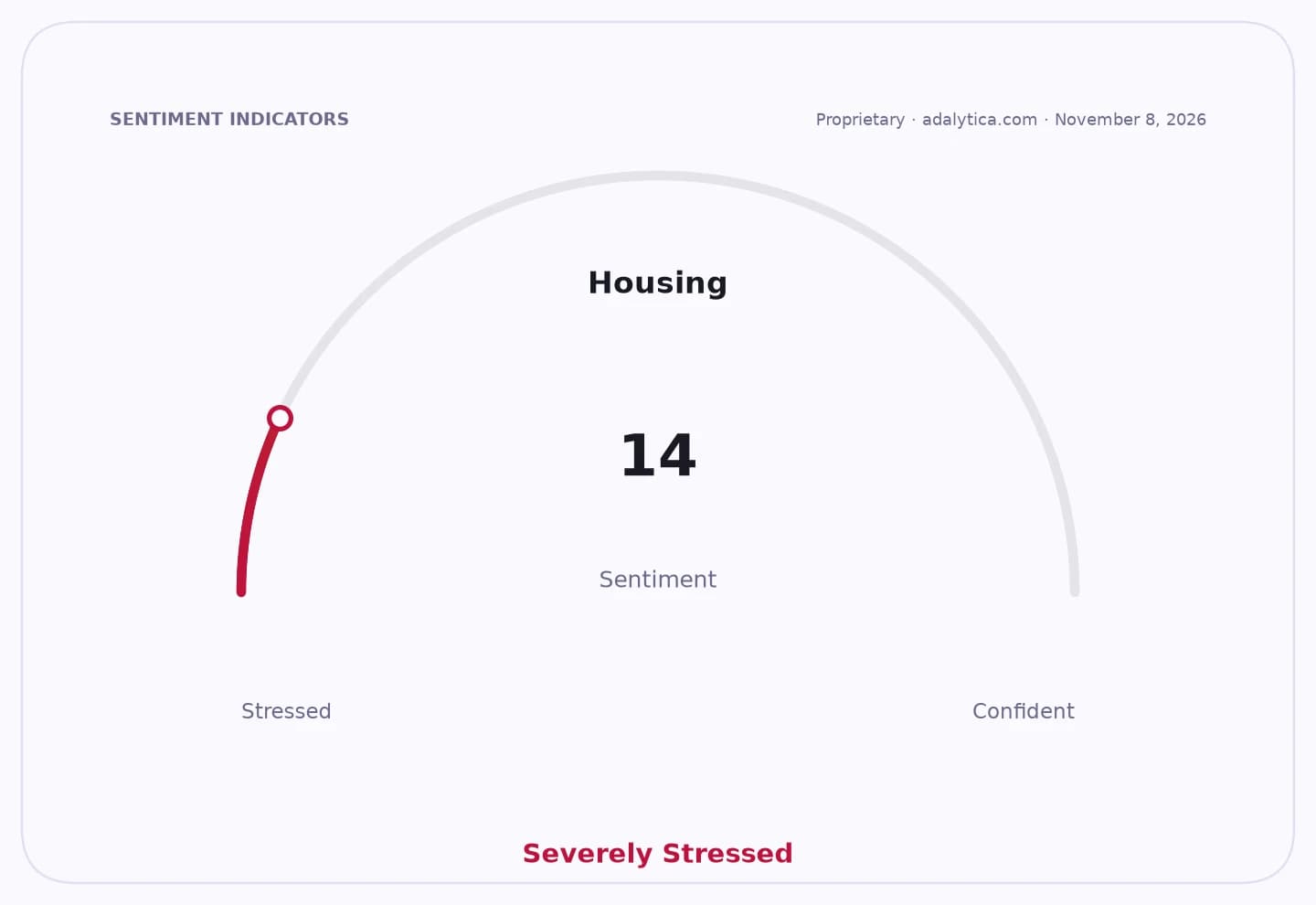
Sentiment Indicators
S&P Global said the slowdown was driven by ongoing uncertainty around the Canada-U.S. trading relationship and rising prices. New business also weakened, with the new orders gauge falling to 48.0 and new export business posting its steepest decline since November 2025. That suggests demand is softening not only at home but also from cross-border clients, a troubling development for a country that sends about 70% of its exports to the United States.
Inflation is complicating the picture. The input prices index climbed to a three-month high of 63.9, reflecting higher fuel surcharges, transportation costs and tariffs. Firms managed little relief on pricing power, with the prices charged measure unchanged at 53.4, implying businesses are still passing some costs through even as customers resist. That combination points to margin pressure for service providers and reinforces the risk that higher operating costs will weigh on hiring and investment.
The weakness was broad enough to pull the composite PMI down to 48.1 from 48.7, marking a fifth month below the no-change line. Sentiment also deteriorated, with the future activity index slipping to 57.7 from 61.4, showing firms are less confident about the near-term outlook even though the index still points to some growth ahead.
For investors, the data reinforce a cautious case on Canadian cyclical assets. A prolonged services slowdown raises the odds of softer domestic demand, slower earnings growth and a more dovish policy backdrop if the weakness persists. The bear case is that tariffs, weak export orders and sticky inflation combine to keep activity subdued into year-end. The bull case is that the sub-50 readings prove temporary and that any easing in trade tensions could quickly lift confidence and orders.
| Entity | Gains | Losses |
|---|---|---|
| Canadian consumers | ▲Some pricing restraint | ▼Services availability and jobs |
| Service firms with pricing power | ▲Limited pass-through | ▼Margin compression |
| U.S. exporters to Canada | ▲Potentially softer cost inflation | ▼Weaker Canadian demand |
| Canadian equities tied to domestic growth | ▲Defensive appeal if rates fall | ▼Cyclical earnings outlook |