The Canadian dollar climbed to a seven-week high against the US currency after Democrats’ sweeping midterm victory knocked the greenback lower and a stronger-than-expected Canadian trade surplus offered a domestic tailwind.
Canadian dollar hits seven-week high vs US dollar
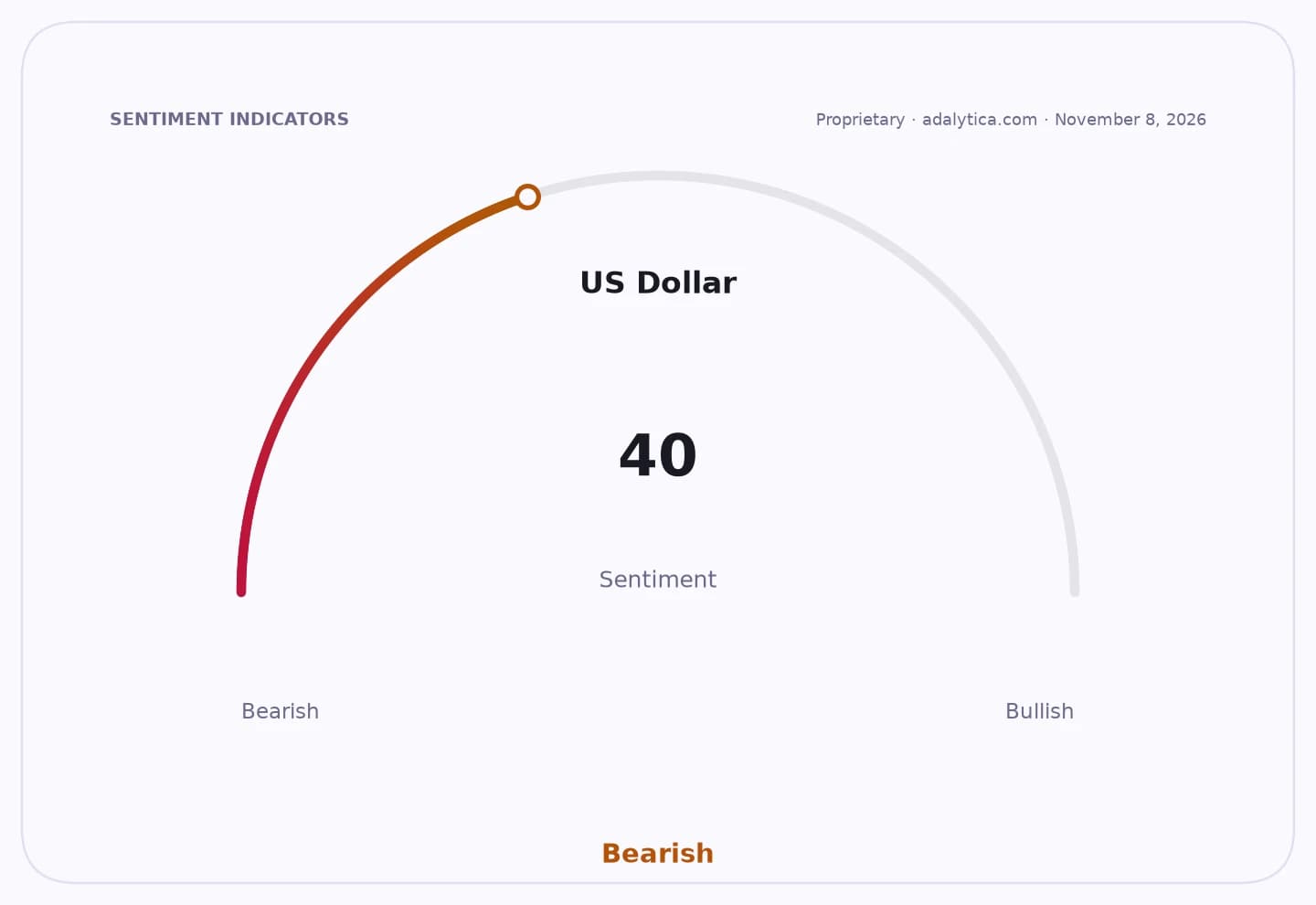
US Dollar
The loonie traded 0.3% higher at 1.3965 per US dollar, or 71.61 US cents, after earlier touching its strongest intraday level since Sept. 16 at 1.3930. The move reflects a broader repricing in currency markets rather than a Canada-specific growth story alone: investors were selling the dollar as the election outcome raised the prospect of two years of political gridlock in Washington and made some traders less confident in the direction of President Donald Trump’s trade and regulatory agenda.
Sentiment Indicators
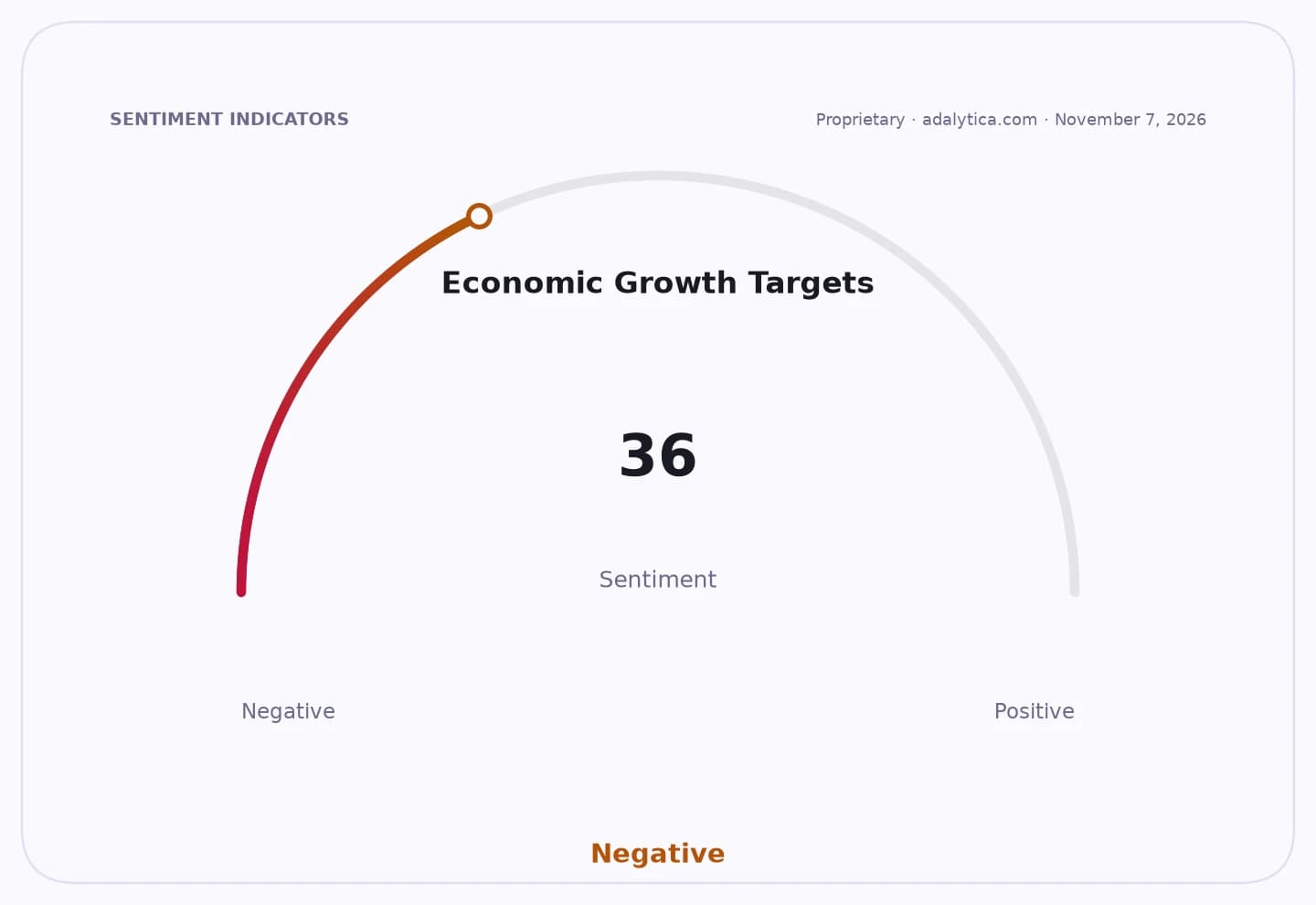
That matters economically because the currency reaction tightens the link between US politics and North American trade assumptions. A divided Congress could complicate US moves on tariffs, trade talks and military policy, all of which feed into capital flows, corporate planning and commodity demand. For Canada, where the economy is highly exposed to US demand and resource prices, a softer dollar can cushion exporters and partially offset weaker domestic momentum.
George Davis, chief technical strategist at RBC Capital Markets, said USD-CAD sold off alongside broader US dollar weakness after the election results. He said Democratic control of both chambers could create “impediments” to Trump’s trade and military agenda and curb attempts to reduce regulation in sectors such as tech, which in turn could damp demand for US assets.
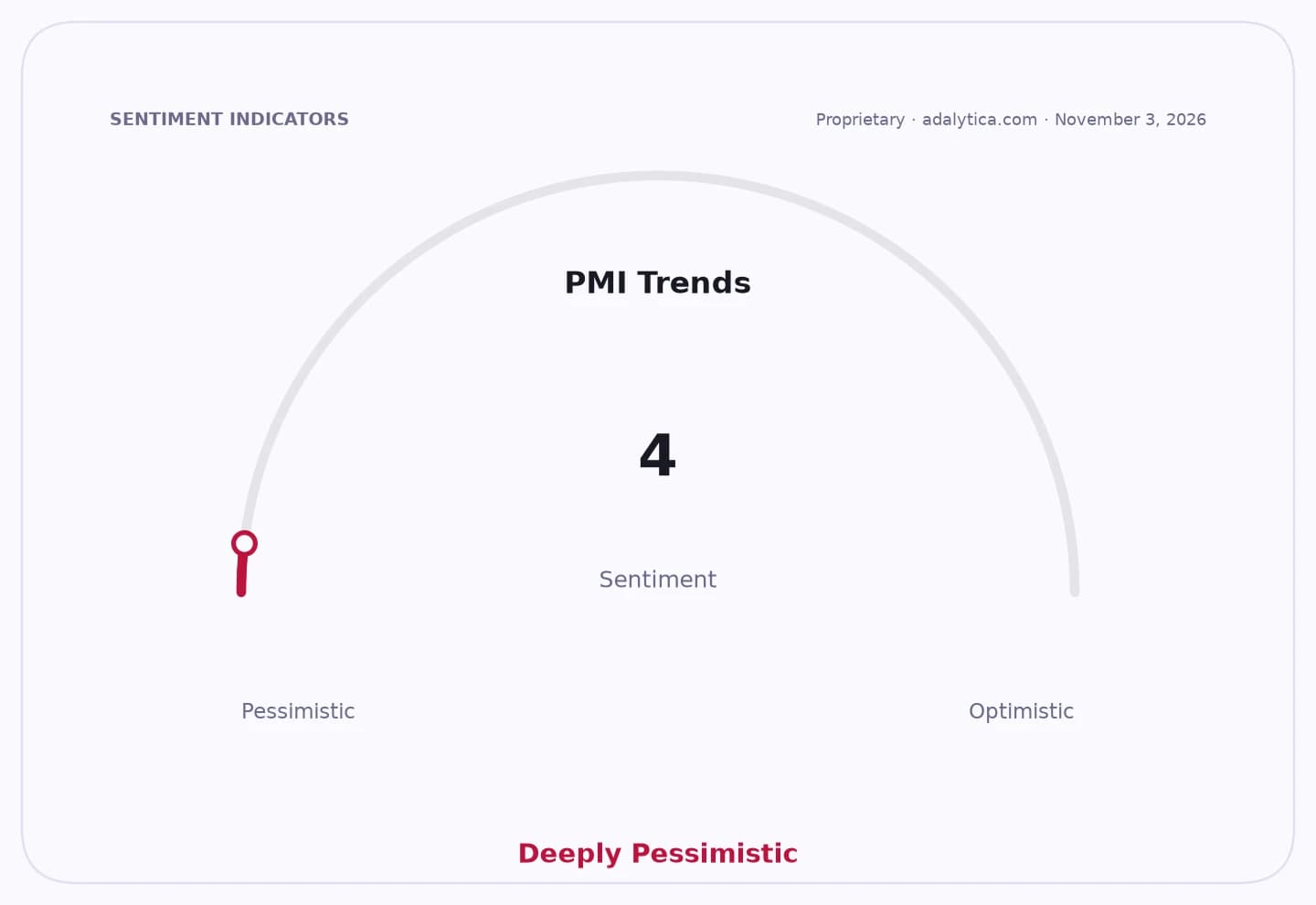
The loonie also drew support from Canadian data showing a trade surplus of C$5.35 billion in September, the widest since May 2022. Even so, the details were less flattering: strip out gold and energy and the trade picture was weaker, with export volumes down 4%. That suggests the currency’s strength is being driven as much by external dollar weakness as by a sustained improvement in Canada’s underlying external balance.
The market response came despite signs of fragility in the domestic economy. Canada’s services sector contracted for a fifth straight month in October as trade uncertainty and higher prices weighed on activity. At the same time, oil, one of Canada’s key export earners, fell sharply as investors watched developments in the US-Israeli war with Iran, with US crude futures down 8.5% to $87.89 a barrel. Lower oil prices usually dull support for the Canadian dollar, underscoring how much of Wednesday’s move was driven by the US side of the ledger.
Bond markets echoed the same risk-off tone. Canadian yields fell across a flatter curve, tracking US Treasuries, with the 10-year down 7 basis points at 3.712%, the lowest since Aug. 28. That combination of a weaker dollar, lower yields and softer oil suggests investors were repositioning for slower US policy momentum rather than betting on a clear acceleration in Canadian growth.
For investors, the key question is whether the loonie’s rally can hold once the immediate post-election dollar selling fades. If US political gridlock keeps pressure on the greenback, Canada’s currency could extend gains, especially if commodity prices stabilize. But if incoming US economic data or fresh geopolitical risk revive demand for dollars, the move may prove tactical rather than structural.
| Entity | Gains | Losses |
|---|---|---|
| Canadian dollar | ▲Stronger FX level | ▼Exporters with thin margins |
| US dollar | ▲— | ▼Broad-based selling pressure |
| Canadian exporters | ▲Easier foreign demand conversion | ▼Importers facing firmer loonie |
| Oil producers | ▲— | ▼Revenue support from crude prices |