The Canadian dollar climbed to a five-week high on Friday as stronger retail sales and a jump in oil prices hardened bets that the Bank of Canada will lift interest rates next week.
Canadian dollar hits five-week high on rate bets

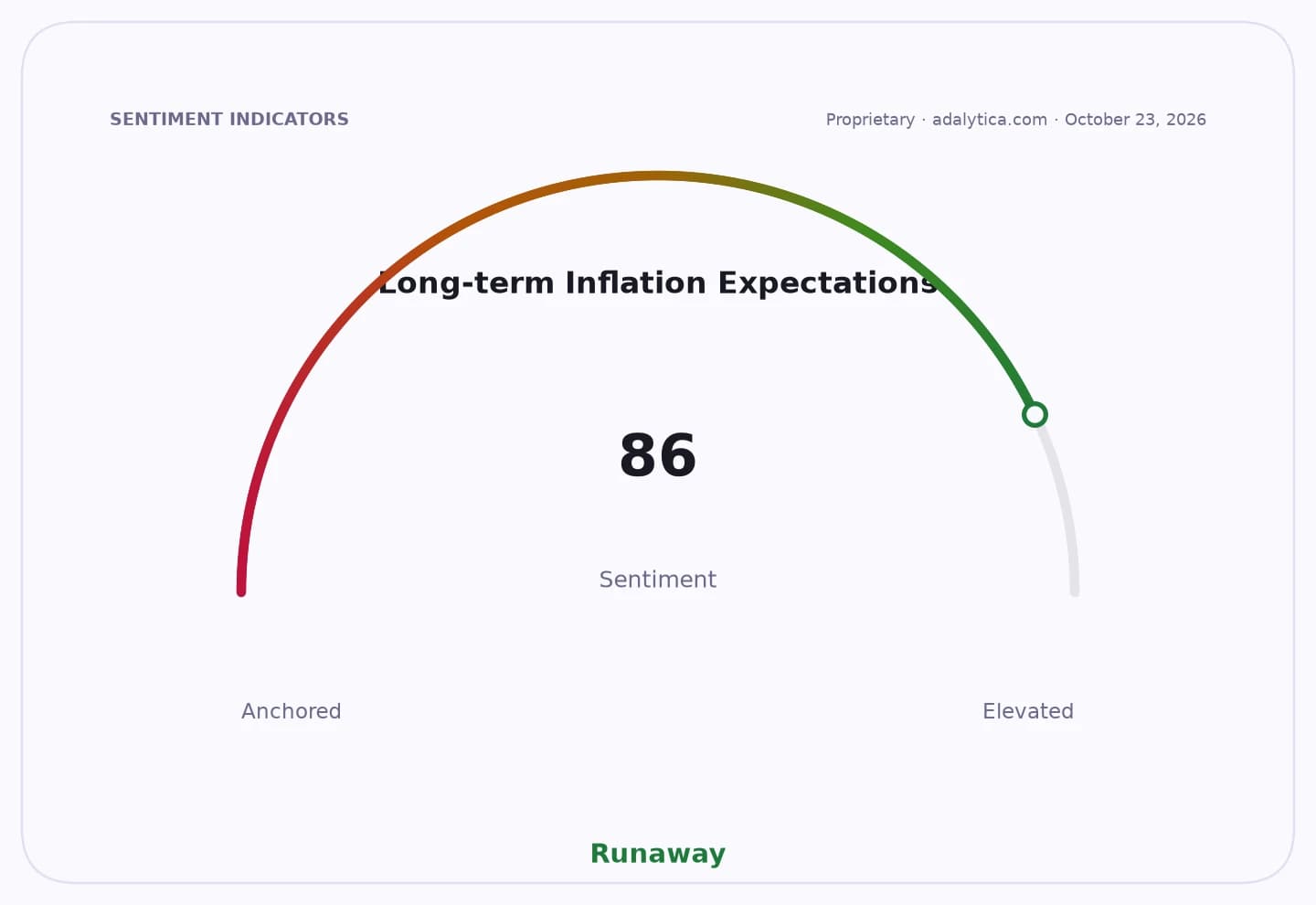
That is the key market story: the loonie is being repriced not just on one data point, but on a tightening mix of domestic demand resilience, higher energy revenues and a central bank that is increasingly uncomfortable staying on hold while inflation expectations rebuild. For investors, that means Canada’s policy path may be turning more restrictive just as the global bond market is already adjusting to higher-for-longer rates.
Sentiment Indicators
The currency was last up 0.1% at 1.40 per US dollar, or 71.43 US cents, after earlier touching 1.3969, its strongest intraday level since Sept. 16. It has gained for seven straight sessions, which would be its longest winning streak since March 2022 if the move holds. On the week, the loonie is up 1%, its biggest weekly advance since April.
Retail sales in Canada rose 1.2% in August from July, led by motor vehicles and parts, while a preliminary estimate pointed to another 0.7% increase in September. Desjardins analyst Oskar Stone said the resilience in spending leaves the bank “headed for a rate increase next week” and points to third-quarter GDP growth of 2%.
That matters because consumer demand is proving firm enough to keep pressure on the Bank of Canada even as borrowing costs have already risen sharply. Markets are now pricing roughly an 80% chance of another hike, and a majority of economists polled by Reuters expect the central bank to raise its benchmark rate by 25 basis points to 2.50% on Oct. 28, with one more move by the end of March.
Oil is adding another layer of support. US crude rose 3.8% to $103.27 a barrel after Houthi attacks in Saudi Arabia stoked fears of more disruption in Middle East energy supplies. For Canada, a major oil exporter, firmer crude improves the external balance and supports national income, making the currency more sensitive to supply shocks abroad and less vulnerable to short-term domestic data misses.
The bond market is also leaning into the tighter policy narrative. Canadian yields rose across the curve, with the 10-year up 5.1 basis points to 3.838%, following the move in US Treasuries. In FX terms, that combination is bullish for the loonie: higher expected rates, better terms of trade and a market that is increasingly willing to buy Canada as a relative-value play against the greenback.
The investable implication is straightforward. If the Bank of Canada delivers and signals more tightening ahead, the biggest beneficiaries are likely to be Canadian dollar bulls, oil-linked names and rate-sensitive financials, while imported-goods retailers, borrowers and loonie shorts face the pressure. The market may still be underestimating how quickly a modest policy surprise can extend this currency breakout.
| Entity | Gains | Losses |
|---|---|---|
| Canadian dollar | ▲Higher rate bets | ▼USD/CAD shorts |
| Bank of Canada | ▲Policy credibility | ▼Borrowers |
| Canadian banks | ▲Wider rate spreads | ▼Bond holders |
| Oil exporters | ▲Stronger crude prices | ▼Importers |