The Canadian dollar is drawing support from a market that no longer sees Alberta’s vote as a material risk, and that matters because it keeps the focus on relative growth, rates and capital flows rather than political disruption. For investors, the message is simple: the loonie is behaving less like a headline-driven protest trade and more like a currency still anchored to Canada’s macro backdrop.
Canadian Dollar Rises as Alberta Vote Risk Fades

Rosenberg Research’s view that the Alberta election poses little threat to the currency is important because political noise can quickly morph into a real FX discount when traders fear fiscal stress, pipeline disruption or a broader challenge to investor confidence. That risk has not materialized. Instead, the Canadian dollar has been able to firm even as the broader dollar narrative remains unsettled, suggesting the market is willing to look through local politics and price Canada on fundamentals.
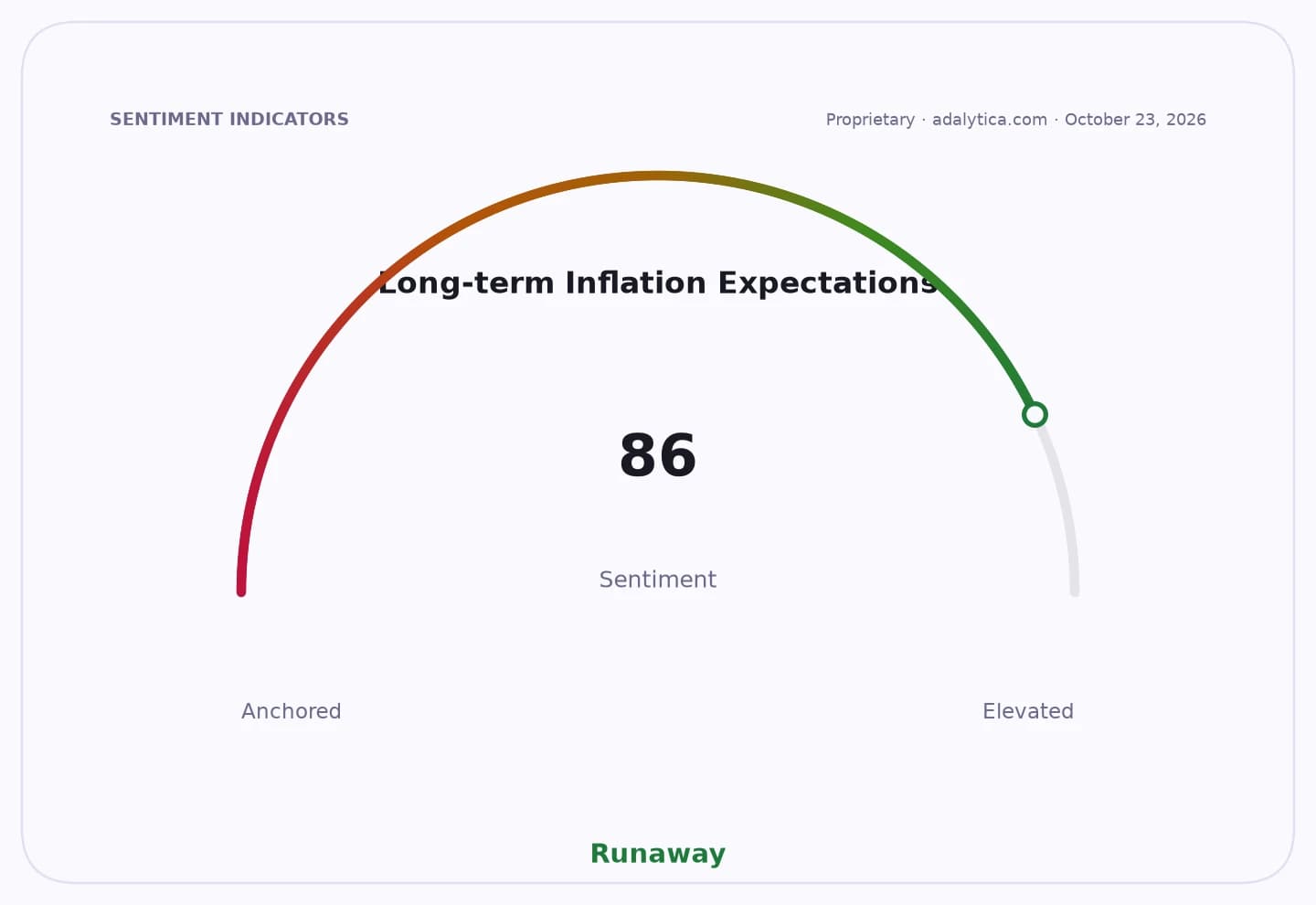
Sentiment IndicatorsⓘProprietary · adalytica.com · October 23, 2026
This is a snapshot — live sentiment, awareness and momentum for 130+ markets update continuously in the dashboard.Open AlphaPulse
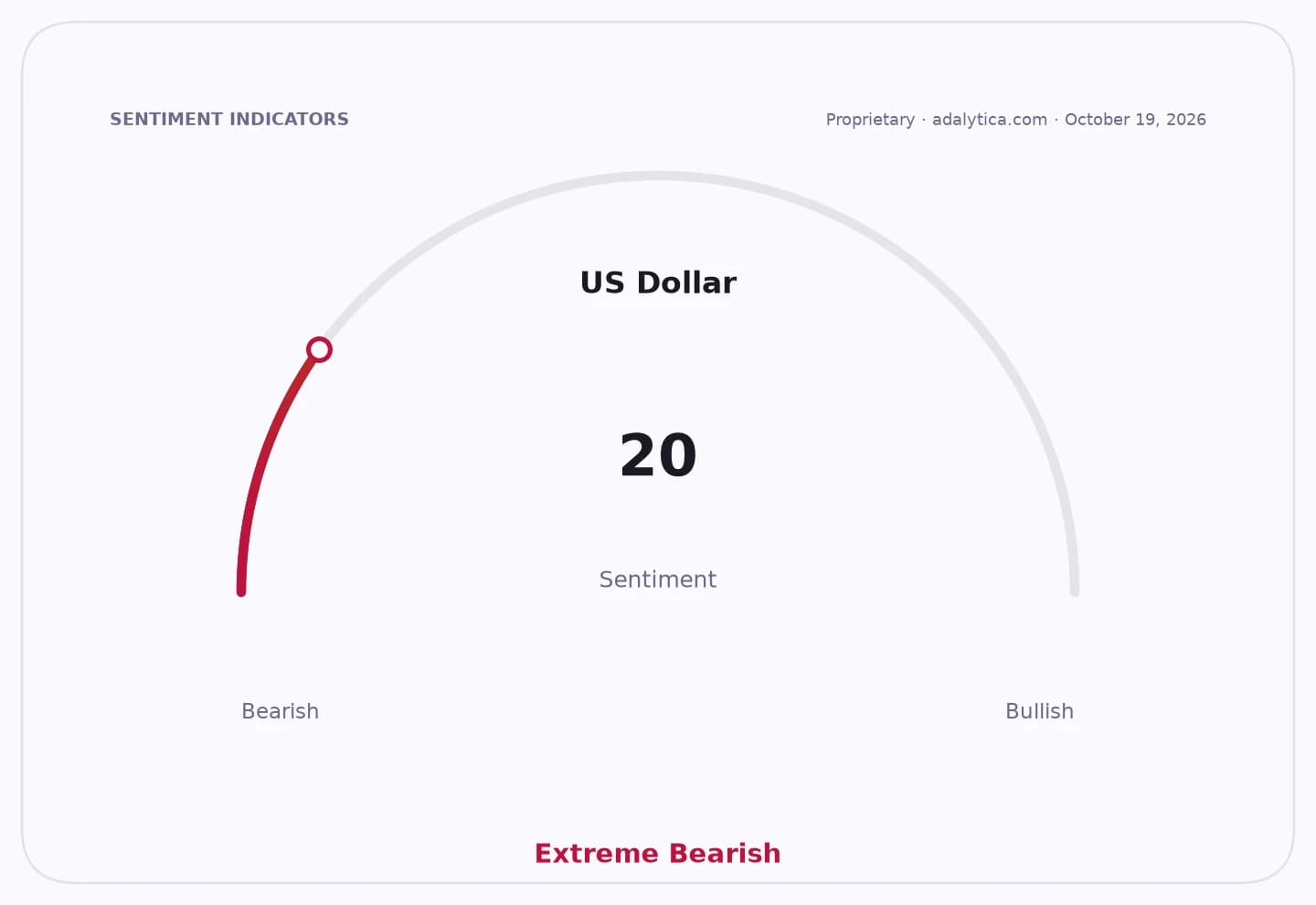
That is the kind of setup traders miss when they stay focused on the day’s headlines. The loonie’s resilience fits a broader pattern in which commodity-linked currencies can outperform when the dollar loses momentum and risk appetite stabilizes. Adalytica’s U.S. dollar trade signals show extreme fear on awareness and a sharply lower 30-day reading, while the Chinese yuan is flashing greed. In that kind of cross-current, a currency like the Canadian dollar does not need a domestic catalyst to rally — it just needs the absence of bad news and a market willing to rotate out of the greenback.
The market action in FXC underscores that point. The currency ETF closed at 69.87 on Oct. 23, up from 68.52 earlier in the month, and has rebounded from an oversold reading on the relative strength index to 76.3, a sign of strong short-term momentum. It is now pressing the upper end of a tight trading range around the 50-day moving average, while the 200-day average sits near 70.38. That tells us the move is no longer just a knee-jerk reaction to politics; it is becoming a technical breakout attempt.
Royal Bank of Canada’s share price, meanwhile, reflects a market still comfortable with the domestic banking backdrop even as the currency firms. RY closed at 200.97 after trading above 200 through the week, with its 50-day moving average at 202.31 and the 200-day at 187.21. That kind of setup matters because a steadier currency can ease imported inflation pressure and support financial-sector confidence, especially if investors begin to believe Canada’s policy and political mix is less disruptive than feared.
The investable takeaway is that the market may be underestimating how much relief is already priced into the Canadian dollar from simply not having a political shock out of Alberta. If the U.S. dollar stays soft and Canada avoids a policy surprise, the loonie has room to extend higher, and FXC remains the cleanest vehicle to express that view. For investors, this is the kind of asymmetric trade that often looks boring right before it works: limited downside from the election, but meaningful upside if macro sentiment continues to rotate away from the dollar.
| Entity | Gains | Losses |
|---|---|---|
| Canadian dollar / FXC | ▲Political risk premium fades | ▼Short-dollar traders |
| Alberta stability narrative | ▲Investor confidence | ▼FX volatility buyers |
| Royal Bank of Canada | ▲Steadier macro backdrop | ▼Import-cost pressure |