The Canadian dollar’s rebound against the U.S. dollar is running into a new political risk, with Alberta’s vote on a possible future separation referendum threatening to slow the slide in USD/CAD toward 1.40.
USD/CAD Near 1.40 as Alberta Vote Adds Risk
That matters because the loonie’s latest gains are being driven by a narrower U.S.-Canada rate spread and fading dollar support, not just sentiment. Scotiabank now pegs fair value for USD/CAD at 1.4140, almost exactly where the pair traded near 1.4152, leaving little valuation cushion for the Canadian dollar even before the Alberta vote is fully digested.
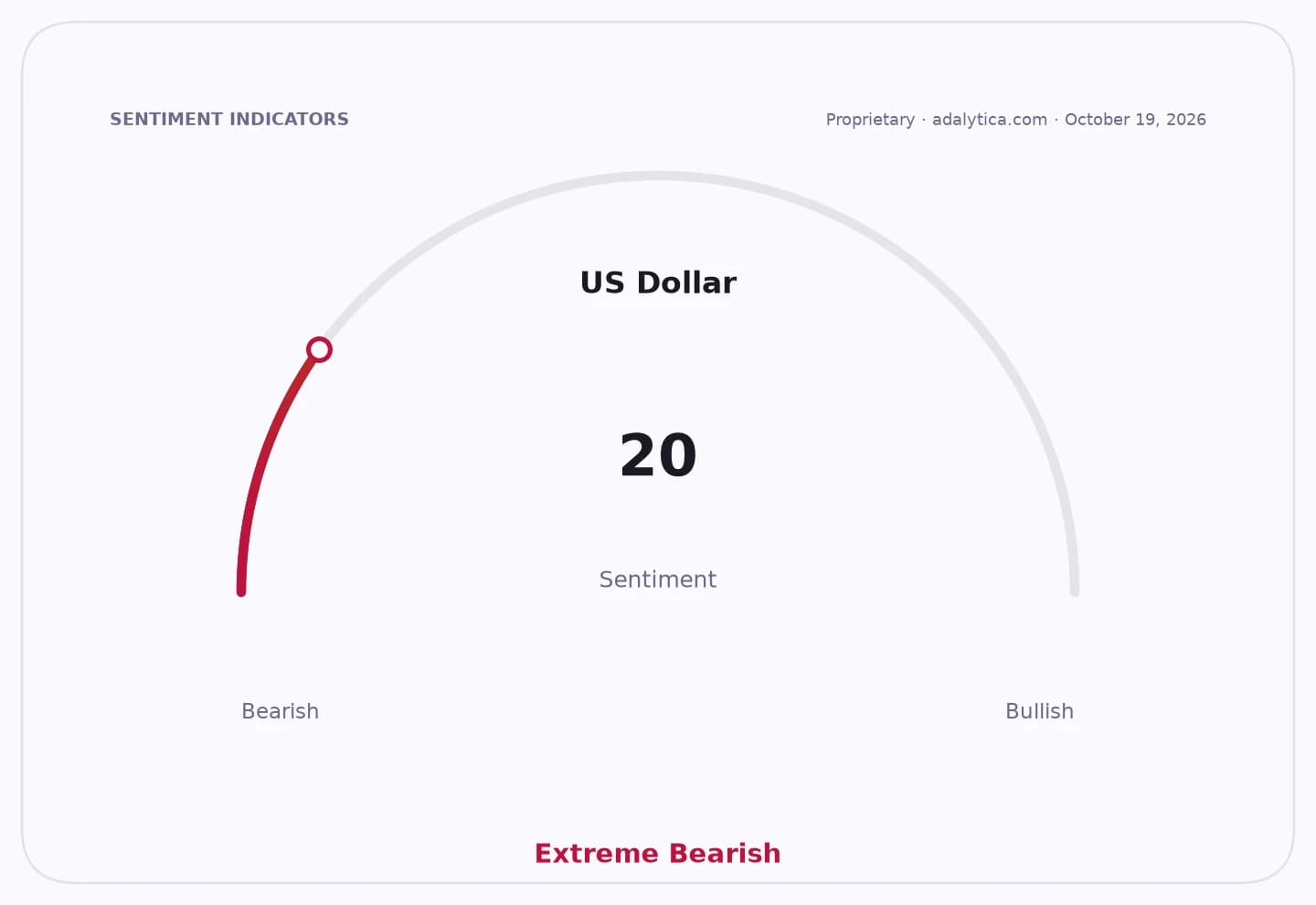
Sentiment IndicatorsⓘProprietary · adalytica.com · October 19, 2026
This is a snapshot — live sentiment, awareness and momentum for 130+ markets update continuously in the dashboard.Open AlphaPulse
The bank’s call is notable for two reasons. First, it says there is “little technical support before 1.40” after USD/CAD broke below 1.4200, a level that had anchored the pair’s recent range. Second, the move has taken the Relative Strength Index back to the neutral 50 threshold, which means bullish dollar momentum has faded without yet creating a deeply oversold setup. In plain terms, the market has room to keep leaning against the U.S. dollar, but the easy part of the trade may already be over.
That is where Alberta enters the story. Scotiabank flagged “near-term domestic risk” into Monday’s Alberta vote, where the province is choosing whether to start the legal process toward a later binding referendum. The provincial government has stressed the current question does not directly trigger separation, but markets do not need a formal break-up risk to react. Any sign of constitutional friction can weigh on Canadian assets by reviving uncertainty around fiscal cohesion, investment flows and the stability premium attached to the country.
For investors, the setup is straightforward: the Canadian dollar is still benefiting from a softer U.S. dollar and improving domestic rate expectations, but the market is approaching a point where politics can matter as much as macro. Scotiabank said markets are pricing 9 basis points of tightening this month and 23 basis points by December, suggesting some support for the loonie from the Bank of Canada path. Housing starts also rose 3% in September, helping the domestic backdrop, but those positives are not enough to eliminate headline risk.
The bigger investment implication is that USD/CAD may not fall in a straight line to 1.40. A clean break lower would require either another leg of broad U.S. dollar weakness or a stronger-than-expected Canadian policy repricing after the Bank of Canada decision and Monetary Policy Report on Oct. 28. If Alberta’s vote unsettles sentiment, the pair could stall above Scotiabank’s downside reference even if the broader trend remains bearish for the dollar.
This is the kind of setup currency markets often misprice: a valuation edge that looks compelling, but only until politics injects a fresh risk premium. My view is that investors should not assume the loonie’s rally is fully secured just because U.S.-Canada yield spreads have narrowed. The asymmetric trade is still lower USD/CAD over time, but Alberta raises the odds of a choppy pause before that move is complete.
For traders, the message is to stay constructive on the Canadian dollar, but with tighter risk controls heading into the vote. For longer-term investors, the real opportunity remains in any pullback in CAD-linked exposure if political noise briefly overshoots the macro trend.
| Entity | Gains | Losses |
|---|---|---|
| Canadian dollar | ▲Narrower yield spread | ▼Political risk premium |
| USD/CAD bears | ▲Momentum near 1.40 | ▼Rebound above 1.4200 |
| Bank of Canada | ▲Easier tightening expectations | ▼Policy uncertainty from vote |
| U.S. dollar | ▲Safe-haven bid if risk flares | ▼Broad-based dollar weakness |