The dollar slipped as the US election outcome reduced political uncertainty in Washington and pushed Treasury yields lower, giving global equities, bonds and risk-sensitive currencies a short-term lift.
Dollar Falls After US Election on Lower Yields
US Dollar
Markets read the result as a cleaner outcome than many had feared. Democrats’ stronger showing in Congress eased concern about contested results and suggested a greater chance of legislative gridlock, while also reducing expectations that President Donald Trump would move quickly to escalate military action against Iran, according to National Australia Bank’s Ray Attrill. That combination helped fuel demand for Treasuries and took some of the bid out of the greenback.
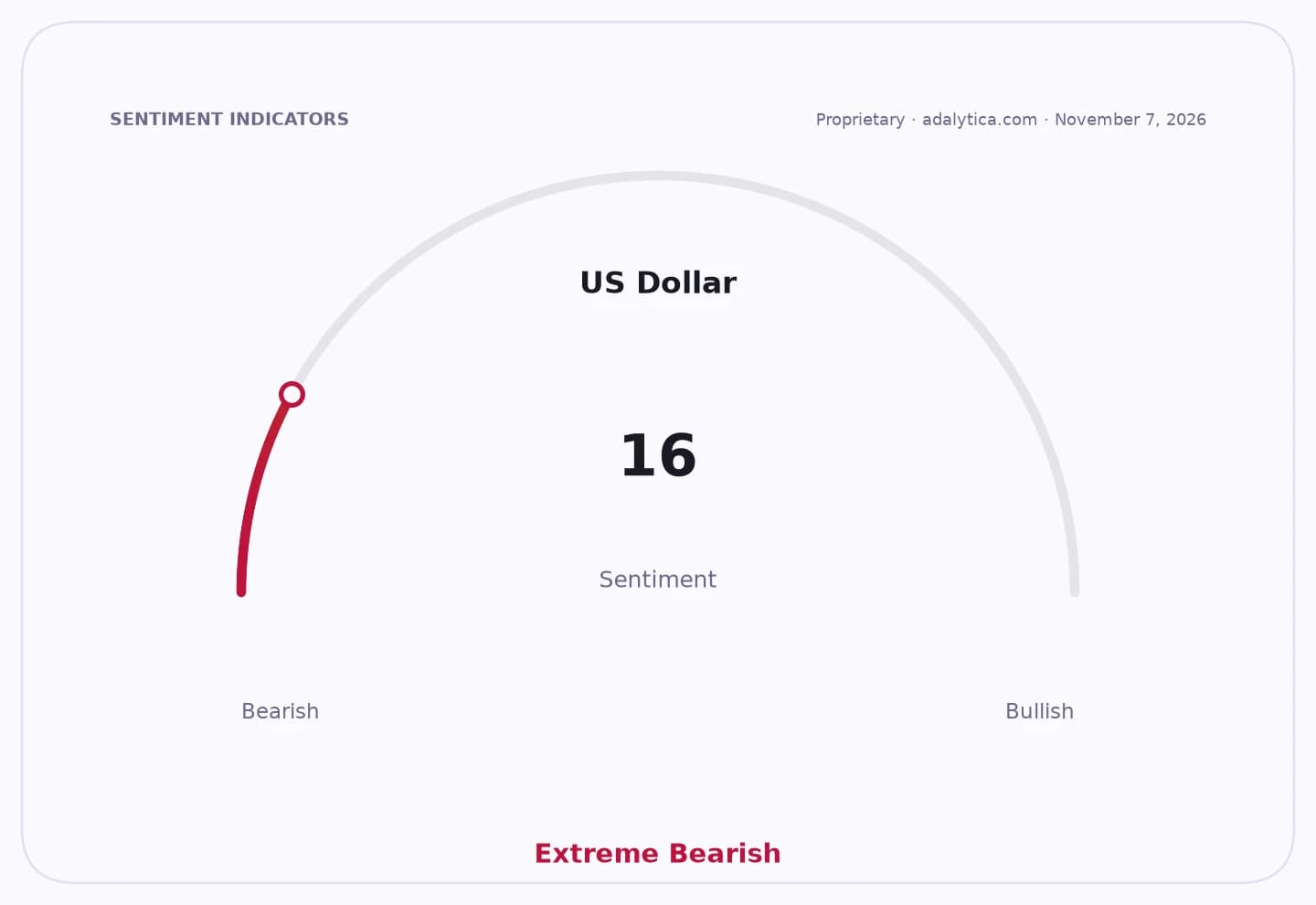
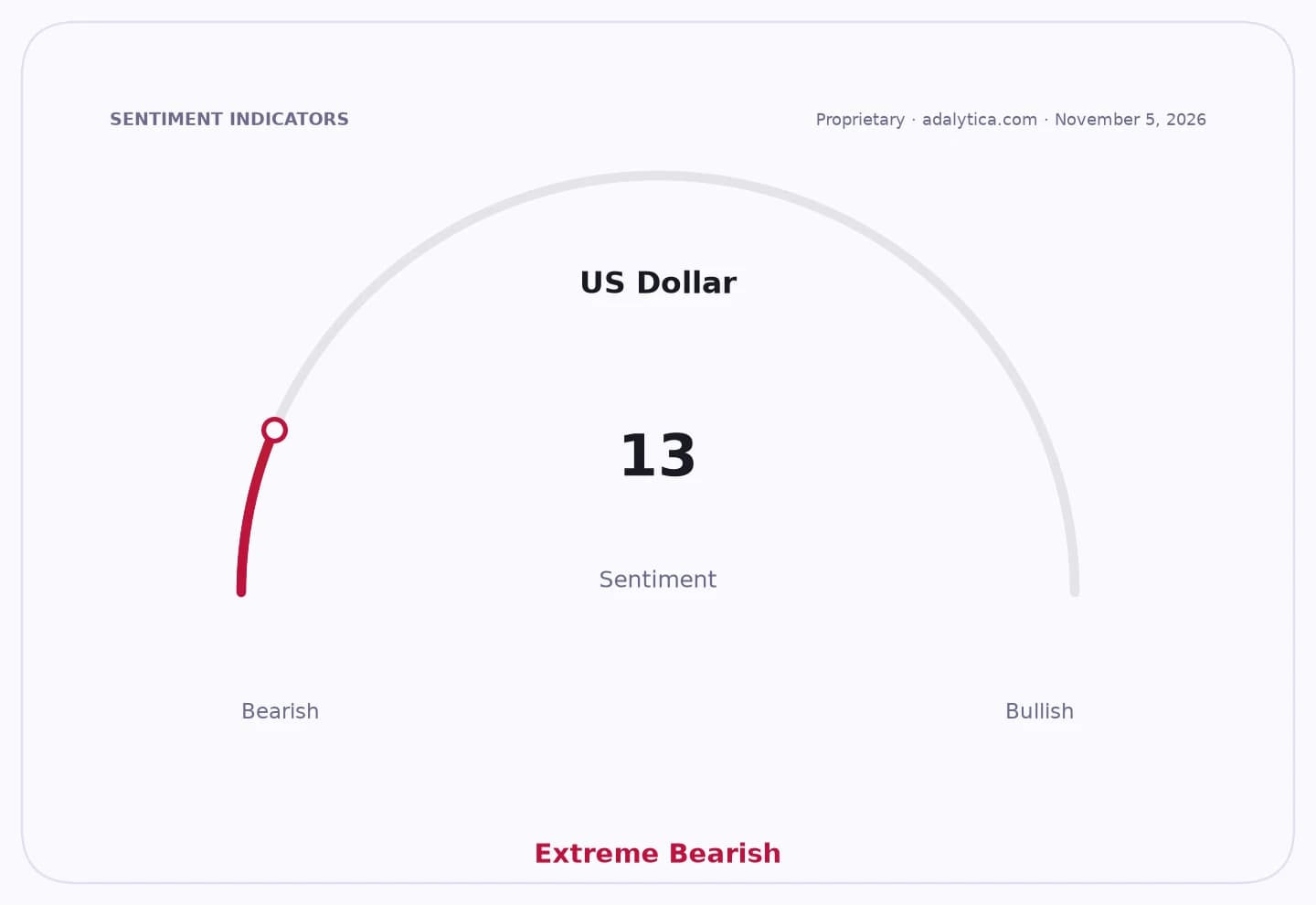
Sentiment Indicators
The dollar index fell 0.06% to 101.41 after a 0.36% drop in the previous session. The euro was little changed at $1.1241, while sterling rose 0.38% to $1.3462 and touched a more than seven-week high as investors positioned for a Bank of England rate increase. The pound was on track for a sixth straight daily gain, its longest run since July, underscoring how the market’s immediate response has been to reprice away from dollar strength and toward currencies backed by tighter monetary policy.
The shift matters economically because a softer dollar tends to ease global financial conditions. It improves the translated earnings of US multinationals, supports commodity prices priced in dollars and reduces pressure on emerging markets that borrow in the currency. That is particularly relevant after a period in which US growth, Treasury yields and political risk had kept the greenback firm.
The move was reinforced by falling US yields. Ten-year Treasury futures rallied on the election result, and the drop in yields fed directly into dollar weakness, Attrill said. Shorter-dated rates also eased, with the 2-year Treasury yield slipping to 4.46% in the context provided, while the 10-year was around 4.84%. Lower yields reduce the dollar’s interest-rate advantage and tend to make carry trades in other currencies more attractive.
Other central banks added to the crosscurrents. Minutes from the Bank of Japan’s September meeting reinforced expectations for further rate hikes after policymakers lifted borrowing costs to a 31-year high of 1.25%, with one board member signaling room for faster tightening. Sterling was supported by anticipation of another Bank of England increase aimed at containing inflation from high energy costs, even as policymakers may resist market bets on a prolonged tightening cycle. The Australian dollar and New Zealand dollar also firmed, reflecting the broader risk-on tone.
For investors, the key question is whether the dollar’s decline is the start of a more durable reassessment or just an immediate relief rally in other assets. The bearish case for the dollar is that political gridlock in Washington and easier Treasury yields could persist, while tighter policy elsewhere narrows the relative rate gap. The bull case is that US growth remains resilient enough to keep yields elevated and preserve dollar support if risk appetite fades.
Equity positioning appears to reflect the same balancing act. Adalytica’s US Dollar Trade Signals showed neutral sentiment but elevated awareness, while S&P 500 signals pointed to extreme greed in awareness terms, suggesting investors are leaning into the post-election relief trade even as they remain alert to reversals. In crypto, bitcoin and ether also advanced, consistent with a broader move into higher-beta assets.
The next catalysts are straightforward: further Treasury yield moves, comments from the Federal Reserve and the Bank of England, and any change in how investors handicap fiscal and geopolitical policy under the new political backdrop. If the market continues to believe the election lowers policy risk without reigniting inflation pressure, the dollar could stay on the defensive. If not, the greenback’s pullback may prove brief.
| Entity | Gains | Losses |
|---|---|---|
| Non-US currencies | ▲Easier financial conditions | ▼Dollar bulls |
| US Treasuries | ▲Lower yields, stronger demand | ▼Higher-rate positioning |
| Global equities | ▲Relief from political uncertainty | ▼Safe-haven flows |
| US exporters | ▲Better foreign revenue translation | ▼Importers facing dearer dollar inputs |