Wheat prices are under fresh pressure as a correction in 13.5% FOB Canada CWRS underscores a broader slide driven by weak demand, ample export competition and falling prices in rival origins.
Wheat Prices Fall as CWRS Weakness Deepens

The correction matters because CWRS is a key high-protein benchmark for global milling wheat trade, and any move lower feeds directly into export pricing, margin expectations for Canadian sellers and hedging decisions across the grain complex. It also comes as the broader wheat market remains fragile, with Russian export values easing, EU wheat softening on peace-talk optimism and Kazakhstan increasing shipments.
Sentiment Indicators

For investors, the signal is that wheat-linked assets remain trapped between supply pressure and inconsistent demand. The Teucrium Wheat Fund, WEAT, has already fallen to $21.73 on Nov. 6 from $26.96 on Sept. 8, while its London-listed counterpart WEAT.L slipped to 18.87 pounds from 22.52 pounds over the same rough period, reflecting a sharp reset in wheat sentiment.
Technical readings show the downside pressure has intensified. WEAT’s relative strength index is 8.5, deep in oversold territory, while the fund’s price sits well below its 50-day moving average of $24.78 and only slightly above the lower Bollinger Band at $21.02. WEAT.L shows a similar pattern, with RSI at 9.5 and the ETF trading below its 50-day moving average of 21.58 pounds.

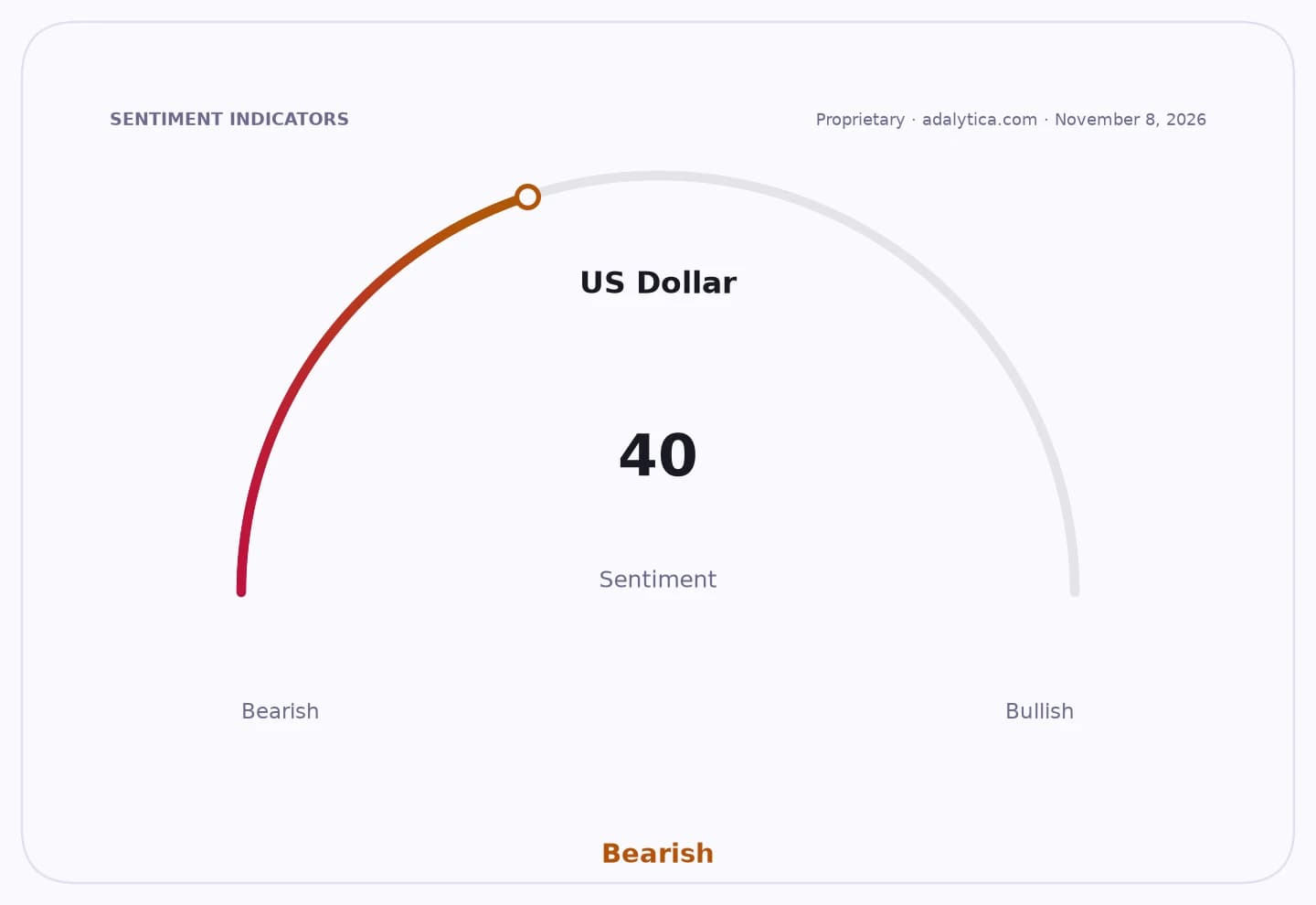
The macro backdrop is also mixed. A weaker US dollar is typically supportive for dollar-priced commodities, but that tailwind is being outweighed by softer import appetite and export competition. Adalytica’s US Dollar Trade Signals show sentiment at 61, with awareness at 88, indicating the currency remains a closely watched variable even as wheat-specific fundamentals dominate price action.
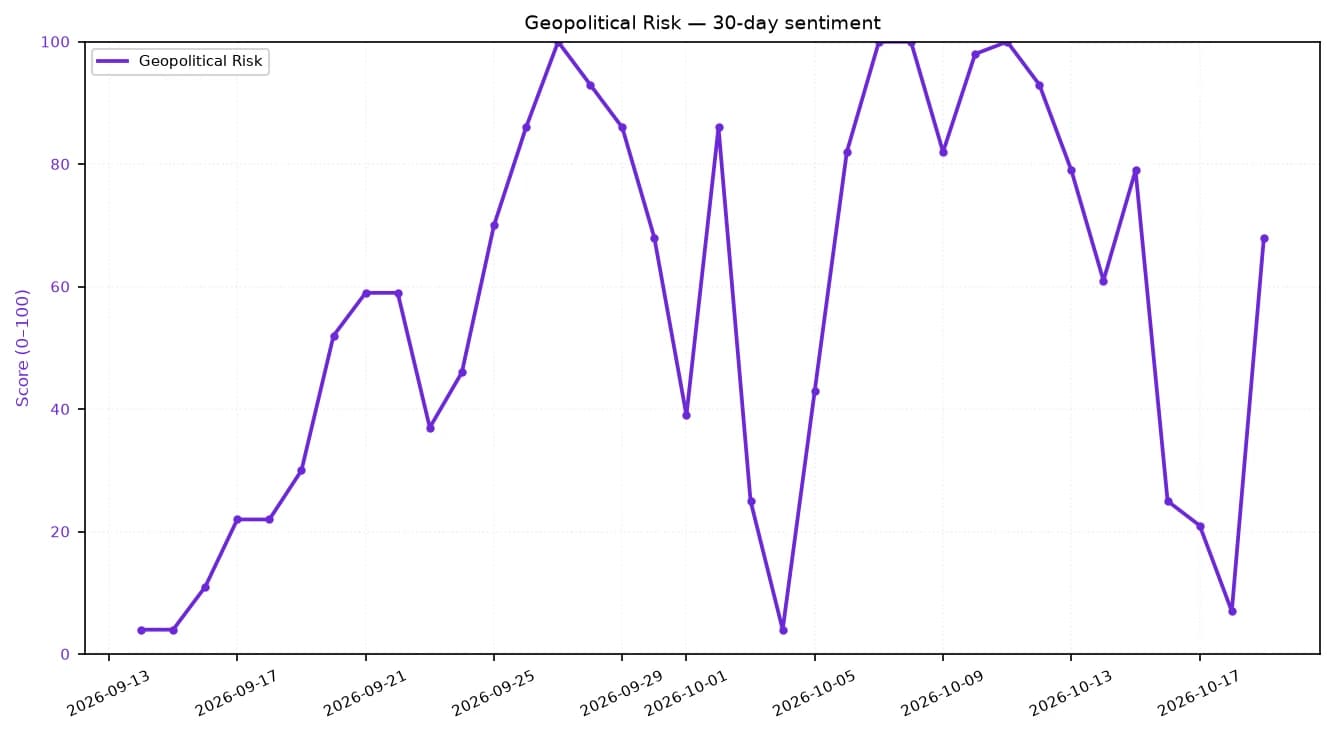
The bigger risk for the market is that lower wheat prices could persist if export flows remain strong from the Black Sea and Canada while demand stays subdued in major importing regions. Traders will be watching fertilizer costs, planting decisions and any further geopolitical shifts that could alter supply expectations heading into the next crop cycle.
| Entity | Gains | Losses |
|---|---|---|
| Flour mills/importers | ▲Lower procurement costs | ▼Producers’ pricing power |
| Wheat consumers | ▲Cheaper feedstock | ▼Exporting farmers |
| Canadian exporters | ▲More competitive FOB pricing | ▼Spot margins |
| WEAT / WEAT.L longs | ▲None on the move lower | ▼Mark-to-market losses |